





 English
  Francês
  Alemão
  Italiano
  Japonês
  Norueguês
  Portuguese
  Spanish
 3 min of reading


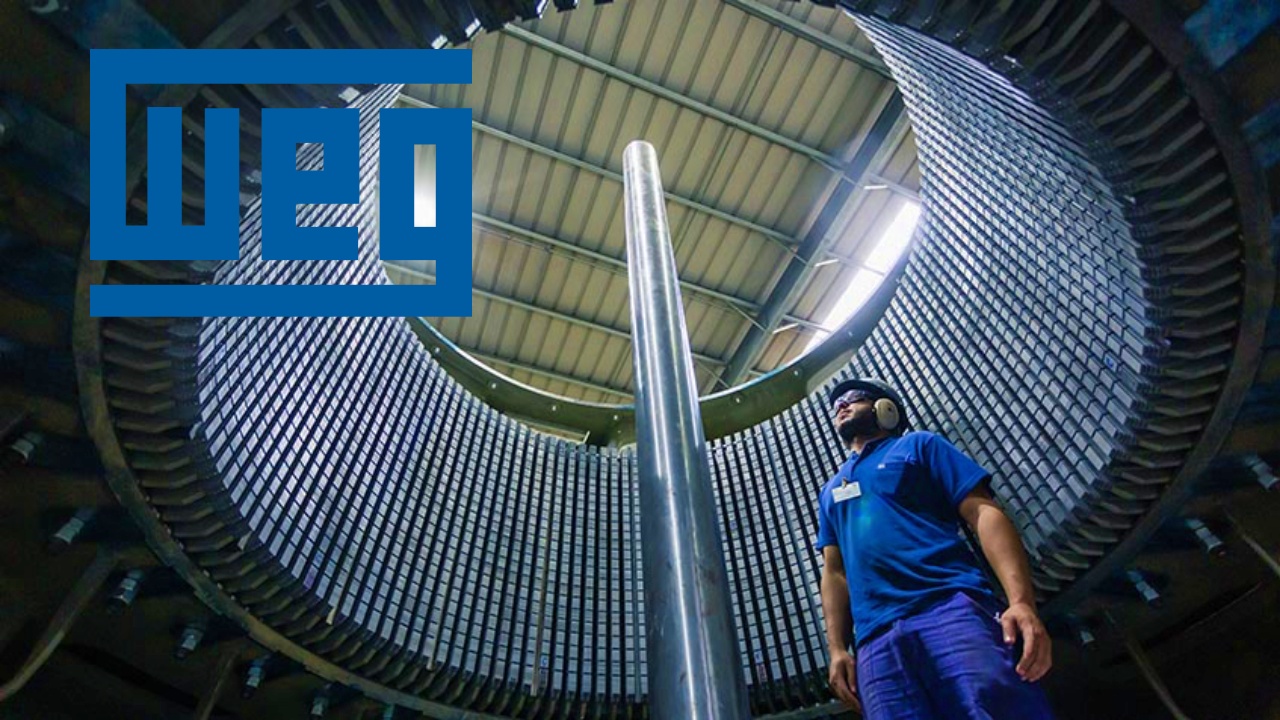
WEG Participates in Expansion of Mill Grinding Capacity. Motors and Transformers Supplied Will Trigger the Cane Preparation, Shredder, and Defibrator Process
WEG, one of the largest manufacturers of turbines and electric motors in the world, has a broad portfolio of solutions for the Sugar and Ethanol industry, combining market-leading experience with the technology of an innovative company.
This is why an important company in the sector, with the capacity to process about 11 million tons of sugar cane per harvest, chose WEG to supply equipment for the expansion of the grinding capacity of one of its mills.
WEG Equipment Is Developed with Modern Design and High Performance Standards
The W60 line motors supplied (frame 710, 4,500 hp, 13,800 V) will drive the cane preparation, shredder, and defibrator process and feature interchangeability among themselves and with other existing equipment, enabling easy application.
-
While Russia dominates the global wheat market, Brazil emerges as an unexpected competitor in the Cerrado, offering grain available in July and August when stocks in the Northern Hemisphere are at their lowest point of the year.

-
China returned almost 20 Brazilian ships with soybeans, but now everything could change: the country that buys 80% of the grain is considering relaxing regulations after impurities held up shipments of thousands of tons and caused million-dollar losses.

-
Chinese giant worth nearly R$ 4 billion that manufactures cables for electric cars, solar energy, and robotics wants to open a factory in SC.

-
Many employers do not know, but the law guarantees domestic workers a 25% increase in salary during trips, 50% for overtime, 20% for night shifts, and 17 additional benefits that can lead to labor lawsuits if not paid.

Since they are identical machines for different applications, the customer has the option to, in an eventuality, remove one of the motors from its original position and apply it in another position, ensuring greater safety and operational availability. In addition to the motors, WEG also supplied a 55,000 kVA transformer, 138 kV, and rectifiers.
WEG equipment is developed with modern design and high performance standards, providing sugar-alcohol applications with low maintenance, high reliability, and flexibility, resulting in greater efficiency and operational safety.
Electric Motors in Mill Production Processes Promote Steam Savings
The use of electric motorization in the mill’s production processes promotes steam savings, which applied to the turbine generates energy, powering the motors and making the surplus available for sale.
With the largest network of technical assistance and authorized resellers throughout Brazil, WEG maintains complete support for the customer, from the moment of purchase to post-sale, enabling lower operational costs, reduced downtime, and the sustainable use of the harvest.
The Largest FPSO Platform in Brazil — Built by Modec for Equinor, Destined for the Pre-Salt of the Santos Basin, Will Have 140 Electric Motors
About 40 medium-voltage electric motors, with powers reaching up to 13,400 kW, plus 100 low-voltage electric motors and five medium-voltage variable frequency drives (three of which with a rated power of 11,723 kW), will be supplied by multinational WEG to equip the largest oil and gas platform in Brazil.
WEG, one of the largest manufacturers of turbines and electric motors in the world, is already manufacturing the equipment at its factory located in Jaraguá do Sul (SC). The electric motors and inverters will be supplied through compressor and pump manufacturing clients from Europe and Asia, and will operate in driving this equipment in the Bacalhau field, in the pre-salt of the Santos Basin.
The Largest Transformer Produced by WEG Left the SC Factory in April, Heading to the African Continent
The Brazilian giant WEG built its largest transformer at its Blumenau factory in SC. The equipment, weighing 348 tons each, will be integrated into the power transmission electrical system in southern Africa, providing reliability in energy supply and directly contributing to the local economy’s development.
The first unit was shipped in early April this year, and the second in May, ahead of the agreed contractual deadlines, with the complex logistics of transport to the final destination estimated at 60 days.








Seja o primeiro a reagir!