





 Portuguese
  English
  Spanish
  6 min of reading
  0 comments


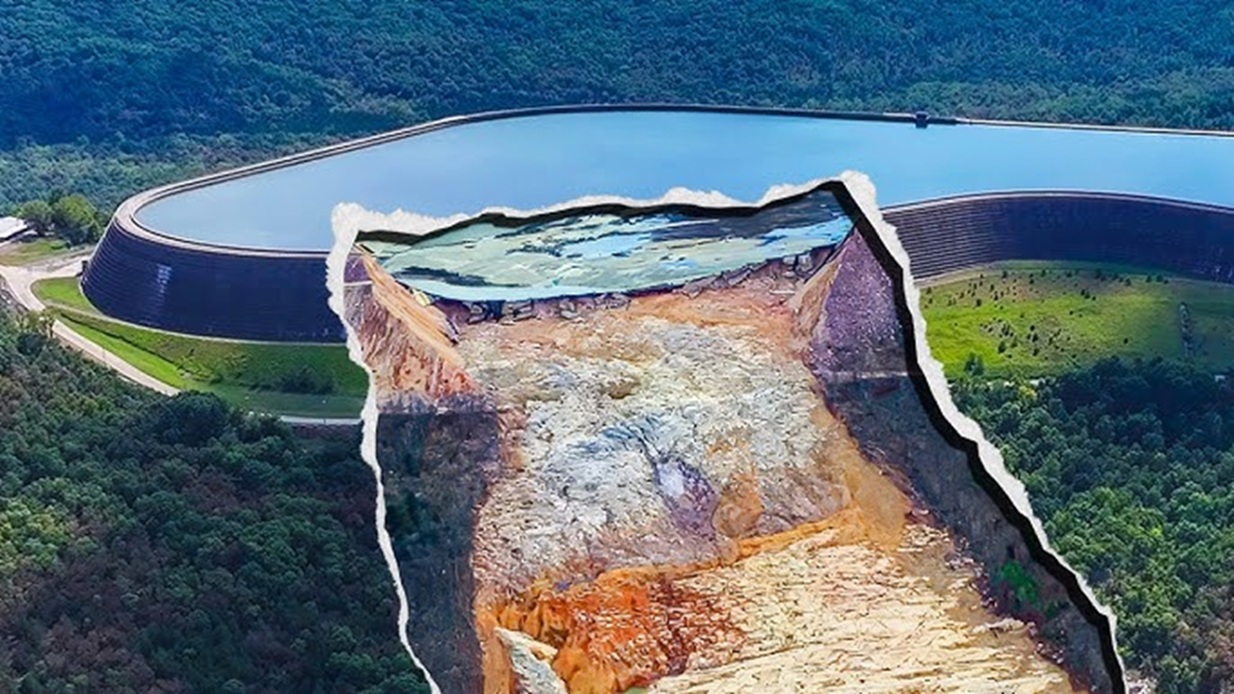
Learn About The History Of The Taum Sauk Plant, One Of The Most Advanced Energy Storage Systems In The U.S., Which Collapsed In 2005 After A Series Of Technical And Human Failures.
The Hydroelectric Plant of Taum Sauk, located in Missouri (U.S.), is a pumped storage facility — a special type of hydroelectric dam that functions like a giant battery.
Unlike conventional plants, it does not rely on a river with a constant flow to generate electricity.
Instead, energy is stored in the form of water in an elevated reservoir, being released when necessary to meet demand.
-
With a cost per shot close to zero, the DragonFire laser could change naval warfare in 2027 and provide British ships with nearly unlimited defense against drones.

-
A British startup creates tires that generate electricity in electric vehicles when passing over potholes, speed bumps, and cracks.

-
Scientists have created robots made with living cells that have their own nervous system, swim on their own, explore the environment, and self-organize without any genetic engineering, and now they want to do the same with human cells.

-
Students create a solar-powered ambulance that operates without a plug, without fuel, and still keeps medical equipment running in remote areas.


How The Taum Sauk Plant Works
Unlike traditional hydroelectric plants, its operation is based on storing energy when demand is low and releasing it during peak consumption periods.
It is an efficient and sophisticated system that utilizes principles of classical physics, such as gravity and potential energy.
The Engineering Behind The System
The operation of the plant revolves around two reservoirs: one at the top of the mountain and another at the base.
During off-peak hours — usually at night — water is pumped from the lower reservoir to the upper one. This consumes energy, but serves to store it in the form of gravitational potential energy.
Potential energy is calculated by the formula Ep = m · g · h, where “m” is the mass of the water, “g” is gravity, and “h” is the height between the reservoirs. In other words, the greater the elevation and the volume of water, the more energy will be stored.
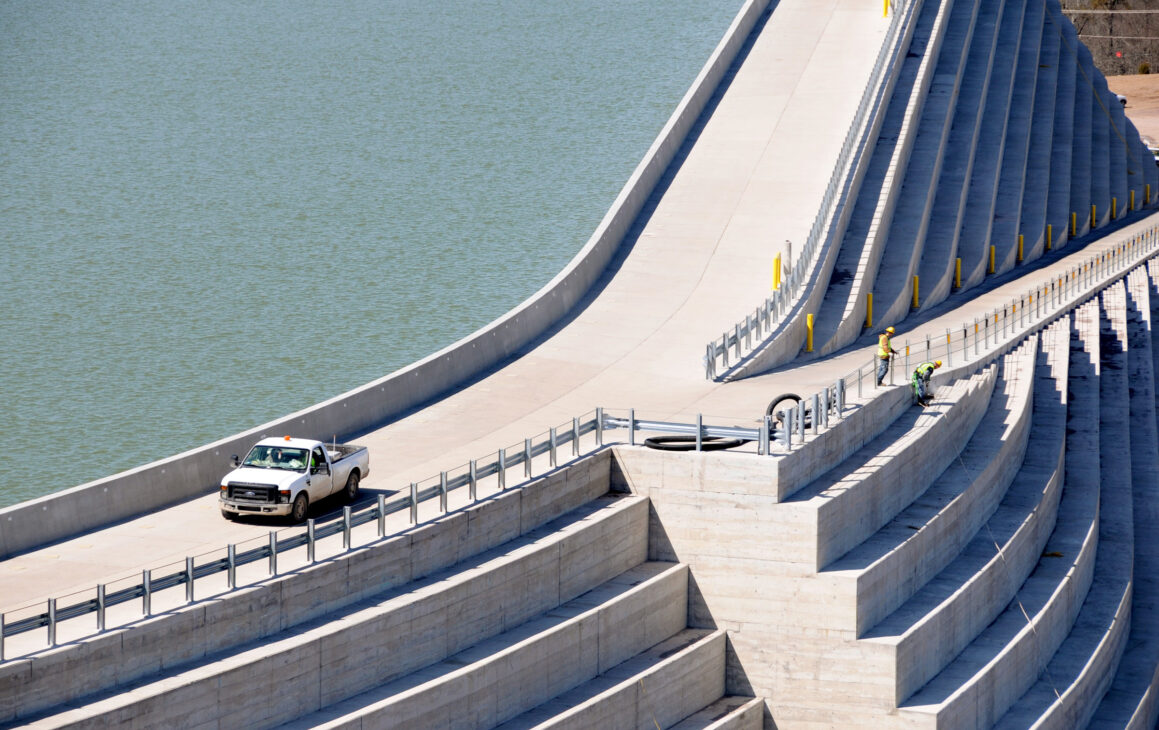
During peak hours, the system reverses: the water from the top is released and flows through conduits to turbines, converting potential energy into kinetic and then electrical energy. The turbines are reversible, functioning both to pump water and to generate electricity.
Quick Response To Demand
This type of system allows the plant to operate rapidly, responding almost immediately to variations in demand.
This is crucial for balancing energy supply, especially when there are fluctuations in renewable sources, such as solar and wind.
The plant achieves a return efficiency of 70% to 80%. In other words, for every 100 units of energy consumed in pumping, up to 80 can be reused as electricity.
The infrastructure includes tunnels, valves, turbines, generators, and automated systems that monitor water levels, pressures, and other variables in real-time, ensuring safety and efficiency.

The Collapse Of The Structure
On December 14, 2005, a disaster struck the Taum Sauk Plant. During an apparently normal operation, the upper reservoir overflowed, the structure gave way, and six billion liters of water cascaded down the mountain towards a state park. Despite the severity, there were no fatalities — but the damage was extensive.
From Innovation To A Symbol Of Failure
Built in the 1960s, south of St. Louis, the plant was one of the largest in the world in pumped storage.
Its operation used two reservoirs connected by reversible turbines. The concept was simple: pump water when demand was low and generate energy when it increased.
Although it consumed more energy than it produced, the efficiency of 70% justified the cost, as the goal was to balance the grid.
The height between the reservoirs, about 230 meters, helped generate energy with less water volume.
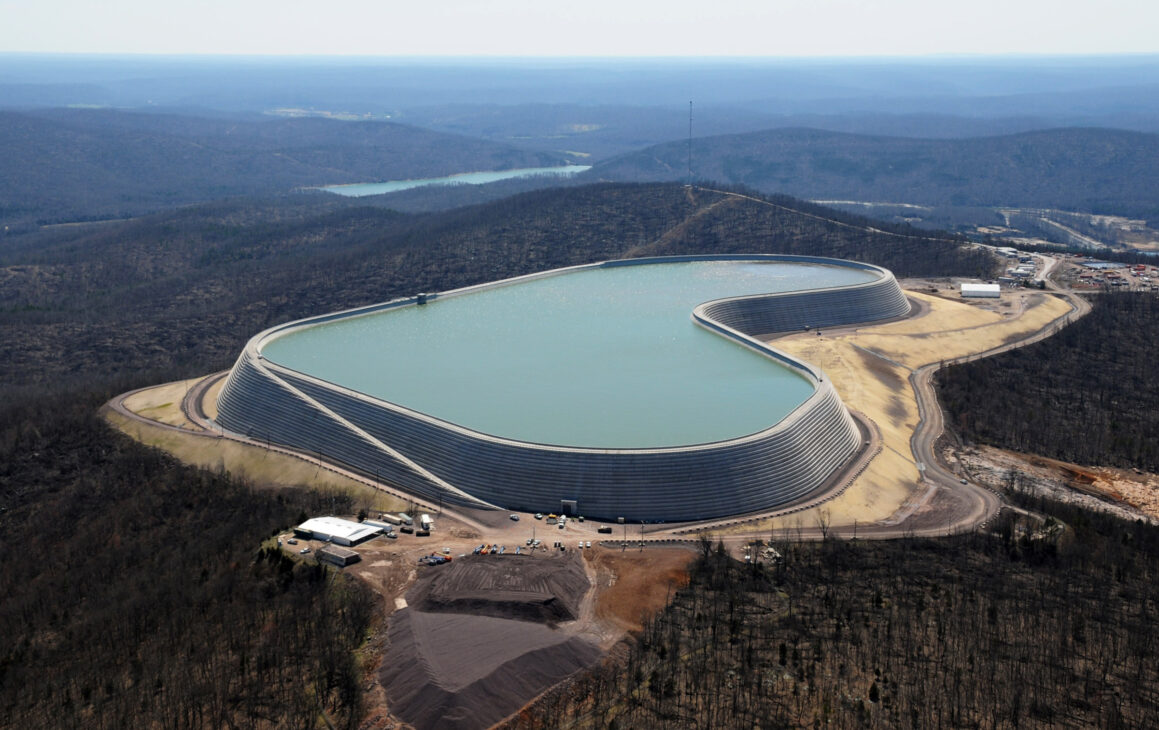
Circular Reservoir At The Top
The upper reservoir, known as the “ring levee,” had a circular shape and was made of stones — something unusual for this type of project.
Because they were not waterproof, it was necessary to install concrete panels inside. The structure was built on top of Proffitt Mountain after an environmental veto on Mount Taum Sauk.
For decades, the plant operated about 100 days a year. But in the 1990s, with the deregulation of the sector, it began operating up to 300 days a year, increasing cycles and accelerating wear on the structure.
Leaks And Repairs
From the beginning, the reservoir exhibited leaks. Repairs were made, but did not eliminate the problem.
In 2004, the Ameren company spent over two million dollars on the installation of a geomembrane to seal the reservoir. The challenge then became to attach level sensors without puncturing the new membrane.
The solution was to use anchored cables to support the sensors. However, the system was unstable.
The movement of the water misaligned the sensors, causing them to register levels lower than the actual ones. Based on this data, the control system artificially raised the filling limit.
Ignored Warning
In September 2005, during a technical event of the IEEE honoring the plant, technicians observed water overflowing. The official explanation was the wind, but divers hired to check the sensors found misalignment.
Even with this finding, the only measure taken was to temporarily reduce the level. Visual monitoring was nonexistent, and there was no technical team on-site during operations.
The Collapse
In the early hours of December 14, the scenario repeated itself. Water overflowed the reservoir wall and trickled down the external slope. The pump was shut down too late. The base of the wall gave way and the entire structure collapsed.
Six billion liters of water cascaded down, destroying everything until it reached Johnson’s Shut-Ins State Park. As it was winter, the park was nearly empty.
Even so, the superintendent’s house was hit. He, his wife, and three children — including a baby — were swept away. All survived with injuries.
The water reached the lower reservoir, as expected. This prevented an even greater tragedy downstream. However, the damage was already severe.
Detailed Investigation
The FERC began an investigation that revealed a series of failures. The material of the dam was not pure rock, but included soil, which caused settlement in the structure. Some sections sank two feet without corrections on the sensors, which were loose and poorly positioned.
Emergency sensors were installed above the sunken wall. Since they required simultaneous activation, none was triggered. Even after the September alert, no one physically checked the sensors. A simple camera could have prevented the disaster.
Design Flaw: No Spillway
The biggest flaw was conceptual: the upper reservoir had no spillway. As it was an off-canal system, engineers deemed a gravity drain unnecessary. They relied solely on the electronic system.
This excessive confidence was a critical mistake. Sociologist Charles Perrow calls this a “normal accident”: when system complexity creates inevitable risks.
Fines And Reconstruction
The FERC fined Ameren $15 million. The state of Missouri received an additional $177 million in settlement, most of which was used to recover the park.
The new reservoir was built in the same location, but with compacted rolled concrete, a safer technique. The old material was recycled as aggregate. This time, a spillway was included.
Reopened in 2010, the plant was again honored and awarded for its reconstruction.
New Safety Rules
After the accident, the FERC created specific rules for pumped storage plants. A chief dam safety engineer was required — a position that did not exist at the time of the collapse. Other states also strengthened their safety programs.
The lesson was clear: automated systems need passive safety mechanisms, such as spillways. The absence of this item was costly.
With the growth of renewable sources, energy storage has become a priority. Plants like Taum Sauk have advantages but also risks. Therefore, large-scale batteries are gaining prominence.
Studies project that by 2030, the U.S. will have 400 gigawatt-hours in batteries — more than 100 times the capacity of Taum Sauk. Batteries also come with risks, but they are different and often smaller.








Seja o primeiro a reagir!