





 English
  Francês
  Alemão
  Italiano
  Japonês
  Norueguês
  Portuguese
  Spanish
 4 min of reading
  0 comments


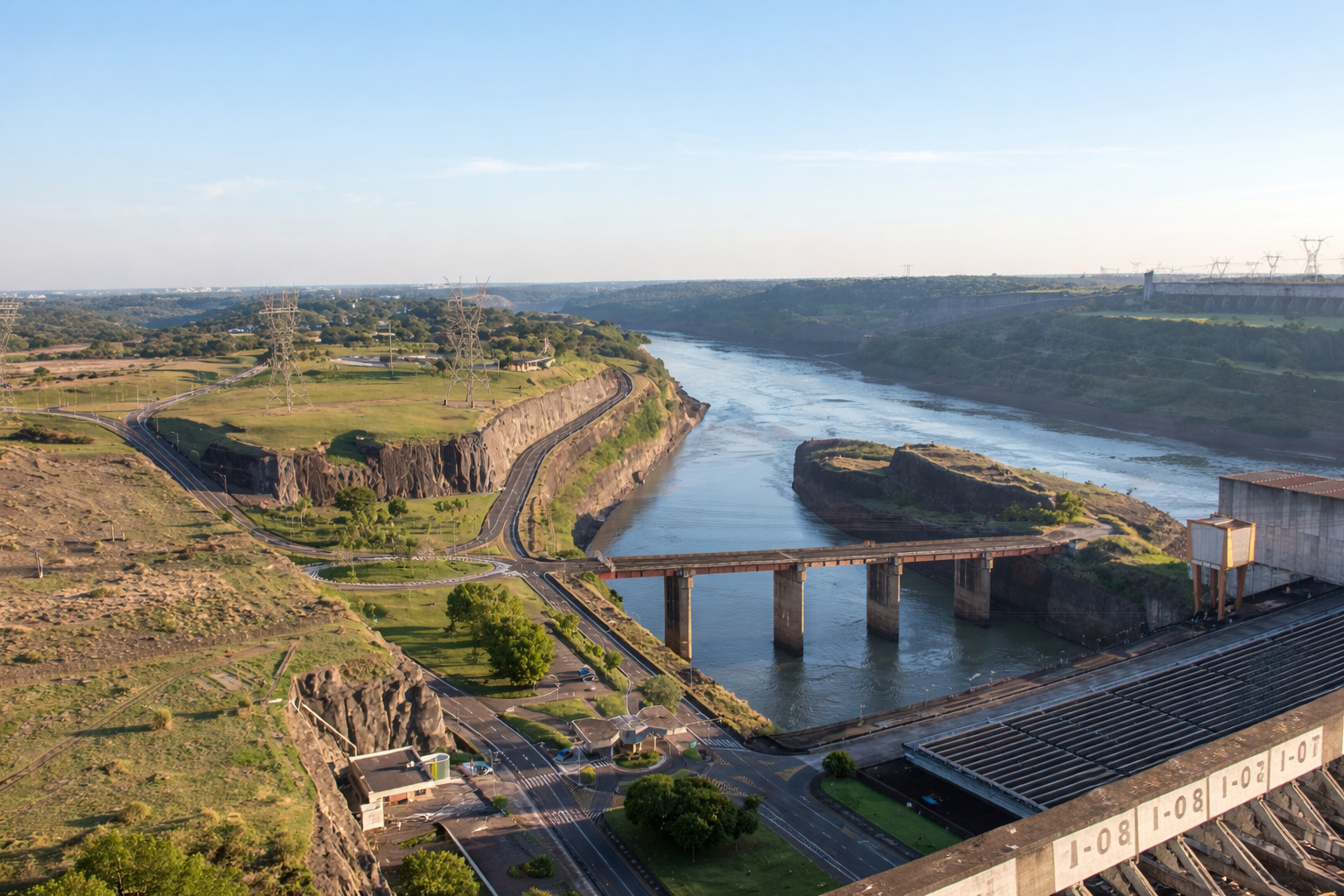
The Giant Binational Hydroelectric Plant Inaugurated in 1984 Between Brazil and Paraguay Became a World Reference in Electric Generation, Engineering, and International Cooperation
The Itaipu Hydroelectric Power Plant was inaugurated in 1984, and since then, it has become one of the largest energy projects in the history of South America. Located in Foz do Iguaçu, in Paraná, on the border with Hernandarias, Paraguay, the plant arose from a binational cooperation that united infrastructure, diplomacy, and energy planning. With 20 turbines and an installed capacity of 14,000 MW, Itaipu became a leader in the accumulated production of clean energy on the planet.
Furthermore, according to official data from Itaipu Binacional and IBGE Cidades, the hydroelectric plant surpassed the mark of 2.9 billion MWh generated since the start of operations. This enormous volume of energy consolidated the plant as a landmark of global hydroelectric engineering. Thus, over decades of operation, Itaipu has supplied millions of homes, cities, and industries in Brazil and Paraguay.
Operational Efficiency Transforms Itaipu into a World Reference
Itaipu’s leadership in the global ranking of accumulated generation is directly related to the combination of technical efficiency and water availability from the Paraná River. This river, one of the largest in South America, provides sufficient flow to keep the turbines operating continuously and steadily.
-
Equatorial adopts new national number for consumer units on electricity bills starting in April, following ANEEL standards and modernizing energy bills in several states.

-
Aneel Revokes CMAA Thermal Power Plants After Network Restrictions and Excess Energy in the System

-
13-Year-Old Scientist Creates Clean Energy Device For Just R$ 16, Wins $25,000 Prize And Surprises The World With Affordable Solution

-
Energisa Announces Investment Plan in Energy and Gas with Direct Impact on Network Expansion and Supply Reliability for Consumers

Although there are hydroelectric plants with greater installed capacity, Itaipu stands out for its ability to produce energy consistently over the years. In this way, the plant has recorded historical numbers in annual generation, surpassing various large-scale projects.
During the construction of the dam, which began in the 1970s, an enormous volume of concrete was used. The quantity was so significant that, according to technical estimates released by Itaipu Binacional, it would be enough to build hundreds of football stadiums. At the same time, the course of the Paraná River had to be partially altered to facilitate the installation of the structure.
Engineering of the 20 Turbines Impresses Experts
The technical structure of the plant is considered one of the most advanced in the hydroelectric sector. Each of the 20 generating units has enough capacity to supply a medium-sized city on its own.
In addition, the plant’s electrical system operates at two different frequencies. Paraguay uses electricity at 50 Hz, while Brazil operates at 60 Hz. Therefore, a complex network of conversion and transmission was installed to ensure that energy is correctly distributed between the two countries.
This technological infrastructure has made Itaipu one of the most studied examples in the world when it comes to large-scale hydroelectric generation. The magnitude of the plant can be better understood when compared to other large international hydroelectric plants.
Among the major global projects, the following stand out:
Itaipu (Brazil/Paraguay) – 14,000 MW – Paraná River
Three Gorges (China) – 22,500 MW – Yangtze River
Belo Monte (Brazil) – 11,233 MW – Xingu River
Even with lower capacity than the Chinese Three Gorges plant, Itaipu remains a historical leader in the accumulated production of clean energy.


Binational Management Model Becomes an International Reference
In addition to impressive engineering, the plant’s administrative model also draws attention. Itaipu is managed by an international treaty signed between Brazil and Paraguay, which establishes an equal division of the generated energy.
Thus, each country receives half of the energy production and shares administrative and operational responsibilities. This binational management model has been studied at various universities and international institutions as an example of diplomatic cooperation and business efficiency.
At the same time, Itaipu Binacional invests in various socio-environmental projects in the border regions. Among the initiatives are programs for biodiversity preservation and actions aimed at the development of local communities.
Official Indicators Reveal the Dimensions of the Plant
In addition to its energy importance, Itaipu has also become one of the main tourist attractions in Paraná. Visitors arriving in Foz do Iguaçu often include the hydroelectric plant in their itineraries.
According to official data released by Itaipu Binacional and IBGE Cidades, the main indicators of the plant include:
Installed capacity: 14,000 MW with 20 generating units
Accumulated production: over 2.9 billion MWh since 1984
Location: Paraná River, on the border between Foz do Iguaçu (Brazil) and Hernandarias (Paraguay)
The tourist complex of the plant also offers attractions such as the Ecomuseum, the Bela Vista Biological Refuge, and the night lighting spectacle of the dam.
Visitation Reveals the Backstage of the Largest Hydroelectric Plant in the Region
Currently, the Itaipu complex offers different types of guided tours. Among them, the Special Circuit stands out as the most comprehensive experience.
In this tour, visitors enter the dam and observe the turbines up close. In this way, the public understands how hydroelectric generation works.
In addition, the night lighting of the dam transforms the structure into a spectacle of light and sound. Thus, the grandeur of the work becomes even more evident.
Finally, visiting the Itaipu Tourism portal allows you to check schedules and book tickets for the available tours.
Given the magnitude of this plant and the energy it generates for two nations, an inevitable question arises: will large-scale hydroelectric plants continue to be the basis for clean energy production in the coming decades?









Seja o primeiro a reagir!