





 Portuguese
  English
  Spanish
  5 min of reading
  0 comments


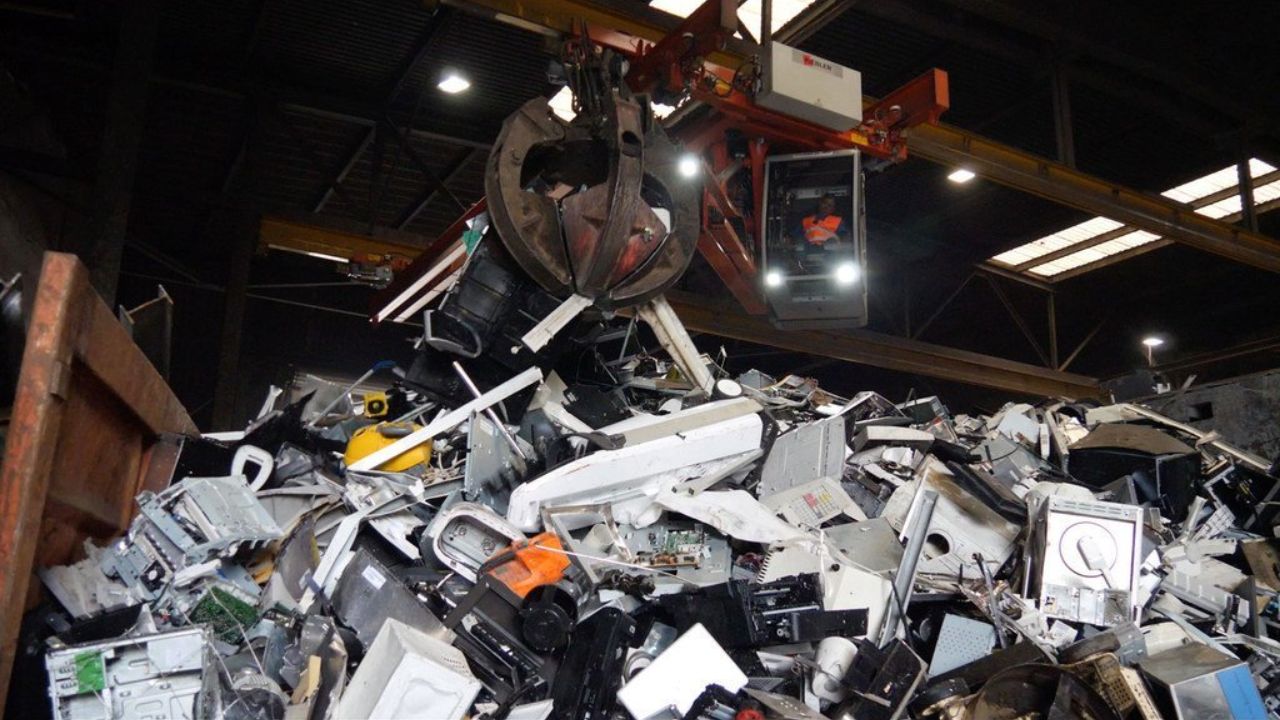
How Brazil Is (or Isn’t) Turning Electronic Waste into Fortune, a Global Market That, According to UN Reports, Already Surpasses US$ 62 Billion Annually.
The digital age has created a paradox: a growing mountain of waste that, at the same time, is one of the richest gold mines on the planet. The transformation of electronic waste into fortune is the new economic frontier, an “urban mining” that seeks to recover precious metals like gold, silver, and palladium from discarded computer boards, servers, and smartphones.
In Brazil, the challenge is monumental. The country is the fifth largest generator of e-waste in the world, but, according to alarming data from the Global E-Waste Monitor, from the United Nations (UN), it formally recycles only 3% of this volume. This article explores the billion-dollar potential of digital scrap, the extraction technologies, and the chasm between advanced laws and the practical reality that prevents the country from capitalizing on this opportunity.
The Dimension of the Challenge: The Brazilian Giant and the Mountain of Waste
Global statistics on electronic waste (e-waste) generation reveal a crisis of exponential growth. In 2022, the planet generated a record 62 million tons of this waste, a volume that, according to the UN, would be enough to fill 1.55 million trucks lined up around the equator. Worse yet, this generation is growing five times faster than the documented recycling rates.
-
Spain surprises the world by erecting 62 artificial dunes, mixing sand with natural remains of posidonia, and causing the structure to lose only 1.4% of its volume in 1 year.

-
With 16 Bulava missiles, improvements in acoustic stealth, and a design focused on silent patrols, Russia’s nuclear submarine was born to ensure Moscow’s invisible retaliation and has become one of the pillars of its maritime strength.

-
‘Populous’ city in Rio among the worst in Brazil in national ranking and exposes silent development crisis.
-
Couple buys house in the South Zone of São Paulo, opens a hidden door in the garage, and finds a secret wine cellar with dozens of old wines forgotten since the 1970s.

In this scenario, Brazil occupies a worrying prominence. We are the fifth largest producer globally and the second in the Americas, generating about 2.4 million tons per year, as noted by the UN. The critical data is the recycling rate: with only 3% of correct collection and disposal, the country allows 97% of this material to leak into common dumps, informal deposits, or simply be stored in drawers. This failure represents a monumental economic loss; the UN estimates that the recoverable materials in global electronic waste are worth more than US$ 62.5 billion annually.
Urban Mining: Defining the New Technological Gold Rush
In the face of this crisis, the transformative concept of “urban mining” emerges: the sustainable extraction of raw materials from the waste accumulated in cities. Instead of drilling the earth’s crust in destructive processes, urban mining focuses on “panning” the ore already present in post-consumption equipment, turning an environmental liability into a strategic asset.
What makes this approach so attractive is the concentration of materials. The “urban ore” is surprisingly rich, potentially containing up to 100 times more gold in a ton of mobile phones than in a ton of ore extracted from a conventional mine. Urban mining is a pillar of the circular economy, operationalized through two stages: reverse logistics (the system for collecting the product) and reverse manufacturing (the process of dismantling and separating materials to reintroduce them into the industry).
Modern Alchemy: How Is Gold Extracted from Boards?
The process of extracting precious metals from electronic scrap is a form of modern alchemy, involving complex mechanical and chemical steps. Gold, used for its high conductivity and corrosion resistance, is concentrated in processor pins, connectors, and the edges of printed circuit boards. Although each device contains little, the aggregated volume makes recovery highly profitable.
The extraction begins with physical-mechanical processes, such as shredding and grinding, to separate the metallic fraction from plastics and ceramics. Then, metallurgical routes come into play. Pyrometallurgy uses extreme heat (smelting) to separate metals, but it is an expensive, energy-intensive process that can generate toxic gases. Hydrometallurgy, more common, uses chemical solutions (leachants) to selectively dissolve the metals. Traditional methods include the use of cyanide or strong acids, such as aqua regia, which are effective but extremely toxic and produce hazardous effluents.
Fortunately, innovation is seeking “greener” and safer routes. Biohydrometallurgy, for example, uses bacteria to mobilize metals, reducing environmental impact. Cutting-edge research includes the development of biphasic aqueous systems (BAS) in Brazil, which use non-toxic solvents, and even a “sponge” made from whey protein, developed in Switzerland, capable of selectively absorbing gold from the solution, proving that clean technology is the future of the sector.
The Dark Side of Scrap: The Risk to Health and the Environment
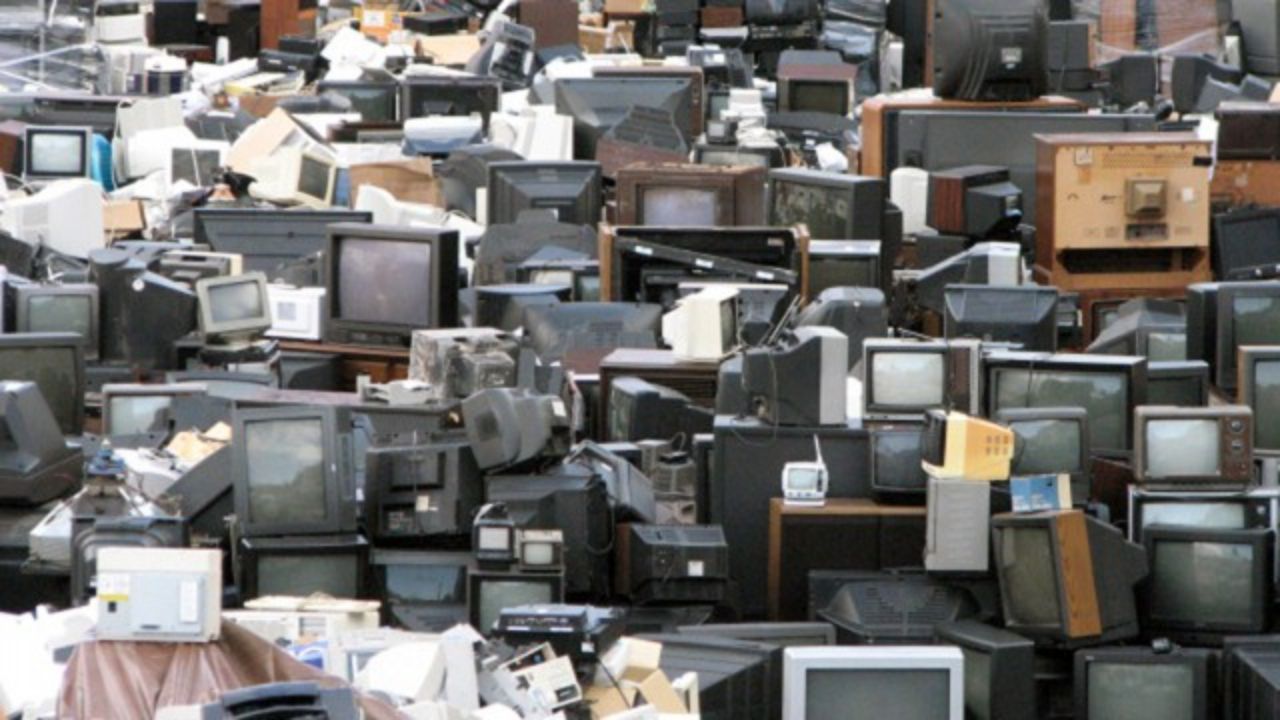
The failure to recycle 97% of Brazilian e-waste creates a socio-environmental time bomb. When discarded in landfills, these devices release a toxic cocktail of heavy metals, such as lead, mercury, and cadmium, which contaminate soil and groundwater, entering the food chain. Moreover, the informal burning of cables to recover copper releases dioxins and furans, dangerous atmospheric pollutants.
The most severe impacts fall on informal workers, the “collectors.” A report from the World Health Organization (WHO) on “digital dumps” warns that e-waste contains over a thousand harmful substances. Chronic exposure is linked to severe health issues, including DNA damage, thyroid dysfunction, respiratory problems, and an increased risk of cancer.
Children are disproportionately vulnerable. The WHO highlights that exposure to neurotoxins such as lead and mercury, common in these locations, is linked to cognitive deficits, reduced IQ, and issues with neurological development. The public health crisis in these areas is a direct consequence of the formal system’s failure to absorb and manage this valuable waste.
The Regulatory Maze: Why Brazilian Law Doesn’t Work?
Ironically, Brazil has one of the most advanced legislations in the world on paper. The Federal Law No. 12,305/2010, which established the National Solid Waste Policy (PNRS), is clear. It is based on two central pillars: the principle of “shared responsibility”, which involves manufacturers, importers, traders, consumers, and government in the product lifecycle; and the requirement of “reverse logistics”, which forces manufacturers to structure and finance systems for the correct collection and disposal of products after use.
The problem is the deep chasm between law and reality. The failure results in a recycling rate of only 3%. One of the biggest obstacles is the lack of rigorous enforcement and effective penalties. Companies that ignore the law often face no consequences, creating unfair competition with those that invest millions in collection systems.
Moreover, the infrastructure for Voluntary Delivery Points (PEVs) is insufficient, poorly promoted, and inaccessible to most of the population. The PNRS created a powerful engine but failed to provide the fuel (incentives and enforcement) and the transmission (logistical infrastructure) to make the machinery of the circular economy run. This void is filled by the informal sector, perpetuating health risks and economic waste.
The transformation of electronic waste into fortune is undoubtedly one of Brazil’s greatest economic and environmental opportunities. The country has the volume of waste, the demand for raw materials, and an advanced legal framework. However, the chronic failure to connect these points, through effective enforcement, accessible collection infrastructure, and clear incentives, is costing billions of dollars and, tragically, the health of its most vulnerable populations.
The solution involves a complex debate about responsibilities and investments. Do you agree with this change? Do you think it impacts the market? Leave your opinion in the comments; we want to hear from those who live this in practice.







-

-

3 pessoas reagiram a isso.