





 Portuguese
  English
  Spanish
  4 min of reading
  0 comments


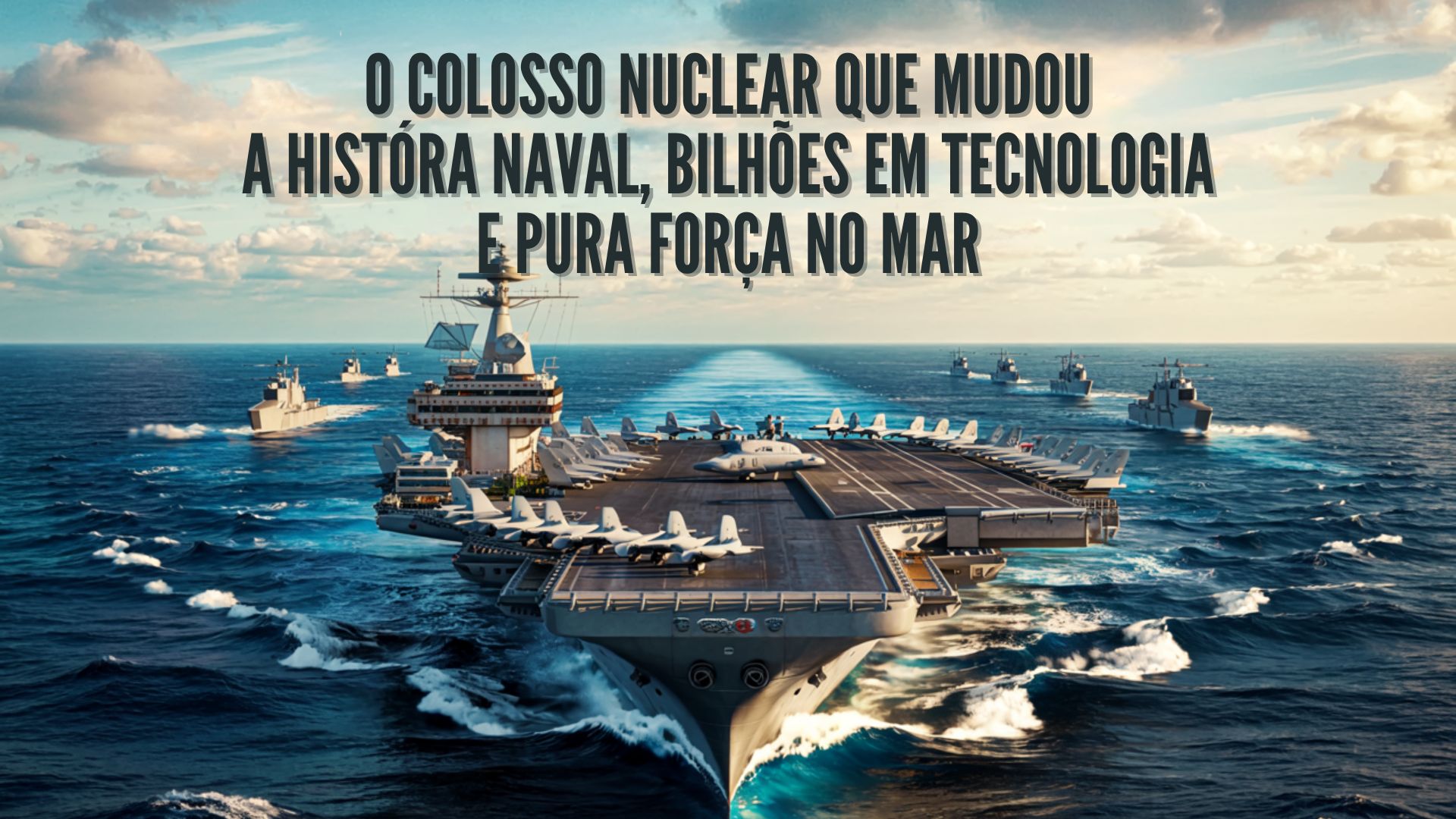
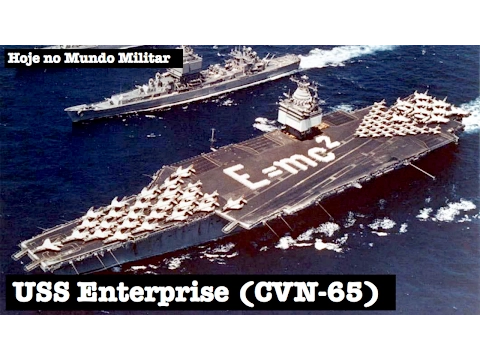
Moved By Eight Nuclear Reactors, The USS Enterprise (CVN-65) Was The Largest Aircraft Carrier Of Its Time, With Capacity For 90 Aircraft And Half A Century Of Global Operations.
The USS Enterprise (CVN-65) was the first nuclear-powered aircraft carrier in the world and, for more than half a century, represented the naval power of the United States in conflicts, diplomatic missions, and strategic operations on various continents. Launched in 1960 and officially commissioned in 1961, it became one of the most iconic vessels in the history of the American Navy, with a construction cost that exceeded US$ 451 million at the time — equivalent to billions in current values.
The ship was so advanced for its time that it earned the nickname “Big E,” a reference to both its imposing stature and the historical significance of the name “Enterprise” in the American fleet. At 342 meters long, the USS Enterprise (CVN-65) remains the largest military ship ever built to date in overall length. It was also the only vessel of its class, as the costs and complexity of its nuclear propulsion prevented the construction of sister ships.
Moved By Eight Nuclear Reactors
The main technical differentiator of the USS Enterprise (CVN-65) was its propulsion system based on eight A2W nuclear reactors, built by Westinghouse Electric. This unusual configuration allowed the ship to operate for up to 25 years without the need for refueling, ensuring virtually unlimited autonomy on long-duration missions.
-
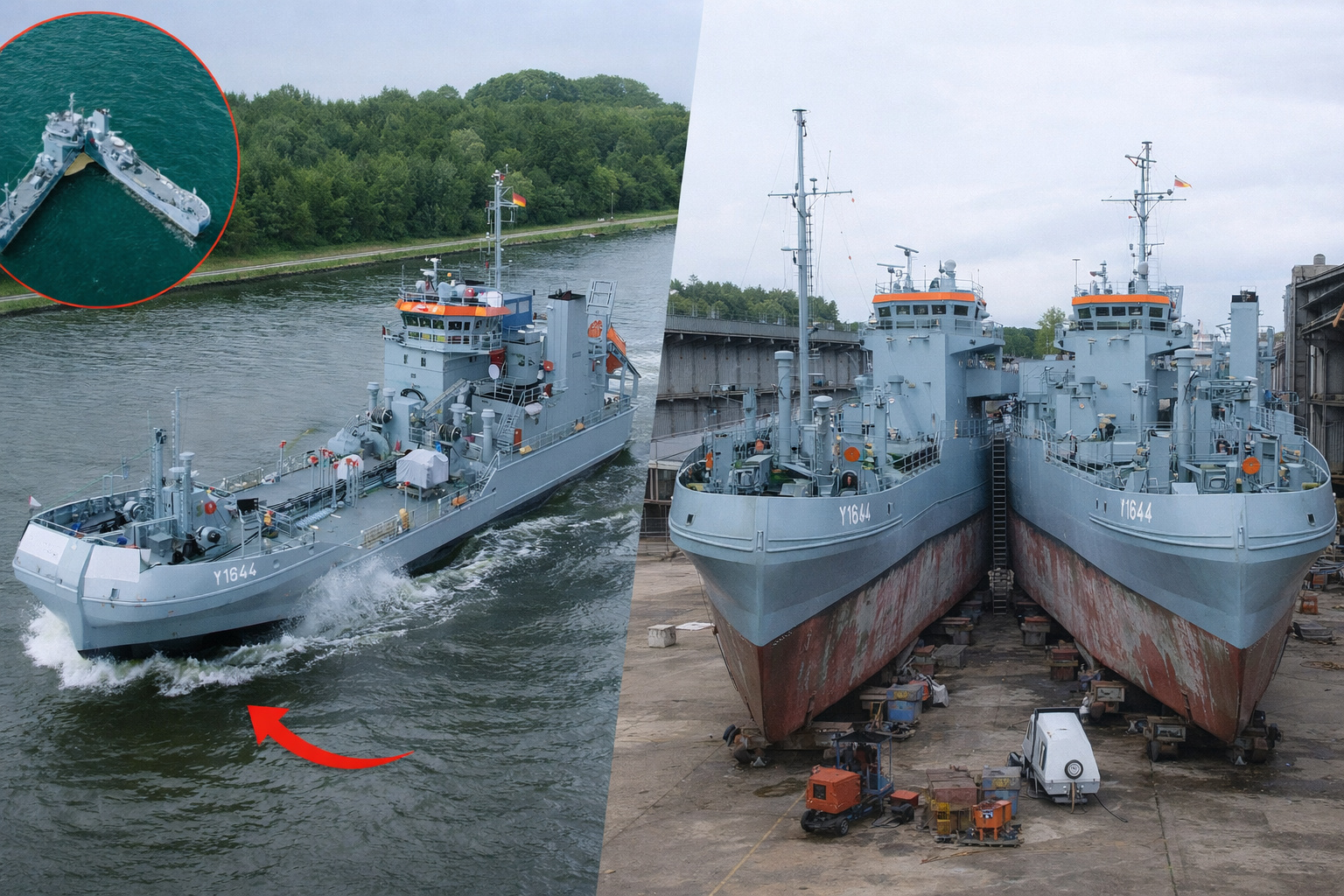
The German ship Bottsand splits its hull in two halves in the middle of the ocean to swallow spilled oil on the surface, separating the oil from the water inside a 790 cubic meter tank and then closing again. It is the only ship in the world factory-designed to split in half as part of normal operations, and the crew of six people who operate everything is civilian.
-
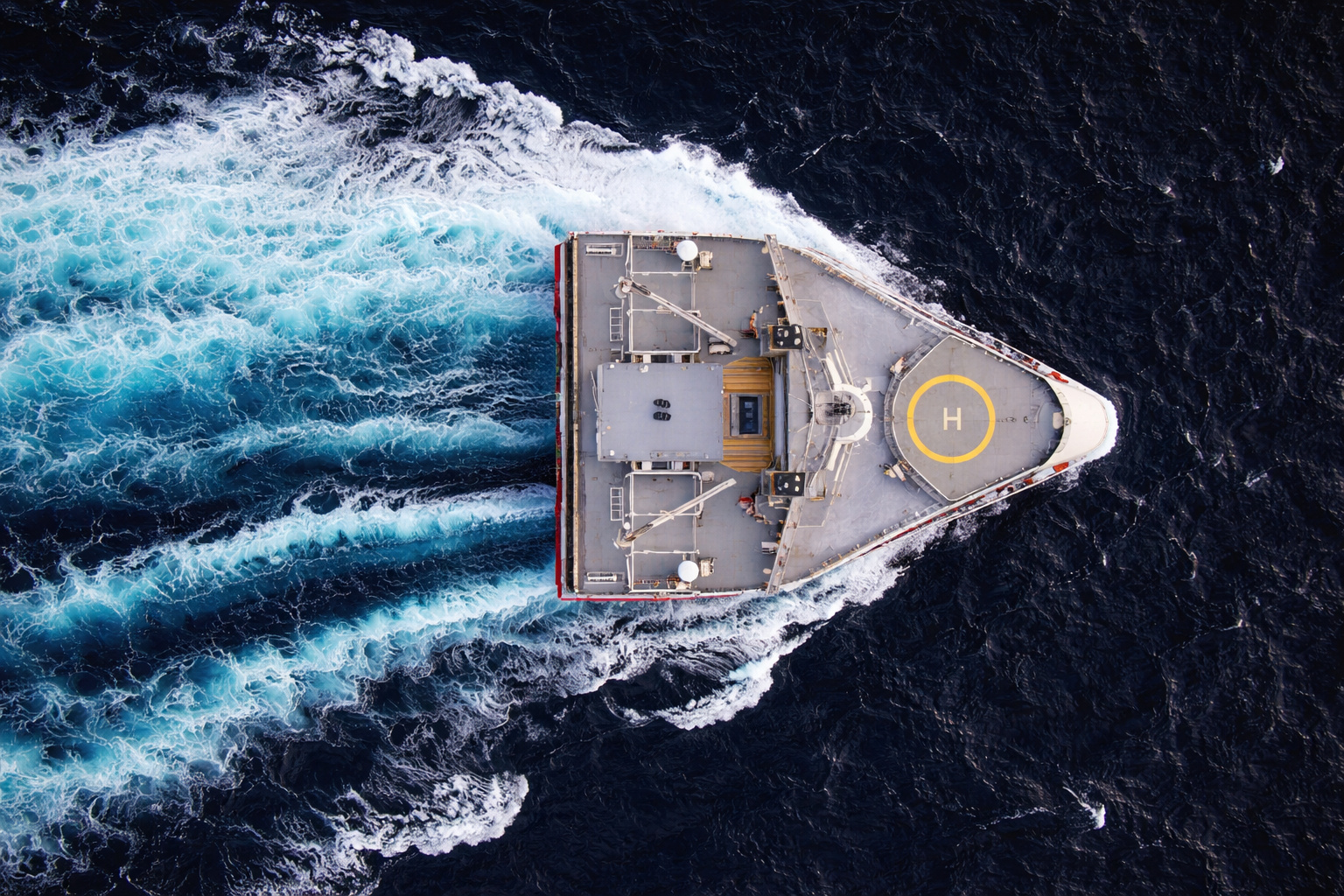
With almost 70 meters in width at the stern and a shape resembling a “giant slice of cheese,” the Ramform Titan tows up to 24 seismic cables to sweep the ocean floor in 3D and reveal oil reserves hidden beneath kilometers of sediment.
-
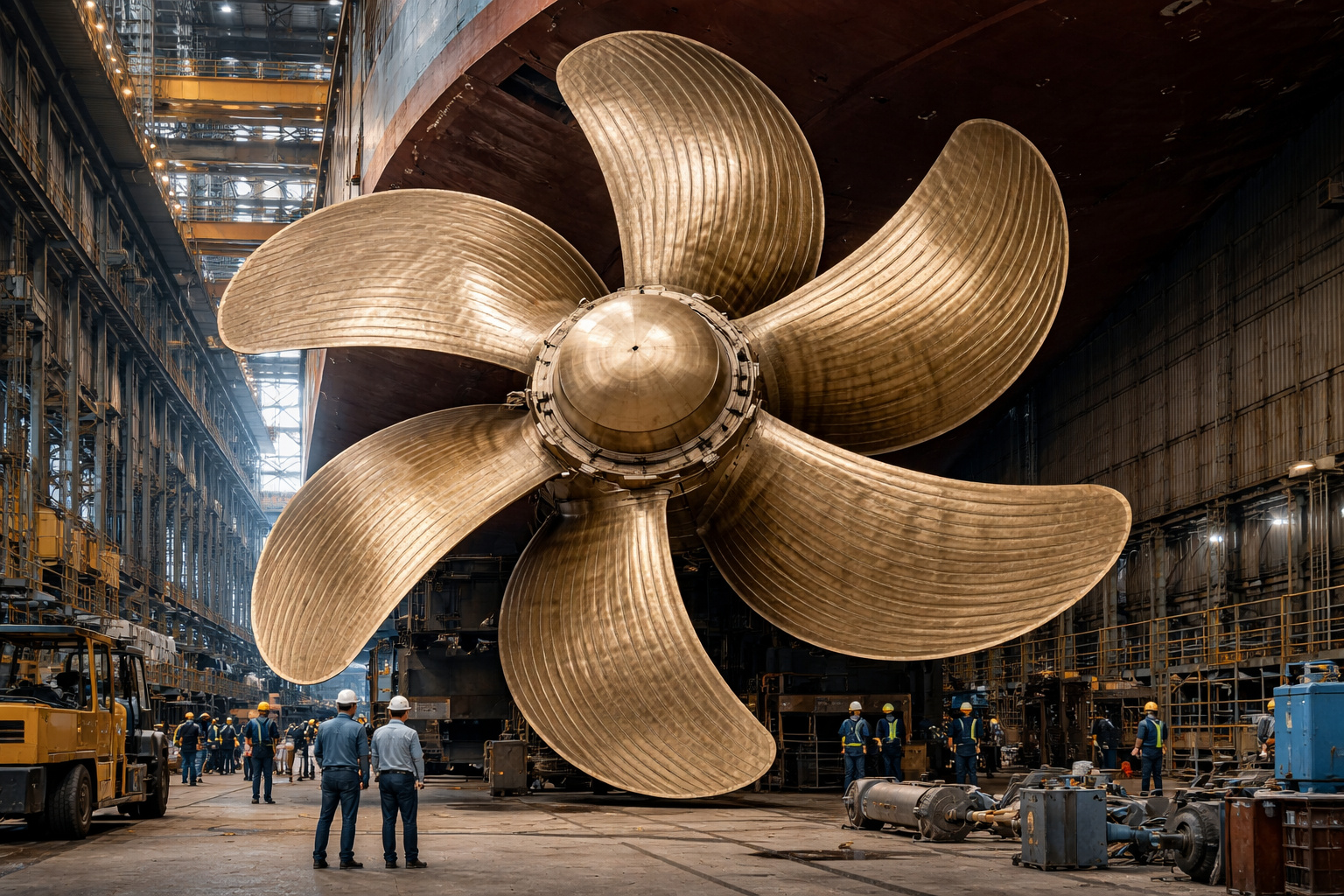
How a 131-ton, 11-meter propeller supports 90% of global trade and transforms the largest container ships on the planet.
-
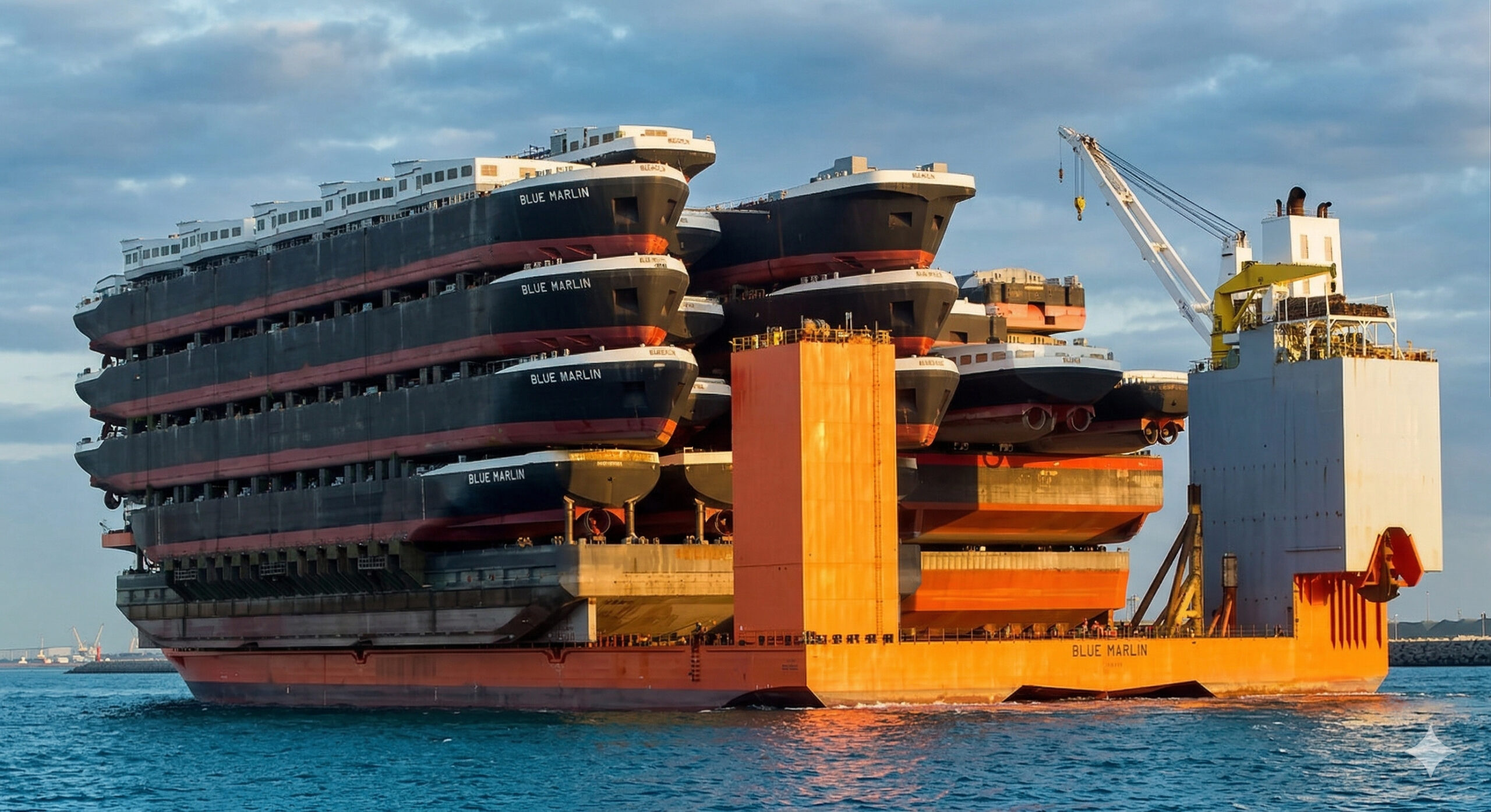
With a length of 225 meters and a capacity of 76 thousand tons, this ship “sinks” its own deck down to 28 meters deep to accommodate war destroyers, oil platforms, and giant radars floating above, and then emerges with everything intact on top like a colossal tray crossing oceans.


The use of eight reactors was a solution to distribute power generation and maintain system redundancy. Each reactor supplied power to the ship’s four propellers and to onboard systems, including aircraft launch catapults, radars, weaponry, and the entire electrical infrastructure of the vessel.
This complex engineering, however, raised the construction and maintenance costs of the ship. In later projects, such as the Nimitz-class aircraft carriers, the U.S. Navy adopted only two higher-capacity reactors, making the Enterprise model unique in its configuration.
Capacity For Up To 90 Aircraft
The nuclear-powered aircraft carrier was capable of transporting up to 90 aircraft simultaneously, including fighters, early warning aircraft, helicopters, and tankers. Its takeoff and landing strip, which extended for nearly 300 meters, could operate multiple aircraft at the same time, thanks to steam catapults and arrestor wires.
The USS Enterprise participated in practically all major conflicts the U.S. was involved in from 1962 to 2012. It was present during the Cuban Missile Crisis, the Vietnam War, the Gulf War, operations in Afghanistan and Iraq, as well as humanitarian missions and international patrols.
Its ability to launch aircraft at any time, anywhere, made the ship a strategic tool for military and diplomatic presence. During the Vietnam War, it managed to conduct hundreds of takeoffs per day. In peacetime, it served as a symbol of American power projection on the oceans.
Decommissioning Process And Removal Of Reactors
After more than 50 years of active service, the USS Enterprise (CVN-65) was officially decommissioned on February 3, 2017. The deactivation process of a nuclear-powered aircraft carrier is extremely delicate and involves various technical and environmental steps, primarily due to the presence of nuclear reactors on board.
The removal of the reactors and the safe dismantling of the nuclear facilities require strict monitoring by environmental and military agencies. The ship’s hull remains stored at the Newport News Shipbuilding yards in Virginia, where complete inactivation is still ongoing, with completion projected for 2025.
The Enterprise was the first nuclear-powered aircraft carrier to be decommissioned, which required the creation of unprecedented protocols for decontamination, dismantling, and disposal. Parts of the vessel are to be recycled, but others will be preserved as historical and educational material.
Legacy In Naval Engineering And Military Strategy
Even after its decommissioning, the USS Enterprise (CVN-65) continues to influence American engineering and naval doctrine. The experience gained from its construction and operation served as the foundation for the development of subsequent classes, such as the Nimitz and Ford, which maintain nuclear propulsion but with more efficient and automated systems.
The name “Enterprise” will be retained in the Navy. A new aircraft carrier, the USS Enterprise (CVN-80), is already under construction as part of the Gerald R. Ford class and will be the ninth American ship to carry that name.
A Landmark In The History Of Aircraft Carriers
The USS Enterprise (CVN-65) was much more than a ship. It represented the pinnacle of naval engineering in its time and symbolized the U.S. ability to maintain global presence with embarked air power. Its size, power, and durability made it a reference point for an entire generation of modern aircraft carriers.
Although it is no longer in service, its legacy remains one of the most relevant chapters in contemporary naval history — both for its pioneering nuclear propulsion and its influence on military missions around the world.








-

-

3 pessoas reagiram a isso.