





 Portuguese
  English
  Spanish
  4 min of reading


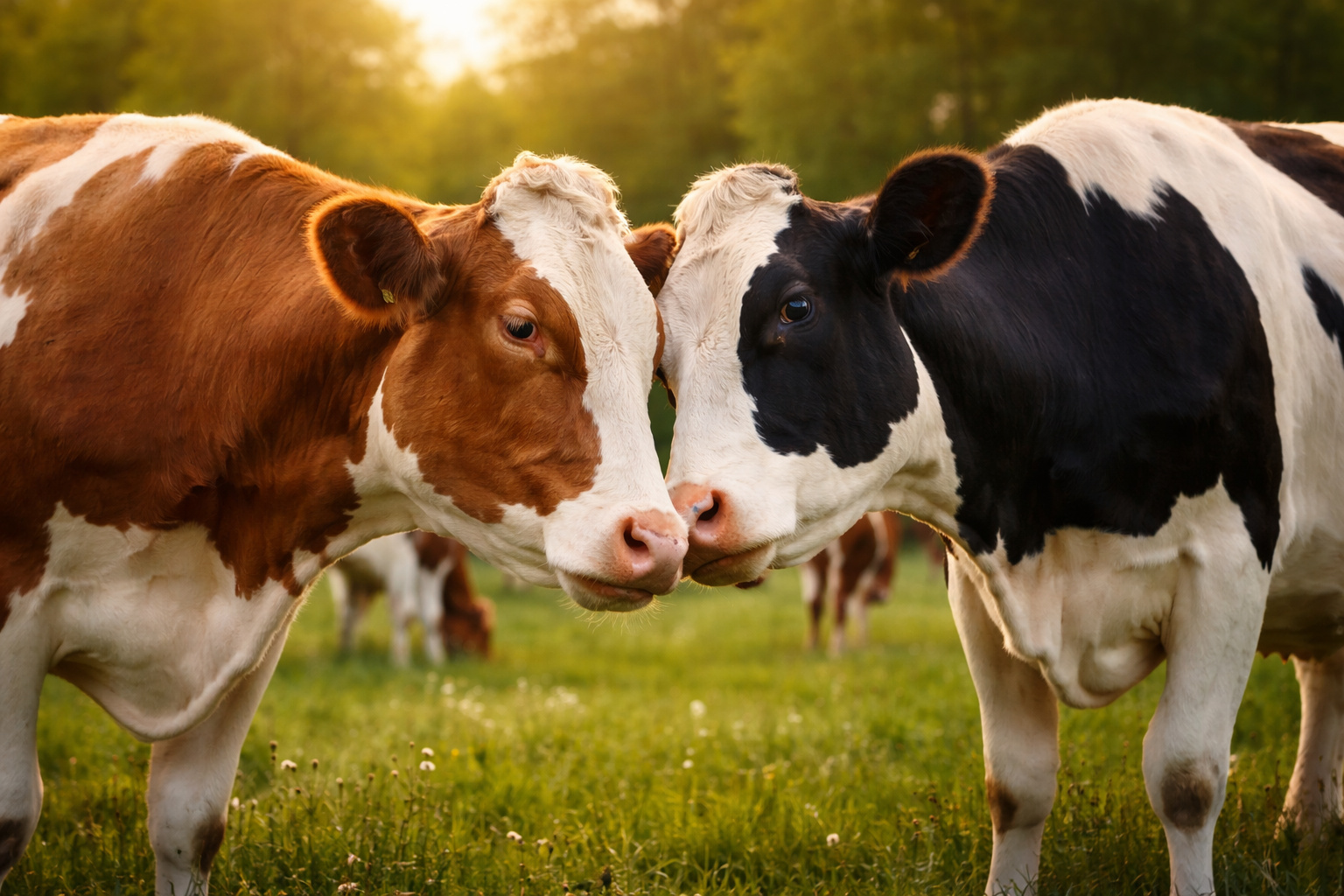
The idea that cows form deep social bonds may sound unusual to many people. However, among the curiosities of the animal world, this is one of the discoveries that has drawn the most attention from researchers in recent years. In fact, scientific observations indicate that cows develop clear social preferences, forming lasting ties with specific individuals in the herd. As a consequence, they begin to show signs of stress when separated from these companions.
According to a report published by the Times of India, studies in animal behavior show that these separations do not go unnoticed by the bodies of cattle. In other words, the effects appear in both behavior and physiological parameters directly related to well-being.
Social Bonds Between Cows Go Beyond Herd Instinct
For a long time, science considered that cows clustered only for collective protection instinct. However, more recent research shows a different scenario. Instead, the data indicates that these animals do not interact at random. On the contrary, many cows choose specific companions, spending more time close to them.
-
Friends have been building a small “town” for 30 years to grow old together, with compact houses, a common area, nature surrounding it, and a collective life project designed for friendship, coexistence, and simplicity.

-
This small town in Germany created its own currency 24 years ago, today it circulates millions per year, is accepted in over 300 stores, and the German government allowed all of this to happen under one condition.

-
Curitiba is shrinking and is expected to lose 97,000 residents by 2050, while inland cities in Paraná such as Sarandi, Araucária, and Toledo are experiencing accelerated growth that is changing the entire state’s map.

-
Tourists were poisoned on Everest in a million-dollar fraud scheme involving helicopters that diverted over $19 million and shocked international authorities.


Additionally, when they stay together, they show greater calmness. In this sense, researchers point out that cohabitation with a preferred individual reduces conflicts and promotes a more stable social environment within the herd. Thus, the grouping ceases to be merely instinctive and instead has a more sophisticated social component.
Scientific Evidence and Signs of Stress Upon Separation
The effects of separation among cows that maintain close bonds have been documented through objective measurements. For example, studies conducted over the past decade show that animals separated from their preferred partners exhibit increased heart rate.
Furthermore, there is greater vocalization and more restless behavior. Consequently, these signs indicate measurable emotional stress. According to research institutions focused on animal welfare, the impact is not limited to the moment of separation. In some cases, discomfort persists for prolonged periods, especially when the change occurs abruptly.
Historical Context of Research on Emotions in Farm Animals
Historically, studies on emotions and social relationships have focused on primates, cetaceans, and other species considered cognitively complex. Meanwhile, farm animals such as cows remained outside of this scientific debate for a long time.
This landscape began to change in the late 20th century. From that period, ethology began to value long-term observations and physiological indicators of well-being. In this way, researchers began questioning the notion that cows were emotionally simple. Currently, the observed social bonds reinforce this shift in the scientific paradigm.
The Role of Friendships in Cattle Well-Being
Maintaining stable social bonds brings clear benefits for cows. According to organizations focused on animal welfare, animals that stay with their preferred companions tend to exhibit calmer behavior. Moreover, they show greater adaptability to the environment.
Similarly, social stability reduces internal disputes. As a result, cohabitation within the group becomes more harmonious. These factors, in turn, directly reflect on the overall health of the animals, reinforcing the importance of social relationships in the routine of herds.
Implications for Management and Human Practices
The findings about friendships among cows raise important discussions about management practices. In many traditional systems, frequent separations occur for logistical or productive reasons. However, these decisions rarely consider the emotional impacts on the animals.
According to experts cited by the Times of India and by animal protection institutions, acknowledging these bonds can contribute to more humane practices. Thus, it becomes possible to reduce stress and improve the quality of life for cattle, even in productive contexts.
Curiosities of the Animal World and What Is Still Being Investigated
Despite the advancements, there are still gaps in understanding how these bonds form. Additionally, researchers investigate how long these friendships last and whether they change over a lifetime.
According to academic institutions and animal welfare organizations, new research is expected to delve deeper into these questions in the coming years. In this way, the discoveries reinforce that, among the curiosities of the animal world, even species considered common harbor complex and surprising behaviors.
Finally, observing these relationships broadens our understanding of the emotional lives of animals. More than mere members of a herd, cows prove to be social individuals, capable of forming bonds that directly influence their well-being.









-

-

2 pessoas reagiram a isso.