





 Portuguese
  English
  Spanish
 5 min of reading
  48 comments


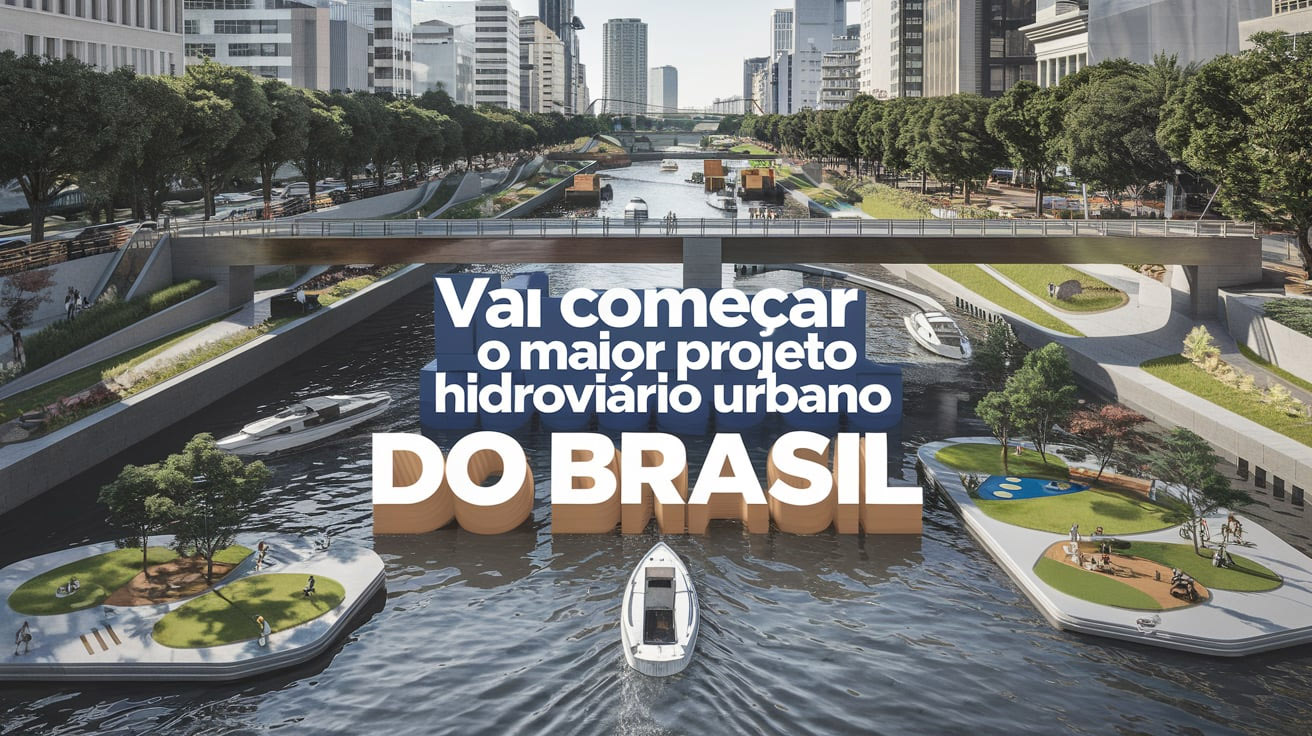


The Hydro Plan SP Promises to Transform São Paulo with 180 Km of Urban Waterways. Focused on the Tamanduateí River, the project will include decontamination, bridges, sustainable eco-points, and river parks, offering an alternative to urban mobility and revitalizing degraded areas.
São Paulo is about to experience one of the largest urban transformations in its history.
The ambitious waterway project, known as Hydro Plan SP, aims to revitalize rivers and transform about 180 km of navigable routes into important transportation routes, creating a new model of sustainable urban mobility.
With a billion-dollar investment and a completion forecast by 2054, the proposal will also bring new river parks, social integration, and reduced congestion on the streets of the São Paulo capital.
-
The government requests the Federal Revenue Service for a new system to automate the income tax declaration, reducing errors, time, and bureaucracy for millions of Brazilians.

-
Pix in installments, international Pix, and contactless payment without internet: the Central Bank revealed the new features coming to the tool that is already used by almost every adult in Brazil.

-
Mercado Livre has just started selling medications with delivery in up to three hours to your door, and this move could completely change the way Brazilians buy medicines on a daily basis.

-
The lack of welders, electricians, and operators becomes a structural threat in 2025, with the construction industry and manufacturing already suffering from delays, cost pressures, and labor shortages in Brazil.
Tamanduateí River: The Project’s Focus
According to the channel Construction Time, the Hydro Plan SP concentrates its main efforts on the Tamanduateí River, a historic artery of São Paulo.
The river, which originates in Mauá and stretches about 35 km until it flows into the Tietê, crosses regions such as Brás, Parque Dom Pedro I, and ABC Paulista.
These locations will be directly benefited by the planned interventions, such as decontamination and urban improvements.
The revitalization of the Tamanduateí seeks to restore not only its transportation function but also its historical role, lost due to unregulated growth and pollution.
Planned Works
The project is not limited to the Tamanduateí River.
According to Construction Time, the waterway network envisions integration with the Tietê, Pinheiros rivers, and reservoirs like Billings and Guarapiranga, creating an efficient intermodal system that combines water and land transportation.
The main interventions include:
- Decontamination of waters: Implementation of sewage treatment plants and filtration systems to remove pollutants.
- Construction of 10 urbanized bridges: They will facilitate crossing and integration of the banks.
- Installation of modern locks: They will manage water flow and ensure safe navigation.
- Strategic eco-points: Sustainable ports for loading and unloading goods and passengers.
- River parks and leisure areas: They will promote social integration and the revitalization of the banks.
A Forgotten Past
The Tamanduateí, which in the early 20th century was vital for transporting goods and people, became polluted and underutilized with industrial and urban advancement.
According to Construction Time, the Hydro Plan SP proposal is to recover this historic route and transform the river into a catalyst for economic and social development in the region.
In the 19th century, the river was a crucial route for the flow of agricultural and industrial products, connecting the city to other regions of the state.
Its importance was lost with unregulated channeling and the focus on road transport, which dominated urban policies in the 20th century.
With population growth and increased emissions of polluting gases, urban mobility in São Paulo has become chaotic.
The Hydro Plan SP emerges as a sustainable solution, leveraging the natural infrastructure of rivers to create new transport routes, reduce emissions, and recover degraded areas.
International Example
The São Paulo project draws inspiration from successful international models, such as Chonggyecheon in South Korea and San Antonio River Walk in the United States.
Both have demonstrated how revitalizing rivers can transform cities:
- Chonggyecheon (South Korea): Recovered a river covered by an elevated highway, creating a vibrant community space, improving air quality, and attracting tourists. The project, completed in 2005, was a milestone for Seoul and is a global reference in urban sustainability.
- San Antonio River Walk (USA): Transformed 24 km of river into a cultural and tourist center, boosting the local economy with green spaces, restaurants, and entertainment. The economic and social success is evident in the more than 11 million annual visits the region receives.
The Hydro Plan SP is even more grandiose, covering about 180 km of navigable waterways and integrating different rivers and reservoirs into a modern river system.
Sustainability and Innovation
The innovations include:
- Advanced navigation technologies: Radars and GPS systems will monitor traffic in real-time.
- Use of clean energy: Eco-points will rely on solar and wind energy, as well as charging for electric vessels.
- Low-impact construction: Recyclable materials will be used in parks and marginal infrastructures.
- Protected biodiversity: The project includes the recovery of flora and fauna along the banks, creating habitats for native species.
Economic and Social Impacts
According to Construction Time, the project will have significant impacts on the local economy and the quality of life for the population:
- Job creation: The works will create thousands of direct and indirect jobs.
- Property appreciation: Areas near the banks of the rivers will see their values increase, attracting private investments.
- Accessible mobility: Waterway transport will offer a cheaper and more efficient alternative, benefiting mainly the peripheral regions.
- Tourism and leisure: River parks and gathering areas will make the rivers attractive destinations for residents and tourists.
Challenges and Solutions of the Hydro Plan
Despite the potential of the Hydro Plan SP, significant challenges will need to be faced. The decontamination of rivers will require substantial investments and rigorous oversight to prevent the irregular disposal of waste.
Additionally, public awareness will be crucial to maintain water quality over time.
To overcome these challenges, the project envisions educational campaigns, partnerships with companies, and incentives for sustainable practices.
Constant monitoring and the use of advanced technologies will ensure that the goals are achieved efficiently.
A New Future for São Paulo
According to Construction Time, the success of the Hydro Plan SP depends on collaboration between government, the private sector, and the population.
The project promises to redefine the city’s relationship with its rivers, offering an alternative to chaotic road traffic, creating leisure spaces, and ensuring a greener future.
With completion expected by 2054, the project promises to transform 180 km of rivers into an integrated solution for transportation and leisure.
São Paulo could become a global example of sustainability and urban mobility.
It remains to be seen if the timeline will be followed and if the benefits will truly transform the lives of São Paulo residents.
And you, do you believe that the Hydro Plan SP is the solution for traffic and sustainable development in São Paulo? Share your thoughts on this project!








Se deixarmos guerras políticas de lado e focarmos num futuro melhor. Sim. Aí é possível…
Beira um sonho, mas devemos empenhar todos os esforços para tornar realidade.
Maravilhoso!
Muito bom., se isso vingar mesmo!
Essa cidade está precisando duma cara nova no que diz respeito aos seus rios!