





 Portuguese
  English
  Spanish
  5 min of reading
  2 comments


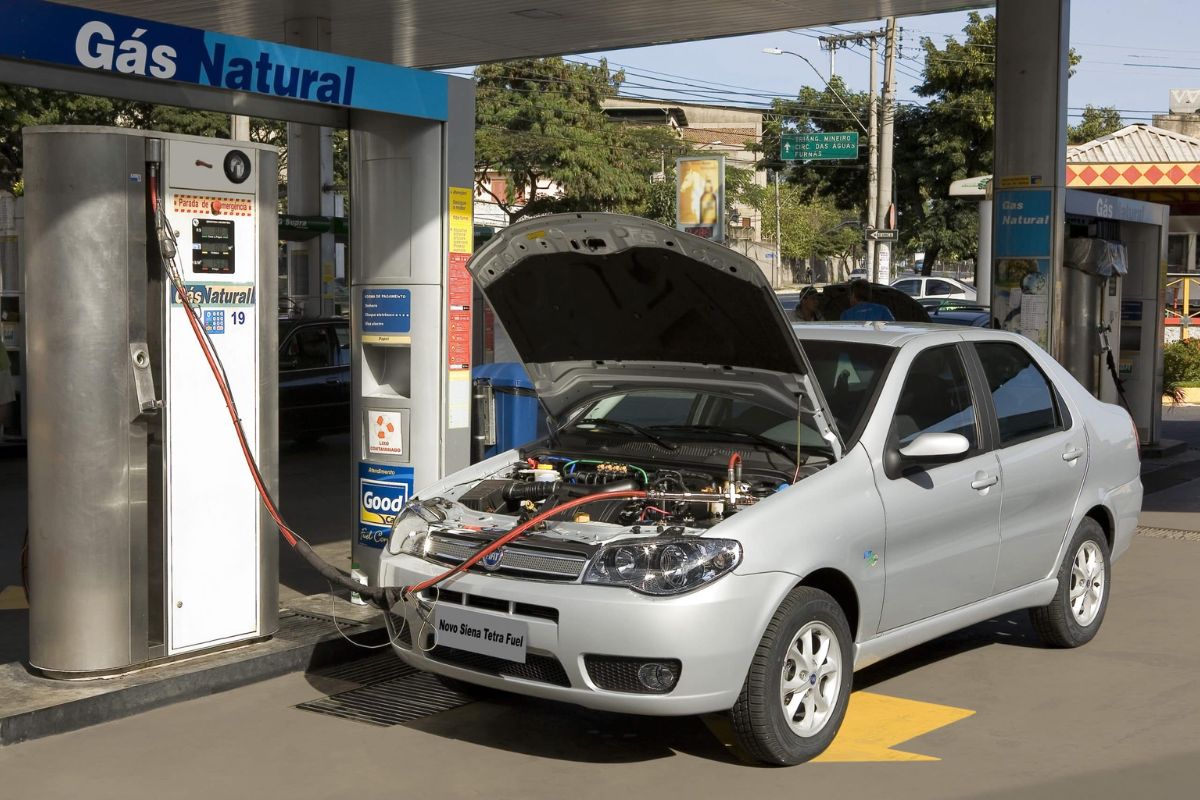

We Analyzed the Pros and Cons of Having a Natural Gas Vehicle in 2025. Discover the Conversion Costs, Fuel Savings, and Key Factors for Brazilian Drivers.
Understand the involved costs in converting and operating a natural gas vehicle in Brazil. We compared it with gasoline and ethanol to calculate the return on investment and help you make a well-informed decision for the coming year.
The Natural Gas Vehicle (NGV) remains an alternative for Brazilian drivers in 2025. The pursuit of savings at the pump is the main attraction. However, the decision to convert a vehicle to NGV requires a careful analysis of several factors.
The Initial Investment: How Much Does It Cost to Convert a Car to NGV in Brazil?
The first step to having a natural gas vehicle is the investment in conversion. The cost of a 5th generation NGV kit, the most recommended, including installation, can vary greatly in Brazil. Recent estimates, based on Santa Catarina, range from R$ 4,500 to R$ 6,000, but this amount depends on the brand of the kit, the vehicle model, and the workshop.
-
Spain surprises the world by erecting 62 artificial dunes, mixing sand with natural remains of posidonia, and causing the structure to lose only 1.4% of its volume in 1 year.

-
With 16 Bulava missiles, improvements in acoustic stealth, and a design focused on silent patrols, Russia’s nuclear submarine was born to ensure Moscow’s invisible retaliation and has become one of the pillars of its maritime strength.

-
‘Populous’ city in Rio among the worst in Brazil in national ranking and exposes silent development crisis.

-
Couple buys house in the South Zone of São Paulo, opens a hidden door in the garage, and finds a secret wine cellar with dozens of old wines forgotten since the 1970s.


In addition to the kit, there are documentation fees. The alteration of vehicle characteristics with the DETRAN of your state has a cost, which varies locally. The first vehicle safety inspection (CSV), mandatory to obtain the INMETRO seal, also has a variable price, costing around R$ 330 in some regions, for example. It is essential to research INMETRO accredited workshops in your city. Also check if there are state or municipal incentive programs, although these are rare and previous campaigns may have ended.
NGV vs. Liquid Fuels: Price and Efficiency Analysis in 2025
The viability of NGV depends on fuel prices. In Brazil, the prices of NGV (R$/m³), gasoline (R$/L), and ethanol (R$/L) vary significantly between states and cities. It’s essential to research prices in your area. The “70% rule” (the price of NGV being up to 70% that of gasoline) is an initial indicator, but the analysis needs to go deeper.
The efficiency of NGV is generally superior. A natural gas vehicle can run, on average, about 13.5 km/m³. With gasoline, the average can be 10.5 km/L, and with ethanol, 7.3 km/L. These values vary according to the vehicle and usage. Based on these indicative data and reference prices (e.g., NGV at R$ 5.10/m³, gasoline at R$ 6.50/L, ethanol at R$ 4.70/L), the cost per km would be: NGV ~R$ 0.378; gasoline ~R$ 0.619; ethanol ~R$ 0.644. This difference in cost per kilometer is the main saving factor of NGV.
The Return on Investment (ROI) of a Natural Gas Vehicle
To determine if the conversion is worth it, the Return on Investment (ROI) and the payback period (the time to recover the amount spent) are calculated. The monthly savings is the difference in cost per km between NGV and liquid fuel, multiplied by the monthly mileage. The payback is the total initial cost of conversion divided by this monthly saving.
Mileage is the crucial factor. Using an indicative initial conversion cost of R$ 5,763, here are some simulations (exact results will depend on your costs and local prices):
- Driving 10,000 km/year: Annual savings of ~R$ 2,410 vs. gasoline. Payback in ~28 months.
- Driving 20,000 km/year: Annual savings of ~R$ 4,820 vs. gasoline. Payback in ~14 months.
- Driving 30,000 km/year: Annual savings of ~R$ 7,230 vs. gasoline. Payback in ~9 months. The more you drive, the faster the investment in a natural gas vehicle pays off.
Ongoing Expenses and Other Financial Implications of a Natural Gas Vehicle
Owning a natural gas vehicle involves costs beyond fuel. Regular preventive maintenance is crucial. Spark plugs and air filters may need more frequent replacements. The NGV system also requires checks of its components, such as filters and pressure regulators.
The mandatory annual inspection of the CSV (Vehicle Safety Certificate) is a fixed cost across Brazil, with variable values by locality (e.g., R$ 330). Every 5 years, the NGV cylinder needs requalification (retesting). Automotive insurance may have an increase if you opt to cover the NGV kit. Regarding IPVA, some Brazilian states offer reduced rates for natural gas vehicles, which is a good incentive. However, many states, like Santa Catarina, do not have this benefit, maintaining the standard rate (e.g., 2%). The resale value of a converted vehicle may also be affected, with a potential depreciation, although there is a niche of buyers interested in the savings offered by NGV.
Important Pros and Cons of a Natural Gas Vehicle
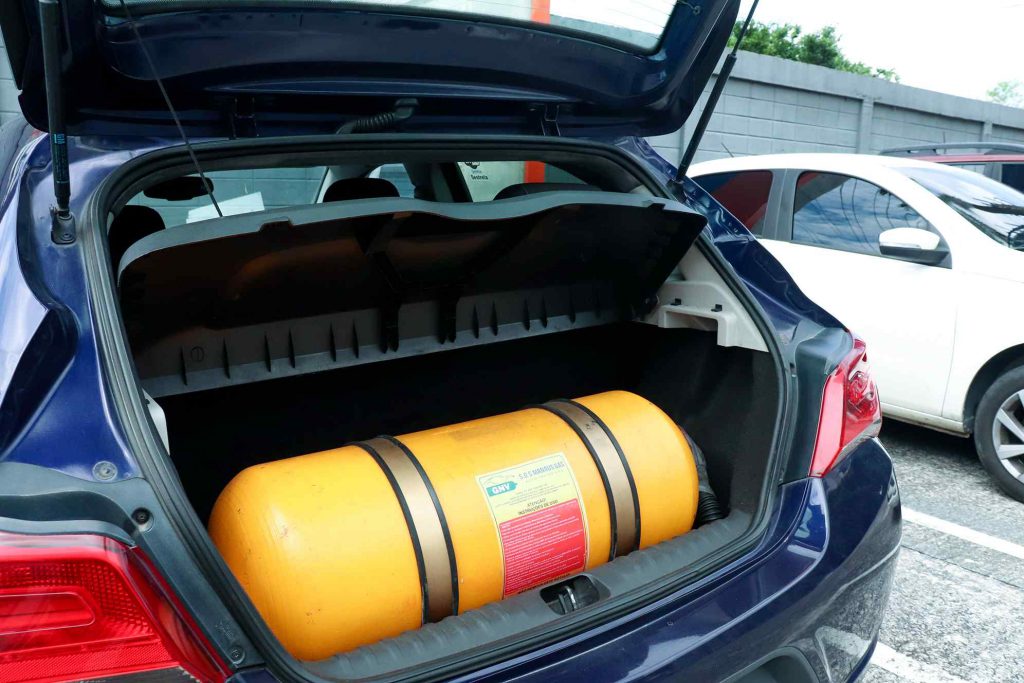
The decision to convert a natural gas vehicle is not just financial. Consider performance: there may be a slight loss of power, typically small with 5th generation kits. On the other hand, the cleaner combustion of NGV may extend the lifespan of some engine components. The installation of the cylinders inevitably reduces trunk space, a downside for many.
The safety of the NGV system is an important topic. If installed in INMETRO accredited workshops and with up-to-date periodic inspections, NGV is considered safe. The gas is lighter than air and dissipates quickly in case of a leak. Environmentally, NGV emits less CO2 than gasoline. Although it releases more methane (CH4), a potent greenhouse gas, the overall impact balance on global warming can be favorable. The availability of NGV stations varies greatly across Brazil; in large centers and some routes, it is good, but in other regions, it may be scarce, requiring planning for long trips.
Natural Gas Vehicles in Brazil in 2025
Converting to a natural gas vehicle in 2025 in Brazil requires individual assessment. The main pros are the savings on cost per kilometer driven and an attractive return on investment for those who drive a lot. The cons include the initial conversion cost, loss of trunk space, and annual inspection costs.
For high-mileage drivers (above 20,000 km/year), conversion is generally advantageous. For those who drive little (below 15,000 km/year), payback may be very long. It is essential that you research conversion costs and the fuel prices in your city. With a well-informed decision, you can take advantage of the benefits of NGV if it fits your profile.








Reportagem fraca! Faltou falar da economia sobre o IPVA em veículos emplacados no estado do Rio de janeiro!
Meu carro é um siena tetrafuel 1.4 2009, eu gasto mensalmente 220,00 na gasolina e 75,00 no gás rodo com ele 18km de segunda a sexta-feira. A gasolina aqui está r$5.79 e gnvR$ 4.69