





 Portuguese
  English
  Spanish
  4 min of reading
  0 comments


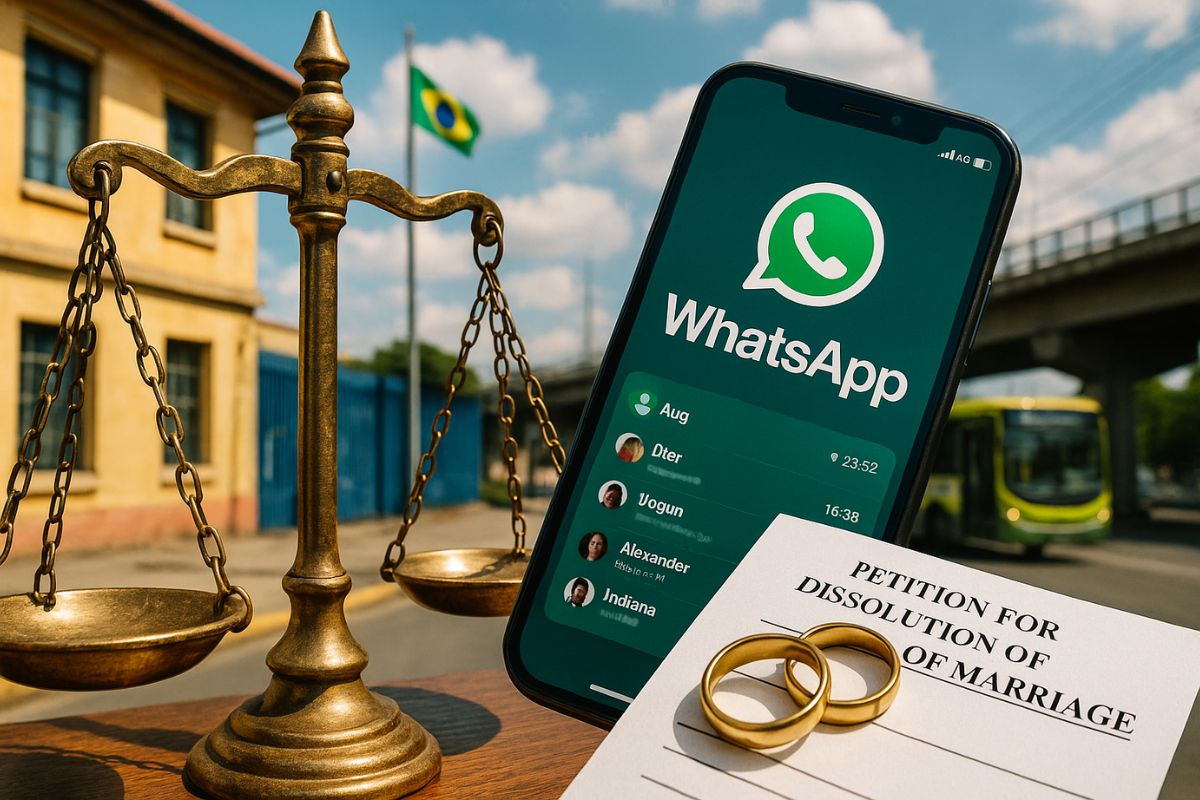
Family Courts Now Consider Frequent Contact Lists and WhatsApp Location Data as Evidence, Evaluating Conversations, Metadata, and Communication Routines Alongside Other Evidence to Confirm or Disprove Stable Union Relationships, with a Requirement for Authenticity, Procedural Caution, and Respect for Privacy.
The Family Courts have increasingly received messages, contact history, and WhatsApp location information as part of the evidentiary set in recognition or dissolution of stable union actions. According to JusBrasil, these digital elements are not enough on their own and only gain relevance when confronted with other evidence, such as photos, testimonies, shared bills, and proof of residence.
The forensic use of the application requires proof of integrity and origin. The fragility of screenshots necessitates validation by reliable means, such as notarial records, in addition to extractions with adequate methodology. The protection of privacy and confidentiality limits access to sensitive data, which depends on the authorization of the holder or a specific court order.
What Family Courts Analyze When WhatsApp is Introduced into the Process

In family litigation, the party initiating the case often seeks the recognition of the stable union or to discuss its patrimonial and personal effects.
-
The Senate approves a bill that criminalizes misogyny, hatred, or aversion towards women, and includes the crime in the Racism Law with a penalty of up to 5 years.

-
Chamber Approves Bill That Allows Pepper Spray for Women Over 16 and Imposes Strict Rules for Purchase, Possession, and Use as Self-Defense

-
Chamber Approves Law to Combat Leucaena, Fast-Growing Plant That Dominates Land and Threatens Native Species in Various Regions of the Country

-
Asset Division: Know What Cannot Be Divided in Case of Divorce


In these cases, Family Courts evaluate the complete evidentiary context to identify public cohabitation, continuity, stability, and the objective of forming a family.
The exchanged messages, the frequent contact list, and location occurrences may suggest patterns of proximity, cohabitation routine, and care relationships.
These are indications, not automatic confirmations. The greater the coherence between the digital data and other pieces of evidence, the greater the weight assigned by the judge.
Authenticity and Chain of Custody of Digital Evidence
The simple screenshot is fragile evidence, as it can be manipulated.
To enhance reliability, it is advisable to have a notarial record, which describes the content and context observed by the notary public.
Forensic extractions with auditable procedures preserve metadata and allow verification of whether there was editing, deletion, or manipulation.
The CPC admits all morally legitimate means of proof, including electronic means, as long as integrity, authenticity, and relevance are observed.
Without adequate methodology, messages and metadata lose strength and may be disregarded, especially when challenged by the opposing party.
Legal Limits, Privacy, and Lawfulness of Acquisition
The LGPD and secrecy of communications establish guidelines for the collection and use of data.
Where there is an expectation of privacy, the extraction of content and metadata depends on the holder’s consent or a judicial order.
Clandestine access to the device or improper mirroring can render the evidence unlawful, contaminating the process.
In Family Courts, it is common for the holder themselves to present conversations to support their claims.
Still, respect for the intimacy of the other party and proportionality in display are required.
The judge may limit the scope of the produced material, delineating periods, contacts, and search terms to avoid unnecessary exposure.
Frequent Contacts and Location: When These Metadatas Make a Difference
The list of most frequently contacted can indicate interaction frequency and communication routines compatible with a stable relationship.
Location events at recurring times and addresses help to corroborate cohabitation, overnight stays, or attendance at family events, when aligned with other evidence.
On the other hand, isolated metadata do not prove the intention to form a family.
The forensic analysis must contextualize times, georeferencing, periods of absence, and compatibility with schedules and testimonies.
Without evidentiary correlation, the inference of an emotional bond loses consistency.
Case Law and Good Evidentiary Practices Applied to Stable Unions
The courts have emphasized the need for collection and preservation techniques to ensure that digital evidence is valid.
Screenshots without validation tend to be downplayed.
Notarial records and forensic analysis enhance the probative force, especially when there is controversy over authenticity.
The notion of “virtual public cohabitation” has also gained traction, where conversations, photos, and videos demonstrate the publicity of the bond even without mandatory cohabitation.
The central requirement remains the intention to form a family, assessed by the set of behaviors, responsibilities, and social projection of the couple.
Lawyer and Expert Strategy: How to Build a Robust Dossier
During instruction, organizing timelines, mapping key periods, and cross-referencing messages with documents brings clarity to the factual narrative.
Redundant and converging evidence increases the reliability of the evidentiary picture.
For requests for more sensitive data, formulating specific requests to the judge, with a delimited scope, reduces the risks of unlawful evidence and protects fundamental rights.
Clear and replicable forensic reports help the magistrate understand who spoke with whom, when, where, and in what context, without overreaching.
What to Consider Before Presenting Conversations and Metadata to the Court
Before filing, verify the origin and integrity of the material, identify temporal gaps, and potential inconsistencies.
Avoid unnecessary exposure of third parties, which can generate procedural incidents and ethical questions.
Whenever possible, prefer the notarial record and assess the need for forensic analysis. Legal, proportional, and contextualized evidence tends to be more persuasive and withstand challenges better.










-

-

-

-

-

-

41 pessoas reagiram a isso.