





 English
  Francês
  Alemão
  Italiano
  Japonês
  Norueguês
  Portuguese
  Spanish
  3 min of reading
  0 comments


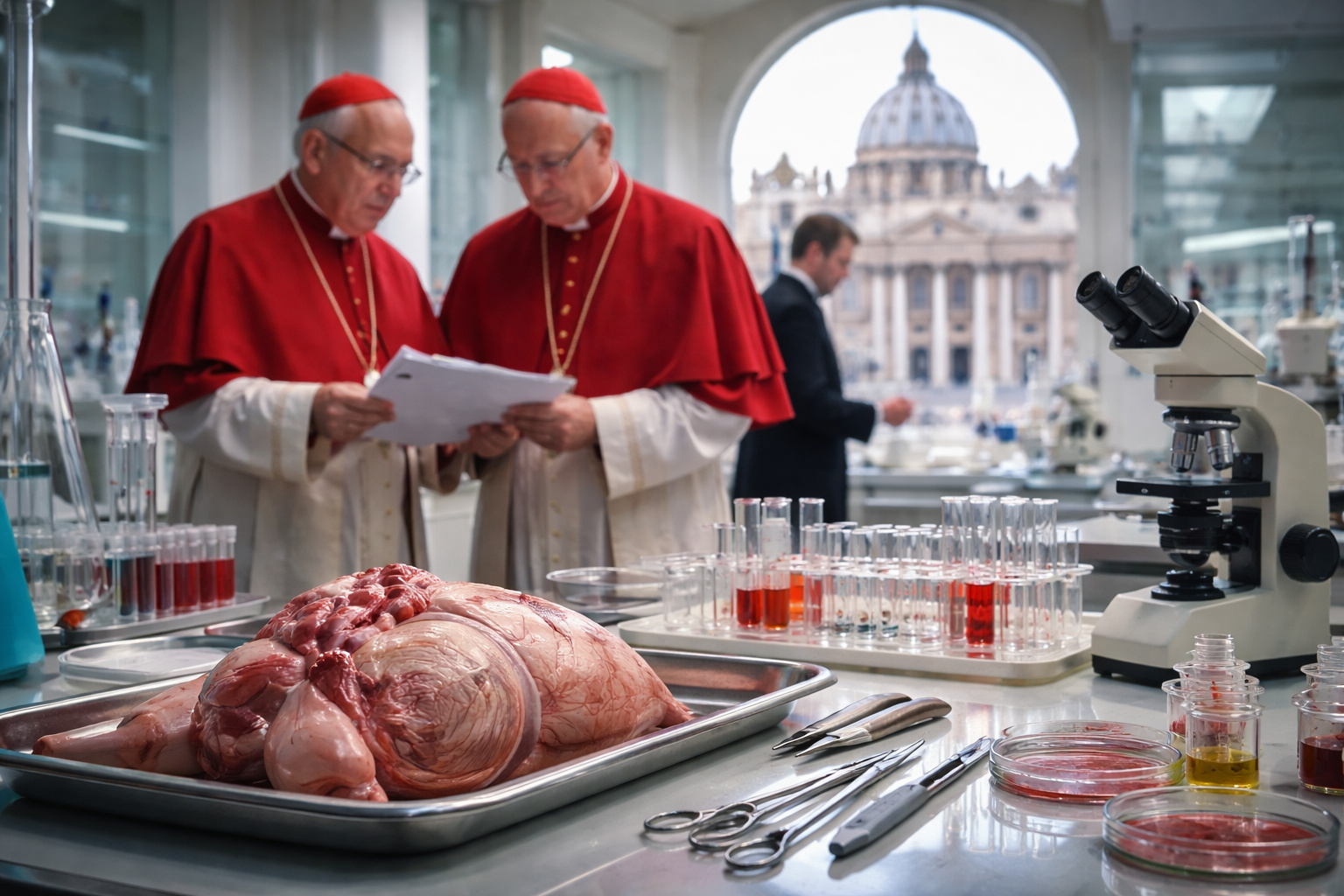
The Catholic Church clarifies official position, establishes ethical limits, and guides medical practices on the use of animal tissues for human treatments
The Vatican announced today (March 24, 2026) that Catholics may receive transplants of animal tissues, provided that the procedures follow best medical practices.
The decision stipulates that animals should not be subjected to cruelty, which establishes clear ethical limits for this type of treatment.
At the same time, the position arises amid the advancement of transplants using genetically modified animal organs, such as pigs and cattle.
Thus, the Church seeks to align faith, science, and responsibility in the face of a technology that continues to evolve in the medical field.
Vatican ethical review redefines guidelines on transplants
The guidance was formalized in an 88-page document, developed with the participation of doctors from Italy, the United States, and the Netherlands.
In this context, the text reaffirms a previous understanding of the Church, maintaining consistency with already adopted positions.
-
350-year mystery may have been solved: remains of a soldier who inspired the hero of The Three Musketeers found beneath a church in the Netherlands.

-
NASA photographed a nearly perfect square with 3 km sides on Mars, 13 times larger than the Great Pyramid of Giza, but the official explanation is natural erosion; still, no one has explained why the four sides have almost identical lengths.

-
Starlink breaks the barrier of 10,000 satellites in orbit and takes its expansion to an unprecedented level, with a direct impact on global internet, technological competition, and the race for space.

-
Japan finds an alternative to oil amid rising prices by transforming ocean balance into electricity with a new technology that maintains efficiency even when the sea changes.


After all, the document states that there are no religious or ritual impediments to the use of animals as a source of organs, tissues, or cells.
Moreover, it emphasizes that authorization depends on the strict adherence to established medical and ethical criteria.
Consequently, Catholic theology recognizes the possibility of these procedures, provided they are conducted responsibly.
Therefore, the decision broadens the understanding of the use of biological resources in human treatment.
Scientific advancement drives xenotransplantation
The document also addresses xenotransplantation, a technique that involves the transfer of organs or tissues between different species.
In this scenario, scientific advancement has allowed the use of genetically modified animals to reduce risks.
Historically, the Vatican had already authorized this type of procedure in 2001, when the technology was still in its early stages.
Since then, studies have evolved, although practical application remains limited.
More recently, in 2024, the first pig kidney transplant into a human was performed in the United States.
Still, these procedures remain rare, demonstrating that the field is still developing.
Medical criteria guide the application of transplants
On the other hand, the document establishes fundamental principles that should guide the procedures.
Thus, transplants need to be conducted within well-defined parameters.
Among the highlighted criteria are:
- Intentionality, with clear medical objectives
- Proportionality, considering risks and benefits
- Sustainability, evaluating ethical and scientific impacts
Furthermore, the Vatican emphasizes that best medical practices must be strictly followed.
Thus, authorization is not unrestricted, as it depends on meeting these requirements.
Clinical risks require transparency with patients
At the same time, the report highlights the importance of clear communication with patients.
In this sense, doctors must inform in detail the risks associated with transplants.
Among the main points are:
- Possibility of immune rejection, due to the difference between species
- Risk of infection from microorganisms, originating from animal tissues
Consequently, this information must be presented transparently.
In this way, the patient can make informed decisions about the treatment.
Balance between faith, science, and responsibility
Finally, the Vatican’s position demonstrates an attempt to balance scientific advancement with ethical and religious principles.
Thus, the Church acknowledges the potential of transplants with animal tissues but imposes clear limits.
At the same time, it reinforces that the practice must respect human dignity and animal welfare.
Therefore, the use of these technologies needs to occur with responsibility and strict control.
In light of this scenario, with the continuous evolution of medicine and new possibilities emerging, to what extent will xenotransplantation be able to advance while maintaining a balance between ethics, faith, and scientific innovation?







Seja o primeiro a reagir!