





 Portuguese
  English
  Spanish
  6 min of reading
  0 comments


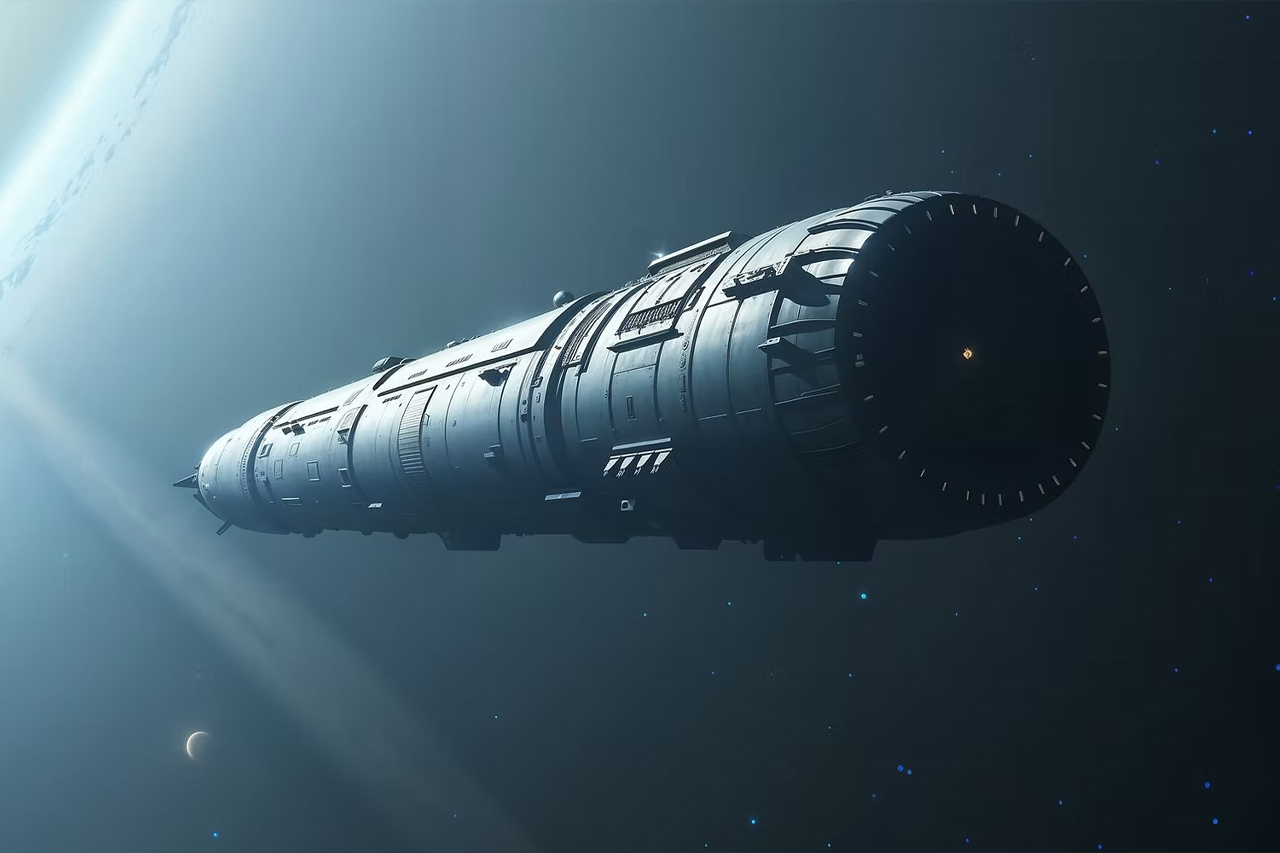
Powered by Fusion Reactors, Chrysalis Is a Real Project Aimed at Transporting Humans to Proxima Centauri b. Its Interior Would House Parks, Libraries, and Agricultural Areas in a Closed Cycle, Ensuring Self-Sufficiency for Centuries.
Imagine a generation ship the size of a linear city, with 58 km in length, slowly spinning to create artificial gravity and accommodate approximately 1000 people on their way to Alpha Centauri. This is the concept of Chrysalis, a proposal that combines engineering, biology, sociology, and governance to enable an interstellar journey of 250 years to Proxima Centauri b, a potentially habitable exoplanet.
Unlike science fiction, Chrysalis relies on plausible technologies in the near future, avoiding shortcuts like faster-than-light travel. The project leans on fusion reactors, concentric cylinders to simulate gravity, and a closed ecosystem to recycle water, air, and nutrients for centuries.
This type of “city in space” would require extreme planning, with an emphasis on social resilience, physical and mental health, and knowledge transfer between generations. It is not just about powerful engines; it’s about maintaining a functional civilization throughout the journey, from launch to landing.
-
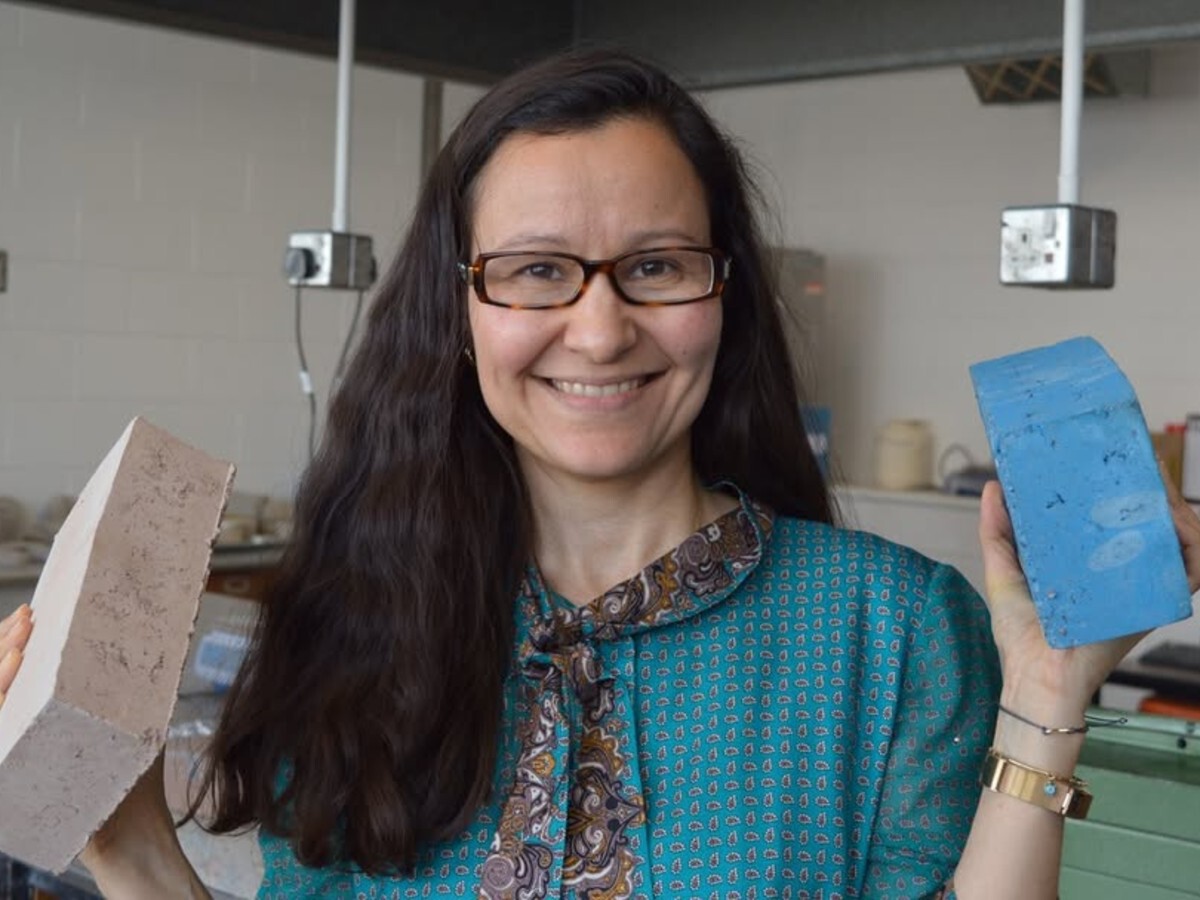
Goodbye to waste: a Brazilian created a revolutionary brick that uses construction debris, has already entered the markets of the United Kingdom and the USA, and promises to shake up the global construction industry.
-
China has created a mass-produced hypersonic missile that costs the same as a Tesla, and this is changing everything in modern warfare because the United States cannot defend itself without spending millions.

-
100% Brazilian technology transforms agricultural waste into a meat-scented ingredient using fungi from the Amazon rainforest. The process does not use excessive water or chemicals, and it also increases the nutritional value of the final product.

-
Psychology reveals that adults who avoid conflicts at all costs are not balanced individuals, but rather children who learned in the worst way that expressing emotions brought punishment and now live paralyzed by the fear of expressing themselves.

Understand how Chrysalis was conceived, what is inside it, what life would be like on board, the critical engineering challenges, and what to expect upon arriving at Proxima b.
What Is Chrysalis and Why This Concept Matters
Chrysalis is an award-winning concept from an international competition to design a generation ship capable of sustaining a human population for centuries on the way to Alpha Centauri. The proposal adopts a cylindrical design, with rotating layers that enable artificial gravity, in addition to modules for energy, agriculture, industry, and housing.
The focus is not merely on traversing space, but on maintaining a habitable and culturally rich environment, with schools, hospitals, libraries, and sports complexes. The idea is for each generation to have a stable and secure daily life while operating and maintaining critical systems.
Concepts like Chrysalis matter because they force the convergence between research in nuclear fusion, closed-loop life support systems, confinement psychology, and AI governance. Even if the mission takes decades to initiate, the necessary advancements have immediate applications on Earth and in shorter missions.
The proposal also helps answer ethical and technical questions regarding selection, training, and autonomy in resource-limited environments where decisions are made light-years away from Earth.
Dimensions and Layered Architecture
With 58 km in length, Chrysalis employs a structure of concentric cylinders that spin at calculated speeds to produce artificial gravity similar to that of Earth. This solution minimizes health issues associated with microgravity and allows for a more natural routine for the population.
The architecture is segmented by functions. One ring houses agricultural areas and artificial biomes like rainforest, boreal forest, and dry shrubland, essential for recycling air, water, and nutrients. Another encompasses modular housing, parks, libraries, cultural artifacts, and communal spaces. A third focuses on production, storage, maintenance, and part manufacturing.
In the core, there are service corridors, internal transport channels, communications, and docks for landing vehicles. The design adopts redundancy and compartmentalization to isolate damage and facilitate repairs in-flight, as well as protection against radiation and micrometeoroids through layers of materials and, potentially, active shields.
The highlight is the cosmic dome at the front, standing about 130 meters tall, oriented towards the Sun and the Earth. Besides serving as a deep-space observatory, it would function as an auditorium for the annual general assembly, strengthening social cohesion.
Energy, Propulsion, and Travel Time
Chrysalis assumes fusion reactors as the main source of energy and basis of propulsion. Concepts like D-T or D-He3 appear in studies for their high energy density, reducing fuel mass for a 250-year journey at fractional light speed.
The mission profile anticipates gradual acceleration to cruising speed, a long phase of interstellar cruising, and braking near Alpha Centauri. The entire system must operate with extreme reliability, with continuous maintenance and the capacity for in-orbit printing and manufacturing to replace critical components.
Thermal management is central. The heat from the reactors powers energy recovery systems, habitat heating, and industrial processes, while radiators dissipate excess heat in the vacuum. Plasma stability, material durability, and high-level automation are key challenges.
Life Onboard: A Complete City in Artificial Gravity
Daily life resembles that of a city. There are schools, hospitals, leisure spaces, parks, and sports complexes integrated into artificial biomes. Food would predominantly be vegetarian, with synthesized protein produced onboard to ensure resource stability.
The agricultural areas operate in a closed cycle, combining hydroponics, aeroponics, and artificial soils, monitored by AI to optimize productivity, water consumption, and nutritional quality. Organic waste returns to the system via biodigesters and composting.
Windows and internal walls can simulate Earth landscapes, adjusting light, color, and textures for psychological comfort. Cultural artifacts, memory collections, and a gene bank with seeds, embryos, and DNA preserve biological and cultural diversity.
The modular housing allows families and groups to define forms of coexistence, with privacy, communal spaces, and possibilities for reconfiguration over generations.
Governance, Society, and the Role of AI
The crew organizes itself through a participatory governance system, with an annual Plenary Council held in the cosmic dome for structural decisions. In daily life, sectorial councils conduct operations, education, health, maintenance, and safety.
The onboard AI acts as the nervous system of the ship, offering predictive monitoring, decision support, and knowledge transfer between generations. It helps calibrate policies on resource use, population control, and incident response, always with human oversight.
Social resilience is a priority. Continuous training routines, participation in projects, and community rituals reduce mission fatigue. This includes art, sports, and citizen science to maintain purpose and cohesion.
Before boarding, the first generations would undergo decades of training in isolated analog environments, such as polar bases, to validate protocols, psychological profiles, and the real logistics of confined daily life.
Health, Reproduction, and Psychological Well-Being
Artificial gravity mitigates bone and muscle loss, improves sleep and circulation, and simplifies medical procedures. Nevertheless, Chrysalis medicine requires long-term protocols, focusing on prevention, regular check-ups, and continuous biomedical telemetry.
Reproduction is planned to ensure genetic diversity and resource stability. The gene bank and ethical-scientific oversight support sensitive decisions regarding birth spacing, counseling, and parental support.
Psychological well-being receives continuous attention. Work, recreation, education, and contemplation cycles are balanced by mental health programs, access to simulated nature, and an active community. The design of spaces prioritizes light, acoustics, and privacy.
The crew is trained in conflict resolution, non-violent communication, and mediation to reduce the risks of instability over the centuries.
Technological Challenges and Realistic Timelines for Building Chrysalis
The biggest bottlenecks are known: reliable controlled fusion, ultra-durable materials that last for centuries, large-scale in-orbit manufacturing, and closed-loop recycling systems with minimal losses. Each requires robust R&D programs and progressive testing.
Even the estimate of 20 to 25 years to build the ship depends on industrial chains in space, including asteroid mining, orbital shipyards, and solar-earth-orbit logistics. There is a chasm between proof of concepts and the integration of systems at the level required for a generation ship.
On the social front, AI governance, intergenerational education, and cultural preservation need validations in experimental habitats over decades. Success relies on pilot programs in space stations and lunar or Martian habitats.
The differences in numbers between sources regarding crew size and travel time indicate that we are facing a dynamic conceptual study. What matters is the coherence of the system and the technological maturation roadmap.
Route, Arrival of the Chrysalis Ship, and the Destination Proxima b
The route heads for Alpha Centauri, arriving in the vicinity of Proxima Centauri b after the interstellar braking phase using reverse propulsion and, possibly, hybrid methods. The mothership remains in orbit while landing modules begin surface exploration.
The initial assessment checks radiation, climate, atmospheric composition, geology, and water resources. Meanwhile, Chrysalis maintains communication with probes and relay satellites to map the planet and choose base locations.
The initial colonization prioritizes modular habitats, controlled agriculture, and local energy infrastructure, with compact reactors and, in the future, renewable energy adapted to the environment. The gradual population transfer prevents resource overload.
Even in an ideal scenario, human presence on Proxima b will depend on currently uncontrollable factors. Chrysalis does not promise certainties, but rather the technical and social capacity to arrive, assess, and decide with autonomy.









-

-

2 pessoas reagiram a isso.