





 English
  Francês
  Alemão
  Italiano
  Japonês
  Norueguês
  Portuguese
  Spanish
  3 min of reading


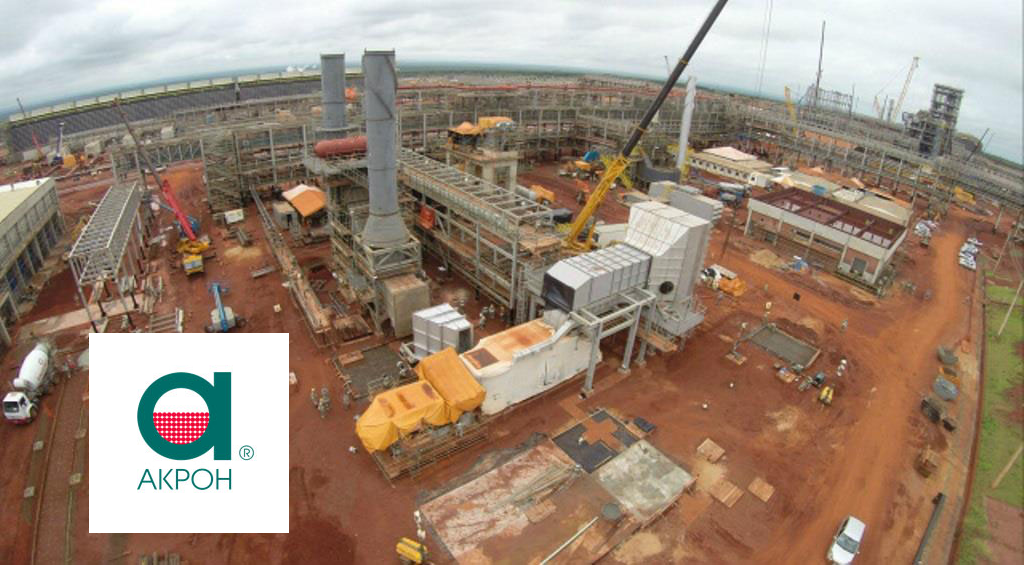
The UFN3 Fertilizer Plant of Petrobras Is 80% Complete, and When Operations Begin, It Is Expected to Generate up to Ten Thousand Direct and Indirect Jobs in Mato Grosso do Sul.
With the Supreme Federal Court’s (STF) decision to allow federal state-owned companies to sell their subsidiaries without the need for approval from the National Congress, Petrobras is expected to finalize the sale of its nitrogen fertilizer plant in Três Lagoas, in eastern Mato Grosso do Sul (UFN 3 – Fertilizer Plant of Petrobras), to the Russian group Acron by September of this year.
According to Governor Reinaldo Azambuja (PSDB), Petrobras published a notice regarding the resumption of sales. “I think it’s well advanced. The CEO of MS Gás, Rudel Trindade, had a meeting on Friday, June 14, in São Paulo with the Russians who are the prospective buyers of UFN3.” Acron is expected to spend around R$ 8.2 billion in the deal, with R$ 3.2 billion going to the Brazilian state company and the remaining R$ 5 billion for investment in the plant.
-
Government unlocks R$ 554 million for a highway that has been requested for decades and accelerates the duplication of BR.

-
Without bricks, without cement, and without endless construction: the cardboard house that is assembled in modules and can be moved.

-
Billions of barrels on the equatorial margin could lead Amapá to double its oil production in Brazil — the state aims to enter the route of companies in the Campos Basin, attract investments, and boost jobs and businesses in the oil and gas sector.

-
Without bricks, without cement, and without endless construction: the cardboard house that is assembled in modules and can be moved.

The governor spoke about the importance of the plant’s operation for Mato Grosso do Sul. “For us, it matters, in addition to the resumption of investments, the generation of jobs and being the largest producer of urea and ammonium sulfate in Brazil. Três Lagoas will become the largest producer of these inputs.”
Once the sale of the plant is completed, the expectation is that work to resume construction can begin at the end of 2019, with the prospect of taking a year and a half to complete.
Azambuja revealed a meeting scheduled for July 9 between Bolivian President Evo Morales and Russian President Vladimir Putin in Russia. “They may meet to sign the gas supply agreement. With the judicial decision, the sales of subsidiaries have been unlocked, and I have no doubt that UFN3 will be negotiated.”
The purchase of raw materials for the production of nitrogen compounds in Três Lagoas is considered certain by both the Bolivian and Russian sides. What remains, according to Verruck, is to finalize the price and the terms for the commodity purchase.
The resumption of UFN3 is part of the Bolivian government’s plan to increase natural gas sales to Brazil, which were reduced starting in 2016, when Petrobras began prioritizing supply to the south-central region of Brazil for the product extracted from its pre-salt reserves in the Atlantic Ocean.
When operational, the fertilizer plant in Três Lagoas will consume an average of 2.3 million cubic meters of natural gas per month. In comparison, currently, in 2019, the average monthly volume of imported Bolivian gas to Brazil is 13 million cubic meters per month.
In the medium term, in addition to generating jobs in the Três Lagoas region, UFN3’s operations will help the public coffers of Mato Grosso do Sul. This project, along with the implementation of a thermoelectric plant in Corumbá (which is planned to be operational in the next decade), will provide more stability to the government’s cash flow.
Data released by the state administration earlier this month indicates a reduction of R$ 13 million in the collection of the Tax on Goods and Services (ICMS) with the import of natural gas compared to the first quadrimesters of this year and last year.
Government Abandons Plan to “Sell Everything” and Decides to Preserve More 12 State-Owned Companies







Seja o primeiro a reagir!