





 Portuguese
  English
  Spanish
  7 min of reading
  3 comments





Founded in Bauru in 1928 by João Batista Martins Coub, Tilibra started from a printing house with four employees, became a reference in notebooks, licensed characters and artists, overcame family crises, was sold in 2004, and today, under Aquobrands, leads the stationery market with digital presence and an app to digitize notes.
In July 1918, young João Batista Martins Coub left Rio de Janeiro and went to Bauru to work at Tipografia Comercial. Ten years later, in 1928, he sold his own house, invested 18 contos de réis, and opened Tipografia Brasil, the seed of what would become Tilibra.
The most impressive turnaround is the size of the leap in time. In 97 years, Tilibra went from being a regional printer to leading the Brazilian stationery market, managing to hold about 25% of the market, and in 2023, launched an app to digitize notes, showing that notebooks can also become files and study tools on mobile devices.
1918 to 1928: From the Counter of the Print Shop to the Risk of Selling the House
The journey begins with a fact that explains the profile of the founder. João Batista Martins Coub was born on February 2, 1900, had limited access to formal education, and only completed two years of primary school.
-
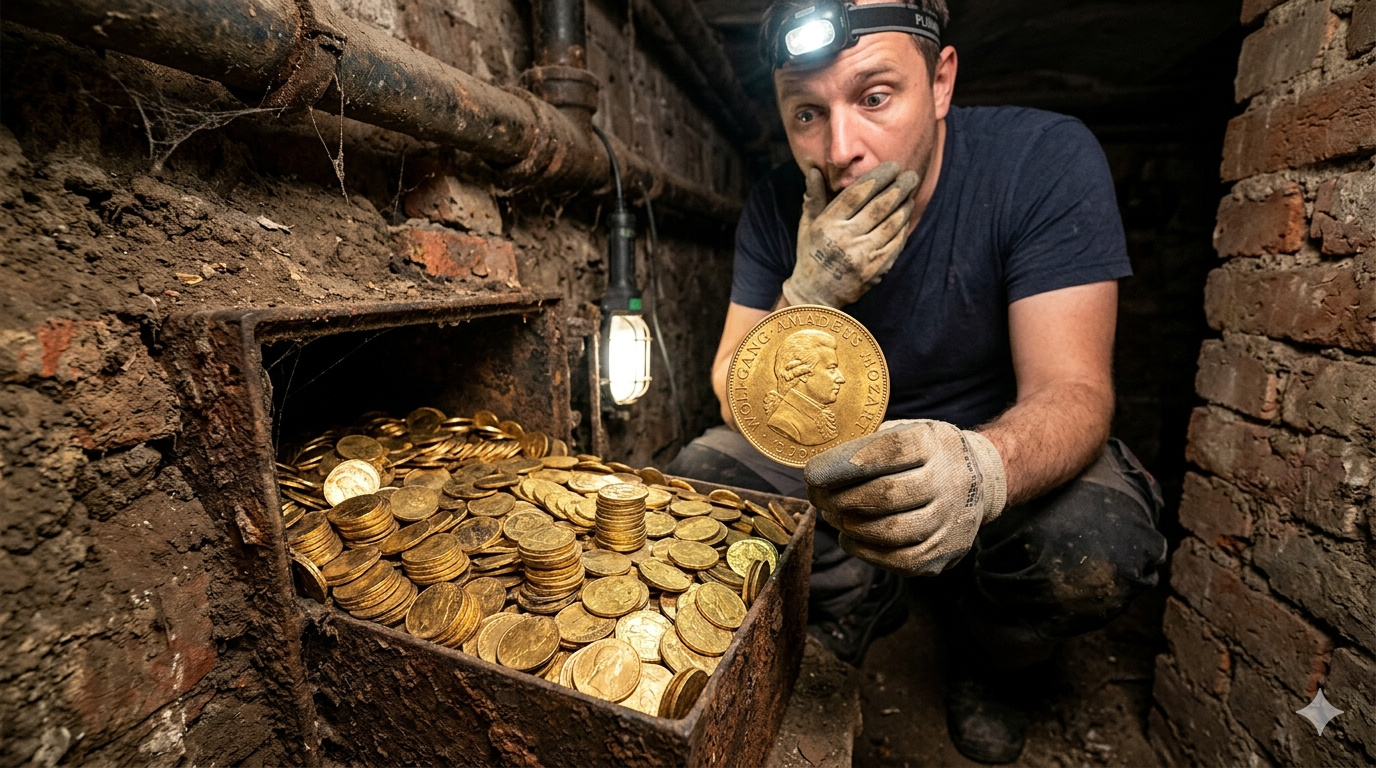
A forgotten cord on the floor of a basement in Vienna leads a plumber to a box containing 30 kilograms of gold with Mozart’s face, hidden before World War II. The treasure, worth 2.3 million euros, was just centimeters away from a worker who ignored the sign a day earlier.
-
A couple buys an old chalet, breaks the kitchen floor for renovation, and finds over a thousand coins of gold and silver hidden since the English Civil War over 4 centuries ago.

-
Rigid bags with their days numbered: new trend prioritizes comfort in 2026.

-
YouTuber creates an excavator equipped with a giant 4.5-meter sword to challenge his brother to a rematch, and the invention quickly goes viral on social media.


Even so, he sought to study on his own and, already in São Paulo, turned to private teachers for mathematics and Portuguese.
In July 1918, he arrived in Bauru to work at a printing house and advanced to the position of manager. In 1928, with accumulated experience and an eye for opportunity, he made the decision that would change history: he sold his own house and founded Tipografia Brasil with 18 contos de réis and only four employees. This is where Tilibra begins, even before it had that name.
Expansion Before the Name: Notebooks, Bookstore, and the Turn to Joint-Stock Company
The growth was rapid enough that the first address became too small. The company expanded its portfolio and began selling not only school notebooks but also toys, paints, and office and engineering supplies. The business was no longer just about “printing”, it was about meeting a complete consumption chain.
In the 1940s, the evolution turned into structural change. In 1944, amid World War II, the company changed its name to Tipografias e Livrarias Brasil and became the first joint-stock company in Bauru.
In 1949, the company opened a new headquarters in a four-story building, with a store on the ground floor and the printing facility on the upper floors. Tilibra did not yet exist as a brand, but the scale was already being built.
1953 and 1962: Numbers That Show When Tilibra Became an Industrial Power
In 1953, 25 years after its founding, the company was already operating with modern equipment for the time and had a structure that stands out for its numbers:
- 362 employees
- nine branches in the state of São Paulo
- commercial representatives in 11 Brazilian states
This expansion strained the infrastructure. In 1962, the commercial building became too small, and the printing facility was moved to a larger area on Rua Aimorés, in Vila Cardia, Bauru.
This industrial park with cutting-edge technology increased production capacity, keeping pace with national demand for school notebooks.
How the Name Tilibra Was Created and Why the Public Played a Role in It


The name Tilibra did not arise from a ready-made advertising campaign. It was born from practical use: as the legal name “Tipografias e Livrarias Brasil” appeared on documents, receipts, and orders, many people began to abbreviate it using the initials.
In the 1970s, the management noticed that the public was already referring to the company this way and formalized the merging of the first syllables, consolidating the Tilibra brand.
This origin explains a crucial point: Tilibra did not become a brand just by internal decision; it became a brand because consumers were already calling it that.
1970 to 1981: Succession, Losses, and the Challenge of Keeping Tilibra Afloat
The founder passed away in March 1970, after more than four decades devoted to the company’s growth. From then on, the four children took on roles in the board, with the eldest, Henrique, as president.
But few business stories have such a tough succession. In a span of 15 months, starting in September 1981, three of the founder’s four children passed away.
Ruben took over the presidency alongside the third generation, during a period marked by instability and internal conflicts.
To reduce impasses and preserve unity, the company adopted an annual rotation system in the presidency, an attempt to balance interests without paralyzing operations.
The 80s and 90s: Licensing, Consumer Desire, and 25% of the Market
In the 1980s, Tilibra made a bet that would change the game: it invested more in marketing and focused on licensing major brands and characters, such as Garfield and Snoopy, bringing these icons to notebook covers.
The effect was direct: products with greater appeal, higher prices, and better margins, creating a competitive differential that was hard to replicate.
In the 1990s, the strategy intensified with exclusive contracts with famous artists like Xuxa and Ana Paula Arósio, as well as animated characters like Mickey Mouse, Minnie, and Winnie the Pooh.
Tilibra also launched its own brands, such as Clique and Grafite, and in 1995 entered the licensing of football clubs, featuring team logos on covers.
It is during this time that the number summarizing the leadership emerges: according to reports from the time, Tilibra held approximately 25% of the national market.
The notebook ceased to be merely school material and became a social symbol. Buying the “notebook of the moment” became an experience, and Tilibra knew how to turn this into a consumer culture.
Crises of the 2000s and the Control Turnaround in 2004
In the early 2000s, the company faced a tumultuous internal scenario and intensified family disputes. However, operations did not stop launching products.
Around 2002, Tilibra launched the Menininhas line, featuring pre-teen characters and a wide range that included notebooks, planners, binders, cases, labels, backpacks, folders, and even dolls, with its own website and digital content.
In August 2004, Tilibra was sold to the American group Midwest Vehicle, for an undisclosed amount. At that moment, it employed about 1,000 people and processed more than 30,000 tons of raw material per year.
Just two months after the sale, still in 2004, Ruben passed away, marking the end of the second generation’s direct presence in the presidency.
2005 to 2019: Bigger Portfolio, FSC Certification, and a New Sector Configuration
Already under new leadership, Tilibra continued to expand its lines. In 2005, it launched the Joli line, aimed at consumers looking for delicate and romantic prints, with illustrations developed by designer Tatiane Ferrino, who remained on the creative team until 2013.
The brand also expanded its presence in virtually all categories of school and office supplies, going well beyond the traditional notebook.
In 2009, Tilibra achieved FSC forest certification, indicating that the raw material in its production process comes from environmentally responsibly managed forests.
In 2012, through a merger, the stationery division that included Tilibra became part of Aquobrands, a company with over 100 years of experience and recognized as a global supplier of office products.
In 2015, Tilibra launched a line in partnership with Capricho and renewed its collections in the following years.
And in 2019, an important change on the board: the historical rival Foroni was acquired by Aquobrands, putting two former competitors under the same economic group.
2023 to 2025: Tilibra Connect, Digitalization, and Collections That Follow Global Trends
The recent phase shows how Tilibra is trying to connect tradition and digital habits. In 2023, the brand launched the Tilibra Connect app, with features such as:
- digitizing notes quickly
- creating study sheets
- organizing files into folders by themes and subjects
- generating quiz games with scoring aimed at reinforcing learning
The following year, the brand launched a special line featuring the image of surfer Gabriel Medina for the Paris Olympic Games.
In 2025, it announced new licensed collections of Stranger Things, following the fifth and final season, and formed a partnership with K-pop’s Guerreiras, described as the most-watched movie in the platform’s history.
In addition to products, Tilibra strengthened its social presence with donations and support for institutions and projects in Bauru and the surrounding area.
And it solidified its digital presence with over 1 million followers on Facebook and Instagram.
Why Tilibra Became a Leader and Continues Relevant
The strength of Tilibra can be explained by a rare combination:
extreme business decision in the beginning, selling the house to found the business
industrial scale and commercial reach, already evident in 1953 with hundreds of employees, branches, and representatives
brand driven by desire, with licensing that transformed notebook covers into status symbols
adaptation to digital, with Tilibra Connect bringing notebooks into mobile devices without abandoning paper
Do you think Tilibra will manage to keep the notebook as a “desirable object” in this new screen era, or is the future of the brand more in the app than in the cover?









I’m 75 and went on Carb/Lev about seven years ago three times a day along with Entacapone. Walking was real difficult. Dr. added PD-5 formula and I had immediate results with movement in my legs. Check out limitlesshealthcenter. com
Amei conhecer a história da Tilibra, trabalhei la em 2011, parabéns!!!
Adorei conhecer a história da Tilibra, acredito que o caderno deve continuar a atrair mesmo na era digital, e continuar investir nas capas e se possível trazer as capas antigas ou capas de papéis de carta da época, seria uma nostalgia para os dias de hoje, os pais contar memórias aos filhos sobre personagens da época, artistas, e coleções da época de papéis de carta.