





 English
  Francês
  Alemão
  Italiano
  Japonês
  Norueguês
  Portuguese
  Spanish
  4 min of reading
  0 comments


Dispute Over The Legitimacy Of The Territory
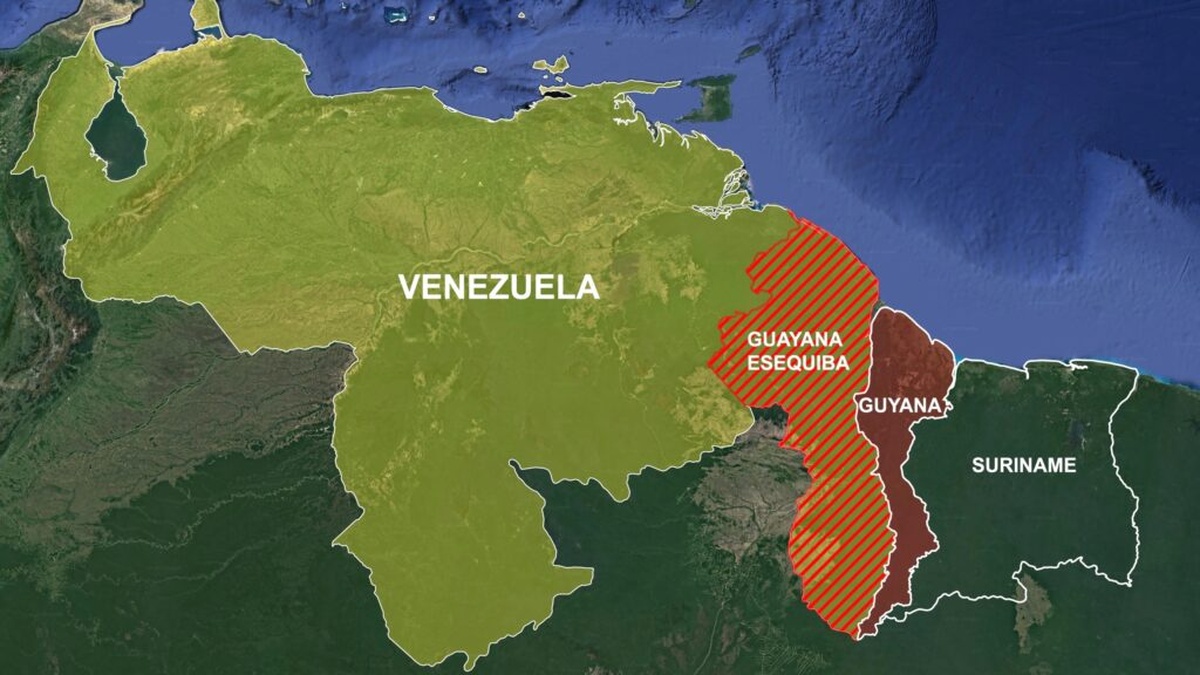
In August 2025, Venezuela submitted new documents to the International Court of Justice (ICJ). The aim was to reinforce its challenge to Guyana’s control over Essequibo.
Covering 159,000 km², the area has been a subject of dispute since the 19th century. Vice President Delcy Rodríguez stated that the evidence submitted demonstrates the “illegitimacy” of the Paris Award.
The 1899 Award and the 1897 Treaty of Washington assigned the region to the United Kingdom. Venezuela considers these historical milestones invalid.
-
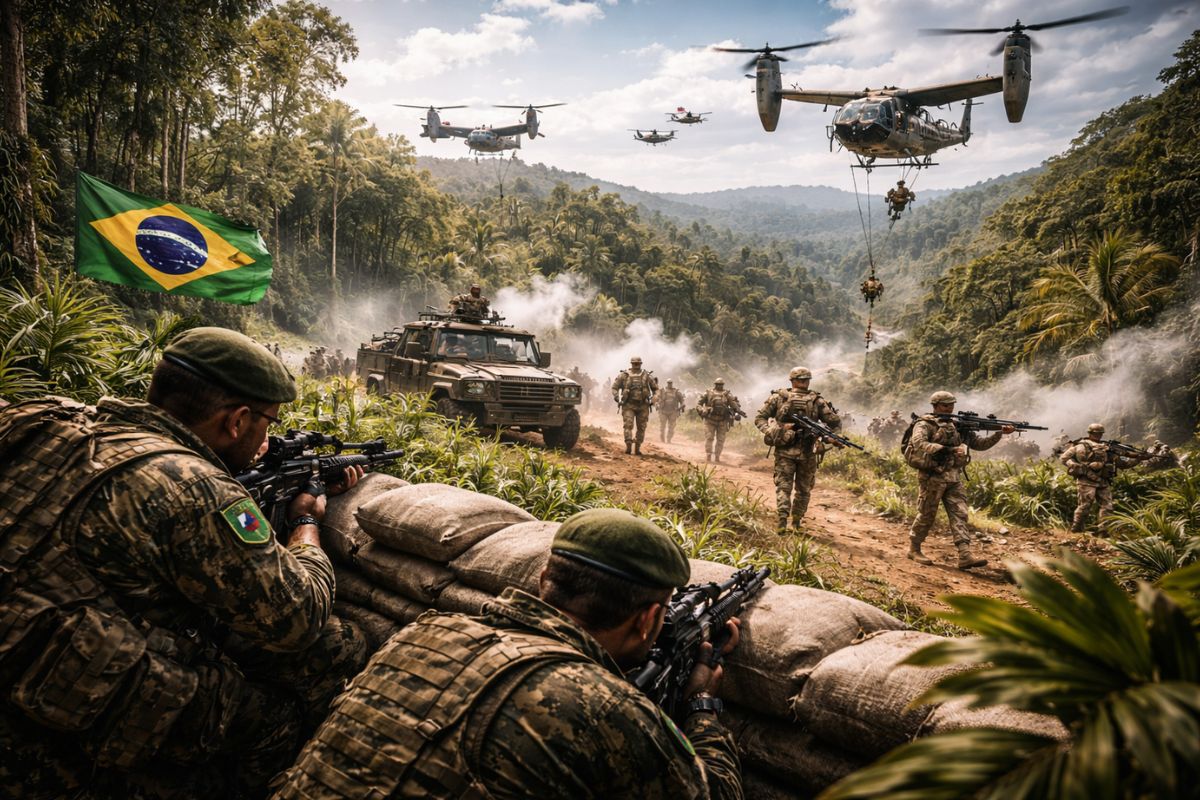
If the USA were to go to war with Brazil, Washington’s greatest fear would not be the attack itself, but facing a vast territory, prolonged resistance, and a costly, chaotic, and unpredictable occupation.
-
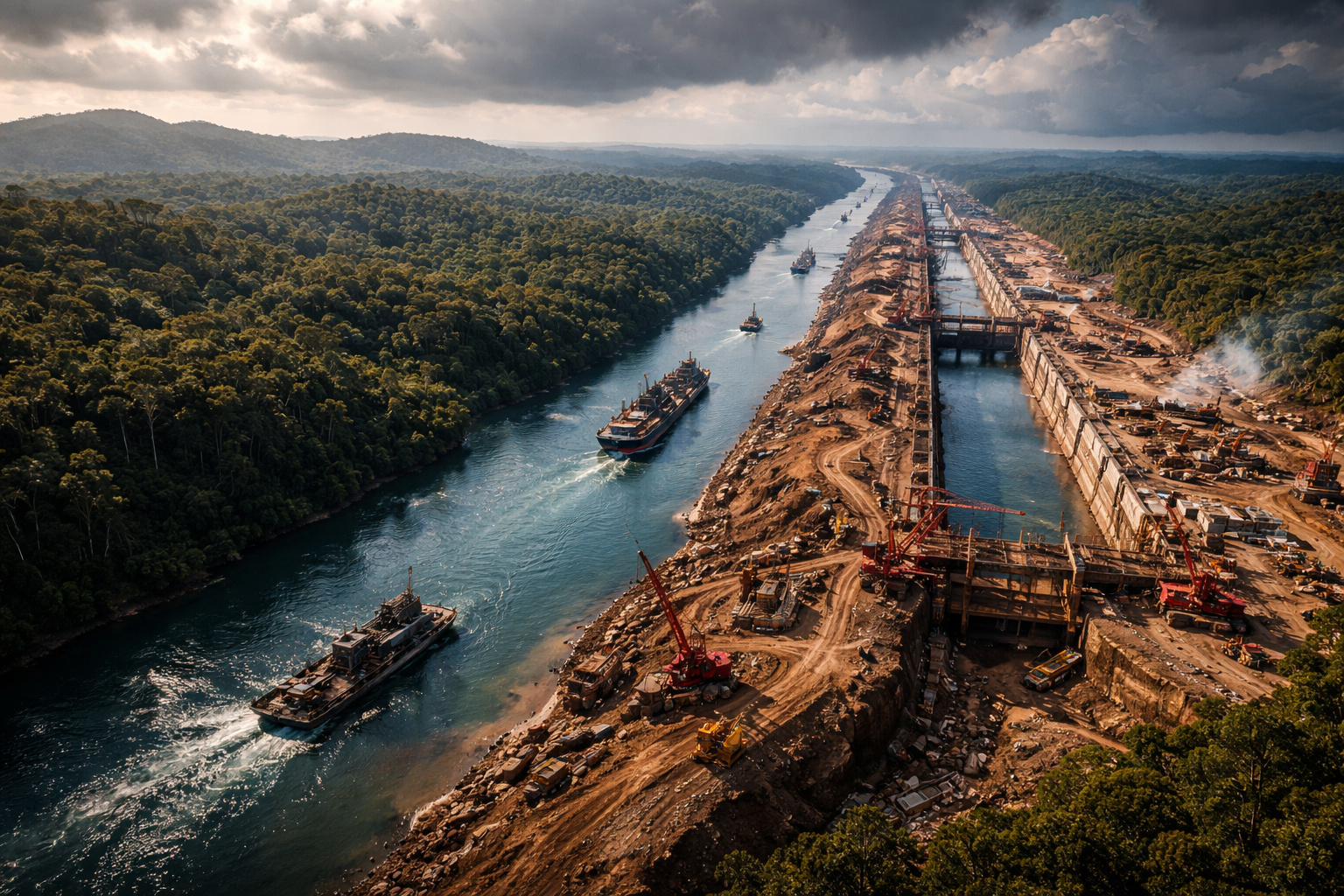
In 2013, Nicaragua sold the concession for a canal to rival Panama to a Chinese billionaire who lost 85% of his fortune, disappeared, and was declared bankrupt. Now the project resurfaces with a new route, a new Chinese partner, and a cost of $64.5 billion.
-
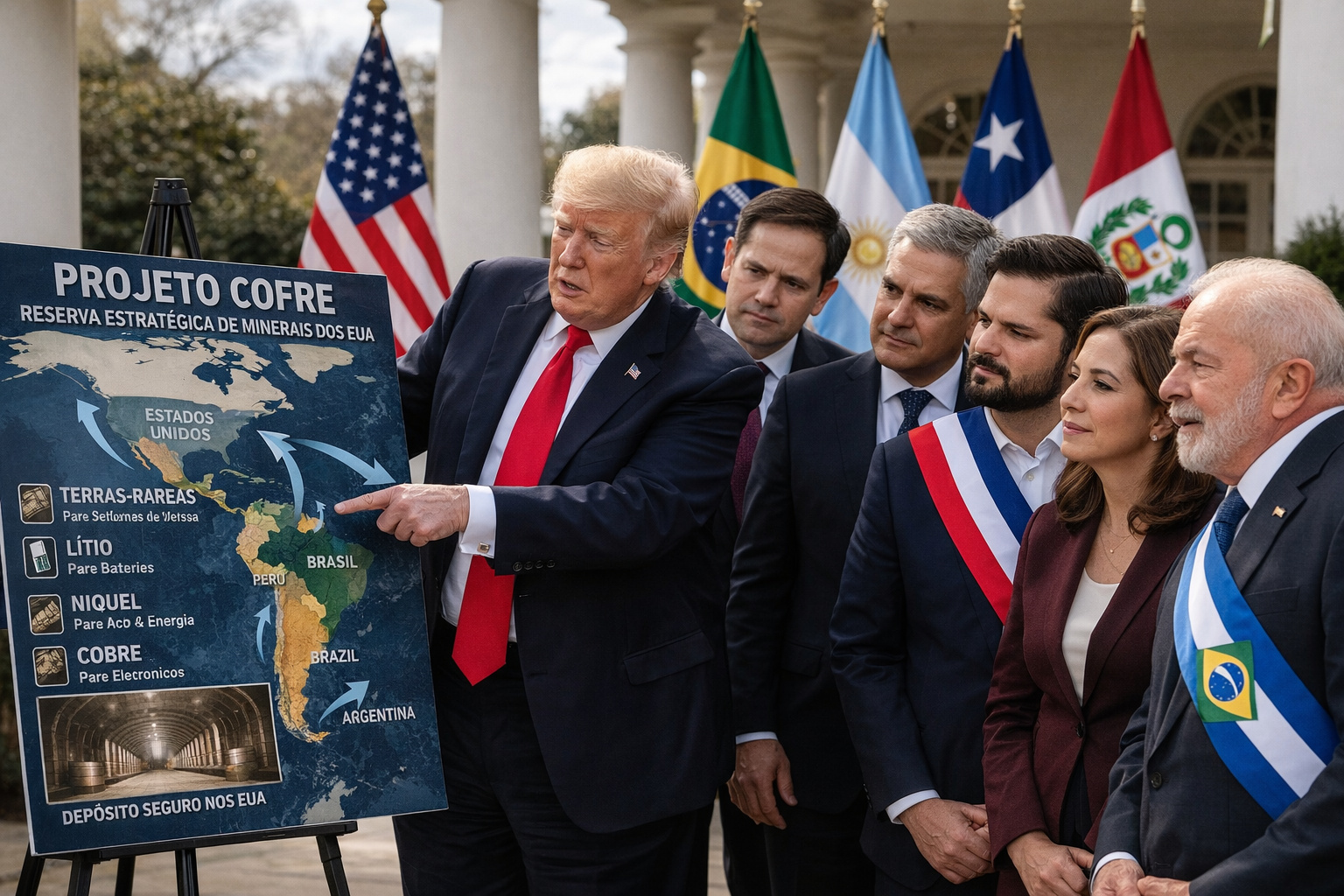
The USA announces a mysterious billion-dollar vault project to store critical minerals, but what intrigues experts is not just the plan itself, but why Latin America, including Brazil, has entered the center of this global dispute against China.
-
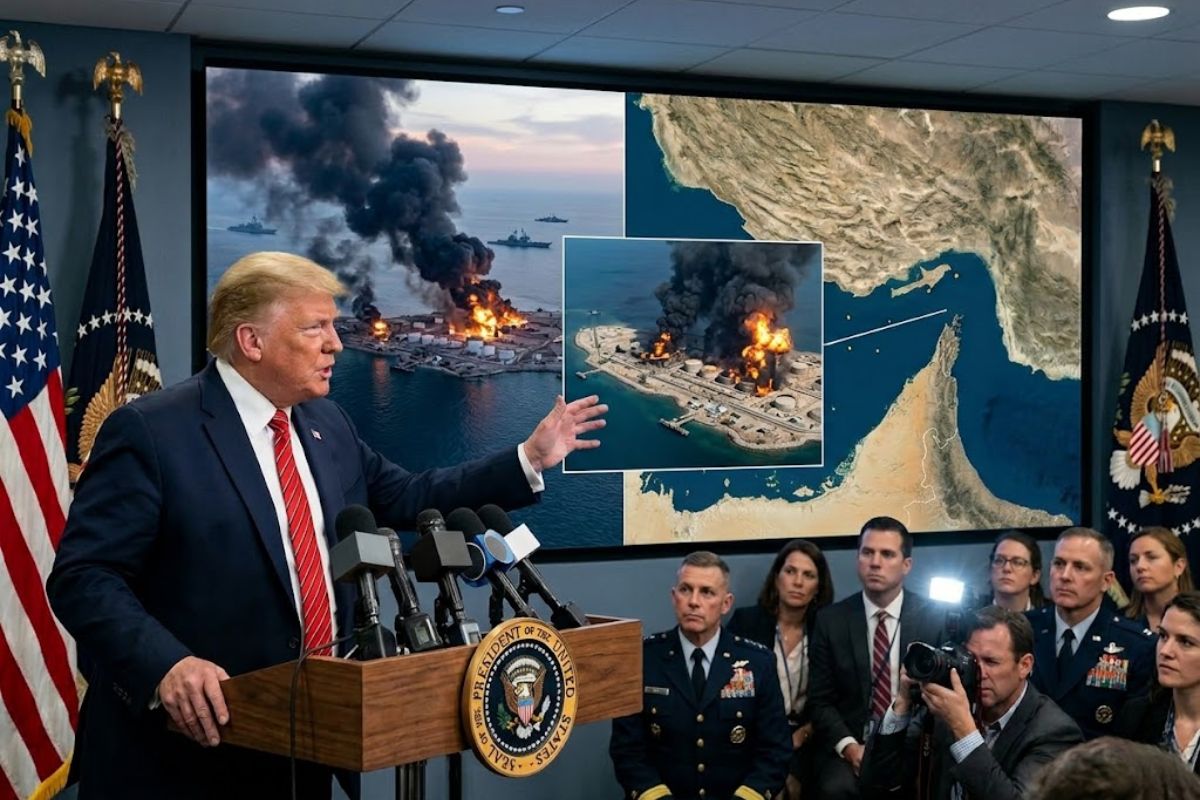
Trump Announces Bombing of U.S. Military Targets on Iranian Island Responsible for About 90% of Iran’s Oil Exports, Warns of Further Attacks if Navigation in Strategic Strait of Hormuz Is Threatened

For Caracas, only the Geneva Agreement of 1966 has legitimacy. The treaty acknowledges the dispute and mandates bilateral negotiations between the countries.
Guyana, on the other hand, insists on the validity of the British documents. Additionally, it reaffirms its position of sovereignty, keeping the conflict open on the international stage.
Historical Line Of A Prolonged Conflict
The controversy dates back to the 19th century when the British Empire occupied the region. This occurred during the process of independence of Spanish America.
In 1899, the Paris Award solidified British control over Essequibo. Venezuela, however, has always deemed the decision illegitimate and detrimental to the country.
Only in 1962 did Venezuela formally contest this at the UN. This act resulted in the signing of the Geneva Agreement in 1966, which was also signed by the future independent Guyana.
The lack of a solution until 1970 led to a temporary truce. However, Venezuela broke this truce in 1982 after presenting new territorial demands.
Tensions resurfaced in 2015 following the discovery of large oil reserves in the territory. The episode reignited the dispute and brought new economic interests to the region.
In 2023, Venezuela held a referendum to annex the area. By 2024, it approved the Organic Law for the Defense of Essequibo, reinforcing its position.
Meanwhile, Guyana strengthened its military cooperation with the United States. Caracas classified the maneuvers as ‘provocations’ and intensified diplomatic tensions.
The Historical Role Of Brazil In The Issue
The dispute has also impacted Brazil, in addition to fueling the rivalry between Caracas and Georgetown. The country was involved in the Pirara River Question in 1904.
At that time, Brazil lost part of the territory south of Essequibo. The decision favored the United Kingdom, which consolidated British Guiana.
This episode defined the borders of the territory and had strategic implications for the Amazon region. To this day, the precedent is remembered as a symbol of geopolitical complexity.
The case also reinforces the consequences of territorial disputes in colonial areas. The dispute between Venezuela and Guyana, therefore, echoes in earlier episodes of border redefinition.
Divergences Between Negotiations And External Pressures
While Venezuela advocates for negotiations “without foreign threats,” Guyana conditions dialogue on adhering to the Argyle Declaration, signed in 2023.
This agreement calls for peaceful solutions with international mediation. However, Caracas insists on direct negotiations and does not recognize the jurisdiction of the International Court of Justice.
Venezuela’s stance undermines the effectiveness of any court decision. Thus, the legal deadlock remains open, with no clear prospect for a solution in the near term.
Furthermore, the military exercises conducted by Guyana in 2024 and 2025, in partnership with the United States, were classified as “provocations” by the Caracas government.
Therefore, the dispute remains stuck between the search for international mediation and the pressure of military interests. The lack of consensus increases bilateral tensions.
The Internal Crisis Under Nicolás Maduro
Alongside the territorial dispute, Venezuela faces a political and economic crisis under Nicolás Maduro’s government. The situation worsened after his reelection in 2024.
The election was marked by allegations of fraud and triggered massive protests in Caracas and several other cities. The demonstrations resulted in heavy state repression.
According to local entities, dozens of people died during the protests, and hundreds were arrested. The numbers reveal the high cost of political instability.
Additionally, the humanitarian crisis has intensified in recent years. The population suffers from shortages of food, medicine, and basic healthcare and education services.
In this context, the claim over Essequibo is also seen as a political strategy. Analysts suggest that Maduro uses the conflict to galvanize internal support.
The tension with Guyana, therefore, intertwines with domestic instability. This creates a scenario of uncertainty, capable of impacting not only Venezuela but the entire Amazon region.









-

Uma pessoa reagiu a isso.