





 English
  Francês
  Alemão
  Italiano
  Japonês
  Norueguês
  Portuguese
  Spanish
  3 min of reading


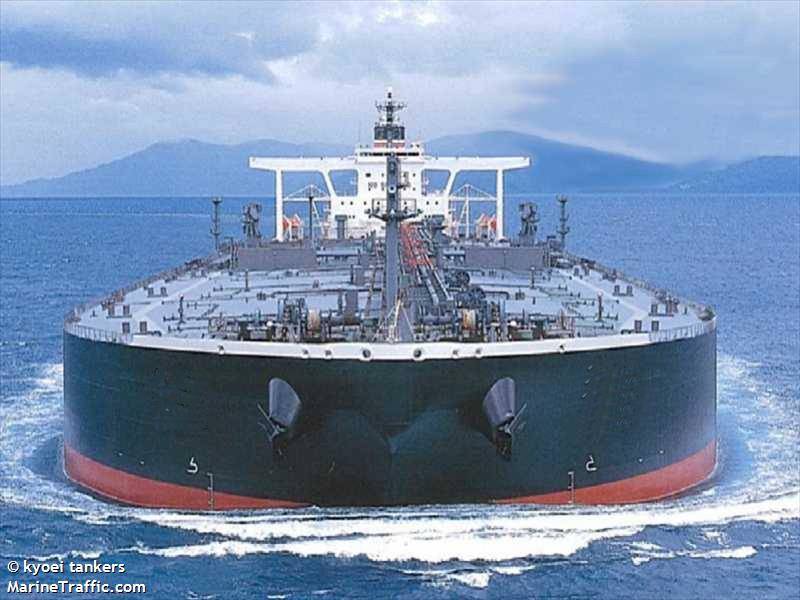
The Dragon, a Huge Oil Tanker Flying the Liberian Flag That Is Currently in Venezuela, Should Be Floating Somewhere Off the Coast of France, According to Its Last GPS Signal.
Instead, it is currently thousands of kilometers away in Venezuela, where, under contract with Russian state giant Rosneft Oil Co PJSC, it loaded 2 million barrels of oil, according to data compiled by Bloomberg and shipping reports. How is this possible? The ship’s transponders were turned off before it slid into Venezuelan waters, the data shows.
The practice of oil tankers turning off location signals increased last month, according to shipping data, after the U.S. pursued a Chinese shipping company said to be moving crude oil to sanctioned Iran. The U.S. is trying to squeeze Nicolas Maduro’s government in Venezuela, starving it of oil revenue. But more and more tankers seem to be using the technique to evade penalties, helping to boost Venezuelan oil production that has fallen since the U.S. imposed sanctions.
-
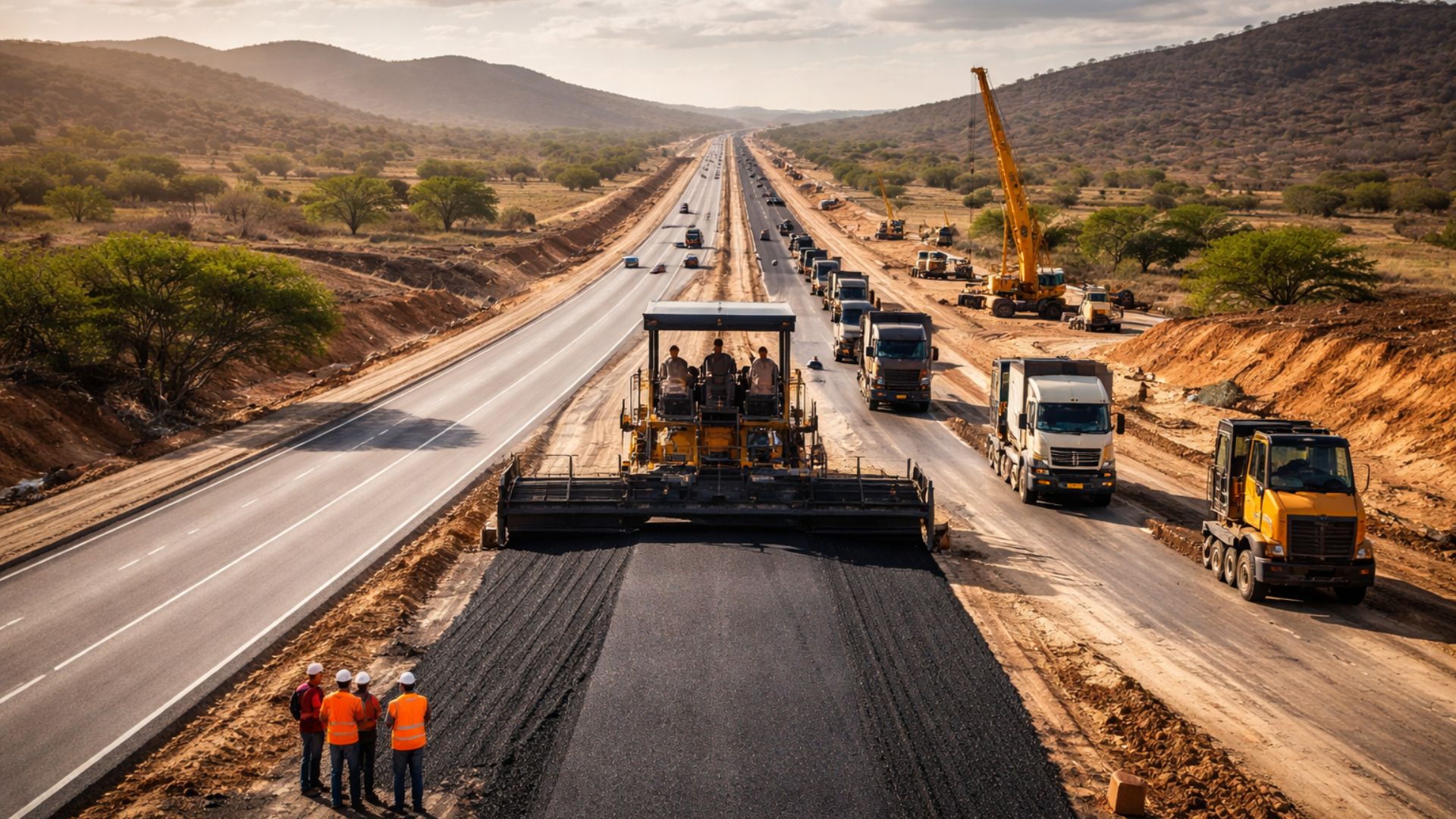
Government unlocks R$ 554 million for a highway that has been requested for decades and accelerates the duplication of BR.
-
Without bricks, without cement, and without endless construction: the cardboard house that is assembled in modules and can be moved.

-
Billions of barrels on the equatorial margin could lead Amapá to double its oil production in Brazil — the state aims to enter the route of companies in the Campos Basin, attract investments, and boost jobs and businesses in the oil and gas sector.
-
Without bricks, without cement, and without endless construction: the cardboard house that is assembled in modules and can be moved.
Venezuela loaded 10.86 million barrels of oil in the first 11 days of November, more than double the volume in the same period last month. About half of those barrels were loaded onto ships that turned off their transponders, which later delivered cargo to China and India, according to data compiled by Bloomberg.
Dynacom Tankers Management Ltd., manager of the Dragon, said in a statement sent by email that “since January 2019, none of the ships under our management has ever entered into any contract with any entity sanctioned by the U.S., nor has it ever violated any U.S. sanctions related to Venezuela or otherwise.” The company did not comment on why the Dragon’s signal had been off for the past three weeks or confirm whether the vessel was docked in the South American country.
Meanwhile, Rosneft said in an email statement that it and its subsidiary RTSA “did not charter ships in this logistics chain.” Its operations involving Venezuela “are based on contracts reached long before the sanctions and fully comply with all rules of international law.” The statement did not specifically address the use of transponders.
While it is possible for transponders, known as Automatic Identification Systems, to go offline, they usually do not stay off for long. The practice of hiding ships carrying oil is not new and can be done for competitive purposes or other reasons. Iran, another OPEC member sanctioned by the U.S. government, also uses dark ships to export its oil.
Recently, the U.S. targeted Chinese oil importers and shippers like Zhuhai Zhenrong Co. and a COSCO Shipping Corp. unit for allegedly handling Iranian oil. Zhuhai and COSCO routinely operate their ships with the signal activated, ship tracking data shows.
Venezuelan oil production – hampered by U.S. sanctions that limited its buyers and restricted access to oil tankers – fell to a new 16-year low of 644,000 barrels per day in September, cutting much-needed funds for Maduro’s regime. Unsold tanks and vessels, full of oil, are forcing operators to halt production in Venezuela’s oil-producing region known as Faja.
Earlier this year, Venezuela disguised deliveries to Cuba by renaming sanctioned ships and disabling the satellite tracking system, according to shipping data. The Trump administration wants to cut off the supply of oil to the Caribbean nation because it helps pay for intelligence, defense, and security assistance to Maduro, the U.S. Treasury Department said.
Darkness has become more common after companies like Unipec, the trading arm of state giant Sinopec, banned the use of oil tankers that operated in Venezuelan ports over the past 12 months.
While Unipec made an official addendum to its chartering contracts, others informally avoid ships that list Venezuela as the last port of call, according to people familiar with the situation.
The demand for Venezuelan oil has increased this month, with state oil company Petroleos de Venezuela SA winning customers, including Indian refinery Reliance Industries Ltd. Thai refinery Tipco Asphalt Public Co. Ltd. is also picking up Venezuelan oil in November, after a two-month absence.
Source: Information from Bloomberg and the author’s text from O Valor website








Seja o primeiro a reagir!