





 Portuguese
  English
  Spanish
  4 min of reading
  1 comment


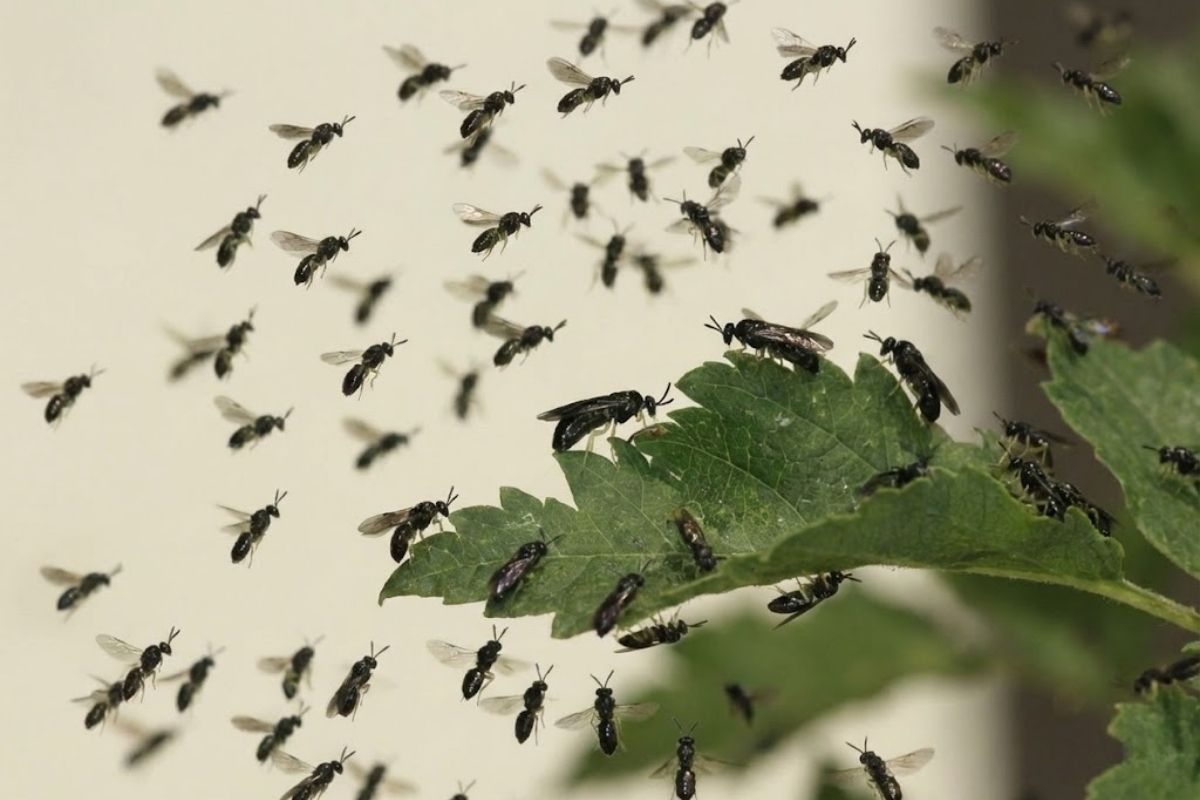


The Invasive Wasp Known As Elm Zigzag Sawfly, Less Than One Centimeter, Reproduces Without Males And Has Already Spread To 15 States Since 2020, From Canada To North Carolina, Attacking Elms And Zelkovas And Traveling Hitched To Trucks And Firewood In Mirrors And Wheels Too
The invasive wasp composed solely of females came onto the radar of biologists after being detected in North America in 2020 and, in just over five years, has expanded its presence across a broad swath of the continent. The insect measures less than one centimeter, produces only daughters, and leaves delicate zigzag marks on leaves, which can evolve into severe defoliation.
The advance is concerning because it targets elms as well as replacement trees in cities that are still dealing with historical losses of tree cover. On January 9, 2026, the situation was described as a second wave of pressure on urban areas where elms had already been decimated by a fungal disease last century.
Who Is The Pest And Why Does It Deceive By Name

The invasive wasp is known as the elm zigzag sawfly, but it is not a fly.
-
The Arctic is shrinking and in March 2026 recorded only 14.3 million km² of ice at the peak of winter, one of the lowest levels since 1979, reducing the planet’s ability to reflect heat and accelerating global warming.

-
The waste that can double a household’s water bill is not in the faucet or the shower; it happens hidden within the walls and can go unnoticed for months, according to sanitation experts.

-
Darkness can surpass light in an optical phenomenon confirmed by scientists, which expands the understanding of relativity and reveals new behaviors of waves in the universe.

-
A Brazilian scientist created a pen that touches human tissue and identifies cancer cells in seconds using a drop of water and artificial intelligence, and Lívia Eberlin’s invention has already been used in over 400 surgeries in the United States and Brazil.


It is a sawfly of the elm called Aproceros leucopoda, native to East Asia, identified on the continent with expansion described as “alarming” by researchers.
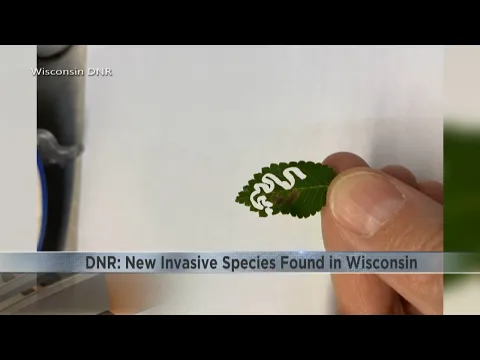
The common name comes from the feeding pattern: newly hatched larvae cut zigzag lines into the leaf tissue.
In some areas, the pattern appears as light scars; in others, feeding progresses to leave the tree nearly completely bare.
Accelerated Dissemination In 15 States And A Map That Just Keeps Growing

In just over five years, the invasive wasp has spread to 15 states in the United States, going from New Hampshire to Minnesota and down to North Carolina.
Entomologist Kelly Oten from North Carolina State University in Raleigh reports that the advance was so rapid that “only Indiana was left to be added” to her sightings map.
The available territory is vast because native elms cover a large part of the eastern United States and Canada.
The indicated expectation is for more records in 2026, with reports emerging in new counties and possibly in more states.
Reproduction Without Males And The Cruel Logic Of Parthenogenesis

The biological engine of this expansion is a reproductive strategy called teliospore parthenogenesis.
In this, females lay unfertilized eggs that only produce more females, allowing a single introduction to give rise to an entire infestation.
In practice, this means that a single egg accidentally transported can start a new focus.
So far, no males have been found, reinforcing the pattern of exclusively female reproduction.
From Cute Zigzag To Almost Total Defoliation
The onset may seem discreet, with fine zigzag patterns.
But as the larvae mature, the invasive wasp can cause severe defoliation and leave the tree almost bare, reducing leaf area and increasing physiological stress.
There is still uncertainty about the outcome: at the moment, it is unclear whether the attack kills the tree or just intensely stresses it, weakening resistance and opening the way for new problems.
Elms Are Not The Only Target And The Zelkova Comes Into Play
To test whether the invasive wasp would attack beyond elms, Oten’s team planted Japanese Zelkovas (Zelkova serrata) near an infested site in Ohio.
Many cities have begun to plant zelkovas as they are relatives of elms and appear resistant to Dutch elm disease, the fungal disease that killed tens of millions of American elms last century.
The researchers observed the wasp laying eggs, feeding, pupating, and emerging as adults on zelkova seedlings, which drop leaves earlier in the spring.
Later, with the progression of the season, the pest returned to elms, suggesting that zelkova may serve as a alternative host when elm foliage is not available.
Forest entomologist Véronique Martel from the Canadian Ministry of Natural Resources considers this type of host-switching rare and evaluates that this ability may make the species even more successful, allowing earlier reproduction and many generations in one summer.
Human Hitchhiking, Firewood, And Trucks Taking The Pest Beyond Natural Limits
Besides biology, there are unwitting accomplices.
The annual natural dispersal range is estimated between 45 and 90 kilometers, but the invasive wasp has been found traveling much further than that.
The team documented cocoons with pupae clinging to side mirrors and wheel wells of trucks.
This allows the insect to cross long distances without needing to fly, jumping from one region to another.
There is also suspicion that the pest may have arrived in North America hidden in the soil of a houseplant.
What Is Being Tested And What Residents Can Do Now
Oten is testing pesticides to help property owners protect trees.
The initial tests with two insecticides applied to the soil have been described as promising, with expected release of complete results in a few months.
Meanwhile, the practical recommendation is straightforward: check vehicles before leaving infested areas, looking for cocoons stuck to external parts, and report zigzag patterns on leaves to local extension offices.
In cities already marked by historical elm losses, early detection becomes part of the control.
In your area, do you think the invasive wasp will be contained with vehicle inspections and rapid response, or will hitchhiking on cars and firewood make this forest crisis inevitable?






É de se preocupar, os institutos brasileiros, precisam conter está vespa,e estuda-la, antes que ela venha em containers dos EUA e de outros continentes!
Fica a alerta!