





 Portuguese
  English
  Spanish
  5 min of reading
  0 comments


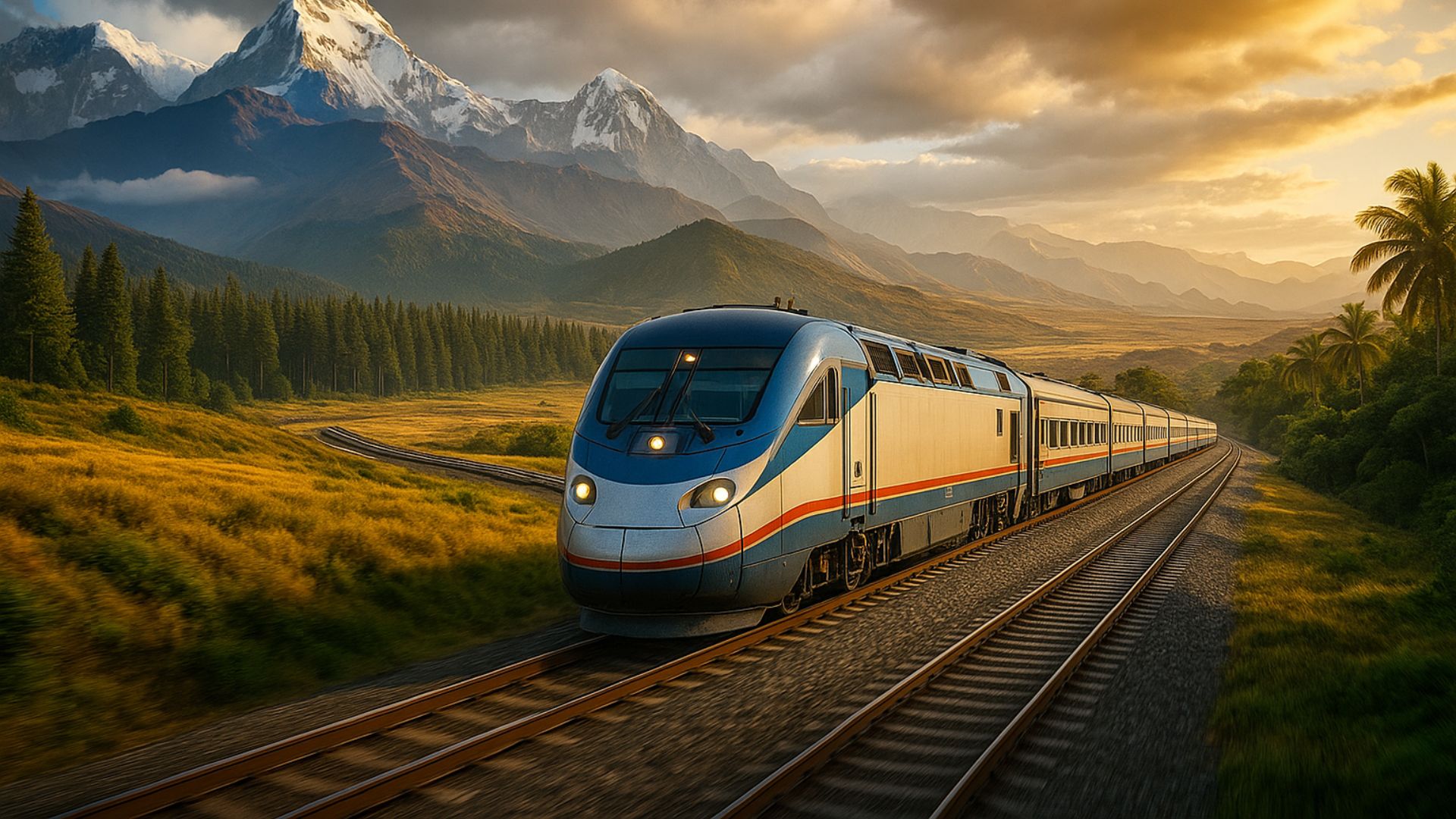
Continuous Rail Links Between Europe and Southeast Asia Form One of the Longest Routes in the World, Connecting Different Cultures, Climates and Landscapes on a Journey of Almost 19 Thousand Kilometers Over Three Weeks.
Over about three weeks and almost 19 thousand kilometers of tracks, an itinerary that begins in the south of Portugal and ends in Singapore is today presented by railway experts as the longest possible commercial train journey in continuous operation, even though it is made up of several separate sections.
The route, which starts in the Algarve and ends in the city-state of Southeast Asia, crosses 13 countries, passes through four major regions of Eurasia, and combines travel, tourism, and meticulous planning for those who wish to cross continents while avoiding planes.
The idea is not to board a single train from start to finish, but to stitch together existing national and international connections into a kind of “continuous line” between the Iberian Peninsula and Southeast Asia.
-
In A European City, The Country’s Largest Railway Junction Was Modernized Without Closing Its Doors, Kept Trains Running During Years Of Construction, Now Serves Up To 60,000 Passengers Per Day, And Installed Solar Panels That Generate About 30% Of Its Energy
-
Famous Brazilian Railway May Become a Parking Lot
-
The Country of “Punctual As a Train” Admits It Has Lost Control: High-Speed Trains Delay, Stop, Disappear from the Map and Turn 6-Hour Trips into 10, While Deutsche Bahn Promises Restructuring in 2026 But Faces 19th Century Infrastructure, Staff Shortages and Sections Closed for Months
-
With an Investment of R$ 700 Million in One of the Country’s Main Rail Networks, VLI Reinforces Infrastructure, Receives 8 New Locomotives, and Expands the Corridor Connecting 7 States, Boosting Jobs and the Transportation of Grains, Ore, and Oil Products to the Port of Santos

In many cases, the traveler alternates between high-speed trains, regional trains, and overnight services, with nights in sleeper trains and others in accommodations along the way.
Why This Train Journey Is So Unique
More than the record distance, what sets this route apart is the concept of crossing almost the entire Eurasia solely by rail.
The journey begins in the southwestern tip of Europe, in the Algarve region, and ends in Singapore, one of the main financial and logistical hubs in Asia.
Between one point and another, the traveler experiences gradual changes in landscape, language, architecture, and climate, rather than a direct leap by plane.
Another striking aspect is the geographical cross-section.
The itinerary passes through Western Europe, moves through sections of Central and Eastern Europe, crosses Russia and Northern Asia, and finally descends into Southeast Asia.
This railway stitching only became feasible in continuity starting in 2021, with the inauguration of the railway linking China to Laos, closing an essential gap between Kunming and Vientiane.

From there, it became possible to continue on to Thailand, Malaysia, and Singapore entirely by rail.
There is also a comparative component.
In relation to an intercontinental cruise, the train journey takes less time to cover a similar distance.
Compared to flying, enthusiasts highlight greater control over the journey and less environmental impact, as the route can emit significantly fewer greenhouse gases.
What Is the Route from Portugal to Singapore Like
In practice, the itinerary is usually planned starting from Lagos, in the Algarve, or from other cities in the region, with initial travel to Lisbon.
From the Portuguese capital, the passenger heads toward Spain and crosses the border to advance to France, using an integrated network of regional, long-distance, and high-speed trains.
The most commonly publicized route includes stops in cities like Madrid and Paris before proceeding to Germany and other countries in the European Union.
After Western Europe, the itinerary advances eastward, reaching Central and Eastern Europe, with possible stops in Berlin and Warsaw.
Moscow appears as one of the main hubs, a meeting point for routes to Siberia, Central Asia, and the Russian Far East.
It is from the Moscow region that the route approaches the more famous paths, such as the Trans-Siberian and Trans-Mongolian railways, used to reach Siberia, Mongolia, and then China.
This stage typically includes long stretches, with entire days of travel across vast plains and the use of sleeper cars, an important part of the experience.
In the final phase, already in Chinese territory, the route incorporates metropolises like Beijing before heading south.
With the connection made possible by the China-Laos railway, the traveler passes through Vientiane and continues to Thailand, Malaysia, and Singapore.
At some points, bus connections may occur, depending on the available rail services at the time of travel.
Since the start of the war in Ukraine, some railway connections between Western Europe, Central Europe, and Moscow have been suspended or limited.
As a result, many travelers need to revise sections, substitute routes, or seek alternatives that avoid Russian territory.
How Much Does It Cost and How to Plan the Route

The most cited value by operators for the entire main segments is around 1,200 euros in tickets.
This figure, however, is an approximate reference, as there is no single ticket for the whole journey.
The cost usually does not include food, sleeper reservations, additional fees, local excursions, or accommodations.
Depending on the pace, the number of stops, and the advance purchase, the final cost can vary considerably.
Additionally, it is necessary to determine where it is best to stay in hotels and where it is worth sleeping on the train, taking advantage of cabins with beds.
It is also essential to check visa requirements, mandatory insurance, and entry rules in each country, which vary and can change.
Another point is the coordination of schedules between operators.
Since the route requires multiple connections, it is advisable to avoid changes with very short intervals, especially at borders.
The purchase of travel insurance covering long distances and multiple countries is recommended.
Trip Stages in Four Main Blocks
To facilitate planning, the route is usually divided into four main stages.
- Western Europe Segment: Portugal, Spain, France, and Germany.
- Central and Eastern Europe Segment: connections toward Belarus and Russia.
- Northern Asia Segment: Siberia, Mongolia, and arrival in China.
- Southeast Asia Segment: China, Laos, Thailand, Malaysia, and Singapore.
Organizing the route this way helps the passenger visualize costs, reservations, and any adjustments along the journey.
Why the Route Attracts So Many Travelers
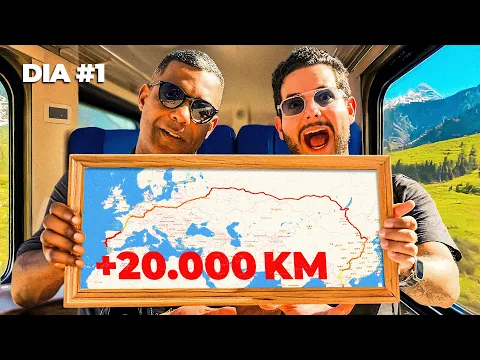

The growing interest is linked to the idea of “slow travel”, where the journey is part of the experience.
Instead of a flight lasting just a few hours, the passenger follows the transition between historic neighborhoods, rural areas, steppes, and large urban centers.
The combination of a certain level of comfort and a dose of adventure also contributes to the popularity of the route.
There are dining cars, cabins with beds, and basic services onboard.
Even so, the traveler deals with train changes, language barriers, border controls, and cultural differences.
Another point of interest is the environmental aspect.
Some estimates suggest that the rail route can emit much less greenhouse gas than its air transport equivalent.
Despite the challenges and necessary adjustments, the itinerary between Algarve and Singapore continues, in 2025, to arouse curiosity among those seeking grand journeys by rail.
Given such an extensive and diverse path, the question remains: would you embark on a 21-day journey crossing continents solely by rail?









-

Uma pessoa reagiu a isso.