





 Português
  Inglês
  Espanhol
  5 min de leitura
  0 comentários


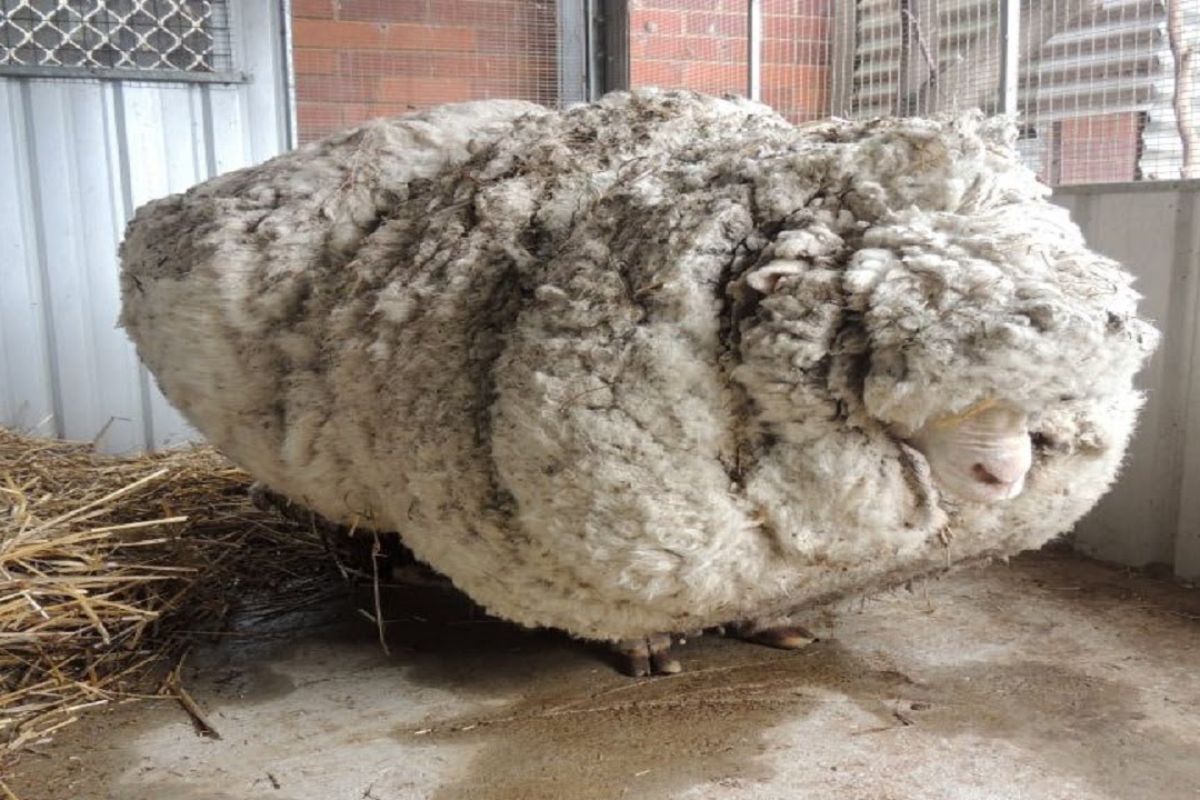
Found In Mulligan’s Flat, Near Canberra, The Abandoned Sheep Hardly Stood Under Giant Wool. The RSPCA Feared Parasites, Infections, And Even Difficulty Urinating And Defecating. In 2015, Champion Shearer Ian Elkins Anesthetized The Animal, Removed 89 Pounds In 45 Minutes, And Changed Its Destination.
The abandoned sheep was spotted by a hiker during a walk in a protected natural area in Australia, and the first shock came even before identifying the animal. The volume of wool looked like a mass almost the size of a small car, until movement in the grass confirmed that there was a sheep there.
When the scene became clear, the problem also became: the abandoned sheep could hardly walk under its own weight, and a fall could be a death sentence. Without handling and shearing, the risk ceases to be “appearance” and becomes survival, especially in a vegetated area where rescue does not happen on its own.
The Encounter In Mulligan’s Flat And What Caught Attention On The Ground

In 2015, the hiker was crossing Mulligan’s Flat, near Canberra, a reserve known for its biodiversity and for gathering around 150 species of wildflowers.
-
Drought may be creating stronger superbugs in the soil and helping antibiotic resistance reach hospitals, warns a study highlighting a problem that could grow alongside extreme weather.

-
The biggest scam in history: Napoleon’s France deceived the United States by selling them a territory that was Spanish.

-
Why is the Danakil Desert so dangerous? It has unstable terrain and how extreme temperatures and toxic gases turn the region into one of the most hostile environments on Earth.

-
With a height of 221 meters and a capacity for trillions of liters, Hoover Dam still holds a trick that makes water defy logic.


Instead of just finding wildlife and trails, he noticed a clear and voluminous mass on the grass, too large to seem normal from a distance.
As he approached, he realized it was an abandoned sheep with wool accumulated to the point of deforming its silhouette and limiting its movements.
The immediate decision was to call the RSPCA to remove the abandoned sheep from the location and take the case for evaluation, because the problem was not “shearing when possible,” but understanding what the wool was hiding.
Why Excess Wool Becomes A Clinical Risk, Not Just A Visual Problem

The initial alert from the team was technical: an extreme fleece can conceal infections, wounds, and parasites, in addition to making any body inspection difficult.
When the skin is under constant tension and without easy access for examination, the chance of a condition evolving “beneath” increases.
There was also an objective described functional risk: such a large fleece could even prevent the abandoned sheep from going to the bathroom, with the possibility of accumulated damage over time.
Therefore, shearing became an urgent measure, not for aesthetics, since wool can turn into a layer that masks symptoms and delays diagnosis.
The Appeal For Specialists And The Role Of RSPCA Leadership

With the abandoned sheep under care, the RSPCA made an online appeal for specialized support for an out-of-the-ordinary shearing.
CEO Tammy Van Dang explained to ABC that it would be ideal to have a specialist immediately to assess serious medical conditions that could be behind the accumulated wool.
The operational point was clear: the weight of the wool was pulling the skin down, increasing the risk of cuts, and the history of isolation left the animal skittish.
A shearing too quick could injure, and a too slow shearing could maintain the risk, so the call for someone with real experience was part of damage control.
The Record Shearing: Sedation, 45 Minutes, And 89 Pounds Removed
To reduce stress and make the procedure feasible, the abandoned sheep was sedated before the main cut.
The shearing was completed without incidents, but the time drew attention: more than 45 minutes of session, when an average shearing usually takes about 2 minutes.
The final result underscored the severity of the accumulation: the removed wool weighed 89 pounds on the scale, described as about eight times what an average Merino sheep would produce.
The shearing became a double turning point, because it relieved movement and, at the same time, opened the way to assess the health that was literally covered.
Previous Records, Comparison With New Zealand, And The Fate Of The Wool
The case entered the record conversation for surpassing previous references associated with other sheep, including the famous Shrek, found wandering the New Zealand countryside in 2004 with a “coat” weighing almost 27 kg.
In the 2015 episode, Chris’s shearing surpassed that mark by almost 13.6 kg, a number that circulated along with the repercussions of the rescue.
The wool of Chris did not just remain as a curiosity: it was placed on permanent display at the National Museum of Australia, in Canberra, as a piece linked to the history of the wool industry and the debate on animal welfare.
The embedded message is uncomfortable and simple: today, sheep have been bred to retain wool, which increases reliance on regular handling and shearing to avoid health collapses.
From Rescue To Adoption, And What The Abandoned Sheep Revealed In The Long Term
After the shearing, the abandoned sheep began to be called Chris and the future was still uncertain in the short term, even with public attention.
Hundreds of adoption offers came in, and in September 2015 Chris was sent to live at the Little Oak Sanctuary in Braidwood, New South Wales.
In 2016, Tammy Van Dang reported to The Canberra Times that Chris, previously very shy, had become bolder, began to eat from a bucket, became more courageous around people, and could now sit without difficulty.
The abandoned sheep became a symbol because of the image, but the core of the story is logistics and routine: without shearing and monitoring, an animal bred to retain wool can enter serious risk without “noise” until it is too late.
The story of the abandoned sheep serves as a case of hidden risk: the wool drew attention, but the real impact was the possibility of infections, parasites, and physical limitations that would only be confirmed after shearing.
When the response depends on specialists, time and sedation make it clear that animal welfare is method, not improvisation.
What was the most impressive case of neglected animal you have seen up close, and what would have made a difference there: oversight, mandatory identification, or a faster rescue?








-

-

-

4 pessoas reagiram a isso.