





 Portuguese
  English
  Spanish
 6 min of reading
  1 comment


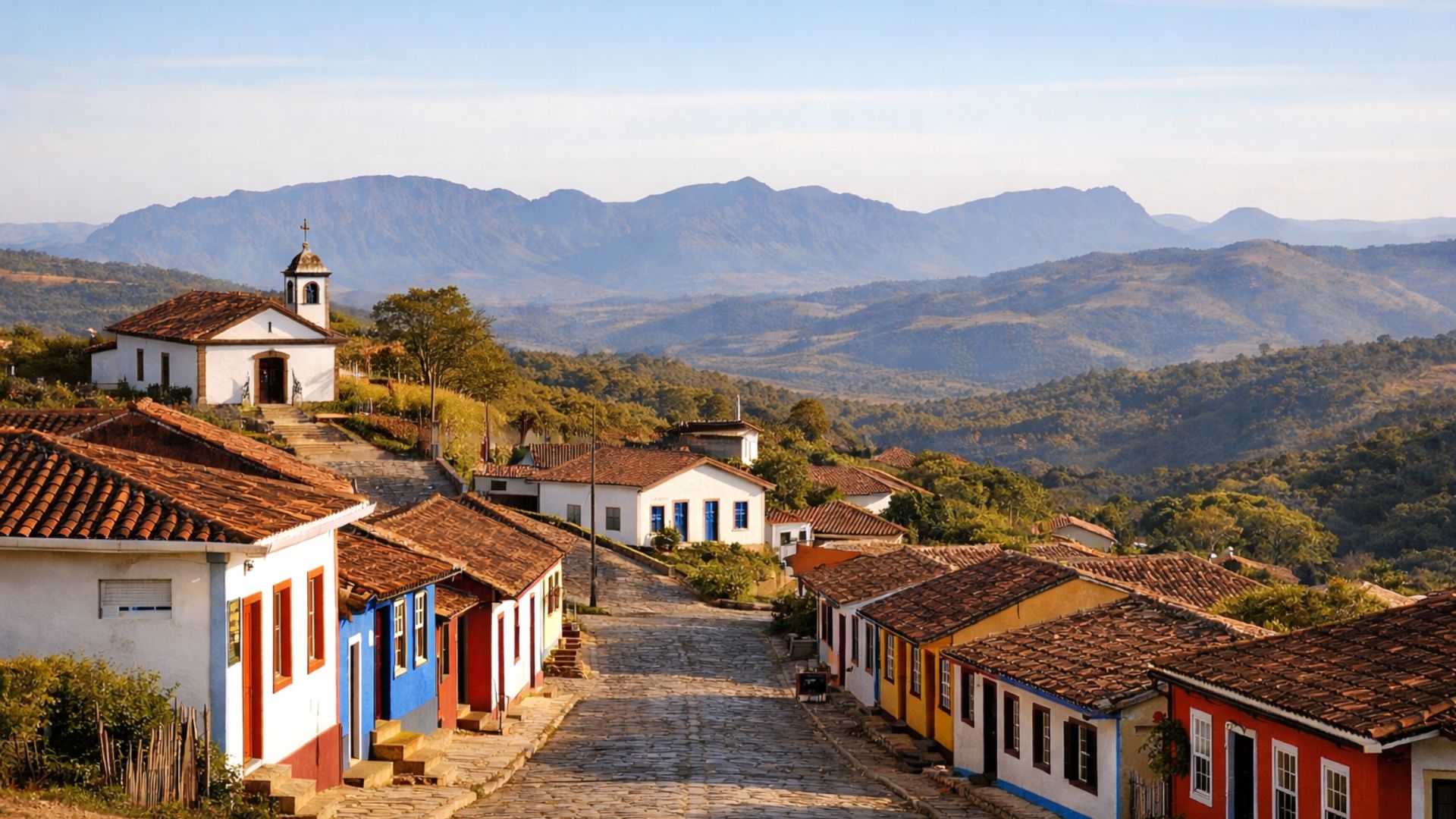


Mining District in the Serra do Espinhaço Combines High Altitude, Past Linked to the Gold Cycle, Structured Ecotourism, Mild Climate Throughout the Year, and Accommodations Focused on Rest, in a Scenery of Mountains, Trails, Waterfalls, and Traditions Preserved in the Interior of Minas Gerais.
Lavras Novas, a district of Ouro Preto, in Minas Gerais, features stone streets, colorful houses, and a routine marked by nature tourism in the Serra do Espinhaço, where the pace slows down and the mountain scenery dictates the local way of life.
About 120 km from Belo Horizonte, the village has established itself as a frequent weekend destination for those seeking tranquility, typical cuisine, and outdoor activities in an area located at 1,300 meters altitude, a condition that ensures cooler nights than those recorded in the capital.
Amid lookouts, mountains, and trails, the village combines imposing natural landscape with a past linked to the gold cycle, preserved less in monumental constructions and more in the collective memory and traditions maintained by the locals.
-
A 48-square-meter house assembled in hours with 4,000 bricks made of recycled plastic that does not absorb moisture, has natural thermal insulation, and costs less than 90,000 reais in a complete kit.

-
Luciano Hang revealed that Havan’s air fleet has already accumulated more than 20,000 landings, 10,000 flight hours, and 6 million kilometers traveled, and he says that without the planes, the company would never have grown so quickly.

-
A historical discovery in the Andes Mountains reveals a gold deposit valued at 770 billion reais hidden over 4,000 meters above sea level on the border between Chile and Argentina, and the whole world is watching.
-
With just joint compound, white glue, and pigment, you can make a homemade paint that yields double the conventional amount, saves up to 70%, and leaves the wall with a finish that no one would believe wasn’t store-bought paint.


With this, Lavras Novas offers a balance between tranquility and movement, allowing for both hikes and quad bike rides as well as periods of rest in inns with fireplaces, hot tubs, and views of the mountains.
Altitude and Relief Shape the Landscape of the Serra do Espinhaço


The high altitude explains much of the first impression of those arriving at Lavras Novas, especially due to the sense of expansiveness provided by the relief.
From the top of the mountain, the horizon opens up to deep valleys and rocky ridges, forming lookout points highly sought after in the late afternoon when the light changes and enhances the contours of the landscape.
In this context, formations like the Serra do Trovão frequently appear in local tourist materials, both as a visual reference and as an area designated for trails and lookouts.
In addition to beautifying the scenery, the relief supports a set of springs and waterways responsible for waterfalls and natural pools, which become even more sought after during the warmer periods of the year.
At certain times, mist appears in the early morning hours and dissipates throughout the day, quickly changing the visual and altering the perception of distance between the surrounding mountains.
Colonial Origin and Simple Architecture in the Historical District
The history of Lavras Novas dates back to the beginning of the 18th century, when mining drove the occupation of the mining territory and structured paths between settlements and support points in the region.
Unlike the historic center of Ouro Preto, marked by churches and baroque buildings, the district preserves a simpler architecture, associated with communities that developed on the margins of the large gold-exploration hubs.
In this scenario, community life organizes around religious references, local commerce, and neighborly relations, maintaining a small village profile even with the constant presence of visitors.
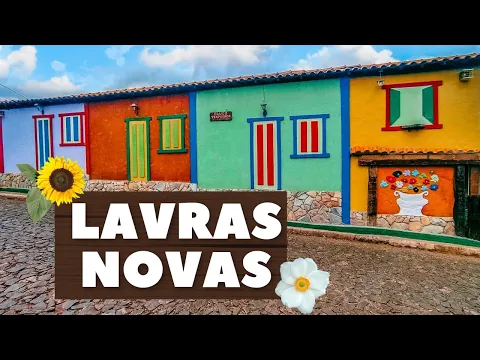
One of the most recognized symbols is the Igreja de Nossa Senhora dos Prazeres, cited by the City Hall of Ouro Preto as a construction featuring characteristics of the 18th century and a central point in the urban landscape.
The temple and its surroundings serve as a meeting space and help explain why Lavras Novas retains, to this day, an intimate atmosphere, despite the growth of tourism.
Legends of the Gold Cycle Preserved in Oral Tradition
Beyond historical records, Lavras Novas keeps alive an oral tradition that spans generations and reinforces local identity.
Among the best-known narratives is the legend of the Mãe de Ouro, often described in folklore as a ball of fire associated with hidden deposits and ancient mining sites.
In tourist materials and residents’ accounts, this story appears as part of the imagery constructed during the gold cycle, preserved mainly through oral transmission.
As in other regions of Minas Gerais, the value of the legend lies less in documentary proof and more in its persistence as a cultural element.
Still, the presence of these narratives helps connect the current experience of those visiting the district to a past that deeply marked the occupation of the mountain.
Nature Tourism and Well-Being Drive the Local Economy
Today, tourism is the main economic activity of Lavras Novas, driven by experiences that combine adventure, contact with nature, and accommodations focused on rest.
Promotional materials for tourism in Minas Gerais highlight the milder climate provided by the altitude, noting that even in summer the nights tend to be cool.
This characteristic directly influences the offerings of inns, many of which are equipped with fireplaces and environments designed for the thermal comfort of guests.
In gastronomy, the district maintains the Minas Gerais tradition of wood-fired cooking and homemade recipes, while also incorporating dishes associated with mountain destinations, such as fondues and preparations with trout.
At the same time, handicrafts appear as a complement to income and cultural expression, with pieces valued by visitors, especially those linked to traditional raw materials from the region.
Waterfalls, Lookouts, and Adventure Sports in the Mountains
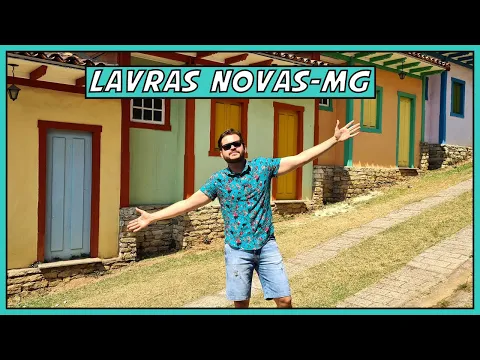
The mountainous geography allows for the construction of varied itineraries, alternating moments of tranquility with activities of greater physical intensity.
There are waterfalls with relatively easy access, with shallow pools sought after by families and couples looking for a swim and rest.
The Cachoeira dos Namorados is cited by the City Hall of Ouro Preto as one of these areas, known for its small pools and proximity to other natural attractions in the district.
The surroundings also feature lookouts used for sunset observation and dirt roads that serve as trails for hiking, biking, and motorized tours.
At the same time, specialized companies offer activities such as rappelling and zip-lining, which are part of adventure tourism and require professional supervision and adequate safety conditions.
Itacolomi State Park in the Surroundings of Lavras Novas
Lavras Novas frequently appears as a support point for those looking to explore larger natural areas around Ouro Preto and Mariana.
Among them, Itacolomi State Park is one of the most mentioned, especially for housing trails and areas of Atlantic Forest preservation.
Established in 1967, the park is presented by official tourism channels in Minas Gerais as the guardian of the Pico do Itacolomi, a historical landmark associated with the old Estrada Real.
On the other hand, accessing the park requires attention, as there have been periods of closure for works and interventions, communicated by responsible agencies.
There are also official guidelines regarding visitation, making it advisable to check the rules and conditions beforehand before including the site in your itinerary.
Altitude Climate Ensures Cool Nights and More Intense Winter
The expression “cold all year round” frequently appears in tourist promotion materials, but what is sustained with more accuracy is the pattern of mild climate related to altitude.
This condition ensures cooler nights even during the summer, differentiating the district from lower areas of the region.
In winter, the cold tends to intensify, especially in the higher areas, where the combination of wind and mist alters the thermal sensation.
This scenario reinforces the demand for accommodations with fireplaces, hot baths, and dining experiences associated with the colder period.
This climatic variation helps explain why Lavras Novas performs well in different seasons of the year, alternating the focus between waterfalls in the warmer months and comfort and gastronomy in the winter.







A primeira foto não é Lavras Novas. O autor da matéria deveria conhecer o lugar e tirar suas próprias fotos antes de publicar um artigo