





 Portuguese
  English
  Spanish
  4 min of reading
  0 comments


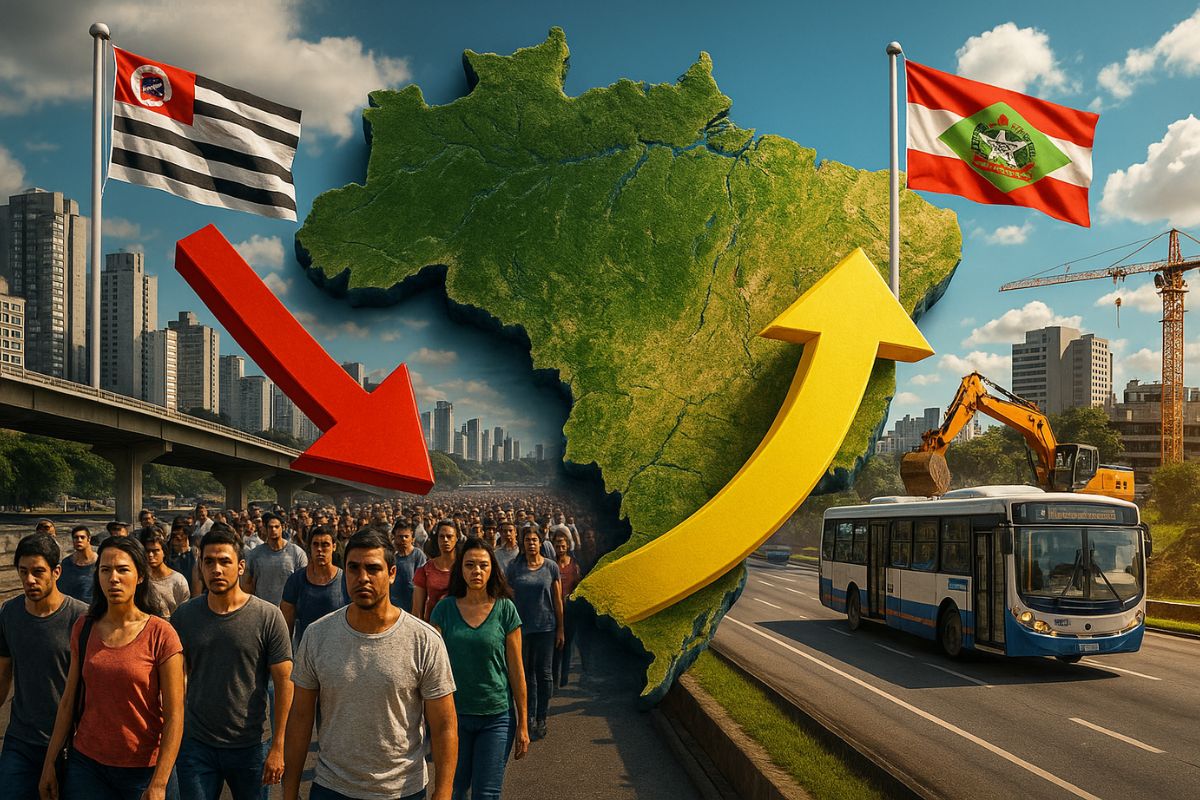
Historical Turn in the Demographic Map: Santa Catarina Attracts More Migrants, While São Paulo Registers Negative Balance for the First Time.
Santa Catarina attracts more migrants and consolidates an unprecedented turn in the country. Data from the 2022 Census, released in 2025, shows a positive migration balance of 354 thousand people between 2017 and 2022, a result that inaugurates a new cycle: for the first time, São Paulo has more departures than arrivals, and the axis of internal migration shifts to the South.
The movement is not episodic. Santa Catarina attracts more migrants due to a combination of formal jobs, public safety, and quality of life. The coastal and inland cities share in the growth, with Itapoá at the national top: 24.3% of its population was born in other municipalities, an indicator that reveals the strength of the phenomenon.
What Changed in the Migration Map
The loss of momentum of São Paulo as the main receiving hub for Brazilians marks a rare demographic inflection.
-
With more than 635,000 doctors, Brazil sees competition increasing in large cities, and recent graduates are competing for shifts at an accelerated pace while the countryside still faces shortages.

-
The world’s first octopus farm wants to open in the Canary Islands and is already provoking an international reaction: the plan aims to produce 3,000 tons per year.

-
Drought may be creating stronger superbugs in the soil and helping antibiotic resistance reach hospitals, warns a study highlighting a problem that could grow alongside extreme weather.

-
The biggest scam in history: Napoleon’s France deceived the United States by selling them a territory that was Spanish.


The state still concentrates opportunities but sees families and professionals migrating in search of a more predictable cost of living and a routine less vulnerable to urban violence.
In parallel, Santa Catarina offers a heated market, historically low unemployment rates, and an environment perceived as safer.
This reconfiguration of internal flows reorganizes family and corporate strategies.
Companies expand productive units and logistics centers in Santa Catarina cities, while qualified professionals and also the operational base seek real job openings in industry, services, agriculture, and technology.
Santa Catarina attracts more migrants because it converts economic growth into tangible employability.
How Much and Where The Flows Come From
Between 2017 and 2022, the net gain of 354 thousand people places Santa Catarina in the national lead for migration balance.
The flow is mostly internal, with significant origins in Rio Grande do Sul, Paraná, São Paulo, and Pará.
Alongside interstate migration, the international presence diversifies, with a focus on Haitians, Venezuelans, and Argentinians.
Cities like Chapecó have gained prominence in absorbing foreign labor, while Joinville, Itajaí, Blumenau, and Florianópolis concentrate openings that anchor the new attraction cycle.
Why Santa Catarina Attracts More Migrants
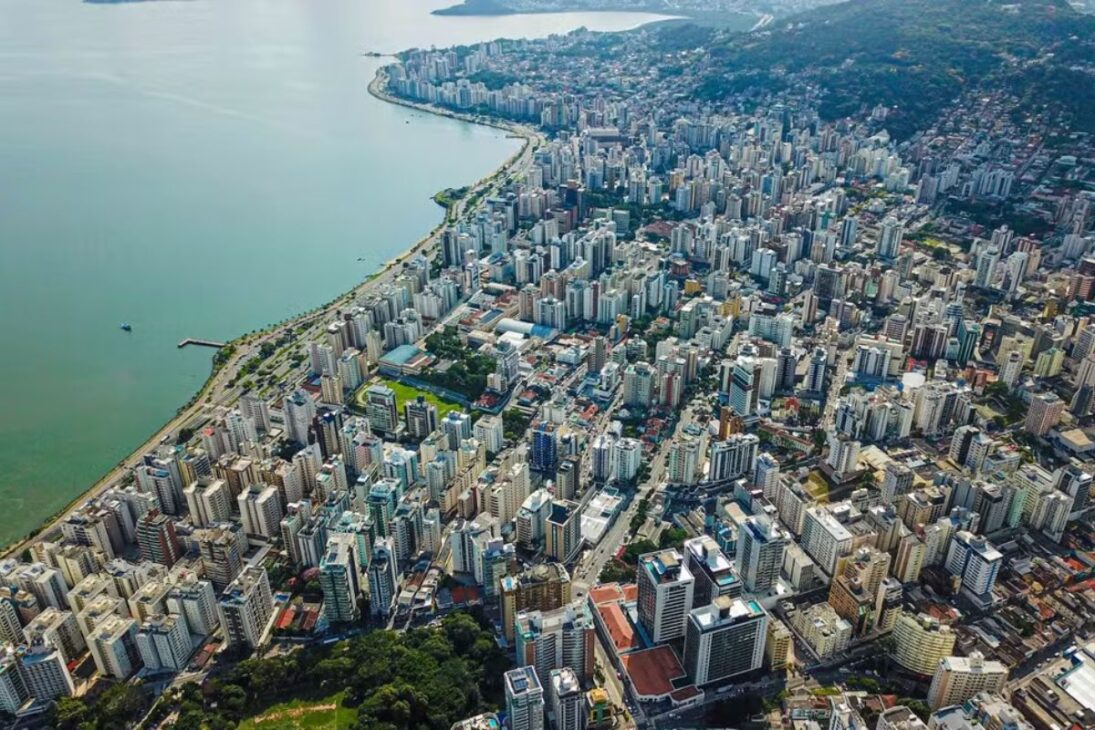
Formal jobs with low turnover. The state maintains unemployment rates among the lowest in the country and consistently opens positions, particularly in industry (textile, metalworking, food), logistics, and construction, in addition to services. This reduces uncertainty for newcomers and enables social mobility.
Safety and predictability of everyday life. Security indicators better than the national average weigh in on family decisions, especially for those arriving with children.
The sense of an organized routine and shorter commutes also contributes to the appeal.
Quality of life and infrastructure. Coastal cities and the Itajaí Valley combine sanitation, educational offerings, and healthcare networks at levels that sustain population density even under pressure.
Santa Catarina attracts more migrants because it offers a balance between work and life perceived as a unique feature.
Economic and Social Impacts of the New Cycle
A more diverse job market. The arrival of professionals from different backgrounds elevates healthy competition, increases productivity, and injects new skills into local productive arrangements.
Startups and industries benefit from talents migrating with prior experience.
Expanding consumption and services. More residents mean demand for housing, education, health, mobility, and culture.
Commerce and construction accelerate, and the public sector needs to respond with urban planning and fiscal capacity.
Broadened cultural integration. Santa Catarina attracts more migrants and becomes more diverse.
The presence of different accents, cuisines, and religions enriches community life, but requires active welcoming policies to reduce friction.
Challenges of Accelerated Arrivals
Pressure on infrastructure. Rapid densification stresses traffic, sanitation, and the education system. Metropolitan planning and affordable housing become priorities to avoid disordered expansion and increased inequalities.
Integration and combating xenophobia. Cases of discrimination against internal and foreign migrants demand institutional and community response.
Qualification programs, teaching Portuguese to foreigners, and labor intermediation help transform arrival into productive inclusion.
Cities in Focus and Their Roles in the Flow
Joinville leads industry and corporate services, Itajaí and Itapoá enhance ports and logistics, Blumenau supports textiles and technology, Chapecó anchors agroindustry, while Florianópolis scales technology and attracts qualified labor.
The municipal mosaic explains why Santa Catarina attracts more migrants: there is space for different professional profiles and life projects.
What to Expect in the Coming Years
If the current cycle continues, the capacity for absorption will depend on three key areas:
(1) urban planning focusing on mobility, housing, and services;
(2) continuous professional qualification to align supply and demand;
(3) integration policies that protect rights and promote coexistence. Without these keys, the demographic bonus becomes a bottleneck; with them, it becomes a lasting competitive advantage.
The turn that places Santa Catarina attracting more migrants at the center of the map indicates a Brazil in rearrangement, where cities and states compete for people with jobs, safety, and well-being.
The balance of 354 thousand new residents in five years shows that everyday decisions such as having a formal job, schools close to home, and quieter streets count more than slogans.
Have you ever left your state to try life in Santa Catarina or are you thinking of leaving? What weighed (or would weigh) in your decision: job, cost of living, safety, schools for children? Share your experience in the comments we want to hear from those living through this change.









Seja o primeiro a reagir!