





 Portuguese
  English
  Spanish
  7 min of reading
  0 comments


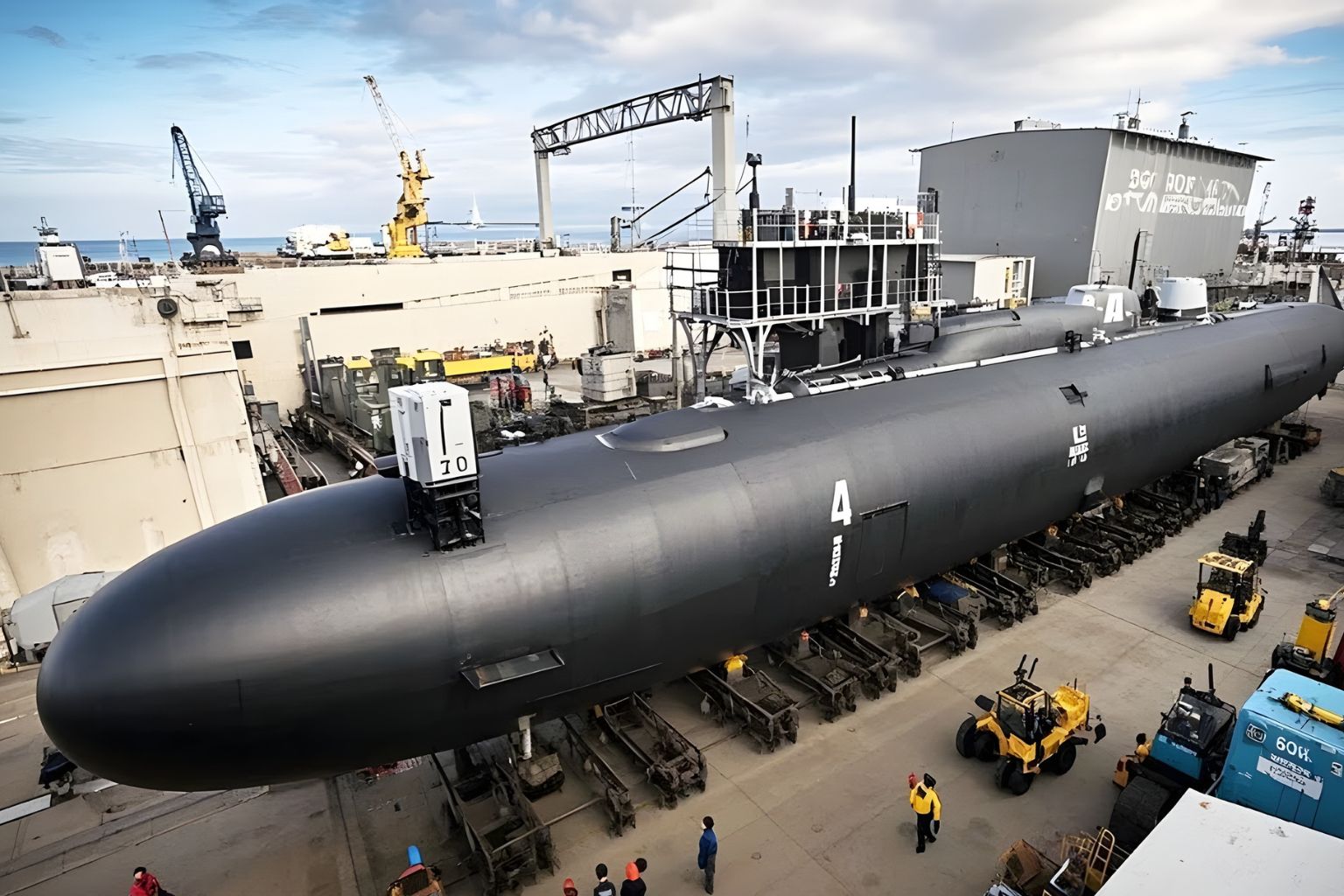
Virginia Block V Nuclear Submarine: How the Largest Class of Submarines in the US Navy Replaced Cold War Submarines and Became the Fleet’s Main Attack Vessel
On July 25, 2025, the United States Navy decommissioned the USS Helena (SSN-725), a Los Angeles-class nuclear attack submarine commissioned in 1988. Submarine decommissioning ceremonies typically occur with little publicity, reflecting the discreet nature of submarine operations. However, the event marked a significant statistical turning point within the structure of the American submarine force. With the Helena’s withdrawal from active service, the Virginia class officially became the largest class of nuclear attack submarines in operation within the United States Navy and the world. This milestone symbolized the maturity of a program initiated in 1998, which over two decades evolved to become the primary attack submarine project of the American fleet.
The transition also reflected a structural transformation of the submarine force. Los Angeles-class submarines, conceived during the Cold War to counter the Soviet Union, began to be gradually replaced by Virginia-class submarines, designed to operate in a completely different strategic environment marked by rivalries in the Indo-Pacific and operations in complex maritime zones.
Despite the maturity of the Virginia program, industrial production of the nuclear submarine was still operating in 2025 at approximately 60% of the rate planned by the US Congress, creating significant challenges for the Navy’s strategic planning.
-
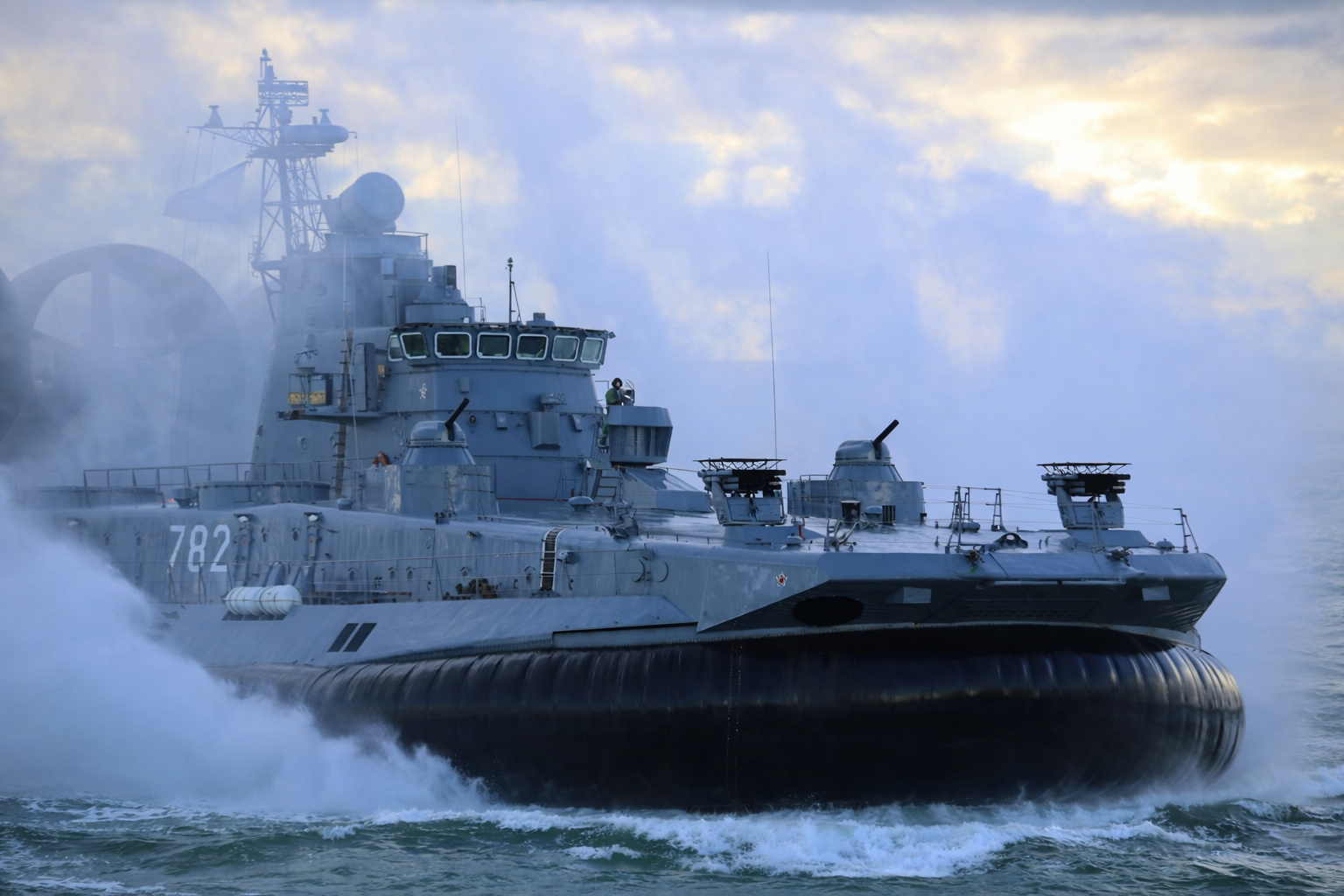
Classified as a “amphibious monster” weighing 555 tons, 57 meters long, and featuring three propellers with a diameter of 5.5 meters, the Zubr is the largest military hovercraft ever built, capable of transporting 3 tanks or 500 soldiers at speeds exceeding 100 km/h over water, ice, and sand, and China has resumed production of it to project power in the South China Sea.
-
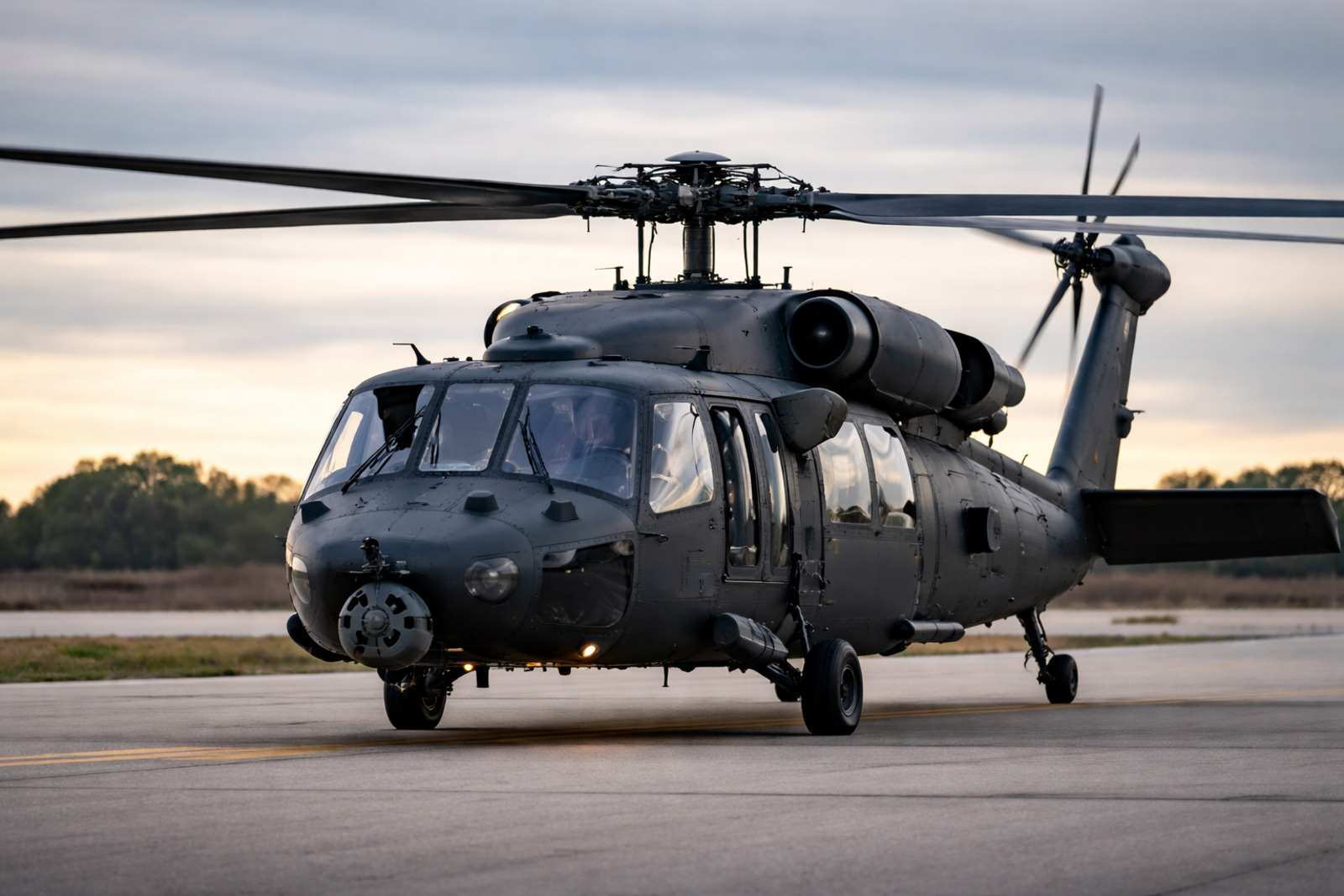
The U.S. Army receives the first Black Hawk helicopter that can fly without pilots, be controlled by a tablet, and even land on its own during high-risk missions.
-
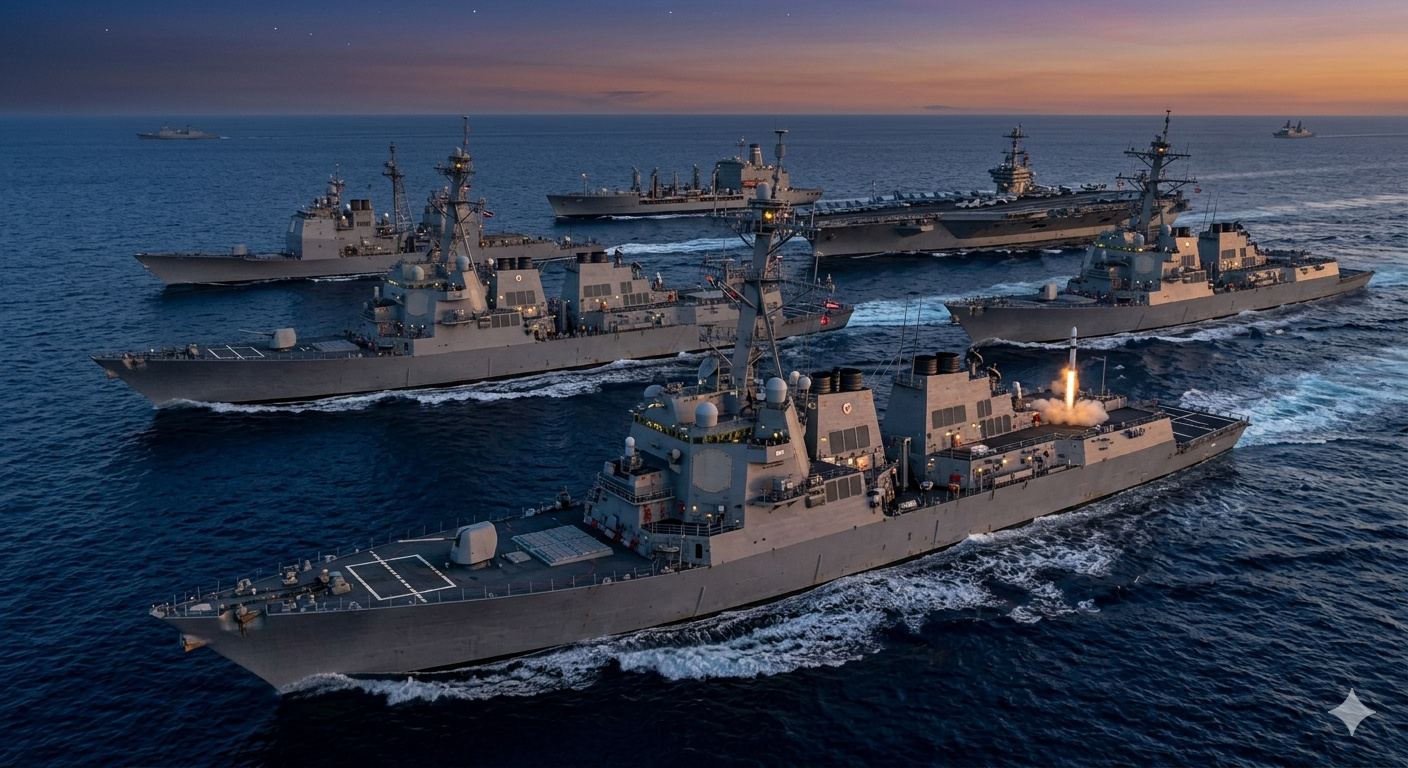
With 11,000 tons and sensors capable of hunting submarines at long distances, the Type 055 has become one of the most feared floating arsenals of the Chinese navy.

-
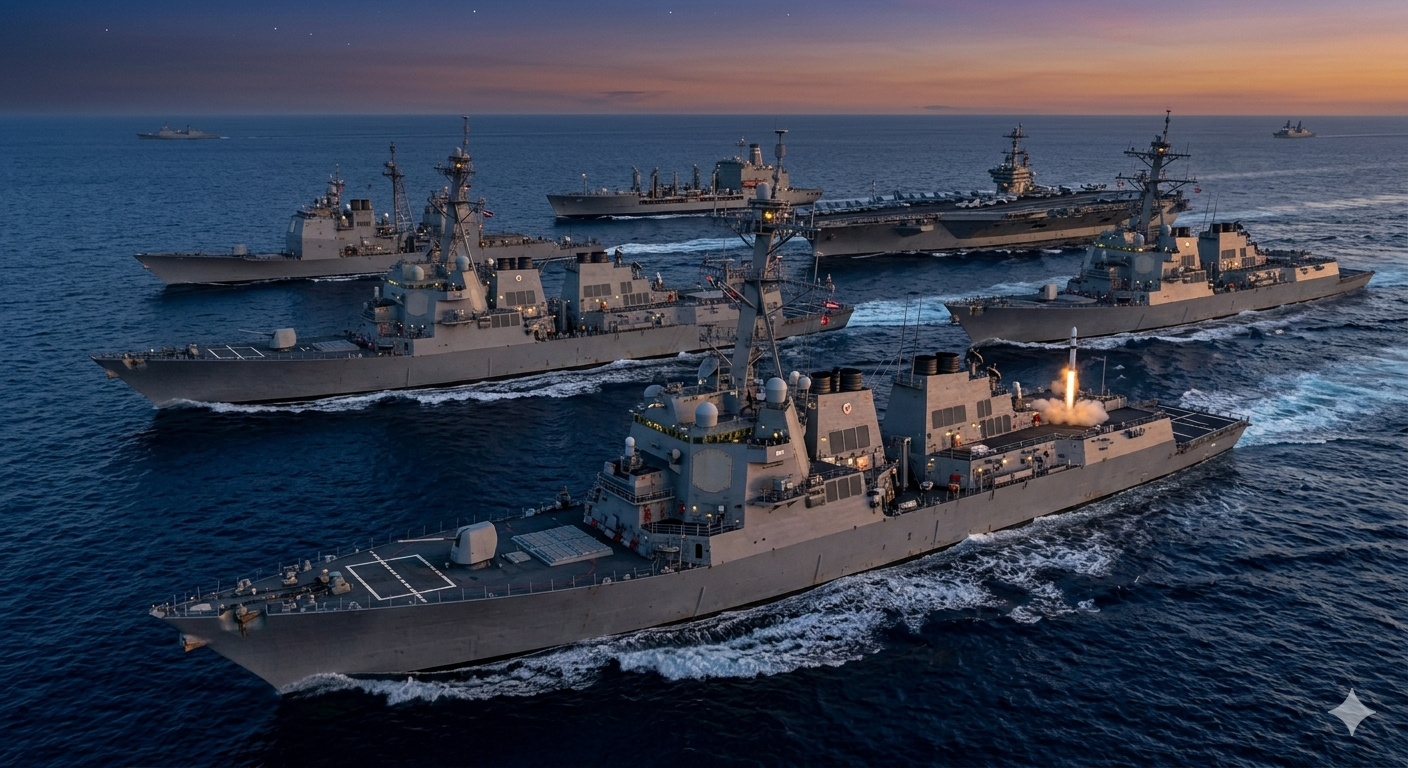
With over 15,000 tons, radars capable of tracking hundreds of targets simultaneously, and more than 120 missiles ready for launch in seconds, modern destroyers cease to be escorts and begin to dominate the naval battlefield.

Virginia Class: The Nuclear Submarine Designed to Replace Cold War Submarines
The Los Angeles class was designed in the 1970s at the height of the Cold War. Its main objective was to hunt Soviet submarines in the North Atlantic, protecting strategic routes and ensuring naval superiority against the Soviet submarine fleet.
With 62 ships built, the Los Angeles class became the backbone of the American submarine force for decades. These submarines prioritized speed, deep dive capability, and reduced acoustic signature, essential characteristics for anti-submarine warfare missions.
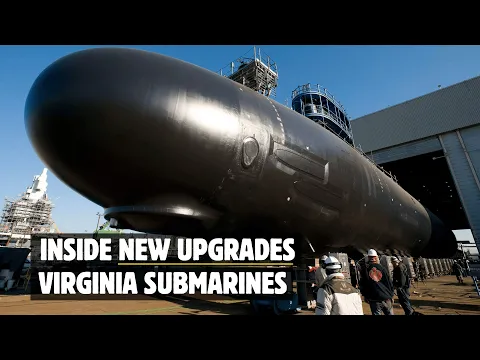

However, with the end of the Soviet Union and changes in the global strategic environment, the United States Navy needed a more flexible submarine capable of operating in both deep oceans and shallow coastal waters near heavily monitored areas.
It was in this context that the Virginia-class nuclear submarines program emerged. The project officially began in 1998 with two central objectives:
- to build a nuclear attack submarine that is cheaper than the Seawolf
- to increase operational flexibility for modern missions
The Seawolf, while extremely advanced, had cost more than US$ 3 billion per unit in the 1990s, leading the US Congress to cancel production after only three submarines. The Virginia emerged as a compromise between performance, cost, and adaptability.
The first ship of the class, USS Virginia (SSN-774), entered service in October 2004. Since then, the design has evolved through different production blocks, each incorporating technological improvements, cost reductions, and increased operational capacity. The most significant evolution occurred with the introduction of the Virginia Block V.
Virginia Block V: The Module That Drastically Increased the Attack Power of the Nuclear Submarine
The submarines of the initial versions of the Virginia class — Blocks I to IV — are approximately 115 meters long and have a submerged displacement of about 7,800 tons. These ships carry:
- 12 vertical tubes for Tomahawk missiles
- 4 torpedo tubes of 533 mm
As a result, the total armament load approaches 25 combined weapons, including heavy Mk48 ADCAP torpedoes and land-attack Tomahawk missiles. The significant transformation occurred with the introduction of the Virginia Payload Module (VPM), introduced in Block V.
The VPM is an additional section approximately 25 meters long inserted into the hull of the submarine, located between the operations compartment and the nuclear propulsion systems. This module includes four large-diameter vertical tubes, each capable of carrying seven Tomahawk missiles.

This allows the submarine to carry 28 additional missiles, raising the total offensive capacity to around 65 weapons, an increase of approximately 76% compared to previous versions.
With the VPM, the total length of the submarine increases to about 140 meters, and the submerged displacement rises to approximately 10,200 tons. According to estimates from the Congressional Research Service in 2023, the unit cost of the Virginia Block V is approximately US$ 4.3 billion, considering production of two ships per year.
Even though it is more expensive than previous blocks, the submarine is still significantly cheaper than the future SSN(X), the next-generation nuclear submarine under development — which could exceed US$ 5.5 billion per unit.
Virginia Block V Nuclear Submarine Technology: Silent Propulsion, Advanced Sonar, and Digital Sensors
A Virginia-class submarine operates with a crew of approximately 132 personnel, including 15 officers and 117 enlisted members. Within a hull comparable in volume to a four-story office building, the submarine can navigate at speeds exceeding 25 knots submerged.
Propulsion comes from a single nuclear reactor, which powers a propulsion system known as pump-jet. Unlike conventional propellers, the pump-jet significantly reduces the noise generated by propulsion, making the submarine harder to detect by enemy sonar.
The hull is covered with anechoic tiles, materials designed to absorb sound waves and decrease the submarine’s acoustic signature. Another important advancement is the replacement of the traditional periscope.
Virginia-class submarines utilize photonic masts, equipped with digital sensors that capture high-definition, infrared, and electromagnetic spectrum images. These images are transmitted directly to screens inside the submarine, eliminating the need for a traditional optical tube.
Armaments of the Virginia Block V Submarine and Capacity for Tomahawk Missiles and Future Weapons
Virginia-class submarines use four 533 millimeter torpedo tubes, capable of launching Mk48 ADCAP torpedoes and various underwater weapon systems. Additionally, the latest blocks utilize two large-diameter tubes called Virginia Payload Tubes, each capable of carrying six Tomahawk missiles.
With the introduction of the VPM, the submarine gains four additional large-volume tubes in the center of the hull. These tubes can accommodate:
- additional Tomahawk missiles
- underwater drones
- special payloads
- future medium-range hypersonic weapons
This modular architecture allows the submarine to adapt to different missions throughout decades of service.
Production of Virginia Submarines: The Two Shipyards Building the US Nuclear Fleet
All submarines of the Virginia class are built by two shipyards:
- General Dynamics Electric Boat in Connecticut
- Huntington Ingalls Newport News Shipbuilding in Virginia
The American industrial model divides production into modules. Each shipyard manufactures specific parts of the submarine, which are then transported for final assembly. Since 2011, the US Congress has funded the construction of two submarines per year.
In practice, this rate has never been fully achieved. After the COVID-19 pandemic, production fell to about 1.13 submarines per year in 2024. Reports from the Government Accountability Office (GAO) identify three main causes:
- shortage of skilled labor
- supply chain issues
- technical difficulties with the initial Block V submarines
AUKUS and the Strategic Challenge of Sharing Nuclear Submarines with Australia
In September 2021, the United States, United Kingdom, and Australia announced the strategic partnership AUKUS. The agreement stipulates that Australia will receive between three and five Virginia-class submarines in the early 2030s.
These submarines would serve as a transitional solution until the arrival of the SSN-AUKUS, a nuclear submarine developed jointly by the three countries.
The problem is numerical. The United States Navy considers it necessary to operate 66 attack submarines to fulfill its global missions. Currently, the fleet only has 47 units. This number is expected to remain low until at least 2030 due to the retirement of older submarines.
Providing submarines to Australia while industrial production remains below target creates a strategic dilemma. In June 2025, the Pentagon initiated a review of the AUKUS program led by Undersecretary of Defense Elbridge Colby.
By the end of 2025, reports indicated that the official conclusion was that the AUKUS agreement remains secure, although industrial challenges persist.
The Current Fleet of Virginia Submarines and the Future of the American Submarine Force
By the end of the fiscal year 2024, 40 Virginia submarines had been contracted. Of these:
- 24 are already in active service
- about 10 are under construction
The production program is planned to continue until 2043, and the most recent submarines are expected to remain operational until the 2070s. In April 2025, General Dynamics Electric Boat received a contract for US$ 12.4 billion, with potential expansion to US$ 17.2 billion, for the construction of two additional submarines.
The investment includes expanding the industrial base, increasing shipyard capacity, and hiring new skilled workers.
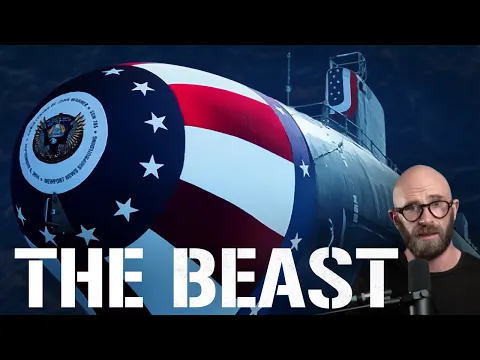
A nuclear submarine contains approximately 1 million individual components, manufactured by over 5,000 supplier companies.
For this reason, the US shipbuilding industry launched a national campaign in 2023 to recruit nuclear welders, engineers, and skilled technicians. The strategic reality is clear.
The Virginia Block V is the most advanced attack submarine currently produced in series in the world. It can operate where aircraft carriers cannot reach, launch dozens of land-attack missiles, and carry out intelligence, surveillance, and special warfare missions without being detected.
The central question for the United States Navy is not whether the submarine is good enough. The question is whether the American industry can build it fast enough to keep up with the strategic demands of the 21st century.







-

-

-

-

-

15 pessoas reagiram a isso.