Portuguese
  Spanish



Cheapest Turbo Sedan in Brazil: Volkswagen Virtus Sense Is One of the Most Affordable Models in the Country and Delivers Great Figures and Standard Equipment, check below!
The Volkswagen Virtus Sense is currently the cheapest turbo sedan in Brazil, standing out as an affordable option within the three-volume category with TSI engine. Especially aimed at the PCD audience, the model comes with a more streamlined proposal, making strategic cuts in equipment to reduce the final cost, but without giving up essential items to ensure safety, comfort, and good drivability.
Even with some simplifications in the equipment package, the Virtus Sense maintains good interior space, the commendable performance of the 1.0 turbo engine, and fuel efficiency — features that reinforce its appeal among urban drivers and those looking for a good value-for-money car.
In this article, we will explore in detail the design, comfort level, performance, fuel economy, and the pros and cons of the model. If you are considering investing in a competitively priced turbo sedan, it is worth checking out everything the Virtus Sense has (and what it lacks).
-
Caoa Changan CS75: New Model with 1.5 Turbo Flex Engine and 8-Speed Automatic Priced $4,000 Less in Brazil

-
Cost Analysis: Maintaining a Fiat Cronos 1.3 Drive 2026 – Parts, Taxes, Insurance, Fuel, and Maintenance

-
New Spanish Engine with Just 500cc Promises Power of 2,000cc, Is 70% Lighter, Crankshaft-Free, Seeks $14 Million to Exit Testing by 2026

-
Nissan Versa Offers Surprising Space and Comfort for Under $10,000, Impressing with Japanese Engineering


The Design of the Volkswagen Model Impresses
On the outside, the Volkswagen Virtus Sense features a simple yet functional design. While retaining important elements such as LED headlights and taillights, the entry-level version makes some cuts in its finish to reduce the price.
The door handles and mirrors are not painted in the vehicle’s color, and the alloy wheels are replaced by black wheel covers of 15 inches. The color palette is limited, with options of white, silver, black, gray, and blue.
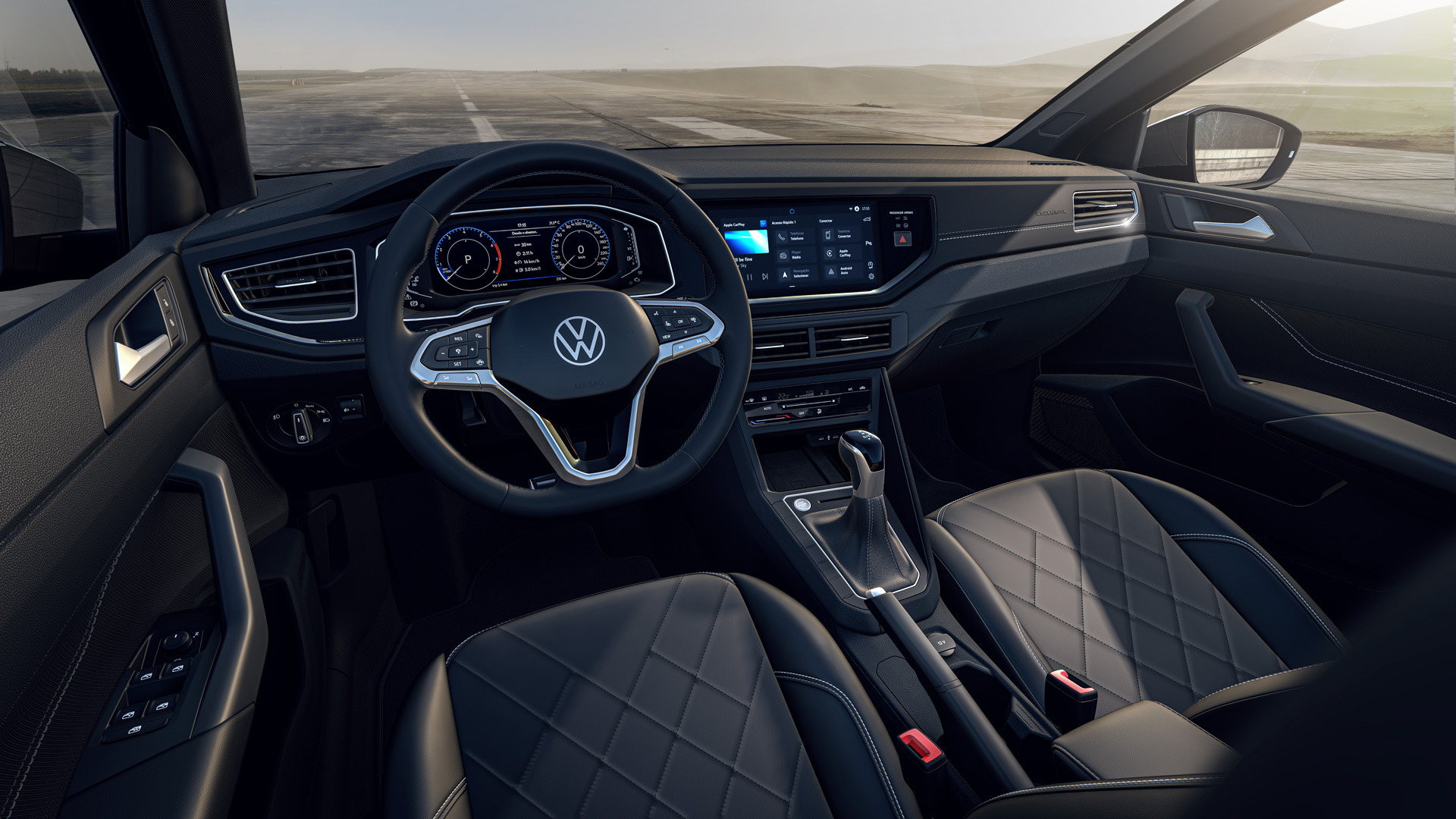
On the inside, the nickname of the cheapest turbo sedan in Brazil is even more prominent. The absence of a multimedia center, which is replaced by a sound system with USB and Bluetooth connections, is a significant limitation. The central screen is monochromatic and quite simple, the instrument cluster is digital, yet it also offers many features.
The air conditioning, although present, is analog, and the ignition key is not keyless but a folding type. Despite some shortcomings in terms of technology, the vehicle’s interior space is a strong point of the Volkswagen Virtus Sense. It offers plenty of comfort, especially for those traveling in the rear seat, with ample legroom and headroom.
Cheapest Turbo Sedan in Brazil Achieves Up to 19.5 Km/L


The 1.0 turbo engine of the Virtus Sense is one of the highlights of the cheapest model, with 116 hp and 16.8 kgfm of torque it delivers excellent performance, especially in the lower gears, which provide short ratios, offering agile and pleasant driving both in the city and on the highway. In tests, the model went from 0 to 100 km/h in 11.4 seconds, which is an impressive number for a sedan in this category.
The 5-speed manual transmission, although simple, is efficient, with gear ratios designed to provide good fuel economy, and the Virtus Sense stands out in this regard. In tests, the Volkswagen Virtus Sense achieved 14.7 km/l in the city and an impressive 19.5 km/l on the highway, numbers that far exceed its direct competitors, such as the Onix Plus and the HB20s, which have automatic transmission.
Main Standard Equipment Items of the VW Vehicle
In terms of safety, the cheapest sedan in Brazil does not disappoint, offering a set of essential equipment.
The model comes standard with six airbags, cruise control with speed limiter and hill-start assist.
Although these items meet the basic safety requirements, the model falls short with the absence of parking sensors and a rearview camera, features that are becoming increasingly common in cars in this price range.
The electric steering and disc brakes (rear) and drum (front) contribute to a more efficient and safe driving behavior. However, the lack of some modern features, such as a parking assistant or maneuvering sensors, may make the driving experience less comfortable, especially in urban environments where space is limited. It is worth mentioning that the model costs an average of R$ 112 thousand.