





 Portuguese
  English
  Spanish
 2 min of reading
  0 comments



FAPESP Agency – Researchers have identified a new virus in the waters of the Paraguay River, considered the largest tail virus ever described by science. Named Naiavirus, the “microscopic giant” measures about 1,350 nanometers (nm) – common viruses measure between 20 and 200 nm.
Very different from pathogens that cause diseases in humans, such as the flu or coronavirus, Naiavirus infects only amoebas. In addition to its unusual size, it has a body enveloped by a kind of “cloak” and a flexible tail that bends and extends, functioning as a tool to approach amoebas and facilitate infection.
The new virus has an enormous genome: nearly 1 million base pairs of DNA. Many genes bear no resemblance to anything previously recorded by science, with functions that were once believed to exist only in complex cells, such as bacteria and eukaryotes. Some resemble plant proteins. This indicates that they may be involved in evolutionary processes that science has not yet begun to understand. Its description was published in the scientific journal Nature Communications on September 17.
-
German reactor of 16 meters with twisted magnetic fields reaches a historic milestone in nuclear fusion by generating high-energy helium ions that simulate alpha particles from the Sun; progress in Wendelstein 7-X could unlock plasma control and explain phenomena observed in our star.

-
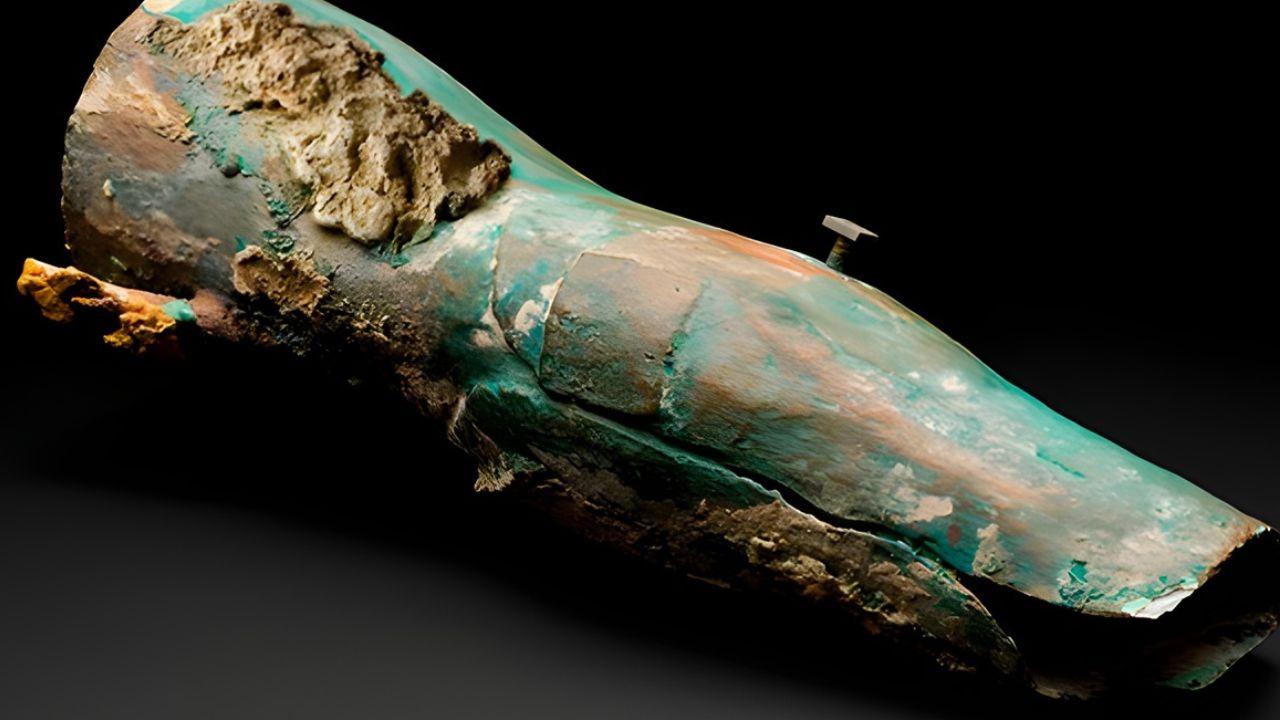
Long before modern medicine, an artificial leg made of bronze and wood buried in Italy showed that amputees were already receiving complex prosthetics around 300 B.C., at a technical level that seems unlikely for antiquity.
-
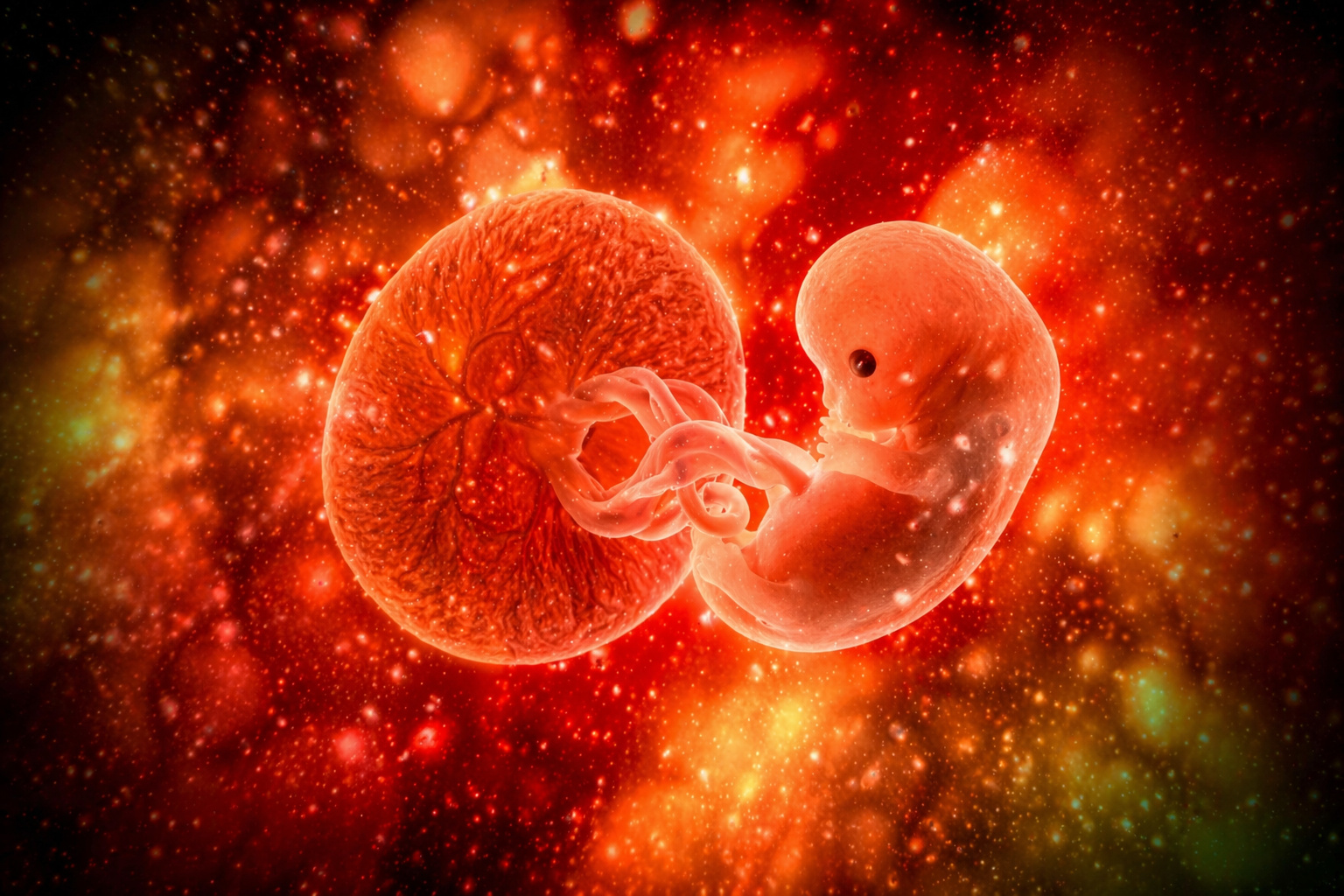
Scientists identify a unique cell that appears only during pregnancy and acts in the connection between the placenta and blood flow, revealing an essential mechanism for fetal development and possible causes of gestational complications.
-
It took just two days of walking in the jungles of New Guinea to find the plane that historians had been searching for for 80 years: the legendary Marge still had its original red paint and the face of the woman who named the most feared fighter of World War II.

The work, led by Jônatas Abrahão from the Institute of Biological Sciences of the Federal University of Minas Gerais (ICB-UFMG), was supported by FAPESP (projects 21/05519-0 and 24/13116-1). In addition to the UFMG group, researchers from the National Laboratory of Biosciences of the National Center for Research in Energy and Materials (LNBio-CNPEM), the Federal University of Rio de Janeiro (UFRJ) and São Paulo State University (Unesp), the Oswaldo Cruz Foundation (Fiocruz), Virginia Tech (USA), and the Institute of Physics of São Carlos at the University of São Paulo (IFSC-USP) participated in the investigation.
According to the scientists responsible for the discovery, the proteins of the supervirus originate from a very ancient divergence, close to the emergence of life on Earth. “They can open unprecedented research doors and be used to produce drugs and enzymes of biotechnological interest,” said Otavio Thiemann, one of the authors of the study, to the Press Advisory of IFSC-USP. “Additionally, they may contribute to clarifying fundamental questions in biology, such as the process of eukaryogenesis, the formation of nuclei in primitive eukaryotic cells,” he emphasized.
The research group analyzed 439 water samples until they found signs of the virus in one of them, collected in the municipality of Porto Murtinho (MS).
The article Naiavirus: an enveloped giant virus with a pleomorphic, flexible tail can be read by clicking here.







Seja o primeiro a reagir!