





 Portuguese
  English
  Spanish
  3 min of reading
  0 comments


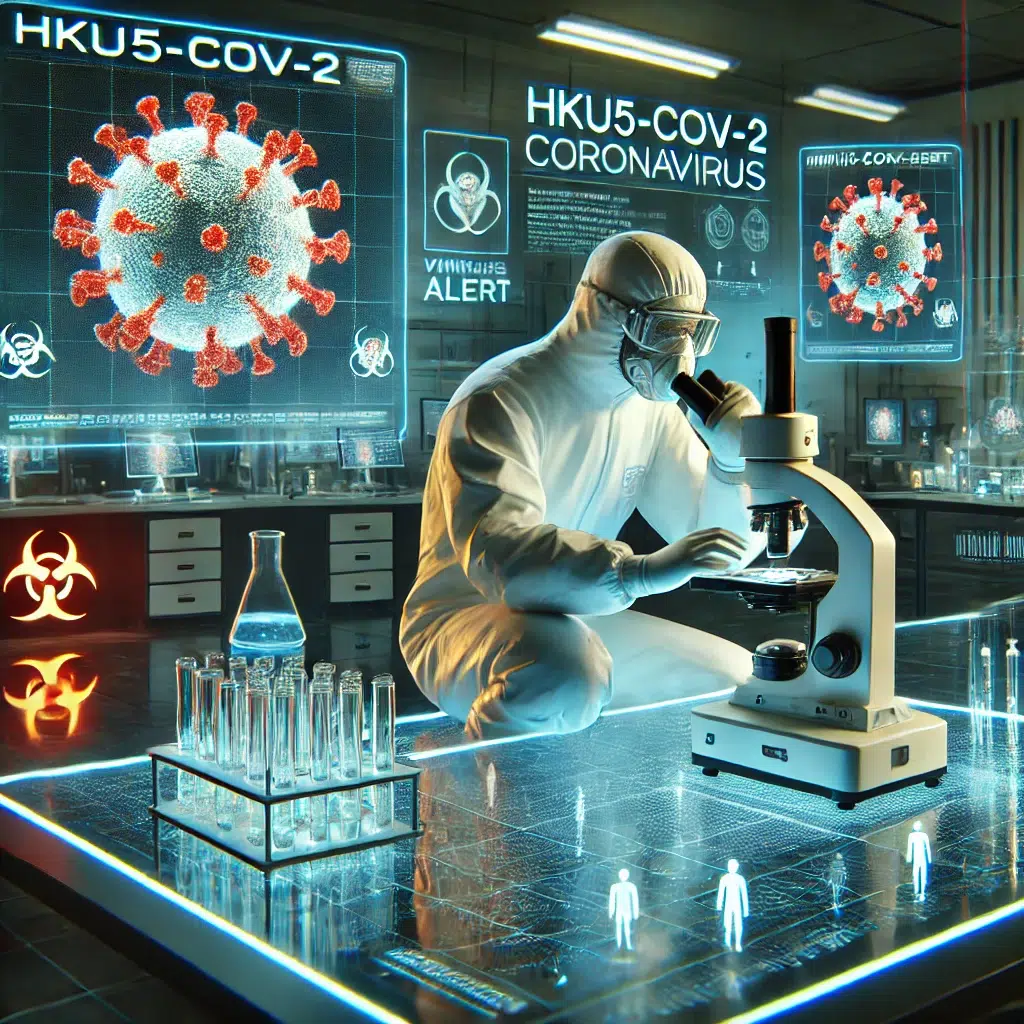
Researchers Warn About the Risk of HKU5-CoV-2, an Emerging Virus Found in China. Moreover, Experts Explain How It May Affect Global Health and, Consequently, Which Measures May Contain a Possible New Health Crisis.
Possible New Coronavirus Discovered in China: Does HKU5-CoV-2 Have Pandemic Potential?
First and foremost, researchers from the Wuhan Institute of Virology identified, in February 2025, a new strain of coronavirus in bats. Furthermore, the virus, called HKU5-CoV-2, raises concerns, mainly because it shares similarities with SARS-CoV-2 and MERS-CoV.
When analyzing this new coronavirus, scientists noticed that it belongs to the group of merbecoviruses, known to affect humans and animals.
More importantly, studies revealed that HKU5-CoV-2 can bind to the ACE2 receptor, meaning it uses the same mechanism as COVID-19 to infect cells. Thus, its transmissibility increases significantly.
-
Italian researchers have detected what appears to be a second Sphinx buried under the sands of Egypt, and satellite scans reveal a gigantic underground megastructure hidden beneath the Giza Plateau for over 3,000 years.

-
There are 4,223 drums and 1,343 metal boxes concreted with 50-centimeter walls that store the radioactive waste from Cesium-137 in the worst radiological accident in Brazil, just 23 kilometers from Goiânia, with environmental monitoring every three months.

-
Giant Roman treasure found at the bottom of Lake Neuchâtel in Switzerland reveals an advanced trade system, circulation of goods, and armed escort in the Roman Empire about two thousand years ago.

-
He buried 1,200 old tires in the walls to build his own self-sufficient house in the mountains with glass bottles, rainwater, and an integrated greenhouse.


So far, there are no confirmed human cases.
The reason for concern is that transmission between species can occur, especially since the virus is already circulating in natural reservoirs, such as bats.
What Differentiates HKU5-CoV-2 from Other Coronaviruses?
In light of this scenario, the discovery of this emerging virus underscores the importance of surveillance and research in infectious diseases.
Moreover, frequent contact between humans and wild animals facilitates viral mutations, which could eventually lead to new outbreaks.
More specifically, scientists from the Chinese Center for Disease Control and Prevention (CCDC) identified the new virus in China in samples collected between November 2024 and January 2025. As bats are already known to harbor different types of coronaviruses, the concern increases even more.
For this reason, researchers from the Wuhan Institute of Virology emphasize that, even without confirmed infections, this virus needs to be monitored.
Additionally, a report published by The Lancet Infectious Diseases in April 2025 suggested that HKU5-CoV-2 may have originated from bats in Guangdong province. This reinforces the need for more in-depth studies.
By the way, the WHO warns that viruses with zoonotic potential require constant monitoring.
Not surprisingly, concern has increased because HKU5-CoV-2 shares genetic characteristics with MERS-CoV, one of the deadliest viruses in recent history, originally identified in Saudi Arabia in 2012.
Thus, the need for in-depth studies becomes urgent.
What Are the Real Risks of This New Coronavirus?
Initially, COVID-19, which emerged in China in late 2019 and quickly spread worldwide in 2020, had already demonstrated the risk of viruses with pandemic potential.
Now, with the emergence of a new coronavirus, the need for global cooperation becomes even more evident. After all, without preventive actions, a new outbreak could spread rapidly.
Furthermore, the scientific community continues to investigate HKU5-CoV-2 to understand its impacts.
In the meantime, measures such as controlling live animal markets, restricting wildlife trafficking, and investing in virological research are essential to minimize risks.
In other words, the possibility of a new outbreak requires strict health surveillance and, at the same time, international collaboration.
Thus, it may be possible to prevent a new global pandemic.
Additionally, organizations such as the Centers for Disease Control and Prevention in the United States (CDC) and the Pasteur Institute in France recommended, in May 2025, increased research on this new coronavirus to understand its transmissibility.
How to Protect Yourself from Emerging New Viruses?
Although researchers have yet to detect HKU5-CoV-2 in humans, some measures can help prevent possible infections.
In this sense, experts recommend:
- First and foremost, reinforce personal hygiene, especially by washing hands frequently.
- Avoid contact with wildlife or markets selling these animals, as these places tend to be high-risk environments.
- In addition, staying updated on the guidelines from organizations like WHO and CDC can help understand the best prevention practices.
- Finally, supporting scientific research on vaccines and antiviral treatments can make a significant difference in containing future pandemics.
Therefore, science is still evaluating whether the new coronavirus in China could trigger a new pandemic.
However, caution is essential.
Moreover, health surveillance and cooperation among countries remain crucial to containing any potential threat.










-

Uma pessoa reagiu a isso.