





 Português
  Inglês
  Espanhol
  6 min de leitura
  1 comentário


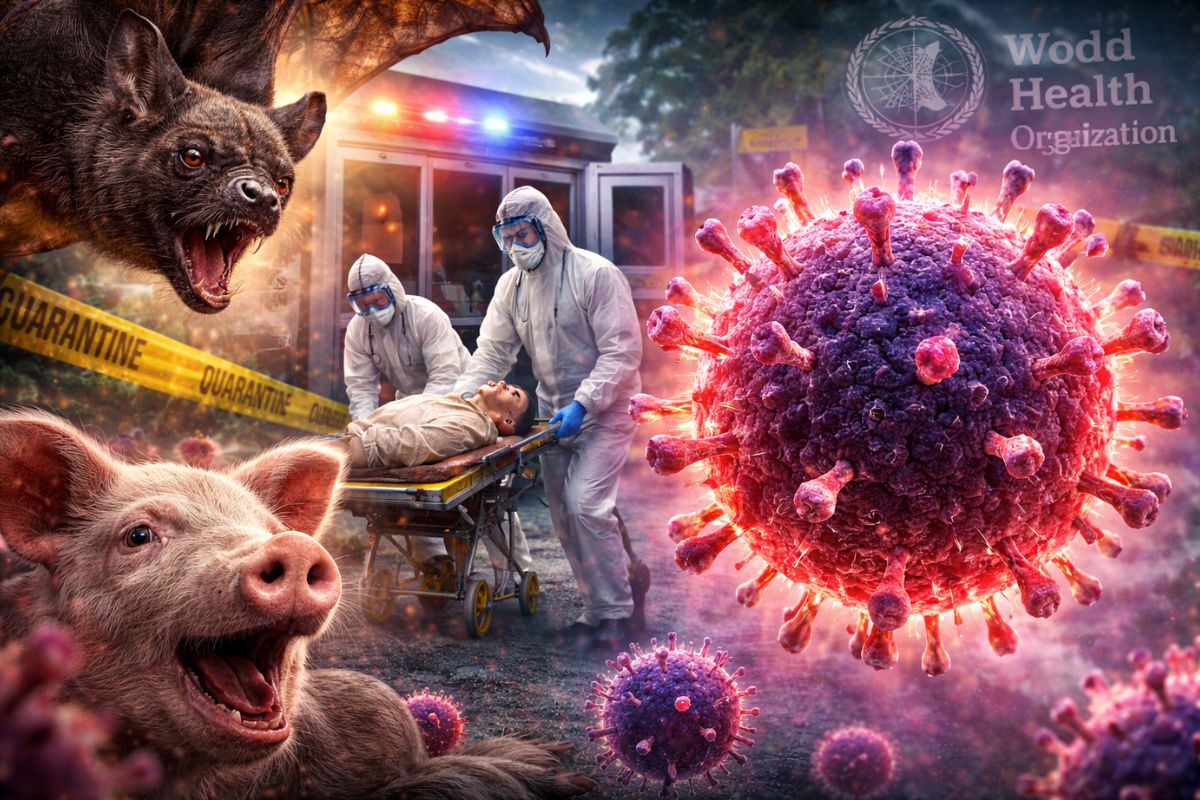


With a Mortality Rate of 75%, the Nipah Virus Has Already Caused Severe Encephalitis in Outbreaks of Zoonotic Diseases and There Is Still No Approved Vaccine for the Nipah Virus.
With an average mortality rate of around 75%, the Nipah Virus has reached 100% lethality in some outbreaks, moving from pig farms in Asia to settle in bats, cutting the path to humans, and now spreading among people, with no approved vaccine or specific treatment available.
Little known to the general public, the Nipah Virus has become a top priority for the World Health Organization, appearing alongside threats like Ebola, SARS-CoV-2, and Zika on monitoring lists, serving as a disturbing reminder that highly deadly viruses continue to circulate in nature, just waiting for an opportunity to make the next leap.
What Is the Nipah Virus and Why Has It Entered the WHO Radar
To understand the extent of the concern, just look at one number. The average mortality rate of the Nipah Virus is estimated at 75%.
-
For more than 10 years, scientists have observed the ice of Greenland deforming into giant spirals without explanation; they have now discovered that solid ice can “boil” from within like magma, an invisible phenomenon that could alter climate predictions and involves a mass capable of raising sea levels by up to 7 meters.

-
A gigantic freshwater reservoir appears beneath the Great Salt Lake, between 3 and 4 kilometers deep, surprising scientists with an unexpected flow towards the interior of the lake.

-
At over 8,800 meters above sea level, the summit of Mount Everest is made up of rocks that originated at the bottom of an ocean about 500 million years ago and were pushed to the highest point on Earth by the collision of tectonic plates.

-
Japan targets a remote island in the Pacific measuring only 1.51 square kilometers, located 1,900 kilometers from Tokyo, to store nuclear waste for up to 100,000 years, raising alarms at sea.
In practice, this means that out of every four people who develop the severe form of the disease, three may die. For comparison, early in the pandemic, COVID-19 had an estimated lethality rate of between 1% and 3%.
This chasm of lethality, combined with the potential to spread, has led the Nipah Virus to be included by WHO among the top research and outbreak preparedness priorities.
It appears on the same monitoring list as Ebola, SARS-CoV-2, and Zika, a clear signal that this is not just any exotic pathogen.
From a biological standpoint, Nipah is a paramyxovirus, from the same family of viruses that includes, for example, the measles virus.
The difference is that, in its case, the combination of severity, adaptability, and zoonotic route transforms the threat into something much more concerning.
The First Outbreak: From Bats and Pigs to Rural Workers

The story of the Nipah Virus began to take shape in the late 1990s on pig farms in Malaysia. Out of nowhere, workers began to present very high fevers and frightening neurological symptoms.
The pattern was noticeable. Only those who had direct contact with sick pigs became ill. It was from this clue that field investigation teams managed to isolate the culprit.
The researchers identified a completely new paramyxovirus for science and named it Nipah, in reference to the village where the first patient was recorded.
The confirmation of an unprecedented pathogen, capable of killing quickly and linked to livestock, raised a global alarm.
Over time, the pieces of the puzzle started fitting together. The natural reservoir of the virus is bats that feed on fruit.
They carry the virus without getting sick. These bats contaminated the food of pigs on farms, and from there, the swine became what scientists call amplifying hosts.
In other words, the pigs acted as true factories of the Nipah Virus, multiplying the pathogen to such high levels that the leap to humans became practically inevitable.
Bangladesh, India, and a More Lethal and Transmissible Version of the Nipah Virus
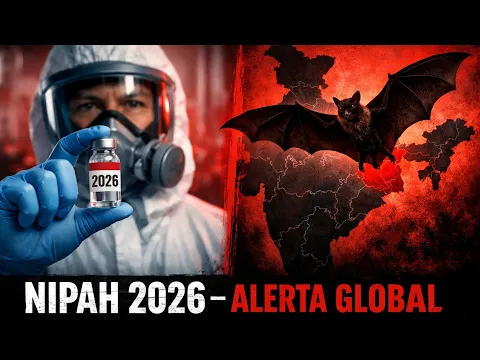

Having controlled the first major outbreak in Malaysia, many might imagine that the problem was over. This was not what happened. The Nipah Virus re-emerged in another setting, with different behavior and even more danger.
The timeline shows that, after Malaysia, the virus appeared in Bangladesh in 2001 and then in India, with severe outbreaks in regions like Kerala.
Each new occurrence brought important clues. The virus was not just reappearing. It was changing.
The original strain from Malaysia is different from those recorded later in Bangladesh and India. This new variant not only reached mortality levels that reached 100% in some outbreaks but also began to cause more severe respiratory cases.
The most alarming point is that the transmission between people became more efficient. In Malaysia, the dominant route was bat to pig to human. However, in Bangladesh and India, the virus cut the intermediary in several cases.
The contamination of raw food, such as sap from palm trees used as a local beverage, became a direct route to humans.
From there, the combination of food exposure and person-to-person transmission led to recurring outbreaks and a much more difficult circulation pattern to control.
Symptoms, Encephalitis, and Neurological Sequelae for Survivors
When the Nipah Virus enters the body, it does not show its strength right away. After an incubation period that can last up to two weeks, the first signs resemble a strong flu. High fever, headache, body pain.
This initial phase creates a false sense of normality, as if it were just another respiratory viral infection. The problem is what comes next.
Within a few days, symptoms can escalate to a critical condition. The virus attacks two vital systems at the same time. The neurological and respiratory systems.
The main cause of death is encephalitis, a severe inflammation of the brain. The Nipah Virus directly attacks neurons and cerebral blood vessels, causing an extremely rapid neurological decline.
In many cases, the person falls into a coma and dies one or two days after the onset of severe symptoms.
For survivors, the story does not end with discharge. About one in five people is left with permanent neurological sequelae.
Among them are seizures, personality changes, and chronic fatigue, showing that the impact is not only acute but can accompany the patient for the rest of their life.
How the World Is Trying to Curb the Nipah Virus Without an Approved Vaccine or Cure
Faced with a virus with this profile, the scientific response is racing against the clock. The current reality, however, is straightforward. There is still no specific cure or approved vaccine for the Nipah Virus.
The available treatment focuses on what is called supportive care. Controlling symptoms, keeping the patient hydrated, supporting respiratory function, providing as much support as possible for the immune system to have a chance to react. At the same time, research is advancing on three main fronts.
First, antivirals like remdesivir, which have already shown promising results in initial studies against this type of virus.
Second, monoclonal antibody therapies, capable of directly neutralizing the pathogen and which are already in human testing phases.
Finally, teams in different countries are working on vaccines based on modern technologies, such as mRNA platforms, aiming to block the infection before the virus can establish itself in the body.
There is no ready product, but the movement shows that the scientific community is not waiting for the next major outbreak to react.
Nipah Virus, Zoonoses, and the Idea of One Health
The Nipah Virus is not an isolated case. It is part of a pattern that is growing worldwide. That of zoonotic diseases, in which viruses circulate among animals and, at a certain point, jump to humans.
Bats, in particular, are natural reservoirs for various viruses with pandemic potential. Among them, different coronaviruses and the Ebola virus itself.
In all these scenarios, the boundary between natural environment, domestic animals, and humans is becoming increasingly narrow.
This is where the concept of one health comes in, proposing to look at human health, animal health, and environmental health as parts of the same system.
Instead of reacting only when the disease is already installed in people, the idea is to monitor ecosystems, wildlife, and livestock to try to predict and prevent the next viral leap.
In the case of the Nipah Virus, the story of bats, pigs, and contaminated food demonstrates how seemingly local changes can generate global consequences.
The more we advance into forests, alter habitats, and increase direct contact with wildlife, the greater the chance that a silent virus will find a way to reach us.
In the end, the message is uncomfortable but necessary. The question is not whether a new dangerous virus will appear, but when.
And the way the world decides to prepare today for threats like the Nipah Virus will define the magnitude of the impact down the line.
And you, after getting to know the Nipah Virus better, do you think we are really learning from these threats or is the world still underestimating this type of silent risk?







Ojalá los gobiernos ofrezcan mas apoyo a los científicos biólogos para pronto tener una vacuna