





 Portuguese
  English
  Spanish
  3 min of reading
  0 comments


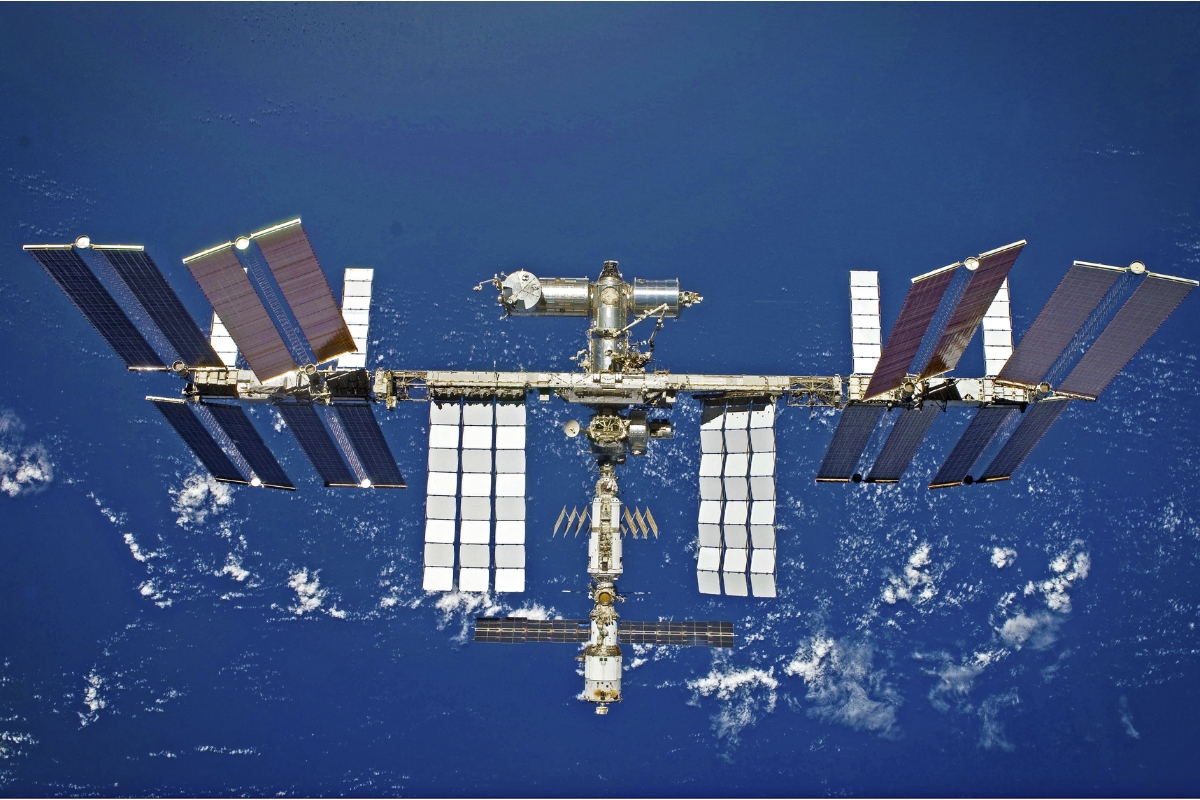
At The International Space Station, Researchers Performed Infection With T7 To Understand Microgravity, Causing Mutations That Increased The Efficiency Of Viruses And Catching The Attention Of Medicine
Microgravity can transform viruses into more efficient tools for attacking bacteria. This idea draws attention because this performance gain opens the door for new strategies against resistant infections.
The investigation was published by PLOS Biology, a peer-reviewed scientific journal of biology. The focus was to understand how viruses and bacteria react when the environment limits movement and reduces contact between them.
What Was Tested At The International Space Station With Virus T7 And Bacteria Escherichia Coli
The experiment took the virus T7, a bacteriophage that infects the bacterium Escherichia coli, to the International Space Station. The goal was to observe the infection in microgravity and compare it with what happens on Earth.
-
With a cost per shot close to zero, the DragonFire laser could change naval warfare in 2027 and provide British ships with nearly unlimited defense against drones.

-
A British startup creates tires that generate electricity in electric vehicles when passing over potholes, speed bumps, and cracks.

-
Scientists have created robots made with living cells that have their own nervous system, swim on their own, explore the environment, and self-organize without any genetic engineering, and now they want to do the same with human cells.
-
Students create a solar-powered ambulance that operates without a plug, without fuel, and still keeps medical equipment running in remote areas.


In space, movement is more limited. This reduces direct encounters between viruses and bacteria, changing the classical scenario where the virus depends on frequent collisions to initiate infection.
How Microgravity Accelerated Mutations In Viruses And Bacteria Inside The ISS
Viruses and bacteria multiply very quickly, which favors evolution in a short time. In microgravity, specific mutations appeared on both sides of this microscopic battle.
The practical result was a dual adaptation. Viruses sought better ways to attach to bacteria, while bacteria adjusted their structures to survive and lessen the impact of the infection.
What Changes In The Virus Proteins Reduced The Contact Needed To Infect
After an initial delay, the bacteriophages managed to infect the bacteria in space. In the viruses, changes emerged in binding proteins, used to recognize receptors on the bacterial surface.
These changes made binding more efficient. As a result, less contact became necessary for the infection to occur, an important detail in an environment where encounters are rarer.
What Tests On Earth Showed About Urinary Infection Strains And Resistance To T7
Back on Earth, tests indicated that the virus cultivated on the ISS managed to infect strains causing urinary infections in humans, which usually resist T7.
PLOS Biology, the peer-reviewed scientific journal of biology, detailed the central point of the discovery. The extra efficiency observed in space became a sign that the environment can directly influence the performance of bacteriophages.
Why The Estimate Of 10 Million Deaths Per Year By 2050 Increases Interest In Bacteriophages
The study reinforces a possible path against superbacteria, bacteria that resist traditional antibiotics. The intense use of antibiotics over the years has favored strains capable of evading treatments.
The World Health Organization estimates up to 10 million deaths per year by 2050 due to these resistances, surpassing cancer. This scenario increases the search for alternatives that expand the arsenal against difficult infections.
The main message is straightforward: microgravity can induce adjustments that make bacteriophages more efficient at infecting bacteria. This changes the way of viewing the evolution of these viruses outside of Earth.
If science can safely and controllably apply this gain in efficiency, phage therapy may gain momentum as support in combating resistant bacteria, including cases where antibiotics fail.







-

-

-

-

-

17 pessoas reagiram a isso.