





 Portuguese
  English
  Spanish
  5 min of reading
  2 comments


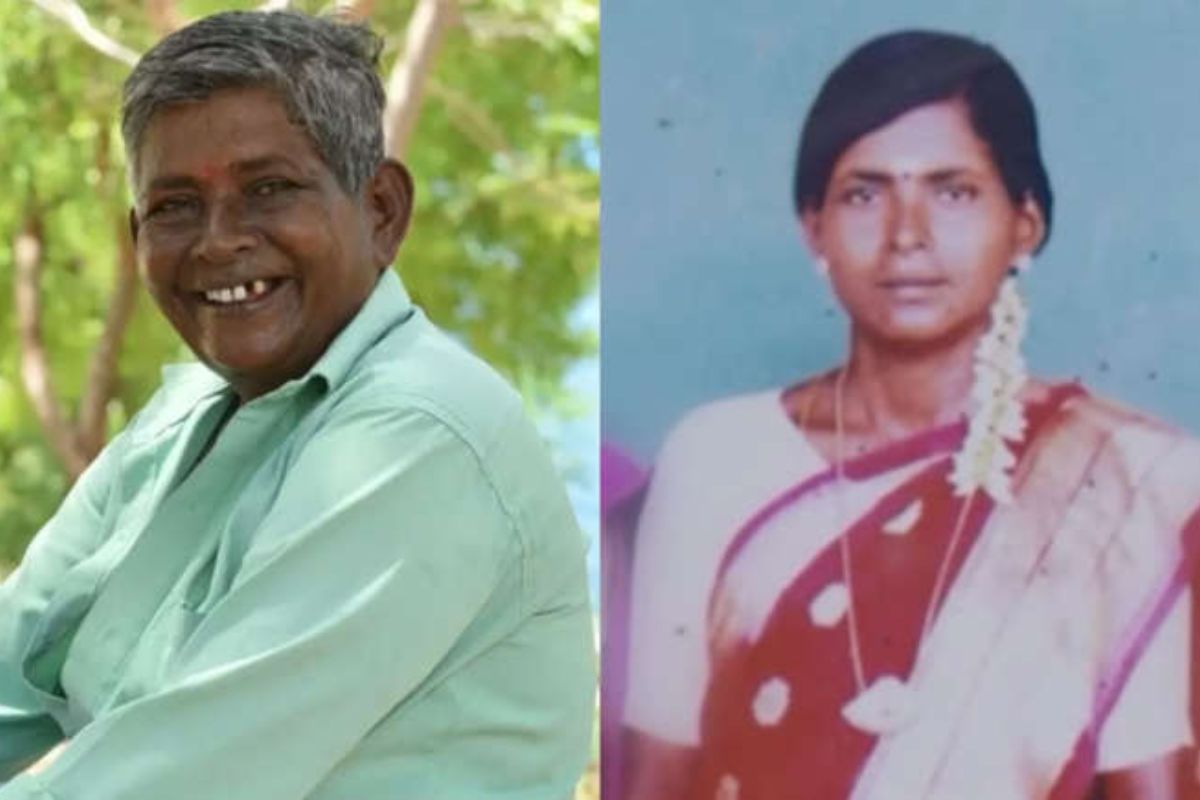


In Kattunaickkanpatti, in the state of Tamil Nadu, a widow decided to live as a man after losing her husband 15 days after the wedding and getting pregnant. Under the name Muthu Master, she moved to another city, worked for 37 years, raised her daughter, and only revealed the truth when asking for retirement in search of dignity.
The story took place in Kattunaickkanpatti, in the Indian state of Tamil Nadu, and revolves around a widow who made an extreme decision to survive after her husband died just 15 days after the wedding. Pregnant and without the protection she expected to have, she began to see work and moving around in public as permanent risks.
The turning point came when, trying to support herself, she reported being <strong harassed by a truck driver, an episode that solidified a fear she already had: of being an easy target for violence for being a woman and, even more so, a widow. It was from this point that she cut her hair, left her town, and began to present herself as a man, adopting a masculine name that would be repeated for decades.
The Start of the Disguise After Mourning and Pregnancy
The death of her husband, so shortly after the wedding, was not just a personal tragedy.
-
After 14 years of waiting, a rammed earth mansion built in 1702 in the North Zone of São Paulo will become a park with leisure facilities and green areas, with a million-dollar investment.
-
With 2 unfinished nuclear reactors, up to 25 billion in costs, and proven fraud, the Nukegate case has left 800,000 consumers still paying today for energy that will never be produced.

-
The household appliance that consumes the most energy in Brazilian homes is not the air conditioner; it is located in the smallest room of the house, is used daily, and can account for up to 25% of the electricity bill, while an alternative in the same outlet can reduce this cost by up to 75%.

-
Son of a seamstress from the rural area of Ceará who did not speak English wins a scholarship of over 2 million reais at Williams College, one of the top 10 universities in the United States, covering everything including dormitory, meals, and annual trips to Brazil.


In practice, it pushed this widow into a routine of insecurity, where every attempt to work or simply walk in public spaces could become a threat.
The combination of mourning, pregnancy, and social vulnerability created a kind of siege: she needed income, needed to protect the baby that was coming, and needed to minimize the risk of aggression.
In this scenario, the identity of Muthu Master emerged.
The choice was not a symbolic gesture, nor a one-off change of appearance.
It was a complete plan for survival: cutting her hair, moving to another city, and maintaining a consistent masculine presentation to secure employment and be treated in a way that, as a woman, she could not guarantee.
The goal was not to attract attention; it was to disappear as a target.
Life as “Muthu Master” and Access to Work Without Fear

By presenting herself as a man, she gained access to activities traditionally occupied by men, with a difference that, for her, was decisive: the social and professional environment began to offer more respect and less risk.
It was not just about income. It was the feeling of being able to work without constantly calculating routes, schedules, glances, and threats.
Over time, this identity became more than a social badge. It became a shield.
Masculinity began to function as daily protection, the kind that does not depend on escort, someone accompanying, favors, or others’ tolerance.
And it was precisely this protection that allowed her to support her daughter’s upbringing and maintain a productive life for decades without revealing who she was.
The Lie at Home and the Daughter Raised Without Knowing

The hardest aspect of this journey is that the masculine identity was not confined to work, the street, or documents.
She maintained the masculine persona even inside the house for almost four decades. Her daughter grew up believing that the person raising her was a man, and only learned the truth when she was already an adult.
This part reveals the level of vigilance she needed to maintain to avoid being discovered. It was not an occasional act.
It was a whole existence molded by a single goal: to reduce risk. She attributed the maintenance of the disguise, in part, to her physical traits and appearance, which helped to compose the masculine image over time.
But, above that, what sustained the identity was the discipline to not leave any openings, not even in the most intimate spaces.
Violence Against Women as the Driving Force Behind the Decision

She directly linked her choice to the constant fear of violence against women in the region where she lived and to the fact that she felt even more exposed for being a widow.
What emerges here is not a “dramatic” decision about lifestyle, but a calculation for survival: if the risk arose from the way society read the body and social status of a widowed woman, then the response was to change the social reading.
In commenting on her experience, she questioned what the minimum safety society can guarantee to a woman.
The sense of this question is simple and heavy: if minimum safety does not exist, then life becomes an improvisation.
And the improvisation, in her case, was to build an identity that would allow her to traverse the world with less fear.
The State, The Retirement, and The Moment When Everything Came to Light
The disguise did not fall by spontaneous confession at the height of a productive life.
It came to light through a bureaucratic shock when she tried to apply for retirement. Registered officially as a man, she had not reached the minimum age required to retire under that registration.
At the same time, she had no documents proving her condition as a woman within the process she was trying to initiate.
This impasse summarizes the final irony of a lifetime of effort: the strategy that guaranteed work, respect, and safety for 37 years turned, in the end, into a barrier to conclude her professional journey with dignity.
It was at this point that the story needed to be revealed, not to provoke emotion but to try to solve an objective problem: the right to stop working after decades.
What This Story Reveals About Silent Survival
The narrative of Muthu Master is not just about passing as another identity.
It is about how fear reorganizes an entire life.
She exchanged her own social identity to protect a daughter, to secure income, and to reduce the risk of being attacked.
And she paid for it with an invisible price: living while watching her own existence, measuring words, gestures, appearance, and routine for almost four decades.
In the end, the revelation does not erase what came before.
It only reveals the extent of the journey that was undertaken so that one basic thing would be possible: to work and raise a daughter without living in panic.
And what about you? If you were in the place of this widow, would you have the courage to sustain such a decision for 37 years to survive?







Eu não sei se teria coragem como ela teve,vejo ela como uma guerreira que merece todo o respeito.
Sim!