





 English
  Francês
  Alemão
  Italiano
  Japonês
  Norueguês
  Portuguese
  Spanish
 5 min of reading
  0 comments


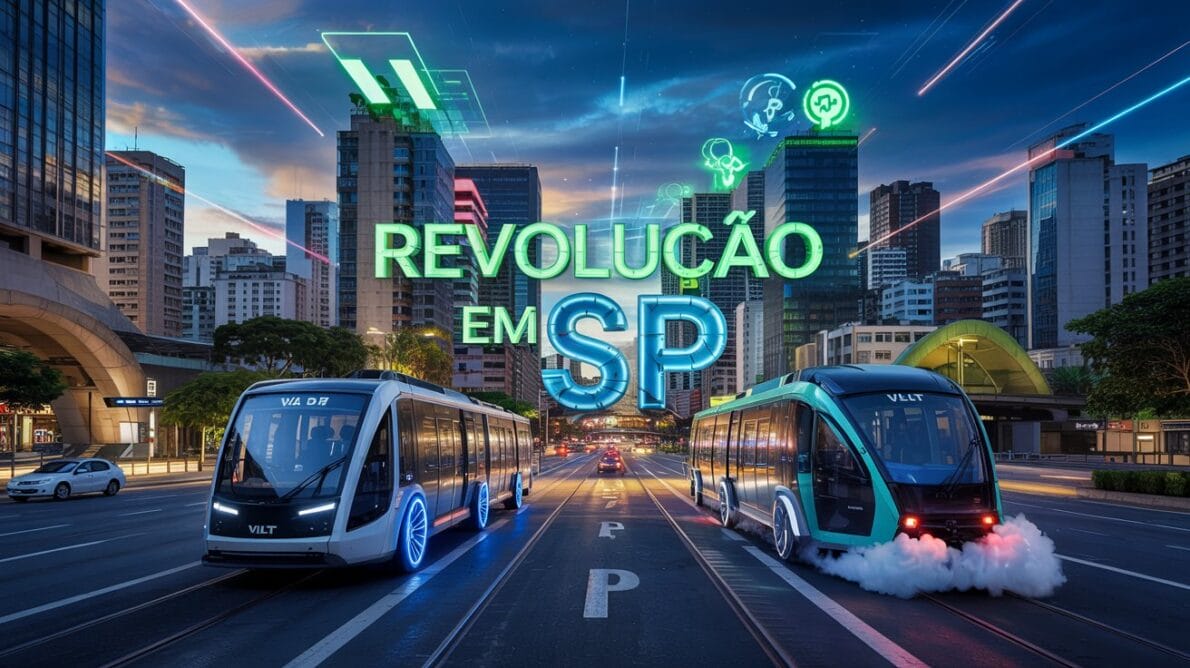
São Paulo May Adopt Hydrogen-Powered Vehicles and Even Trains Without Rails in Its New VLT, Promising an Innovative Urban Transformation That Combines Sustainability, Technology, and Mobility in the Heart of the Largest Metropolis in South America.
São Paulo could be the next city in the world to have a public transportation system that combines innovative technology and environmental commitment.
The municipal administration plans to launch, within this term, the bidding process for the construction and operation of a Light Rail Vehicle (VLT) in downtown São Paulo, with the possibility of using rail-free and hydrogen-powered vehicles.
The project is part of an urban requalification plan aimed at transforming the central region through sustainable and modern solutions.
-
Seen from space, a colossal ‘Y’ cuts through the largest desert in China, blending a jade-filled river, red and white mountains, and revealing the absurd scale of the transformation of the Taklamakan surrounded by a green wall with billions of trees.

-
The Pacific Ocean reveals what the cliffs of Big Sur have hidden for millennia: Pfeiffer Beach, in California, features swirling purple sand formed by garnet crystals and displays a stone arch that is illuminated by the sun in winter for just a few days each year.

-
Aursjøvegen in Norway is a 100-kilometer gravel road that crosses chasms and dark tunnels carved into the rock at an altitude of 947 meters in the fjords and is only open for four months a year.

-
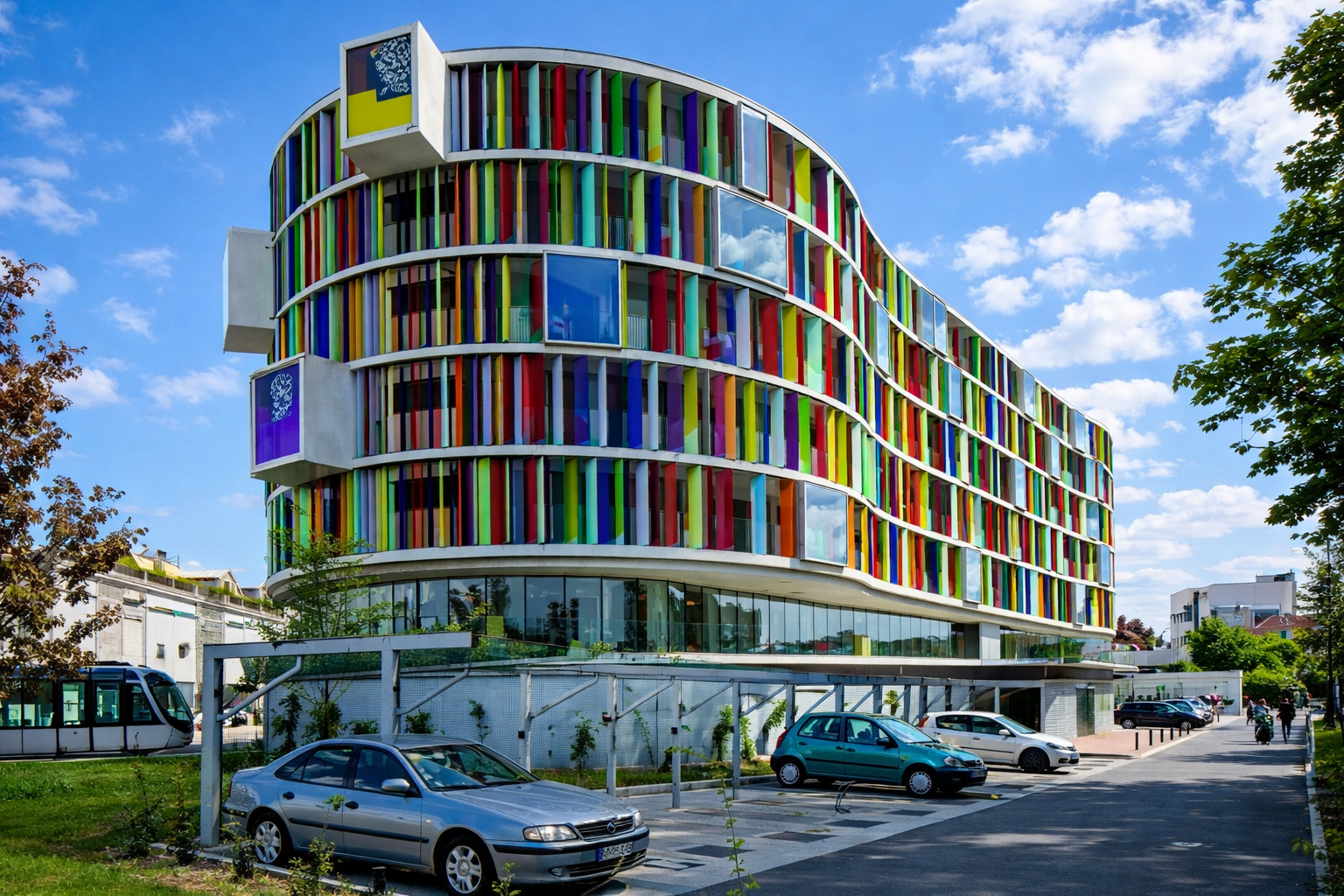
With about 4,000 m², the building constructed in a traditional neighborhood in France looks like a rainbow, has a colorful facade, mixes vibrant glass, and creates one of the most unusual visuals in Bordeaux.

According to information from the São Paulo City Hall, the VLT is included in the Urban Requalification Plan for the Center, with Sustainable Transit-Oriented Development.
The technical study, available on the official website of the municipality, presents a series of technological alternatives and manufacturers that can be adopted in the new system.
The idea is not just to modernize urban mobility, but also to provoke a profound renewal of urban space, encouraging qualified occupation of the city center.
Technologies Inspired by Reference Cities
The technical study highlights successful international experiences, with a special focus on the Carioca VLT, implemented in Rio de Janeiro.
According to the Observatory of Innovation for Sustainable Cities (OICS), the Fluminense system achieved 92% public approval, according to a survey commissioned by Datafolha at the end of 2017.
Speed, comfort, and reliability are the main attributes praised by users: 81% considered the VLT fast, 93% highlighted the comfort, and 85% classified it as reliable.
Other references mentioned in the document include transport systems in Germany, Qatar, and Hungary, such as the model operated in Budapest by the Spanish manufacturer CAF, which has the largest VLTs in the world, measuring almost 56 meters long and up to nine articulated modules.
Rail-Free Vehicle Can Be a Viable Alternative
Among the innovations under analysis, the possibility of deploying a rail-free train, known as VLP (Light Vehicle on Tires), stands out.
One of the latest models was developed by the Chinese company CRRC and is called ART (Autonomous Rail Rapid Transit).
The technology combines tires with GPS navigation sensors and artificial intelligence, eliminating the need for traditional tracks.
This type of system represents a revolution in urban mobility, as it significantly reduces installation and maintenance costs.
Additionally, it allows greater route flexibility, as vehicles are not limited to fixed paths.
The ART is a hybrid between a bus and a train, and was one of the highlights presented at InnoTrans 2024, one of the largest international rail transport fairs, held in Berlin.
Hydrogen VLT: Clean Energy and Cable-Free Landscapes
Another highlight of the project is the possible adoption of hydrogen-powered vehicles.
This solution represents an important step towards sustainable and low environmental impact mobility.
Hyundai Rotem, a South Korean manufacturer, is one of the companies that has already developed prototypes of this type of VLT, also showcased at InnoTrans 2024.
The benefits of this model go beyond emission reductions.
By using hydrogen as an energy source, these vehicles eliminate the need for overhead lines (catenaries) and power substations, which improves urban aesthetics and reduces infrastructure costs.
Additionally, when produced from renewable sources, the so-called green hydrogen becomes an even more promising solution from an environmental standpoint.
According to experts, hydrogen is the most abundant element in the universe and can be used as a clean energy alternative capable of meeting the growing demand for clean transport in large cities.
Local and sustainable production of the input also stimulates the green economy and the generation of qualified jobs.
Quoted Manufacturers and Next Steps
The study prepared by the City of São Paulo also presents a preliminary list of manufacturers that can provide vehicles for the São Paulo VLT.
Among the mentioned names are Siemens, Alstom, Hyundai Rotem, CAF, Vossloh, and CRRC.
Each of these companies has distinct portfolios that can meet the different technical and urban needs of the São Paulo project.
The final decision regarding the type of technology to be used will be up to the bidding notice, which is expected to be launched after the completion of the technical feasibility studies.
Goal 52 of the current administration’s target plan sets as a priority the viability of the “VLT Bonde São Paulo”, with the completion of studies and publication of the notice.
The expectation is that the system will be operational with at least two lines in the city center, promoting integration with other modes and requalifying public spaces, especially degraded or underutilized areas.
Positive Impacts Expected for São Paulo
Urbanism and mobility experts point out that the implementation of the VLT in São Paulo can bring transformative impacts.
In addition to improving mobility in the central region, the project is expected to promote real estate appreciation, increased urban security, and encouragement of local commerce and culture.
The choice of clean and innovative technologies also places São Paulo on the map of cities committed to the decarbonization of urban transport.
In a context of climate emergency and global emission reduction targets, projects like this become essential to ensure quality of life and sustainability.
It is worth highlighting that the implementation of the VLT should not be viewed solely as a mobility project, but as part of a broader strategy for urban transformation and social inclusion, aimed at making the city center more attractive, livable, and accessible.
And you, do you believe that a rail-free train powered by hydrogen can truly revolutionize public transport in São Paulo? Leave your opinion in the comments!








-

Uma pessoa reagiu a isso.