





 Portuguese
  English
  Spanish
  4 min of reading
  0 comments


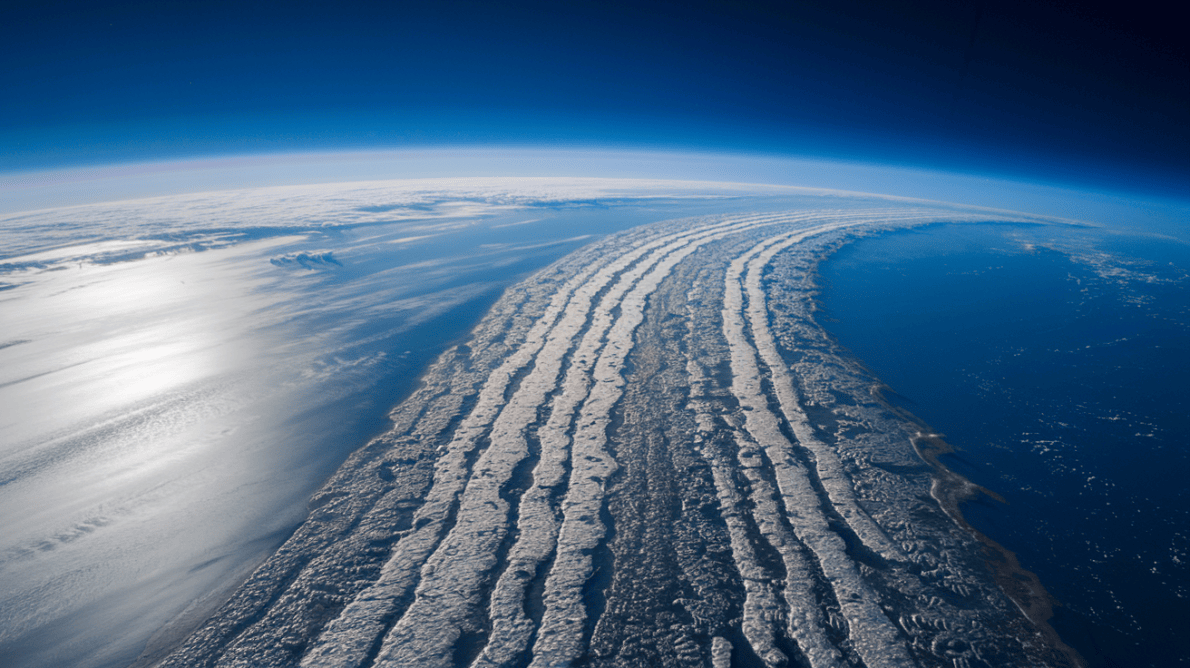
Plastic Sea Visible from Space Is Located in Spain and Is the Only Human Structure That Can Be Seen from the ISS. Learn What the Sea Visible from Space Is, Its Benefits, and Its Impacts on the Environment
Plastic Sea Visible from Space: There is a place in Spain that catches the attention of scientists, farmers, and even astronauts. It is a region called Poniente Almeriense, located in the province of Almería, in the south of the country. There, since the 1960s, a lot of plastic greenhouses began to spread across the fields. And it’s no exaggeration. It has grown so much that today there are over 328 km² of greenhouses, all covered in white plastic. It looks like a giant carpet when viewed from above.
What’s most curious: this “white sea” is so large that it can be seen from space. That’s right! The International Space Station (ISS) has captured images of this place, which has become the only man-made structure that can be clearly seen from Earth’s orbit. Even the Great Wall of China cannot achieve this feat.
How Did This Plastic Sea Come About?
In the 1950s, this region was quite simple. It was pasture and sparse vegetation. Life was tough for small farmers. But then, in the 1960s, they began testing a different way of planting. They used sand, straw, and then covered everything with plastic. It worked. The soil became warmer and more humid, and the plants grew better.
-
Friends have been building a small “town” for 30 years to grow old together, with compact houses, a common area, nature surrounding it, and a collective life project designed for friendship, coexistence, and simplicity.

-
This small town in Germany created its own currency 24 years ago, today it circulates millions per year, is accepted in over 300 stores, and the German government allowed all of this to happen under one condition.

-
Curitiba is shrinking and is expected to lose 97,000 residents by 2050, while inland cities in Paraná such as Sarandi, Araucária, and Toledo are experiencing accelerated growth that is changing the entire state’s map.

-
Tourists were poisoned on Everest in a million-dollar fraud scheme involving helicopters that diverted over $19 million and shocked international authorities.




Then the idea caught on. People started making more and more greenhouses, and over time, it turned into a white sea of plastic that looks like snow from above. Today, this area produces between 2.5 and 3.5 million tons of fruits and vegetables per year. It ranges from tomatoes, cucumbers, and eggplants to melons, peppers, lettuce, and zucchini.
There’s production of all kinds: family farms, large companies, multinationals… all together on the same piece of land. But not everything is perfect there.
Production Is High, but the Environment Suffers
This multitude of greenhouses brings advantages for production, but nature feels the weight. The white plastic reflects a lot of sunlight. In the summer, the farmers also spread lime over it, which increases this reflection. This caused the temperature in the region to drop a bit. While other places in Spain warmed up, the climate there became 0.3 °C cooler per decade.
But there’s another side to the story. The plastic doesn’t last long. And, according to the government of Andalusia, the region uses about 33,500 tons per year. About 85% of this plastic is recycled, which sounds good. But around 5,000 tons end up in the sea or discarded unchecked.
This loose disposal is generating three times more microplastics on the Almería coast than in other parts of the Mediterranean, according to a study conducted by the Institute of Environmental Diagnosis and Water Studies. These tiny pieces of plastic enter the water, underground rivers (aquifers), and even the taps. And with so much irrigation, the freshwater there is becoming increasingly scarce.
Social Problems Also Arise Behind the Greenhouses
Behind this giant plastic structure, there are also complicated stories. Many of the people who work in the fields are illegal immigrants, mainly from Africa. They work hard, earn little, have no contracts, and many live in improvised shacks, without running water or electricity. Several complaints of exploitation have already been made by NGOs and Spanish media.
In other words, the plastic sea has become a symbol of a production that yields great results, but raises serious concerns about the environment, dignified work, and quality of life.
What Can We Learn from All This?
This case in Spain shows how humans can change the landscape and produce on a large scale, but it also highlights how important it is to care for what comes along with it. Agriculture can grow, yes, but it must also look out for nature and people.
The plastic sea visible from space has become a point of study for scientists worldwide. It shows that it’s possible to grow a lot in a small space, but that poorly disposed plastic and poor working conditions are also part of this model. For those in Brazil interested in the environment, agriculture, or rural work, it is a topic worth following.










-

-

2 pessoas reagiram a isso.