





 Portuguese
  English
  Spanish
  5 min of reading
  0 comments


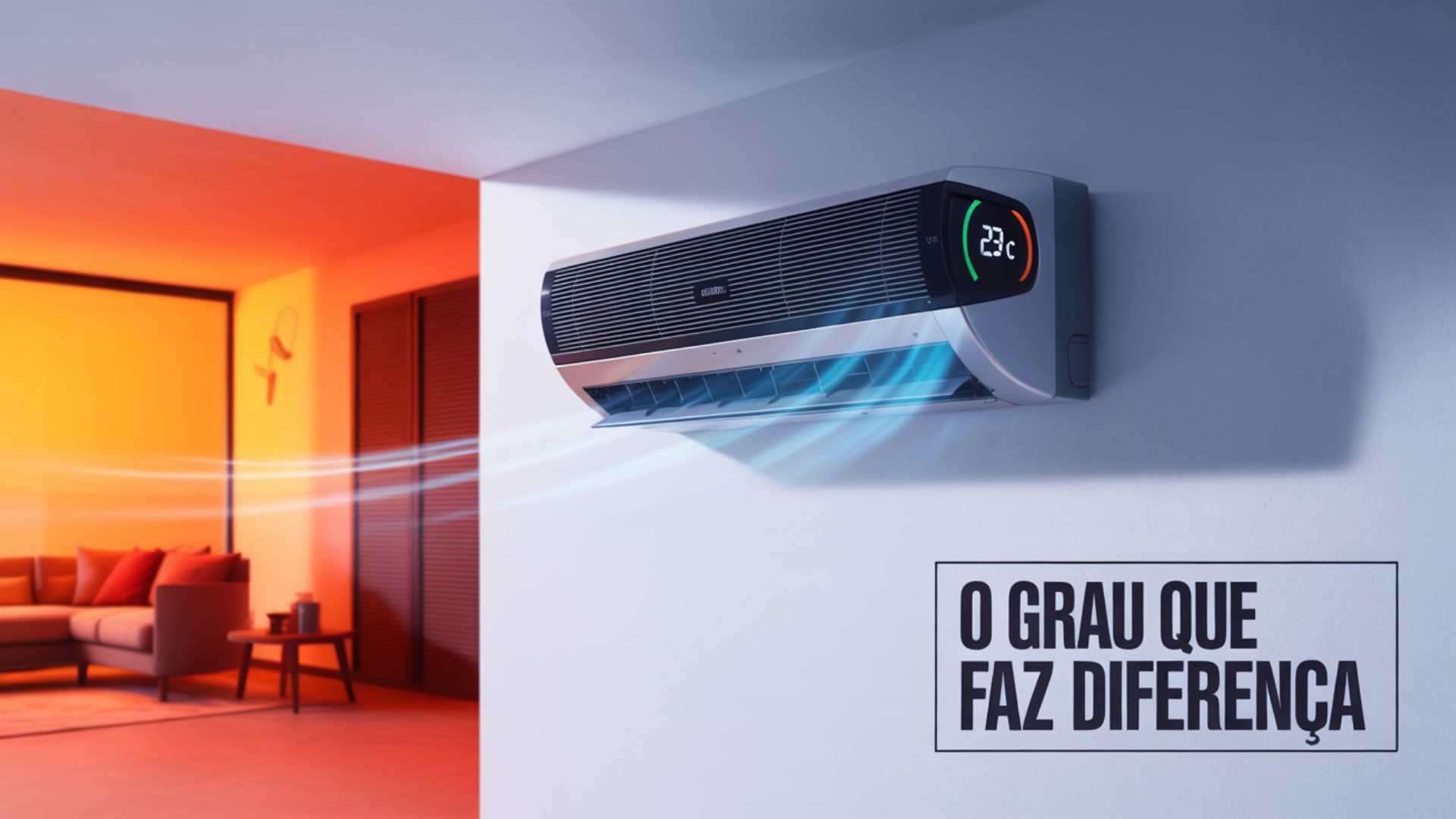
Inadequate Air Conditioning Settings Can Significantly Increase The Electricity Bill And Increase Pressure On The Electric Grid, Especially During Periods Of Intense Heat. Small Adjustments Can Bring Savings Without Compromising Comfort.
Setting the air conditioning below necessary levels can take a toll on your wallet in just a few days of intense heat.
When the thermostat is set too low, the unit runs longer and consumes more electricity, which can increase the bill by up to 25% when the setting drops to excessively cold levels.
The range between 23 °C and 25 °C usually offers a good balance between comfort and expense, and each degree less can add up to 5% to consumption according to efficiency practices widely reported by manufacturers and energy agencies.
-
Motorola launched the Signature with a gold seal from DxOMark, tying with the iPhone 17 Pro in camera performance, Snapdragon 8 Gen 5 that surpassed 3 million in benchmarks, and a zoom that impresses even at night.

-
Satellites reveal beneath the Sahara a giant river buried for thousands of kilometers: study shows that the largest hot desert on the planet was once traversed by a river system comparable to the largest on Earth.

-
Scientists have captured something never seen in space: newly born stars are creating gigantic rings of light a thousand times larger than the distance between the Earth and the Sun, and this changes everything we knew about stellar birth.

-
Geologists find traces of a continent that disappeared 155 million years ago after separating from Australia and reveal that it did not sink, but broke into fragments scattered across Southeast Asia.
Simple adjustments and regular maintenance complete the package to keep comfort without wasting.
What Is The Ideal Air Conditioning Temperature To Spend Less?
The question that appears most in searches is direct: what is the ideal air conditioning temperature to reduce costs without sacrificing comfort?
In most residential and light commercial environments, setting between 23 °C and 25 °C works well for healthy individuals and prevents the compressor from operating for unnecessarily long cycles.
This setting favors energy savings with air conditioning, maintains pleasant thermal comfort, and avoids thermal shock when going outside to very hot areas.
Why does this work?
Because the thermostat is the “target” that the system needs to reach.
The farther the goal is, the greater the effort of the compressor and the longer the unit will stay on.
Setting 22 °C, for example, tends to require more work than 25 °C, without practical gains for most users.
In humid locations, using the dehumidification function helps improve perceived comfort even with a slightly higher ideal air conditioning temperature.
Thus, energy savings with air conditioning do not only depend on the number on the display but also on how the unit manages humidity.
How To Adjust The Unit To Reduce Consumption Without Losing Comfort?
Installation, operation, and cleaning routine adjustments usually yield immediate results.
Below are objective guidelines, organized by topic, to enhance energy savings with air conditioning without sacrificing comfort.
Positioning And Sun Exposure
Avoid installing the condenser in direct sunlight and without ventilation.
Indoor environments with windows facing the afternoon sun get hotter; in such cases, the unit “feels” a greater thermal load.
Caring for the surroundings helps maintain the ideal air conditioning temperature without extra effort.
Curtains, Sealing, And External Heat
Curtains and shades reduce incoming solar radiation and stabilize indoor temperature.
Sealing strips on doors and windows prevent hot air infiltration, favoring energy savings with air conditioning.
Well-sealed joints often matter more than lowering a degree on the remote.
Natural Ventilation And Fan Mode
During cooler hours, open the windows to exchange air and reduce humidity.
Use fan mode to circulate air when cooling has reached the ideal air conditioning temperature.
In many situations, comfort can be maintained with the compressor off for some intervals.
Electronics And Thermal Load
Televisions, computers, and halogen lamps emit heat.
Turning them off when not needed decreases internal load and reduces the compressor’s operating time.
This habit directly contributes to energy savings with air conditioning.
Cleaning And Maintenance
Dirty filters restrict airflow, forcing the unit to work harder to reach the ideal air conditioning temperature.
Cleaning filters every 30 to 60 days, especially during periods of heavy use, maintains airflow and results in energy savings with air conditioning.
Besides filters, care for coils and drains prevents malfunctions and leaks.
Capacity And Technology
Correctly sizing the capacity (BTU/h) prevents under-sizing, which strains the compressor, and over-sizing, which frequently turns on and off and loses efficiency.
Units with inverter technology tend to modulate compressor speed and, in many scenarios, use less energy to keep the ideal air conditioning temperature stable.
Controls, Modes, And Habits
Use automatic mode for the unit to decide when to cool and when to just ventilate.
Sleep mode gradually adjusts the setpoint during the night, preserving comfort and promoting energy savings with air conditioning.
Programming a timer to turn off before leaving home prevents the system from operating unnecessarily.
Why Cleaning The Air Conditioning Reduces Energy Consumption?
The logic is simple: the more air the unit can move with less effort, the less time the compressor will be loaded.
Clogged filters, dusty coils, and dirty fans create resistance to airflow.
The result is longer cycles, higher consumption, and decreased performance.
The maintenance recommendation every 30 to 60 days, during heavy use periods, meets most residential scenarios.
In areas with a lot of dust or pets, shorter intervals may be necessary.
By keeping the unit clean, the system reaches the ideal air conditioning temperature more quickly, which translates into energy savings with air conditioning on the bill.
What Really Affects The Bill?
There are three factors that most impact the monthly expense.
First, the thermostat setting: each degree below the comfort range often represents up to 5% additional expense, especially when the environment is poorly sealed or very exposed to sunlight.
Second, the total usage time per day.
Third, the efficiency of the chosen model and its maintenance condition.
Replacing an old, poorly maintained unit with an efficient new model, combined with use within the 23 °C to 25 °C range, tends to produce visible savings by the following month.
Does The Environment Come Into Play?
Reducing electricity consumption decreases pressure on energy generation and demand spikes.
This has a direct effect on reducing emissions associated with the extra electricity that the system would need to produce during critical times.
By keeping settings within the comfort range, cleaning filters, and avoiding waste, each household contributes to a more stable electrical system.
There is no single official number for Brazil estimating the exact savings if “all homes raised 1 °C” in settings; the impact depends on climate, technology of the installed equipment, and regional habits.
Still, the principle holds: moderate adjustments combined with maintenance and sealing, multiplied by millions of users, yield collective results.
Essential Tips In A Line
Set Between 23 °C And 25 °C.
Each Degree Less Can Mean Up To 5% More Consumption.
Keep Filters Clean Every 30 To 60 Days.
Prefer Efficient Models With Proper Sizing And Up-To-Date Maintenance.
And You, Will You Try Raising 1 °C Today To See If The Thermal Comfort Remains Comfortable And The Bill Looks Better At The End Of The Month?







Seja o primeiro a reagir!