





 Portuguese
  English
  Spanish
  5 min of reading
  0 comments


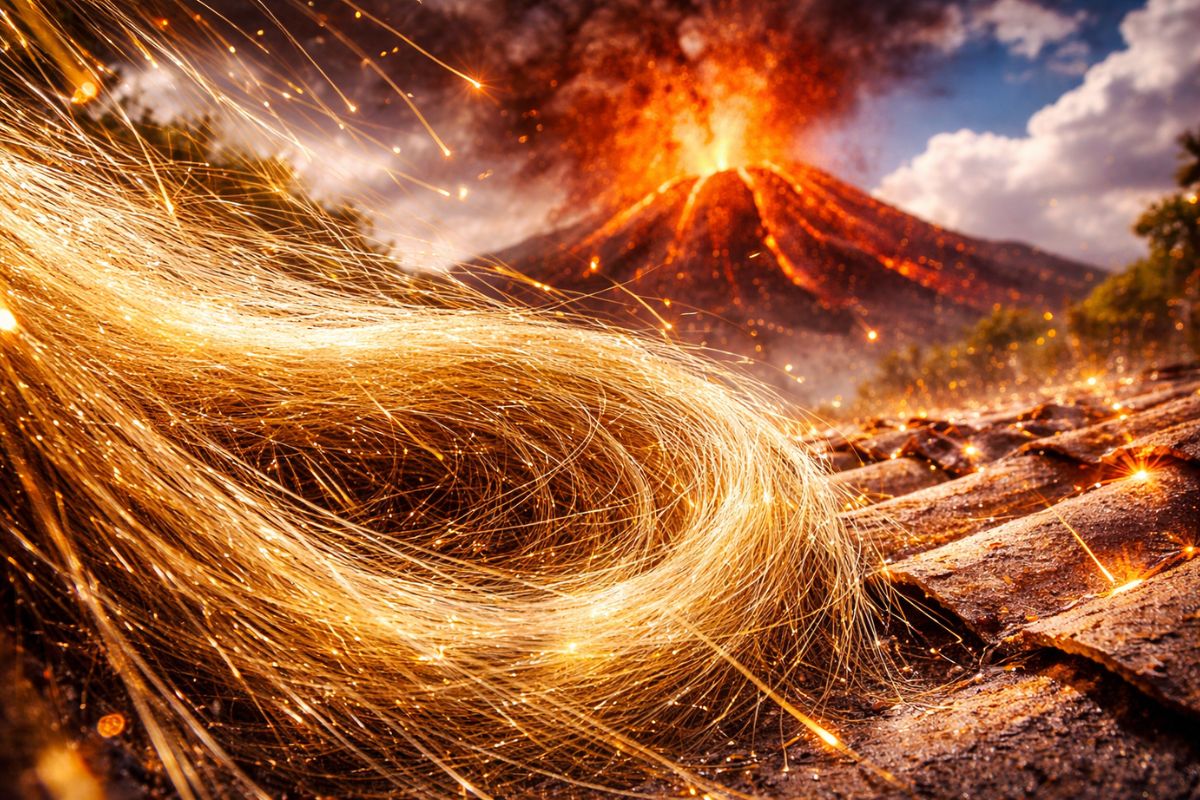
When volcanic lava is ejected into the air during an eruption, it can transform into glass fibers as fine as human hair. Known as skin hairs, these filaments travel more than 30 kilometers by the wind and fall like cutting rain on communities in Hawaii and Iceland.
Volcanic lava can do something that seems improbable: transform into glass fibers so fine that they resemble human hair. These structures, known as skin hairs—a name that honors the goddess of Hawaiian mythology associated with volcanoes—form when the still-liquid magma is ejected into the air and rapidly stretched by jets of gas released during the eruption. As it cools in fractions of a second, the molten material solidifies into extremely thin volcanic glass filaments.
The phenomenon is not just a geological curiosity. These fibers produced by the volcano are light enough to be carried by the wind for dozens of kilometers, falling like a fine rain on roofs, backyards, and gutters of homes in volcanically active regions. In a recent episode in Hawaii, fragments generated by the Kilauea volcano were found about 32 kilometers away from the eruption site and, despite their delicate appearance, the material is sharp like fiberglass and can cause irritation to the skin and eyes.
How volcanic lava transforms into glass fibers

The process that converts lava into glass filaments begins at the exact moment of the eruption. According to a recent study published in the journal Geology, when the bubbling lava is pulled by jets of volcanic gases, the molten material stretches into extremely thin fibers, some with a thickness comparable to that of a human hair.
-
NASA issues a warning for the feared Godzilla El Niño that could change the planet’s climate in 2026 with extreme warming of the Pacific capable of causing devastating droughts in some regions and historic floods in others simultaneously.

-
Archaeologists discover a 100-meter ship graveyard in a submerged Greek city, and what has appeared on the seabed of Libya could change what was known about this ancient port.

-
You buy the refrigerator and still have to see ads: Samsung starts displaying advertising on appliances and generates negative reactions among consumers.

-
What can really trigger large volcanic eruptions? Research suggests that gas returning to the magma may be more dangerous than gas escaping from it.
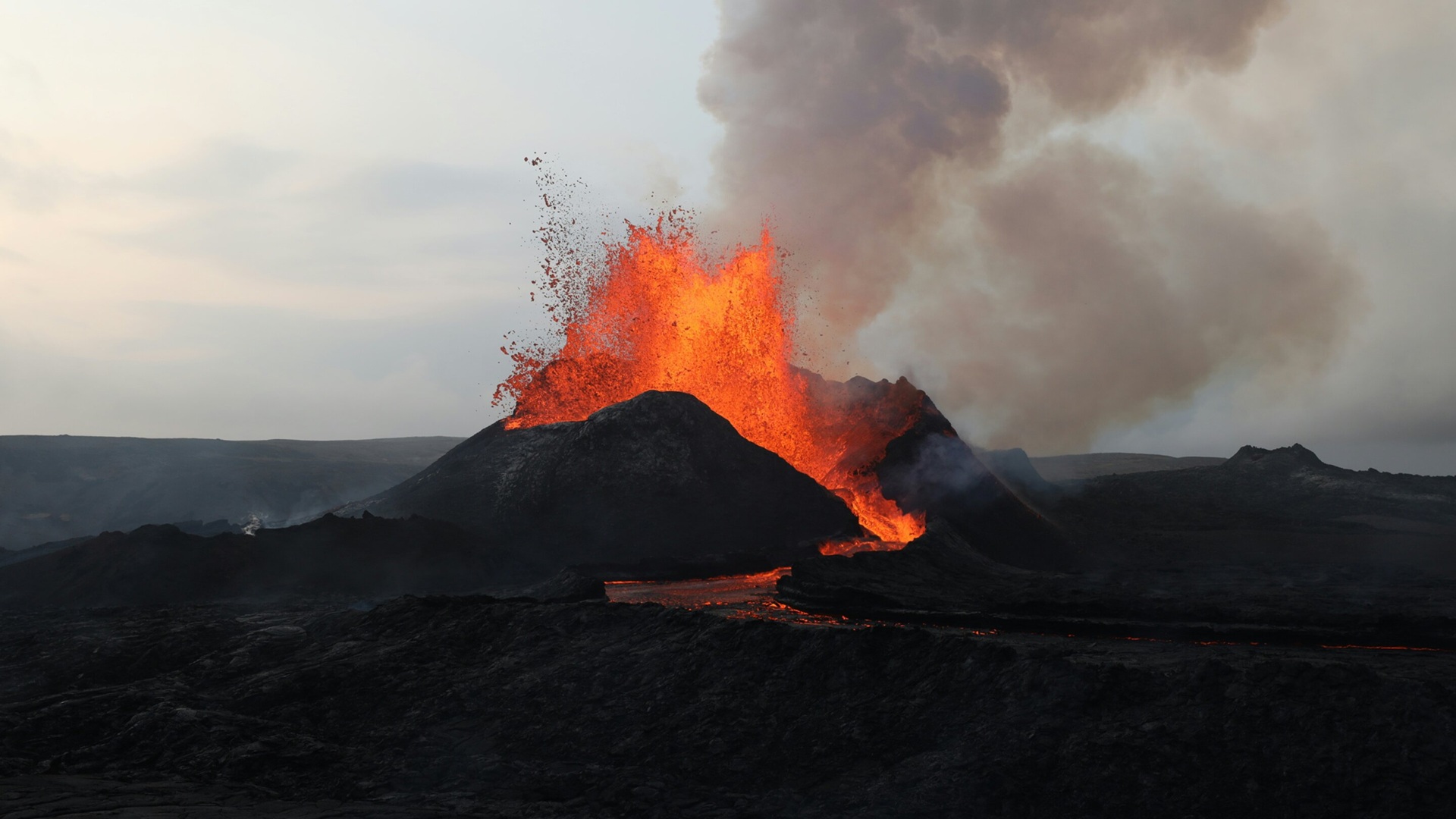
The rapid cooling in the air is what prevents the formation of crystals and results in volcanic glass instead of conventional rock.
What distinguishes skin hairs from other eruption products is precisely this combination of stretching and instantaneous cooling. The lava needs to be in a sufficiently fluid liquid state to be pulled into filaments before solidifying, and the speed of the gases needs to be high enough to produce the stretching.
When these conditions align, the volcano generates not only ash and rock fragments but also these glass fibers that can accumulate in large quantities around the eruption site.
Why the fibers appear grouped in bundles
The phenomenon of skin hairs was already known to science, but one question remained: why, in some cases, do these fibers produced by the volcano appear grouped in bundles with hundreds or even thousands of aligned filaments? The new research published in Geology offers an explanation.
Scientists suggest that the formation of bundles occurs when the magma not only stretches individually but undergoes a more organized process of collective stretching as if several fibers were being pulled at the same time in the same direction by the gases from the volcano.
This mechanism produces structures that resemble grouped hairs, which can be found deposited on surfaces kilometers away from the crater. The discovery helps to understand why some eruptions generate much larger quantities of these filaments than others.
Glass rain on roofs in Hawaii and Iceland
In practice, skin hairs represent a real nuisance for communities living near active volcanoes. In Hawaii, where the Kilauea volcano is one of the best-known sources of this phenomenon, glass fibers accumulate on roofs, backyards, vehicles, and vegetation, and can clog gutters and drainage systems. Iceland, another country with intense volcanic activity, faces similar situations during eruptions.
The problem goes beyond dirt. Since the filaments are made of volcanic glass, they are sharp and can cause irritation to the skin and eyes when handled without protection. In areas where skin hair rain is frequent, residents learn to avoid direct contact and to clean surfaces carefully.
For pets and livestock, the fibers also pose a risk, especially if ingested along with grazing.
What the Kilauea volcano teaches about the reach of the fibers
The case of the Kilauea volcano in Hawaii is emblematic for understanding the reach of skin hairs. Fragments of volcanic glass produced during recent eruptions have been found about 32 kilometers away from the point of origin, demonstrating that the fibers are light enough to travel considerable distances carried by the wind before settling.
This dispersal capability is what makes the phenomenon relevant for communities that are not immediately next to the volcano. Even areas considered relatively distant from the crater can receive significant deposits of glass fibers, depending on the intensity of the eruption, the fluidity of the lava, and the direction and speed of the winds.
Kilauea, being one of the most active volcanoes on the planet, offers scientists a continuous natural laboratory to study the formation, dispersion, and impact of these filaments on the environment and local populations.
A phenomenon that connects mythology and modern science
The name skin hairs connects the phenomenon to Hawaiian cultural tradition. Pele is the goddess of volcanoes in Hawaiian mythology, and the designation reflects the ancestral observation of island residents that the lava from the volcano could transform into hair-like fibers during eruptions.
What generations of Hawaiians observed empirically, modern science now explains with fluid dynamics models and analyses of volcanic glass cooling.
The research published in Geology advances this understanding by detailing the mechanism of bundle formation, but the authors themselves acknowledge that there is more to understand.
Each volcanic eruption produces slightly different conditions of temperature, viscosity, and gas speed, which means that the quantity and type of skin hairs vary from event to event. For communities living with active volcanoes, this variability is precisely what makes it difficult to predict when the next glass rain will arrive.
With information from the portal of G1.
Did you know about skin hairs? What did you think about learning that volcanic lava can turn into glass fibers that travel dozens of kilometers through the air? Leave your opinion in the comments.







Seja o primeiro a reagir!