





 Portuguese
  English
  Spanish
  5 min of reading
  0 comments


Changes in the SUV Market and the Arrival of Volkswagen’s Most Affordable Model Are Bringing News to the Brazilian Public, Increasing Competitiveness and Cost-Benefit for Consumers Attentive to Offers.
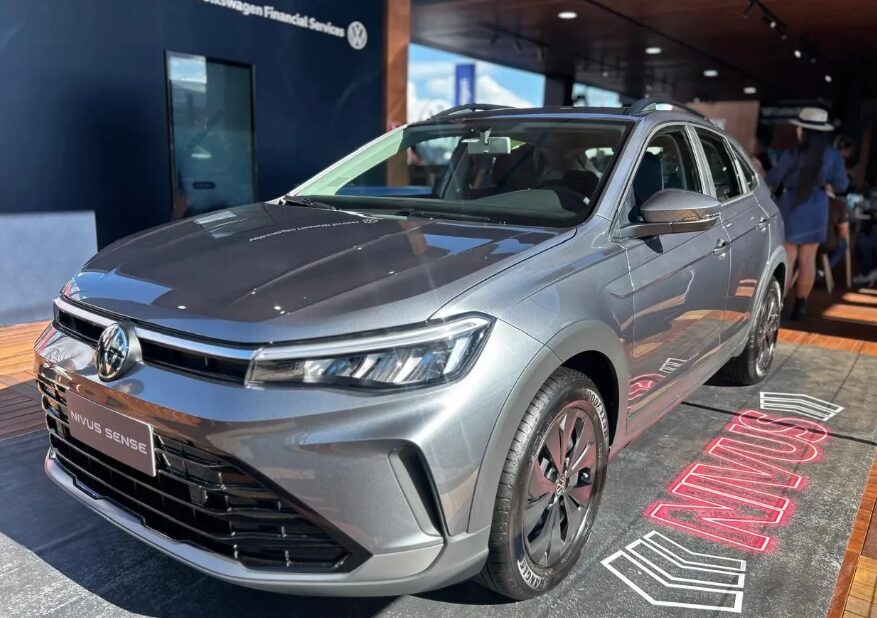
Volkswagen took an important step in the compact SUV market with the launch of the new entry-level version of the Nivus, called Nivus Sense 2026.
With an initial price of R$ 119,990, this version aims to make the model more accessible to the Brazilian public, especially in a competitive segment that demands not only technology but also economy.
The new version aims to offer an attractive cost-benefit, with a value R$ 23,500 lower compared to the previous version, the Comfortline, which cost R$ 143,490.
-
The Argentine government celebrates the lowest poverty rate in 7 years, but experts warn that the methodology has changed, real wages have fallen, unemployment has risen, and the number of people on the streets of Buenos Aires has increased by 57% since Milei took office.

-
The 2026 electric Vitara arrives in Brazil and proves that Suzuki is not leaving: 4×4 traction, 184 hp, 61 kWh LFP battery, 293 km range, R$ 259,000, and a trunk capacity of 224 L.
-
7.8 magnitude earthquake in Indonesia frightens the population, triggers tsunami alert, and hits an island with over 200,000 inhabitants this Thursday.

-
Google will finally let you change that embarrassing Gmail address you created in your teenage years without losing any accounts, logins, or old emails: the feature is already available in the United States.


This move reflects the automaker’s effort to attract new consumers by offering a SUV with great performance but at a more accessible price.
With the increasing demand for compact SUVs in Brazil, Volkswagen seeks to stand out among popular models like Chevrolet Tracker, Hyundai Creta, and Volkswagen T-Cross, all competing for consumer preference.
By reducing the price of the Nivus and simplifying equipment and finishes, Volkswagen bets on competitiveness and attracting a new audience without compromising the essence of the model.
The new Nivus Sense is a direct reflection of this strategy.
SUV Market on the Rise and Volkswagen’s Proposal
The SUV market in Brazil has shown solid growth in recent years, with a 12% increase in sales in 2024, according to data from Fenabrave.
In this context, the Nivus Sense emerges as a more accessible alternative for those seeking a compact SUV but do not want to compromise on quality and performance.
The cost reduction was achieved by excluding some advanced technology items, such as the wireless phone charger and the digital air conditioning, in addition to simplifications in driver assistance systems.
Despite these changes, the model retains essential features that ensure the safety and comfort of occupants, such as six airbags, electric steering, and electronic stability control.
The proposal is to ensure that the Nivus Sense remains competitive and appealing, without losing the Volkswagen DNA.
What Changes in Nivus Sense 2026
The Nivus Sense 2026 was designed to offer a balance between affordable price and essential functionalities.
Despite the simplification of some features, Volkswagen assures that the user experience remains of quality.
The entry-level version does not include premium items like Adaptive Cruise Control (ACC) and the automatic post-collision braking system, but the brand maintained its commitment to safety by preserving features like electric steering and six airbags.
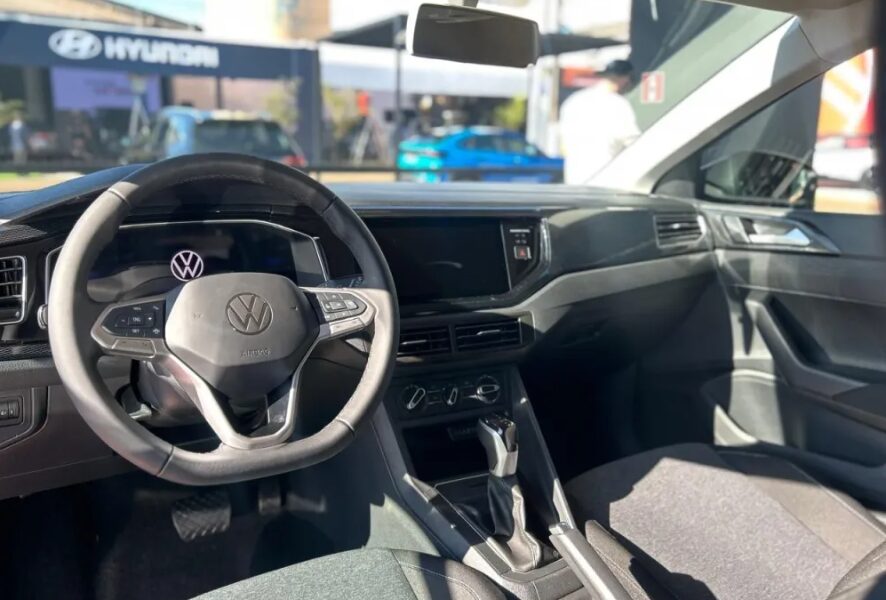
Inside, the finish of the Nivus Sense 2026 is simpler, using less sophisticated materials, but nonetheless, the design maintains a modern and functional appearance.
The dashboard features a 7-inch multimedia center, which is compatible with Android Auto and Apple CarPlay, providing a practical and efficient connectivity experience.
Although the digital air conditioning has been replaced by an analog system, it still meets the needs of the Brazilian climate.
Externally and visually, the model loses some sophistication features in the name of cost reduction.
The alloy wheels have been replaced by 16-inch hubcaps, and the bar connecting the rear lights, one of the Nivus’s characteristic design elements, has been removed.
These changes are visible, but the model’s identity, with its modern and robust lines, remains intact, which continues to attract a young and urban audience.
Main Simplifications of Nivus Sense 2026:
- Wheels with 16-inch hubcaps instead of alloy wheels.
- Removed rearview camera, but with rear parking sensors.
- Analog air conditioning replacing the digital system.
- Removal of the wireless phone charger.
- Simpler interior finish, without chrome or textured details.

Performance and Efficiency of the 1.0 TSI Engine
The 1.0 200 TSI engine of the Nivus Sense 2026 is one of the model’s highlights.
Already established in the Volkswagen lineup, this engine offers 128 hp with ethanol and 116 hp with gasoline, being capable of accelerating from 0 to 100 km/h in 10 seconds.
The 6-speed automatic transmission ensures smooth shifts, providing a pleasant driving experience, both in urban traffic and on highway trips.
The fuel efficiency of the Nivus Sense also deserves attention.
According to Inmetro data, the model has an average consumption of 10.8 km/l in the city and 12.4 km/l on the highway when fueled with gasoline.
With ethanol, the figures are 7.5 km/l and 8.9 km/l, respectively.
These numbers make the Nivus Sense one of the most economical options in its category, ideal for those seeking everyday savings without sacrificing performance and comfort.
The model’s suspension has been tuned to provide more comfort, with a configuration that favors stability in curves and absorption of terrain irregularities, which enhances the sense of safety and well-being.
The 415-liter trunk is one of the largest in its category, surpassing the Renault Captur (393 liters) and matching the Chevrolet Tracker (393 liters), reinforcing the versatility of the model.
Volkswagen’s Strategy in the Brazilian Market
The launch of the Nivus Sense 2026 is a strategic move by Volkswagen to strengthen its position in the compact SUV market, which represents about 30% of new vehicle sales in Brazil.
The brand aims to directly compete with other entry-level models, such as the Fiat Pulse and Nissan Kicks, offering an option with excellent cost-benefit.
With the growth of the SUV market in Brazil and the increase in vehicle sales in 2024, which registered a 8% growth, Volkswagen prepares to consolidate its position in the segment.
Since the launch of the Nivus, Volkswagen has sold over 100,000 units in Brazil, and the Nivus Sense has the potential to boost these numbers even further, especially with its competitive price and the adjustments made to make the model accessible to a broader consumer base.
Volkswagen has also invested in marketing campaigns to highlight the benefits of its new model, emphasizing safety, performance, and the versatility of the Nivus Sense 2026.
By offering a more accessible version, the brand hopes to attract new customers looking for quality and competitive pricing.
Conclusion: The Nivus Sense is an Attractive Option for Those Seeking Cost-Benefit
With the arrival of the Nivus Sense 2026, Volkswagen reaffirms its position as one of the leading automakers in Brazil and offers an interesting alternative in the compact SUV market.
The model combines economy, safety, and performance, maintaining the essence that made the Nivus a success since its launch.
With a reduced price, but without giving up the main attributes of the model, the Nivus Sense 2026 promises to attract a new audience and further solidify Volkswagen’s success in Brazil.
Do you think that the price reduction of the Nivus Sense can transform the competition in the compact SUV segment? Leave your comment!








Seja o primeiro a reagir!