





 Português
  Inglês
  Espanhol
  3 min de leitura


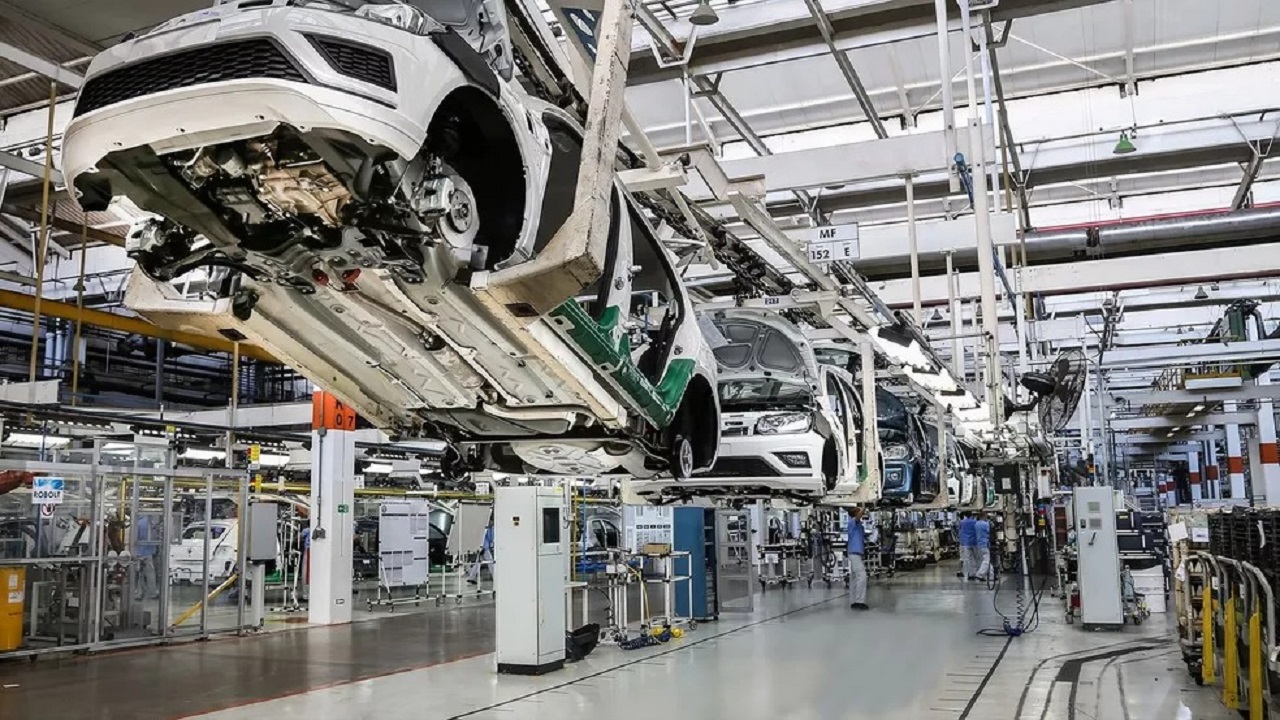
Volkswagen And GM Announced Collective Vacation For Thousands Of Workers Due To Global Semiconductor Crisis And High Interest. Professionals Expected To Return In April.
The automakers General Motors (GM) and Volkswagen began, on this Monday (27), periods of collective vacation for approximately 5,000 employees at their factories in São José dos Campos and Taubaté, in the interior of São Paulo. With the market slowing down due to the global semiconductor crisis, automakers in Brazil announced employee layoffs and reduced manufacturing between March and April.
How Long Will GM And Volkswagen’s Collective Vacation Last?
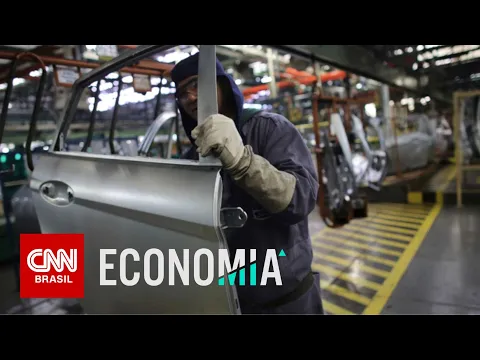

The shutdowns are also happening at Hyundai units in Piracicaba, Stellantis in Goiana (PE), which includes brands like Fiat, Citröen and Peugeot, as well as Mercedes-Benz units in São Bernardo do Campo.
At Volkswagen, the collective vacation for employees at the Taubaté factory will initially last 10 days, for approximately 2,000 employees. After this period, a new collective vacation period will be granted for 900 workers, who will only return to work after the Tiradentes holiday.
-
With awards in various countries, the Jaecoo 7 is establishing itself globally and accelerating the expansion of Omoda & Jaecoo in the hybrid SUV market.

-
In a silent race, Shopee signs a mega contract in Guarulhos and accelerates the e-commerce war with faster deliveries, pressured shipping, and a new threat to rivals in Brazil.

-
5 cheapest used cars than a Honda CG 160 Titan 0 km, with options starting at R$ 13,000 for those who want to trade their motorcycle for a car and escape the rain, sun, and risks of riding.

-
Oil surged to $115 a barrel due to the war in the Middle East, and diesel in Brazil has already risen to R$ 7.45 per liter, while the United States…

According to Volkswagen, the measure mainly aims to maintain the production line of the unit and the instability in the supply chain of components, which has caused the global semiconductor crisis.
At General Motors, the measure will impact 3,000 employees at the São José dos Campos (SP) unit, about 80% of the production sector. The return from collective vacation is initially scheduled for April 13. The company did not respond to media inquiries, however, the Metalworkers’ Union of the city explained that the intent is also to adjust inventory due to market acceleration and declining sales.
Rising Interest Rates Impact Automakers In Brazil
The automotive industry is experiencing a new moment of difficulties and has resumed announcing production halts at its main units in the country. Unlike recent episodes, the Covid-19 pandemic is not at the center of attention. The main obstacles now are the rising interest rates and the global semiconductor crisis.
The increases in the basic interest rate, Selic, implemented by the Central Bank since 2021, have begun to have stronger consequences for the economy. One of them is precisely the reduction in consumption due to the difficulty in obtaining credit.
For analysts monitoring the segment, the rising cost of credit combined with reduced purchasing power has decreased financing potential and, consequently, demand for new vehicles.
Data from the National Federation of Motor Vehicle Distribution (Fenabrave) shows that January this year started slowly. When considering the previous month, there was a 34% drop in the registration of automobiles, trucks, light commercial vehicles, and buses, although the number is 12% higher than that recorded in January last year.
In February, there was another drop of 9% compared to January. Against the same month last year, the accumulated also turned negative: a decline of almost 2%. Considering only automobiles, there was a decrease of 7% and 4.2% respectively.
Global Semiconductor Crisis
Over the past year, at least twice Volkswagen announced measures at its Taubaté (SP) factory due to the shortage of semiconductor chips. In July of the same year, the automaker suspended production in three shifts and, in August, placed 800 employees on lay-off due to the piece’s scarcity in the market.
In November of last year, with production bolstered by a BRL 7 billion investment and all focus turned to the launch of the Polo Track this year, the automaker hoped not to face the same problem that has impacted the automotive industry for at least 2 years.









Seja o primeiro a reagir!