





 Portuguese
  English
  Spanish
  5 min of reading
  1 comment


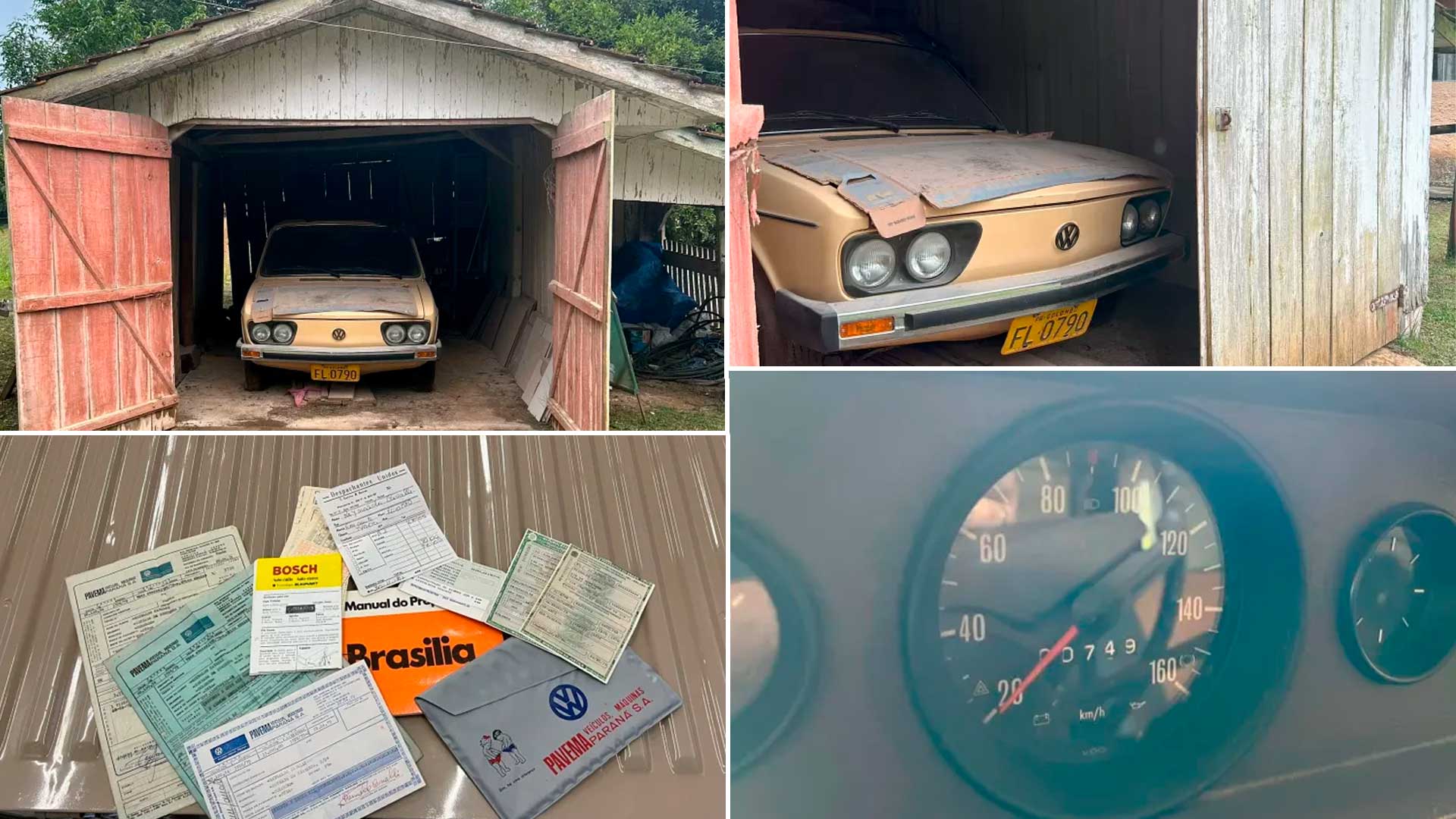


A Volkswagen Brasília LS 1979 Almost Unused Was Found Preserved in a Barn in Colombo, Greater Curitiba. The Car, With 749 km, Still Holds Factory Items and Original Documents. The Case Rekindled the Debate About Conservation and Appreciation of Classics.
The discovery involves a Volkswagen Brasília LS 1979 in Ipanema Beige, with only 749 km on the odometer, kept for decades practically without use. The vehicle was stored in a barn in Colombo, in the Metropolitan Region of Curitiba, and was eventually removed from the location after negotiations with the owner’s family.
According to reports published by the automotive press, the former owner only used the car on Sundays, for short trips such as going to church and the market. The story gained traction due to its preserved condition, described as close to a car fresh off the dealership.
Among the preserved items, plastic on the rear seats, original stickers, and documents such as the manual and the invoice, mentioned in reports as issued at the time of the car’s purchase in 1979, stand out.
-
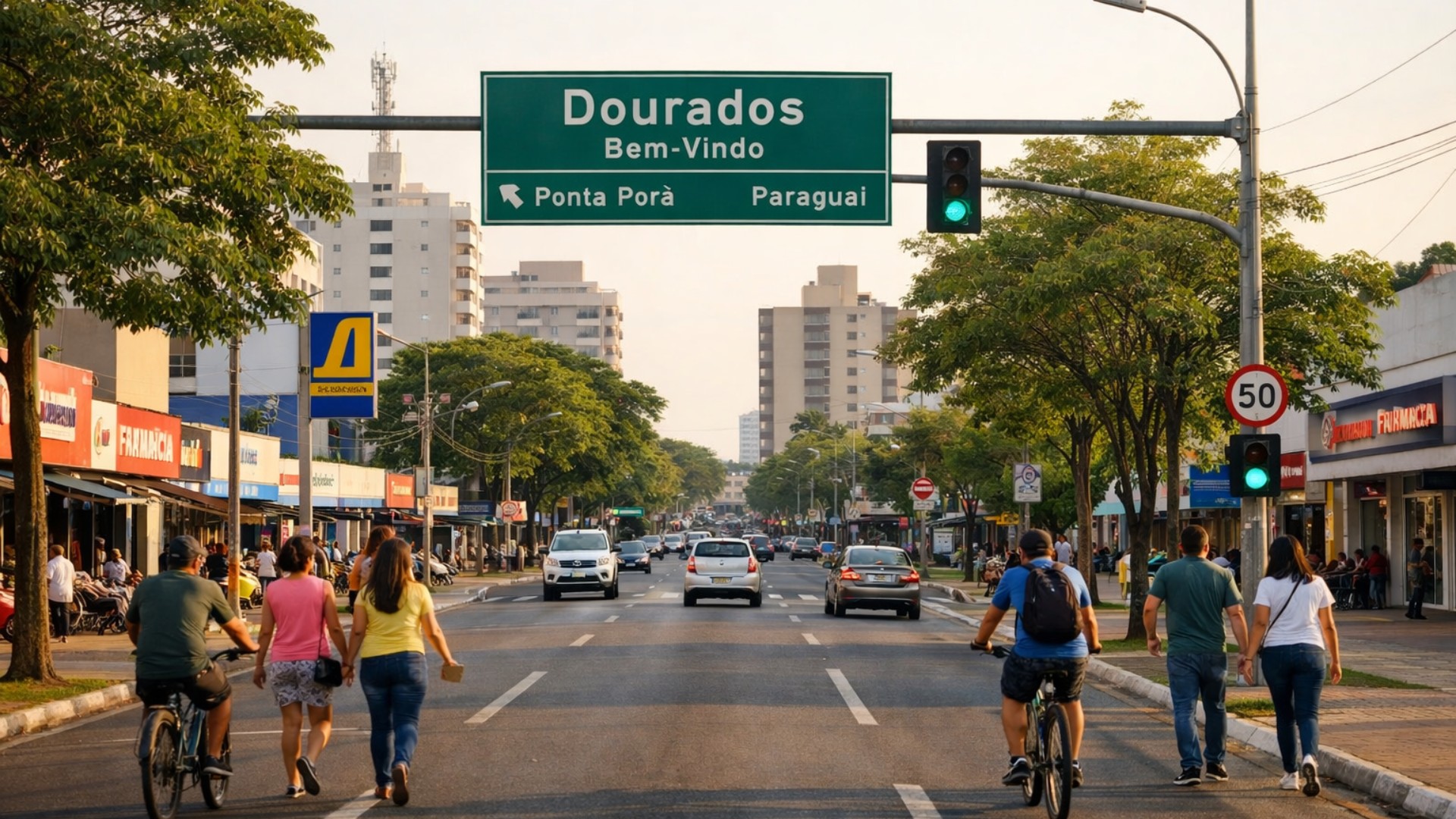
Brazilian city neighboring Paraguay becomes a ‘magnet’ for people seeking quality of life and high standards with exceptional growth and commutes of up to 15 minutes.
-
A rare storm transformed part of the Gulf into an unlikely scene of hail, extreme rain, and tornado risk in the middle of the desert, with volumes that exceeded the annual average in a single day.

-
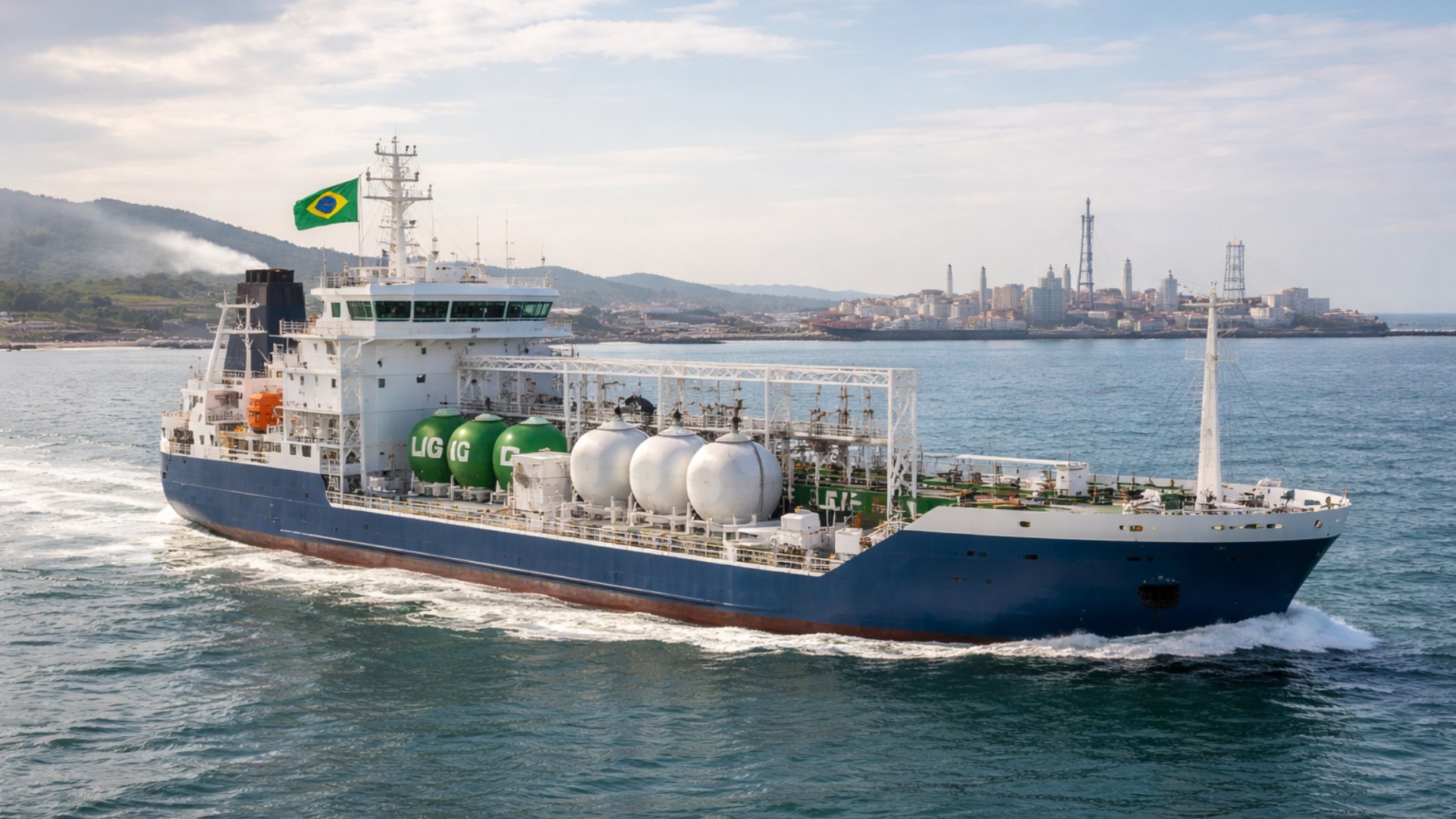
Brazil catches the world’s attention with ships powered by ethanol and biodiesel that have lower emissions, an unprecedented certification with advantages in chartering, and a revolution in cabotage.
-
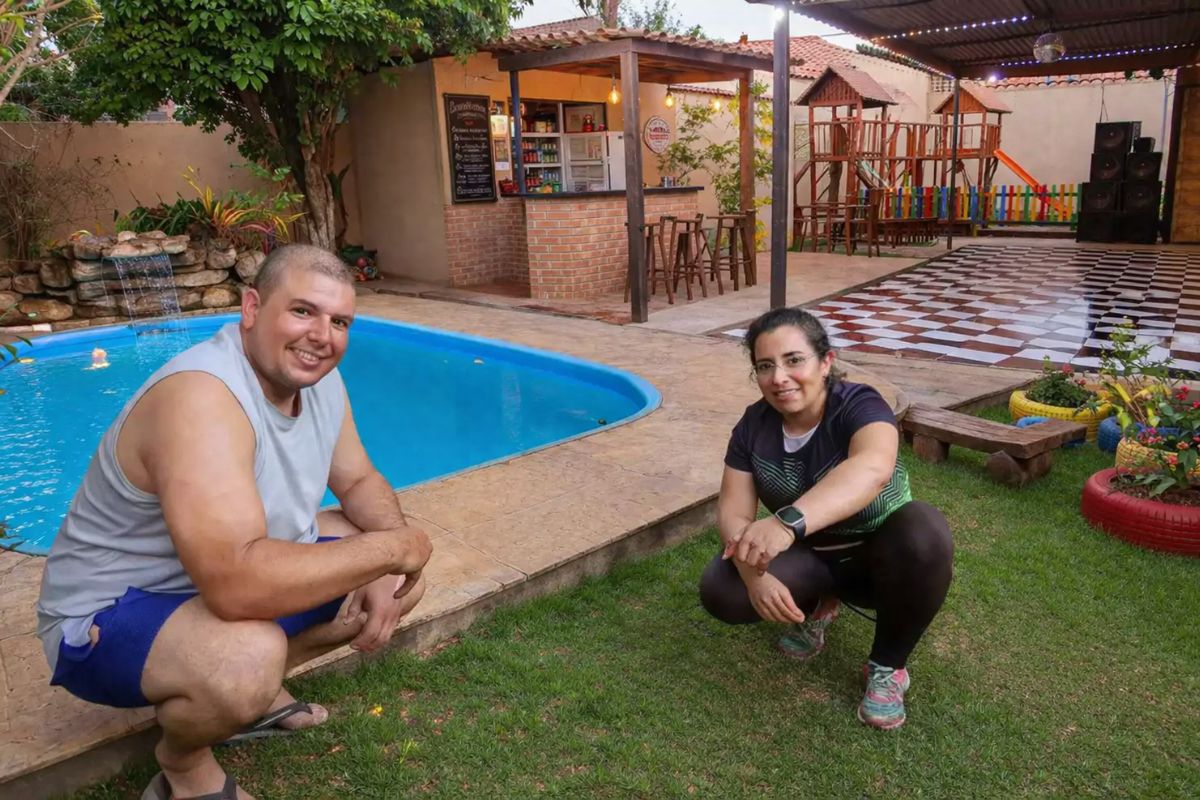
A couple who only has Sundays free has built a hand-dug pool, a hamburger joint, a dance hall, and a playground in their own home without hiring a mason, and even with breaks due to accidents and the pandemic, the work has never truly stopped.

The rescue of the automobile was associated with Flat Collection, a store in São Paulo specializing in air-cooled Volkswagen and Porsche cars, which participated in the acquisition, according to interviews attributed to Alexandre Vicentini.
How the Brasília Almost Zero Kilometers Stayed Parked for Four Decades

The most repeated sequence in the reports is that the Brasília was bought new in 1979 and had limited use for a few years, until a drastic change in the family’s routine. After the death of the owner’s husband, she reportedly chose not to allow others to drive or touch the car, keeping the vehicle stored.
According to the published account, in the early years, the engine was occasionally started to keep the car in minimal condition, but this care reportedly decreased over time. From there, the Brasília remained untouched in the barn, accumulating only the natural wear of a stationary vehicle.
The resolution only came decades later, when the owner passed away. The purchase, according to the investigation published, was completed after the car’s documentation was regularized, allowing for the transfer and removal of the vehicle from the location.
What Makes This Find So Rare for Collectors of Antique Cars

The first factor is obvious to any enthusiast, extremely low mileage on a popular car from 1979. An odometer reading of 749 km functions almost like a time capsule, because it reduces the chance of alterations, adaptations, and repairs common in cars used for decades.
The second factor is the presence of conserved details that usually disappear, such as interior plastics, stickers, and kept accessories. Items like this tend to be discarded in the first years of use, so when they appear intact, they become a strong argument for originality.

There is also the documentary value, with the manual and invoice mentioned in publications about the case. For collectors, this paper trail helps to reinforce provenance and tell the vehicle’s story with fewer gaps.
Another point is the model itself. The Brasília LS version is mentioned in reference materials as a more luxurious configuration in the lineup, with details and equipment that differentiated the car.
Finally, appreciation enters the conversation because the topic touches on a market that rewards originality. In accounts attributed to the buyers, the Brasília is described as a model in high demand among classics, and the deal was said to revolve around tens of thousands of reais.
Next Steps for Documentation and Preservation as It Was Found
The regularization of the documents appears as a central step before any exhibition or definitive transfer. Reports cite that the car would still undergo processes in Paraná to finalize the change of ownership and then follow the planned destination by the buyers.
There was also a reported intention to keep the car exactly as it came out of the barn, with minimal aesthetic intervention, preserving even the objects that were inside, such as religious items on the dashboard.
Brasília LS 1979 and Its Place in the History of Volkswagen in Brazil
The Brasília has symbolic weight for being a landmark project of Volkswagen in Brazil, with a design tailored for the local market and a strong presence on the streets in the 1970s and 1980s. This helps explain why such a preserved specimen attracts attention even outside the collectors’ circle.
The LS version, specifically, is remembered in historical records for bringing refinements and finishing items that aimed to position the Brasília at a higher level within the range. In 1979, this type of differentiation was an important argument for those wanting a compact car but with more comfort and details.
In the specialized press, the Brasília also appears as a character in old tests and articles, reinforcing the role of the model in Brazilian automotive memory. These references help contextualize why the subject generates such a stir when an almost untouched car emerges.
At the same time, the case exposes a curious contrast: a popular car made for daily use that ended up becoming a museum piece due to personal circumstances. It is this clash between simple use and extreme preservation that transforms the story into news.
Whether this car should remain untouched forever or should at least be driven at events divides many opinions. In your opinion, preserving without altering anything is respect for history or a waste of a car made for driving? Leave a comment telling what you would do with a Brasília like this, keep it as a relic or take it out on the street with care.




Colocar na rua com o máximo cuidado