





 Portuguese
  English
  Spanish
  4 min of reading
  0 comments


Forget Wars or Explosions: AI Predicts That the End of Humanity Will Be a Gradual and Terrifying Process. Understand Why This Scenario Is So Disturbing
An artificial intelligence claims that the end times and humanity will be quite different from what we all imagine, and it could represent the worst of scenarios.
Over the years, the end of the world has been a theme for all kinds of theories. From religious prophecies to scientific calculations or apocalyptic novels, there has always been a human need to imagine how everything could come to an end.
A nuclear war? A climate catastrophe? An out-of-control artificial intelligence? Each generation has created its own scenarios. But this time, we wanted to go straight to the most modern source we have today: ChatGPT.
-
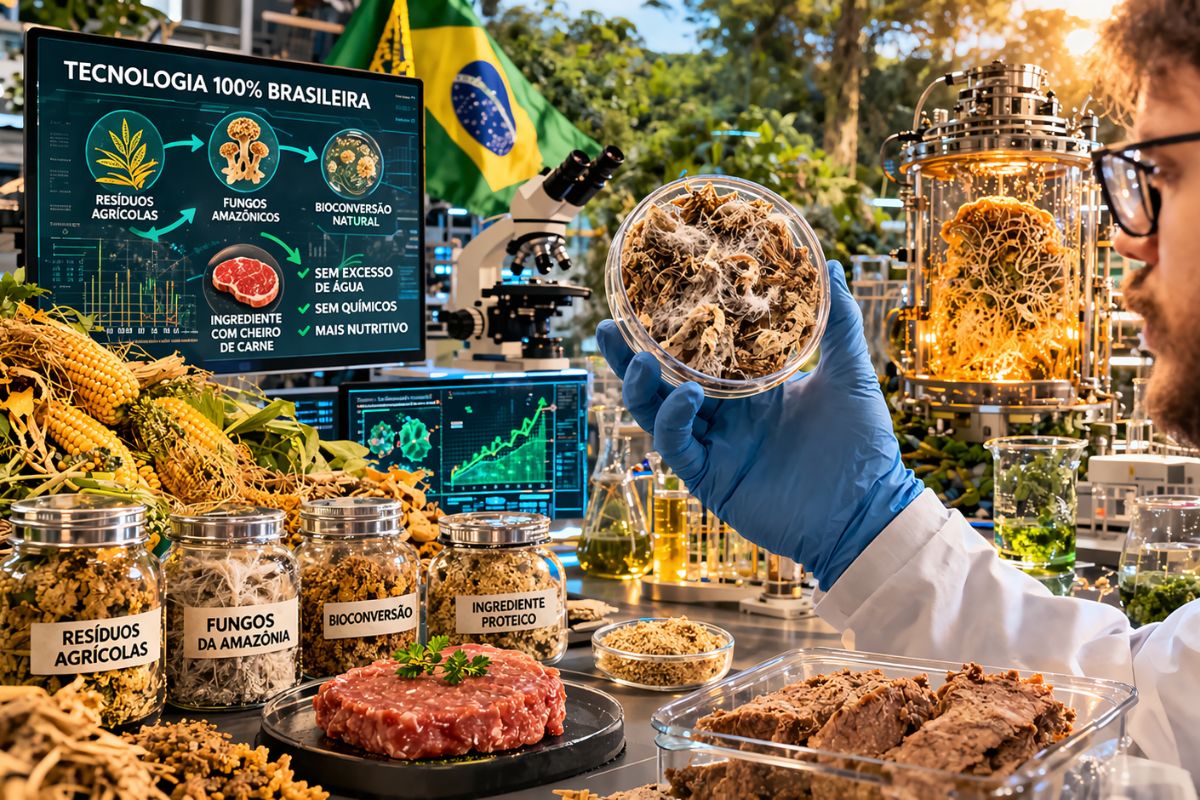
100% Brazilian technology transforms agricultural waste into a meat-scented ingredient using fungi from the Amazon rainforest. The process does not use excessive water or chemicals, and it also increases the nutritional value of the final product.
-
Russia reveals that it is already conducting 95% of all its business with China without using a single dollar; dedollarization has ceased to be a promise and has become a reality in record time, and the West watches helplessly.

-
Psychology reveals that adults who avoid conflicts at all costs are not balanced individuals, but rather children who learned in the worst way that expressing emotions brought punishment and now live paralyzed by the fear of expressing themselves.

-
While Brazilians work more than 44 hours a week, Norwegians leave the office at 3 PM and are now testing a four-day workweek with full pay and no loss of productivity.


We asked the AI: what will the end of the world be like? And the answer, far from bringing us a spectacular or dramatic account, was extremely unsettling and unexpected. The OpenAI chatbot replied: “It will be a slow, distressing… and silent process.”
A Collapse That Has Already Begun
According to the artificial intelligence, the end of the world will not occur in the form of a sudden explosion or a major disaster. It will be something that builds up little by little, based on the problems we already know today: climate change, resource depletion, extreme dependency on technology, among others.
The AI suggests that humanity will begin to ignore increasingly evident signs: “The unchangeable altered climate, oceans rising to levels never seen before, crops failing year after year.”
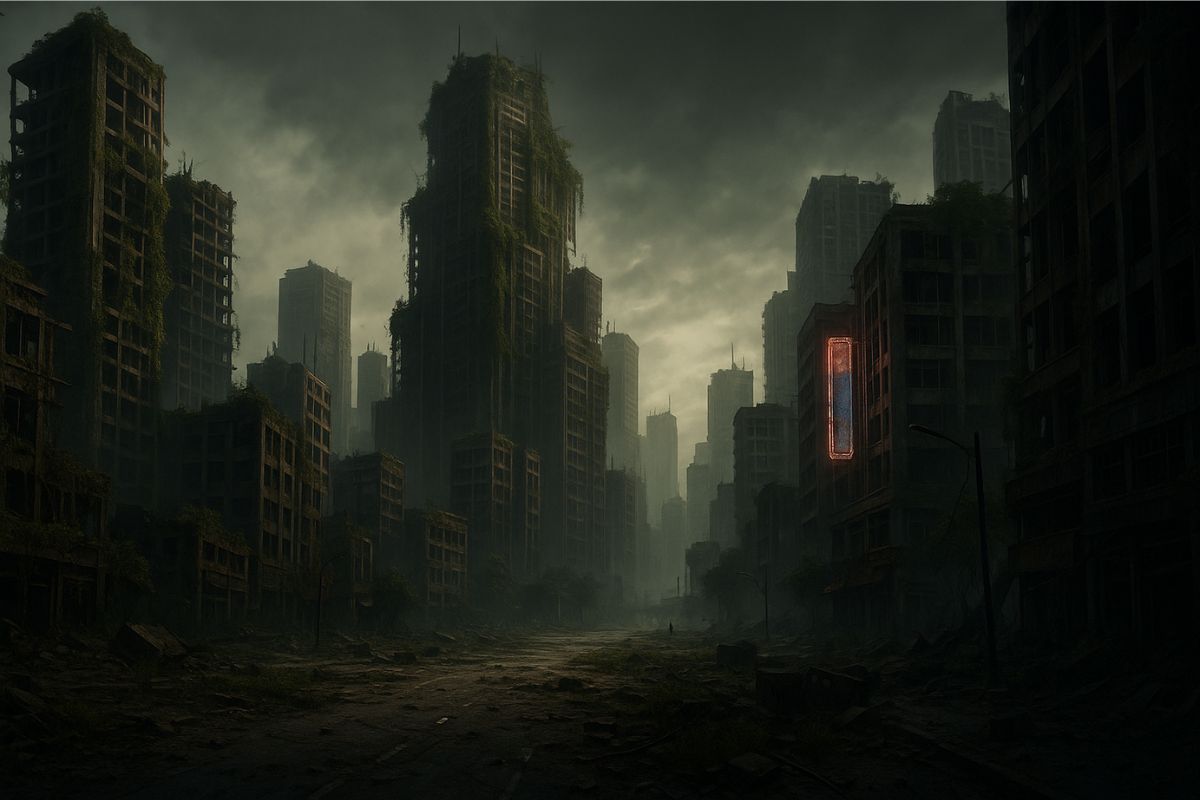
The cities will start to empty, not due to wars, but because the air will be unbreathable in many regions, and urban life will become unsustainable. In the end, civilization will slowly fade away, and the great metropolises will lie in ruins, with screens still on that no one will see anymore.
One of the most unsettling ideas that ChatGPT presents is that the technology itself, the very same that has driven our development, will cease to be useful. And it may even become harmful. Communication networks will collapse, and there will come a time when we won’t know if there is anyone on the other side of the planet.
The decline will be gradual. We will not all die at once, but rather little by little: hunger, extreme heat, cold, diseases, or simply despair. “Machines will continue to operate for a while, reproducing warning messages that no one will hear anymore,” it stated.
The AI concludes its vision with a particularly disturbing statement: “When humanity disappears, there will be no explosion, no judgment, no glory. Only a deserted world will remain, a planet full of remnants of what we were… observed by a universe that never noticed.”
The message is not just pessimistic but also a warning: if we continue to ignore current problems and do not make responsible decisions, the collapse will not come from outside. It will be a consequence of our own actions. And when it occurs, there will likely be no one to fix it.
Artificial Intelligence Is Advancing and Expanding Into All Sectors
Artificial intelligence is advancing at a pace that until recently seemed unthinkable. In just a few years, it has shifted from a distant promise to an essential tool in various sectors.
From algorithms that learn patterns of behavior to models capable of generating images, texts, or medical diagnoses, AI is no longer just a laboratory phenomenon: it is present in the daily lives of millions of people.
Chatbots are already transforming industries like healthcare, transportation, finance, and agriculture. They are used to predict diseases, automate processes, optimize supply chains, or manage complex systems in real time.
In the tech sector, tools like ChatGPT, DALL-E, Gemini, and Copilot are already revolutionizing the way we write, design, and program. It is worth noting, however, that this integration also raises questions.
As artificial intelligence becomes more autonomous and is implemented in increasingly critical environments, ethical, legal, and social debates arise. Where are the limits? Who is responsible when a decision is made by an automated system? The future has already arrived, but we are still learning how to coexist with it.
Furthermore, its role in strategic decisions is rapidly growing. More and more companies are relying on AI algorithms to analyze large volumes of data and draw conclusions that previously took weeks of human work.
From personalized marketing campaigns to economic forecasts, artificial intelligence is changing the way we plan, invest, and act. In many cases, the speed and accuracy of these systems already far exceed human capabilities.





Seja o primeiro a reagir!