





 Portuguese
  English
  Spanish
  2 min of reading


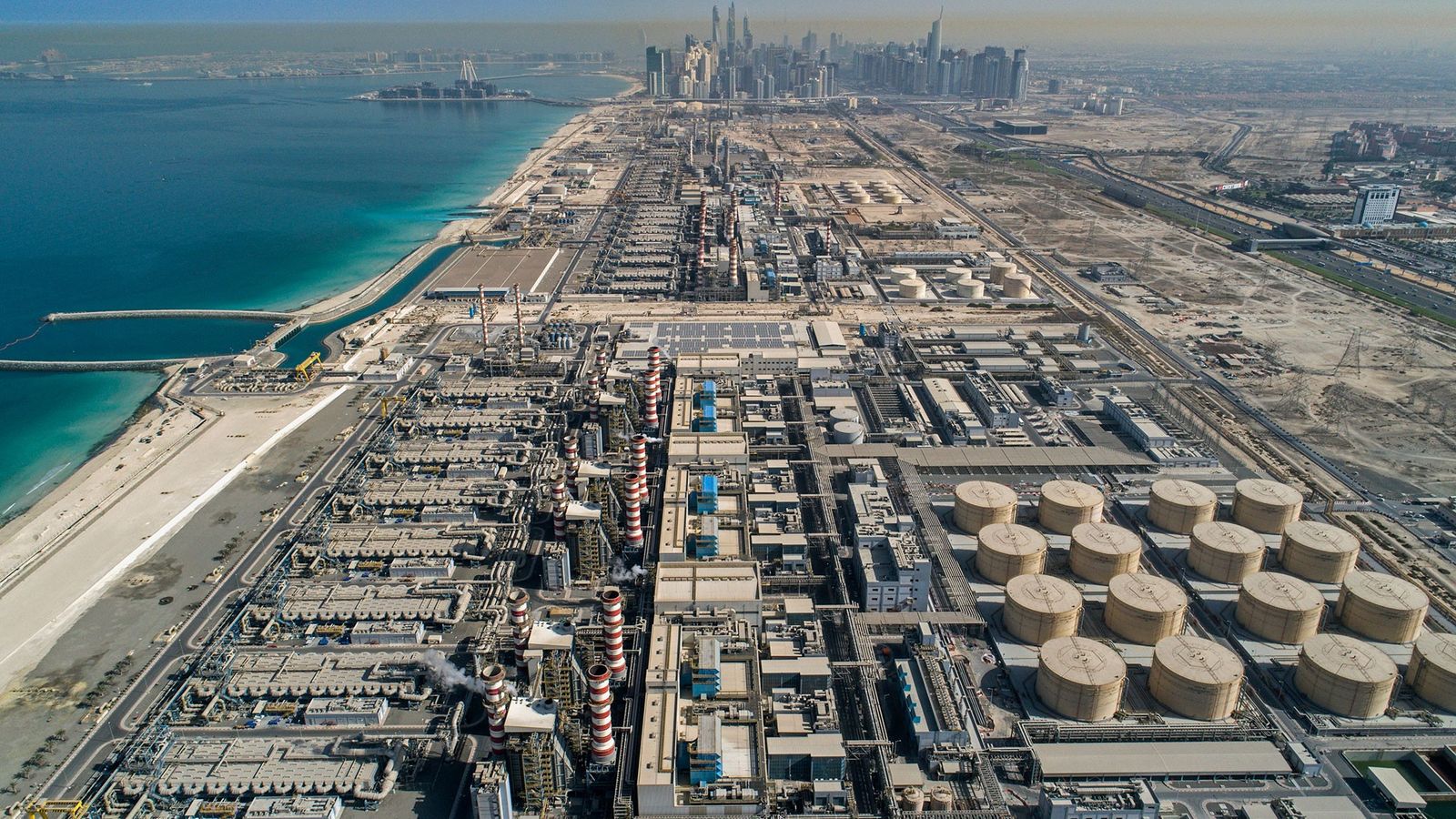
WEG Motor and Inverter Equipped Plant Honored and Recognized by Guinness World Records as “Largest Reverse Osmosis Desalination Installation in the World”.
International water markets increasingly require structure and innovation to meet global needs. WEG informed on April 26 that the largest seawater desalination plant in the world, Rabigh 3, was inaugurated on March 31 in Saudi Arabia, in which the Brazilian multinational participated as a supplier of motors and frequency inverters.
The success of the project was honored and recognized by Guinness World Records as the “largest reverse osmosis desalination installation in the world.”
Watch the Video Below and Learn About Rabigh 3, the Largest Seawater Desalination Plant on the Planet
With a unique structure to serve large engineering companies, WEG was part of this major international project as a supplier of motors and frequency inverters for the main processes of the water production chain, which range from intake, pre-treatment, and reverse osmosis process to post-treatment.
-
Unemployment rises again to 5.8% at the beginning of 2026, raising alarms about the end of temporary positions and its impact on the Brazilian job market.

-
Document organization can cut invisible costs in small businesses, a simple step that prevents waste, rework, and losses in daily operations.

-
While Russia dominates the global wheat market, Brazil emerges as an unexpected competitor in the Cerrado, offering grain available in July and August when stocks in the Northern Hemisphere are at their lowest point of the year.

-
China returned almost 20 Brazilian ships with soybeans, but now everything could change: the country that buys 80% of the grain is considering relaxing regulations after impurities held up shipments of thousands of tons and caused million-dollar losses.


Brazilian Multinational Leader in Turbine Manufacturing Equipped the Largest Desalination Plant on the Planet with 69 Electric Motors and 50 Frequency Inverters
In total, there are 69 electric motors and 50 medium voltage frequency inverters supplied through industry companies, such as the consortium Abengoa, SIDEM, and Sepco III, which is responsible for the engineering, supply, construction, and commissioning of the plant.
Rabigh 3 was built on the western coast of the Red Sea and has the capacity to produce 600,000 m³ of water per day and supply approximately three million people. It is also characterized as the most eco-friendly plant in the world due to its lower electricity consumption during daily operations and has recorded the lowest noise level.
“This WEG investment, based on exclusively serving large engineering companies, has guaranteed the company new supplies in the Middle East and also experience to meet the national demand, which is increasingly intense due to the new regulatory framework for basic sanitation, enacted in Brazil,” stated the Brazilian company.









Seja o primeiro a reagir!