





 Portuguese
  English
  Spanish
  3 min of reading


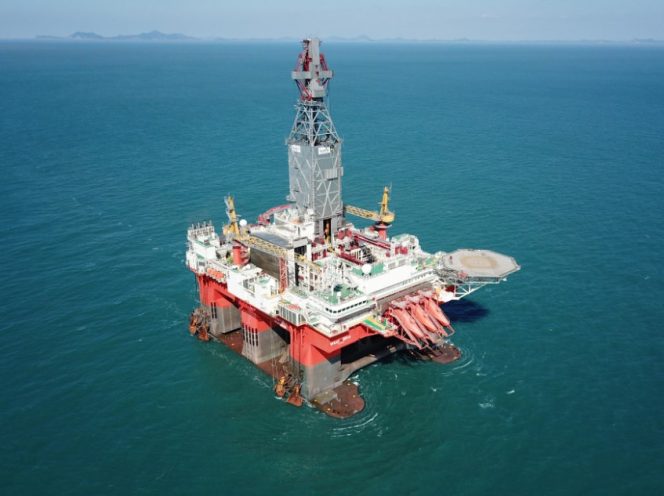
The German Siemens Will Provide a Battery-Based Energy Storage Solution for the Semi-Submersible West Mira and Turn It Into the First Hybrid Offshore Drilling Platform in the World.
Siemens has reported that the BlueVault, the company’s advanced lithium-ion battery solution, will be installed on Northern Drilling’s offshore drilling platform Northern Mira, located approximately 120 kilometers northwest of Bergen in the North Sea. The West Mira, a sixth-generation deepwater semi-submersible designed by Moss Maritime, will become the world’s first modern drilling rig to operate as a hybrid with a diesel-electric power plant using ESS (Lithium-ion Energy Storage Solution).
The solution consists of four converter battery systems for a combined maximum power of six megawatts.
Bjørn Einar Brath, head of offshore solutions at Siemens, said: “Integrating energy storage with the power supply and distribution system of a drilling platform represents an important step towards improving the environmental sustainability of the offshore oil and gas industry.”
-
Government unlocks R$ 554 million for a highway that has been requested for decades and accelerates the duplication of BR.
-
Without bricks, without cement, and without endless construction: the cardboard house that is assembled in modules and can be moved.

-
Billions of barrels on the equatorial margin could lead Amapá to double its oil production in Brazil — the state aims to enter the route of companies in the Campos Basin, attract investments, and boost jobs and businesses in the oil and gas sector.

-
Without bricks, without cement, and without endless construction: the cardboard house that is assembled in modules and can be moved.

“Offshore platforms have highly variable energy consumption for drilling and dynamic positioning. By incorporating energy storage, it becomes possible to reduce the operating time of diesel engines and keep them running at an optimized combustion level. This ultimately leads to lower emissions.”
According to Siemens, the installation of BlueVault on the West Mira will result in an estimated 42% reduction in the operating time of diesel engines on the platform, reducing CO-2 emissions by 15% and NOx emissions by 12% – equivalent to the annual emissions of approximately 10,000 cars.
The batteries will be charged from the diesel-electric generators on the rig and used to provide power during peak load periods. They will also serve as backup to avoid blackout situations and provide power to the thrusters in the unlikely event of losing all operating machinery.
The ESS being provided to the West Mira is based on a technology previously installed on more than 60 ships worldwide, including the world’s first electric ferry, MF Ampere, in Norway.
“We expect this market to grow significantly and have accordingly invested heavily in developing safe and reliable ESS solutions, establishing a production facility for battery modules in Trondheim, Norway. The facility will play an important role in helping Siemens meet the global demand for more efficient drilling operations, with the ultimate goal of reducing the carbon footprint of the offshore industry,” Brath added.
In related news, Siemens won a contract last week to upgrade the AKOFS Seafarer vessel with a battery solution, making it the first upgrade of its kind for a well intervention vessel.
New Drilling Business
Seadrill will operate the West Mira during drilling operations at the six Nova field wells. Wintershall contracted the rig to work on Nova in June 2018. The contract includes options for an early start in the third quarter of 2019, as well as subsequent options.
If all options are exercised, the West Mira is expected to be contracted by Wintershall until the first quarter of 2022.
Siemens added that it will work closely with Seadrill in the coming months to ensure that the hybrid power solution meets the rig’s performance and reliability requirements.









Seja o primeiro a reagir!