





 Portuguese
  English
  Spanish
  4 min of reading
  0 comments


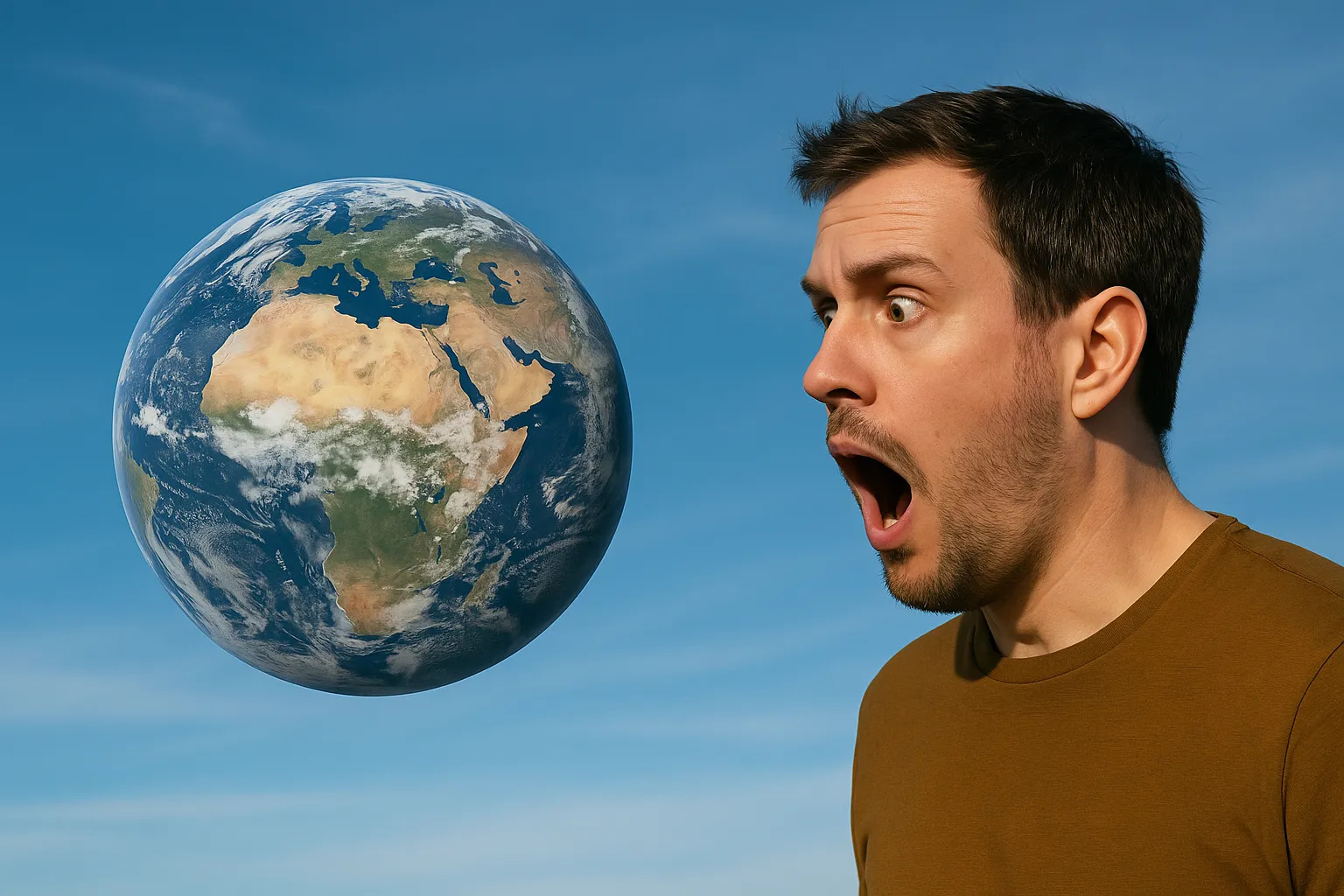
Have you ever paused to imagine what would happen if the Earth suddenly stopped spinning? This hypothesis seems straight out of a science fiction movie, but it brings interesting reflections on physics, survival, and even the invisible role that the planet’s movement plays in our lives. Without realizing it, we depend on the Earth’s rotation every day to maintain the balance of the atmosphere, the oceans, and even how our bodies react to the environment.
Earth Stopping Its Spin and the Force of Movement
The Earth spins around its own axis at about 1,670 km/h at the equator. This absurd speed is not felt by us because the movement is constant and uniform. However, if the Earth abruptly stopped spinning, all that displacement would transform into energy projected forward, like when a car suddenly brakes. People, animals, cars, buildings, and even oceans would be launched at that speed.
Immediate Impact on the Oceans
The sea would be one of the first to react. If the Earth suddenly stopped spinning, the waters would continue to move, generating tsunamis of unimaginable proportions. Imagine giant waves traveling at over a thousand kilometers per hour, flooding continents and completely reshaping the coastal geography. Many coastal cities would simply disappear from the map.
-
The Argentine government celebrates the lowest poverty rate in 7 years, but experts warn that the methodology has changed, real wages have fallen, unemployment has risen, and the number of people on the streets of Buenos Aires has increased by 57% since Milei took office.

-
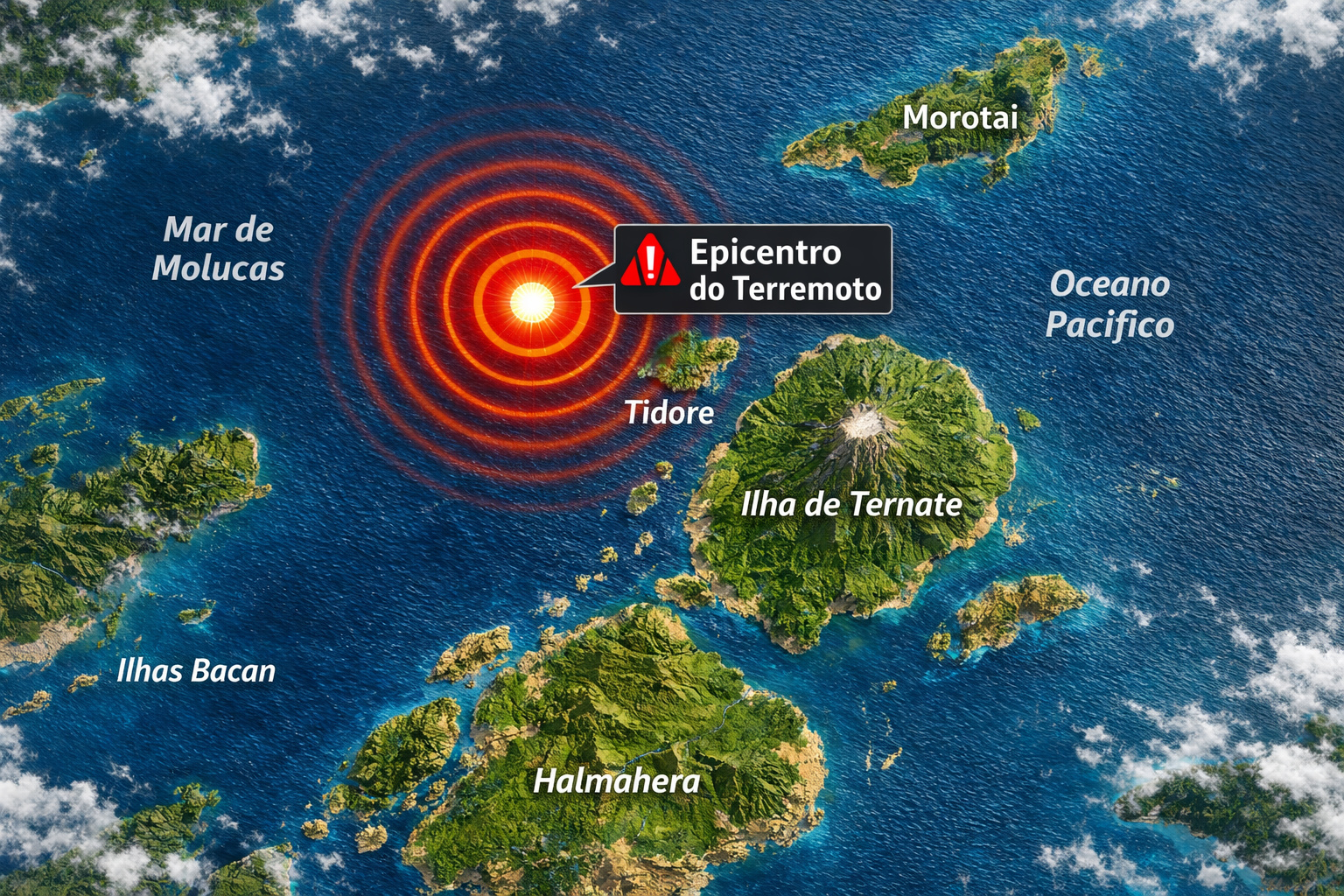
7.8 magnitude earthquake in Indonesia frightens the population, triggers tsunami alert, and hits an island with over 200,000 inhabitants this Thursday.
-
Google will finally let you change that embarrassing Gmail address you created in your teenage years without losing any accounts, logins, or old emails: the feature is already available in the United States.

-
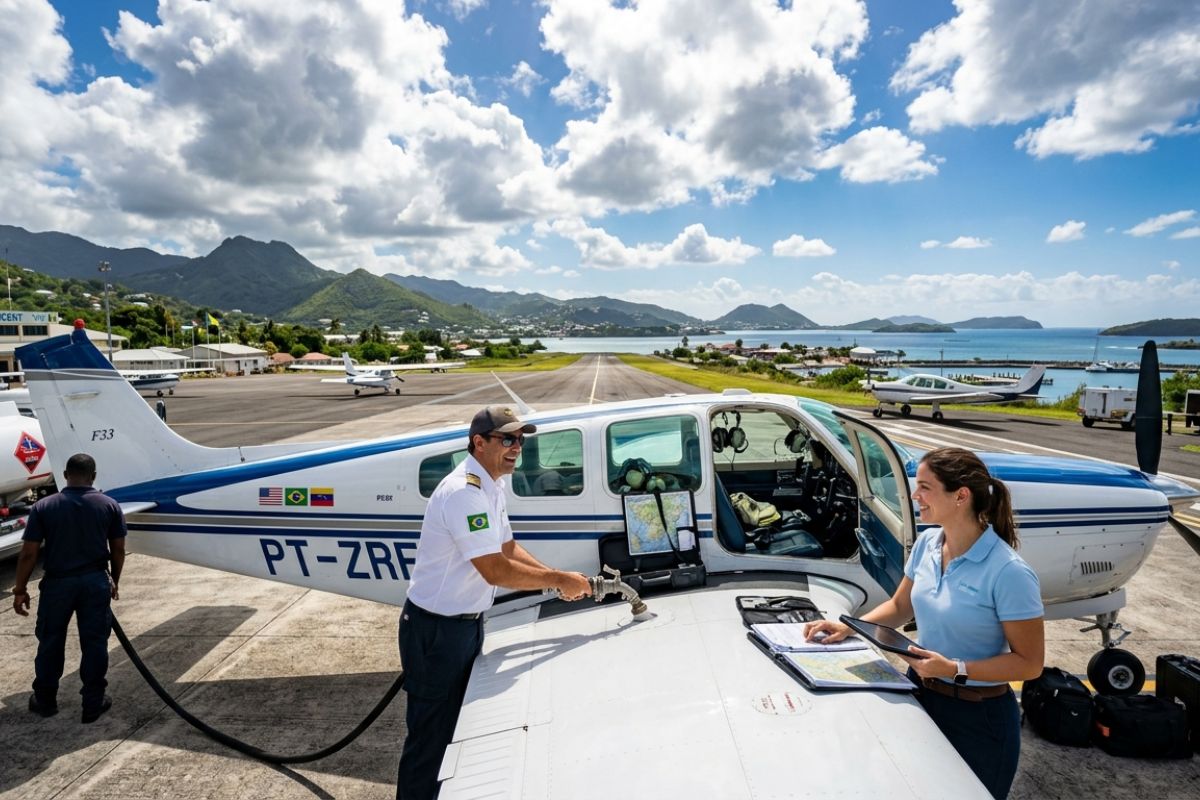
Heading to Brazil in a Bonanza F33 single-engine aircraft: a couple departs from Florida on a visual flight, makes technical stops in the Caribbean to refuel and organize paperwork, and begins the staged crossing until they reach the country.
Consequences in the Atmosphere
The atmosphere would not stop along with the planet. The resulting winds would reach extreme speeds, comparable to or even exceeding those of hurricanes. These winds would sweep across entire continents, destroying forests, cities, and any form of human construction. The air, in uncontrolled motion, would make breathing almost impossible in various regions.
Changes in Perceived Gravity
Another curious effect would be the alteration of the centrifugal force that currently softens gravity, especially at the equator. Without rotation, people would feel more “stuck” to the ground, with a slight increase in the sensation of weight. It may seem like a small detail, but this aspect would profoundly affect life, from blood circulation to the effort required for simple activities.
Endless Days
If the Earth stopped spinning, we would also lose the 24-hour cycle. The planet would maintain only its movement of revolution around the Sun. This would mean that each side of the Earth would be exposed to the sun for six consecutive months, while the other would plunge into six months of darkness. The impacts would be devastating: scorching heat on one side, freezing cold on the other.
Collapse of Ecosystems
Plants and animals, which rely on the light-dark cycle to survive, would collapse. Crops would be destroyed, forests would not withstand such drastic changes, and entire species would disappear. Humans, in turn, would face an unprecedented food crisis.
Challenges to Human Survival
If the Earth stopped spinning, the first hours would be fatal for billions of people. But those who survived would need to adapt to a completely different world. Underground cities or domes with artificial temperature control could be alternatives to withstand extreme heat and cold. Engineering and technology would become the thin line between life and extinction.
The Moon and the Orbit
Without rotation, the gravitational relationship with the Moon would also change. The tides, already in chaos due to the displacement of the oceans, would lose the regularity we know. In addition, the Earth’s magnetic field, generated by the planet’s internal movement, could weaken or even disappear, leaving everyone exposed to cosmic radiation.
Reflections on Our Vulnerability
Thinking about what would happen if the Earth stopped spinning is an exercise in humility. It shows how dependent we are on invisible and constant forces that we rarely stop to appreciate. The simple fact that the Earth is in continuous motion is what keeps the atmosphere stable, the oceans balanced, and life possible.
A Lesson for the Present
Although the hypothesis is nearly impossible — since astronomical forces do not allow the Earth to simply brake — reflecting on it reminds us of the fragility of life. More than fearing an unlikely event, the real challenge is caring for the planet we have, ensuring that it continues to spin in balance, not only physically but also environmentally and socially.
In the end, imagining the Earth stopping its spin is less about catastrophe and more about awareness. We are passengers on a planet that moves in harmony with the cosmos, and every detail of that movement is essential for us to live. Appreciating this invisible mechanism may be the greatest lesson of all.









Seja o primeiro a reagir!