





 Portuguese
  English
  Spanish
  5 min of reading
  0 comments


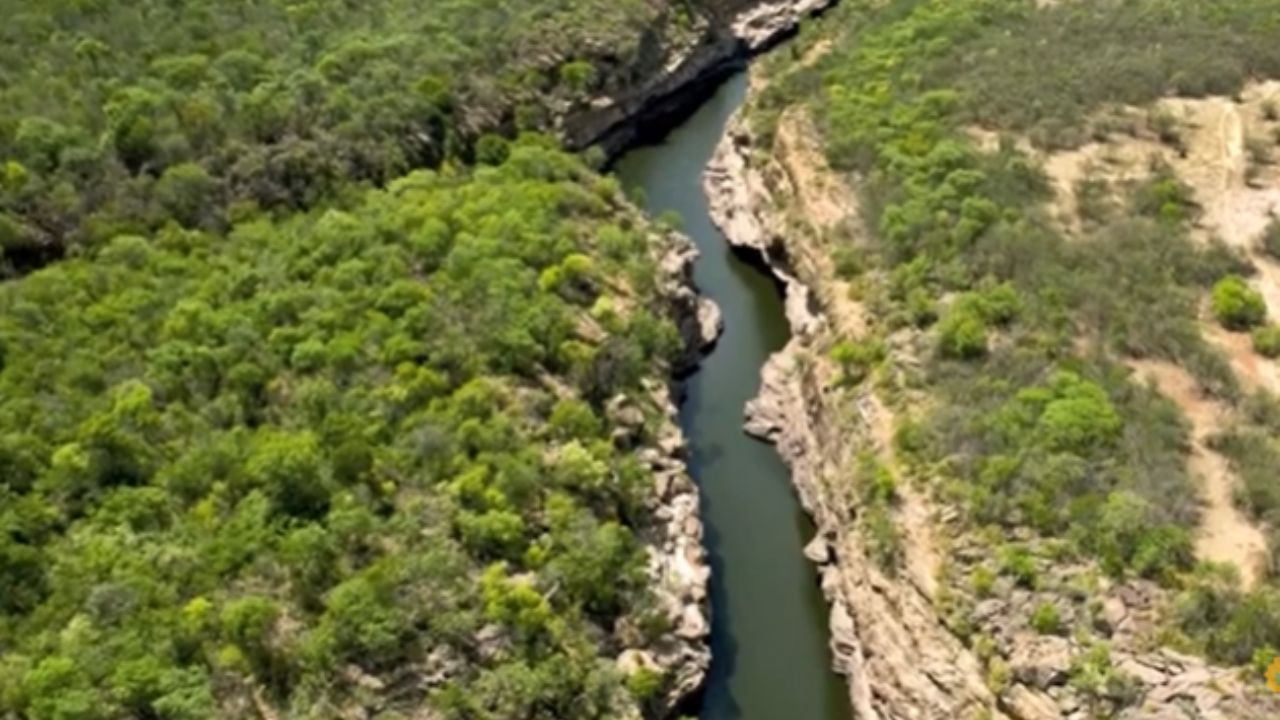
Far From Being Empty, the Region Where Brazil Becomes Desert Hides a Surprising Biodiversity in the Caatinga and One of the Most Starry Skies on the Planet, Offering a New Perspective on the Sertão.
The expression “where Brazil becomes desert” takes us directly to the Semi-Arid region, the area with the driest climate in the entire national territory. Technically, the area has been redefined and now abandons the old term “Polygon of Droughts”. A SUDENE report on the Brazilian Semi-Arid establishes rigorous scientific criteria for its delimitation, such as an annual precipitation of less than 800 mm and a high aridity index. This data confirms the scenario of high temperatures and intense sunlight, where evaporation far exceeds the volume of rainfall.
Contradicting the image of aridity, this setting houses a vibrant and highly adapted life. An analysis of the Fauna and Flora by ISPN (Institute for Society, Population and Nature) reveals the “surprising biodiversity” of the Caatinga, with thousands of species, many of which are found only in this part of the world. In addition to the richness in the soil, the Semi-Arid holds a treasure in the sky. As described by the EntreParques portal, places like the Serra das Confusões National Park have a night sky classified as “Bortle Scale 1”, the purest level of darkness, free from light pollution.
The Driest Climate in Brazil: A Scientific Definition of the Semi-Arid
To understand why this region is considered the driest point in the country, one must go beyond perception and analyze technical data. The SUDENE report on the Brazilian Semi-Arid was essential for replacing the old political designation of “Polygon of Droughts” with a definition based on climatology. Today, a municipality is considered part of the Semi-Arid if it meets criteria such as annual rainfall below 800 mm and an aridity index that confirms severe water deficit.
-
Friends have been building a small “town” for 30 years to grow old together, with compact houses, a common area, nature surrounding it, and a collective life project designed for friendship, coexistence, and simplicity.

-
This small town in Germany created its own currency 24 years ago, today it circulates millions per year, is accepted in over 300 stores, and the German government allowed all of this to happen under one condition.

-
Curitiba is shrinking and is expected to lose 97,000 residents by 2050, while inland cities in Paraná such as Sarandi, Araucária, and Toledo are experiencing accelerated growth that is changing the entire state’s map.

-
Tourists were poisoned on Everest in a million-dollar fraud scheme involving helicopters that diverted over $19 million and shocked international authorities.


This climate is shaped by average temperatures that often remain between 23°C and 27°C and sunlight that reaches 2,800 hours per year. The most impactful factor, however, is the evaporation rate, which can reach 2,000 mm annually, more than double the average precipitation. This means that the region loses far more water to the atmosphere than it receives from rainfall, creating the arid conditions that define the landscape and dictate the survival rules for all forms of life.
Caatinga: The Surprising Forest of Drought


Despite the severe climate, the region where Brazil becomes desert is home to the Caatinga, the only 100% Brazilian biome and one of the most underestimated ecosystems in the world. The ISPN (Institute for Society, Population and Nature) analysis highlights that, far from being poor, the Caatinga possesses an impressive richness of species, with a very high degree of endemism. This means that many of the plants and animals living there do not exist anywhere else on the planet.
Life in the Caatinga is an example of adaptation. The plants, known as xerophytes, have developed incredible mechanisms to survive, such as leaves that turn into thorns, stems that store water (like the mandacaru), and shedding leaves during the dry season to conserve energy. The fauna has also evolved remarkably. Many animals are nocturnal to escape the heat, while others, such as some frogs, practice estivation, a form of hibernation during the dry period by burying themselves in the ground waiting for the rains.
A Perfect Sky: The Sertão’s Potential for Astrotourism
The same characteristics that make the Semi-Arid climate a challenge, low humidity, few clouds, and long dry periods, create perfect conditions for stargazing. The absence of large cities and industries in most of the region results in almost zero light pollution, revealing a cosmic spectacle impossible to see in urban centers. This quality is confirmed by specialized sources that validate the region’s potential.
A concrete example is the Serra das Confusões National Park in Piauí. The EntreParques portal describes the location as a sanctuary for amateur and professional astronomers, classifying its night sky with the “Bortle Scale 1” seal. This is the highest level on the scale that measures sky darkness, found only in the most remote and untouched places on Earth. This characteristic turns the Sertão into a world-class destination for astrotourism, an activity that values untouched nature and generates income sustainably.
The Real Threat: Why Drought Is Not the Same as Desertification?
It is crucial to differentiate the phenomena affecting the region. Drought is a natural and cyclical climatic event, for which the Caatinga is evolutionarily prepared. The local biodiversity knows how to endure long dry periods and bloom again with the arrival of rains. Desertification, however, is a different and much more dangerous process, primarily caused by human actions, such as uncontrolled deforestation and inadequate agricultural practices.
When native vegetation is removed, the fragile soil of the Semi-Arid is exposed to erosion caused by the sun, wind, and torrential rains. Over time, it loses its ability to retain water and nutrients, becoming permanently infertile. Unlike drought, which is a phase, desertification can be a one-way road. It breaks the resilience cycle of the biome, preventing life from regenerating even when rain returns, representing the true threat to the region’s future.
A New Look at the Wealth of the Sertão
The journey through the region where Brazil becomes desert reveals that behind the stereotype of a lifeless land, there exists a complex ecosystem, a unique biodiversity, and immense tourist and scientific potential. The resilience of the Caatinga and the clarity of its night sky are valuable assets that challenge common perception and point to a future where coexistence with the Semi-Arid, rather than fighting it, is the path to development.
Did you already know the hidden wealth in the Brazilian Semi-Arid? Do you believe that star observation tourism could be a path for the region’s sustainable development? Share your opinion in the comments; we want to know what you think!









-

-

-

-

-

6 pessoas reagiram a isso.