





 Portuguese
  English
  Spanish
  5 min of reading
  0 comments


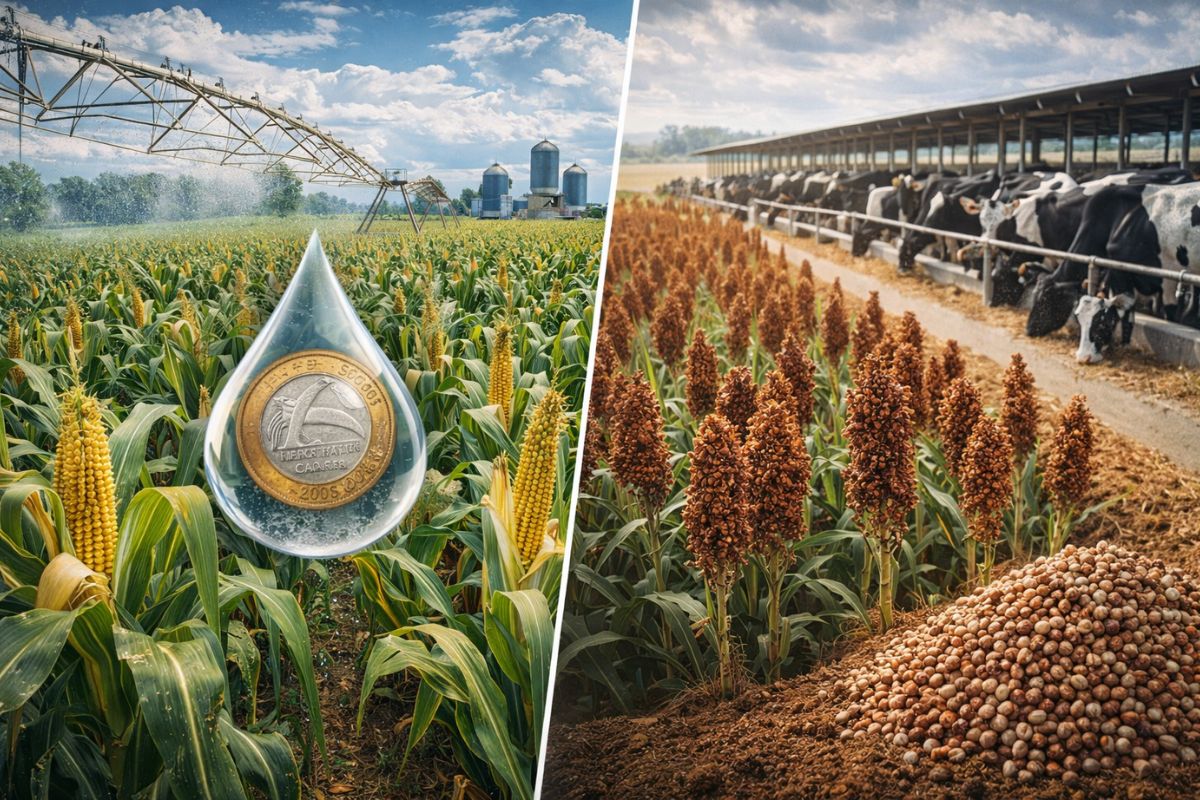
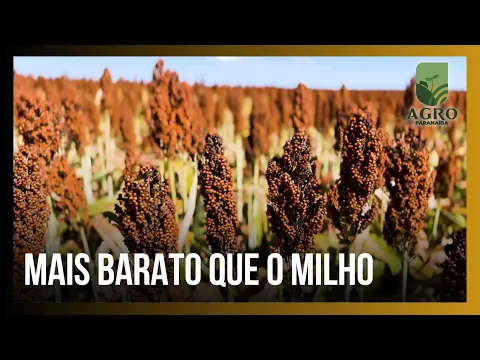
Sorghum is gaining space in the dairy cattle farming of the Triângulo Mineiro as an alternative to corn in the feeding of the herd. With planting costs up to 80% lower per hectare, lower water demand, and comparable forage production, this ancient cereal allows dairy producers to reduce costs without compromising the nutrition of the cattle.
In the Triângulo Mineiro, a region that accounts for almost 80% of sorghum production in Minas Gerais, dairy producers are discovering what many countries in Africa and Asia have known for millennia: sorghum is a resilient, versatile, and economically advantageous cereal for animal feeding. While corn requires regular rainfall and costs over R$ 800 per hectare to plant, sorghum provides a similar volume of forage per hectare with planting costs starting at R$ 175—a difference that completely changes the financial equation of dairy farming.
The comparison is straightforward. In properties like that of producer Adriano, in Uberlândia, sorghum serves as a strategic component in the feeding of a herd of 36 dairy cows that produces about 1,000 liters of milk per day. The cereal does not completely replace corn, but when combined with it in calculated proportions, it allows for a savings of approximately 20% in the total feeding cost—a difference that, in a tight-margin activity like milk production, can determine whether the business is viable or not.
Why does sorghum cost up to 80% less than corn per hectare?

The numbers comparing sorghum and corn are striking right from the start. On the property in Uberlândia, the planting cost of sorghum is R$ 175 per hectare, while corn in the same area exceeds R$ 800.
-
A rural producer from Urubici cries as he shows 50 tons of plums thrown on the ground because no one wanted to buy them, and in desperation, he records a video asking anyone to come to the property to pick the fruits before they rot.
-
Unable to pass through Hormuz, Brazil activated a plan B that uses Turkey as a gateway to the Middle East: the route through Gibraltar and the Mediterranean is longer and more expensive but ensures that chicken, beef, and corn continue to reach Arab markets.

-
You grew up hearing that the good coffee from Brazil goes all abroad and the bad coffee stays for Brazilians, but this story has completely changed, and the numbers show that in the 1980s, thirty percent of the coffee sold here was adulterated with corn and barley.
-
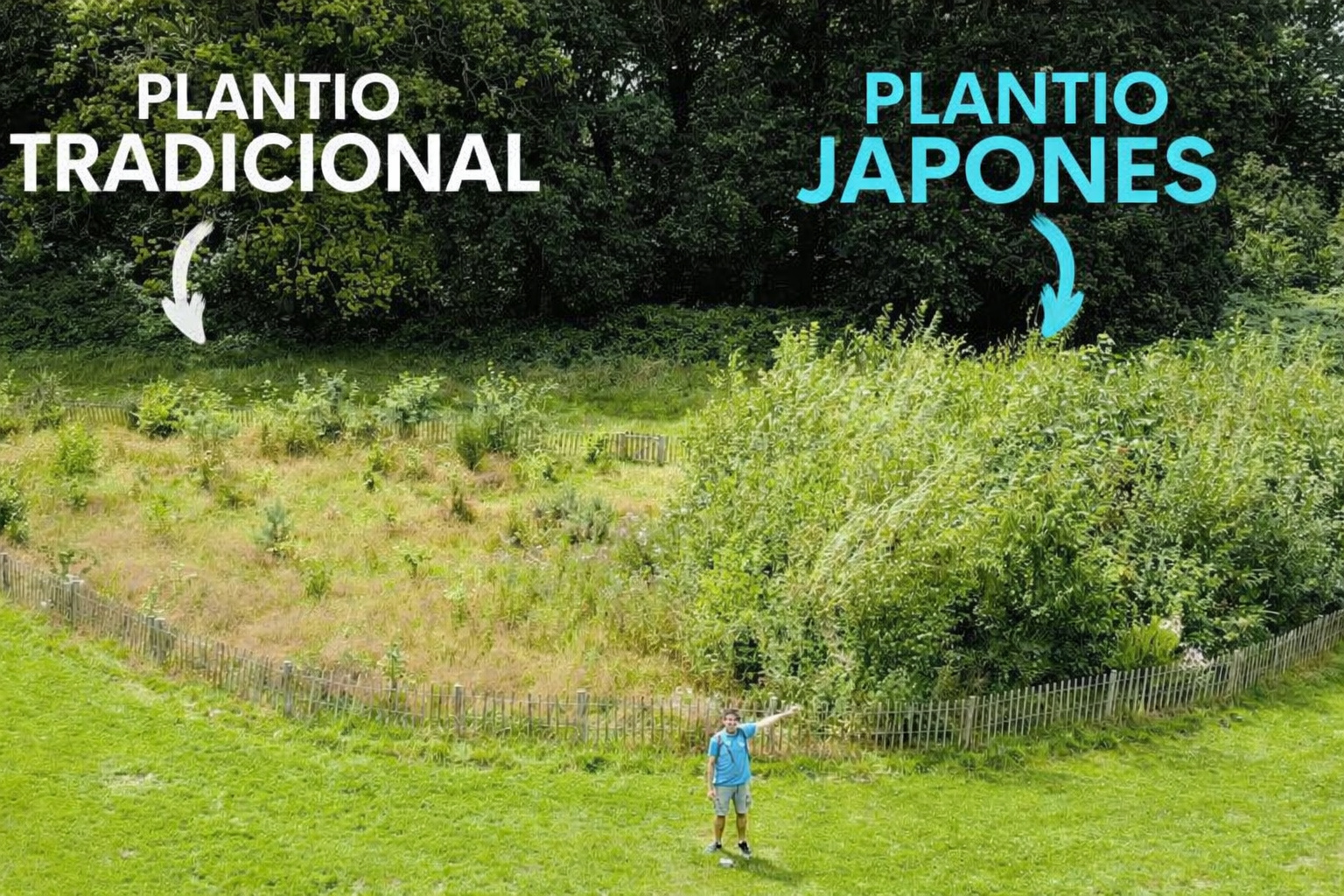
Engineer creates reforestation method that transforms small plots into dense forests in a few years using local biomass and can reduce environmental recovery costs.

This difference can be explained by several factors: sorghum seeds are cheaper, the cereal requires fewer inputs during the cycle, and its natural hardiness reduces the need for pesticides and irrigation.
The production of forage per hectare, measured in tons of green mass, is very similar between the two cereals. Sorghum delivers a biomass volume comparable to that of corn, but with significantly lower production costs.
For those working in dairy farming and needing to fill silos with silage to feed the herd during the dry season, sorghum represents the possibility of ensuring stock without compromising the property’s cash flow.
Sorghum needs less water and tolerates late planting

In addition to the lower cost, sorghum offers a decisive agronomic advantage for the Triângulo Mineiro: it requires less water than corn to complete its productive cycle.
In a region where the last rains in March mark the end of the planting window, a cereal that performs well even with low soil moisture is a trump card for producers who need to maximize every drop of rain.
Late planting is another differentiator of sorghum. Many producers do not plant in March by choice, but due to lack of options; delays in harvesting the main crop or in soil preparation push the calendar back.
Sorghum, with its longer cycle and drought tolerance, allows the producer to still plant a second crop when corn would no longer be advisable. This is what experts call greater productive security: the guarantee that, even under adverse conditions, the crop will deliver results.
How sorghum works in the feeding of the dairy herd

In practice, sorghum does not replace corn in the diet of dairy cattle; it complements it. Cows in high production continue to receive more corn in the food composition, because the cereal is nutritionally richer and contributes to greater milk volume.
Meanwhile, young cattle, low-producing animals, or rearing batches receive proportionally more sorghum, which ensures adequate nutrition at a lower cost. It is in this balance that the dairy farming of the Triângulo Mineiro finds real savings.
The balance between the two cereals varies according to the time of year and the production phase of each animal. When sorghum enters in greater proportion in the mix, milk production drops slightly, but the cost of feeding decreases proportionally more, generating net savings.
Producer Adriano compares: “Sorghum is rice and beans, and corn is meat.” The phrase summarizes the logic: sorghum is the reliable and cheap base that supports the system, while corn serves as a high-performance complement.
A cereal with 7,000 years that arrived in Brazil on caravels
Sorghum is not new in the history of human food. The cereal has been cultivated for at least 7,000 years, with origins in Africa, where it continues to be a source of food in several countries.
It crossed continents, passed through the hands of emperors, and arrived in Brazil in the 17th century, brought on Portuguese caravels, likely among the foods accompanying enslaved people during the Atlantic crossing.
Despite this long history, sorghum is still little known to the Brazilian public. Many producers and consumers do not even know what the cereal is, as reported by Max, one of the main promoters of the culture in the Triângulo Mineiro.
The low pricing when marketing the final product is pointed out as one of the obstacles for sorghum to reach its full potential. However, the arrival of sorghum ethanol plants and the increase in exports are beginning to change this scenario, creating new buyers willing to pay better for the commodity.
What is missing for sorghum to occupy the space it deserves
Experts point out that sorghum has everything to grow even more in Brazilian agribusiness. The versatility of the cereal, which serves for silage, grain, ethanol, and even human food, is one of its greatest assets.
Combined with hardiness, low cost, and lower water demand, this versatility makes sorghum especially attractive in scenarios of climate change and water scarcity.
What still hinders expansion is cultural. Producers accustomed to corn see sorghum as a second option, and the marketing chain does not value the cereal in the same proportion.
But with the cost of corn rising and water becoming increasingly scarce, sorghum is likely to occupy its space not as a total substitute, but as a fundamental piece of a more balanced, cheaper, and more resilient production system. In the Triângulo Mineiro, this future is already being planted.
With information from the Channel TV Paranaíba.
Did you know about sorghum? Do you think the cereal deserves more attention from Brazilian producers, or is corn still unbeatable? Leave your opinion in the comments.










Seja o primeiro a reagir!