





 English
  Francês
  Alemão
  Italiano
  Japonês
  Norueguês
  Portuguese
  Spanish
  3 min of reading
  0 comments


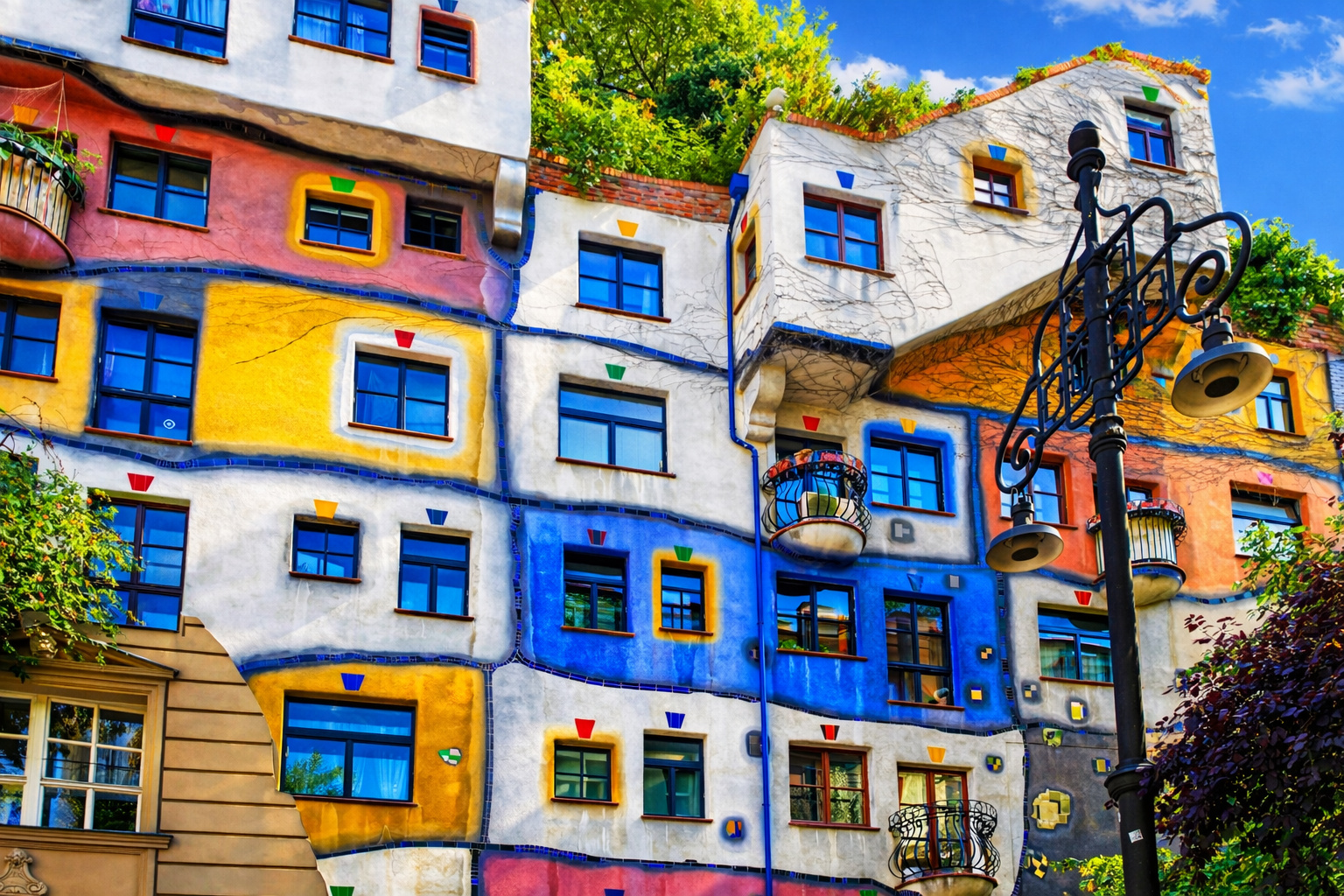
Iconic building of Vienna, called Hundertwasserhaus, combines 52 apartments and more than 250 trees, creating one of the most curious and sustainable giant buildings in Europe
The giant building known as Hundertwasserhaus, in Vienna, catches attention at first glance due to its unusual appearance and impressive numbers. With 1,092 square meters of land, the site hosts an architectural proposal that completely breaks away from traditional standards.
The information was released by the portal White Mad, a set of descriptive data about the architectural project. The building combines housing, nature, and art in a single space, making it one of the most observed points in the city.
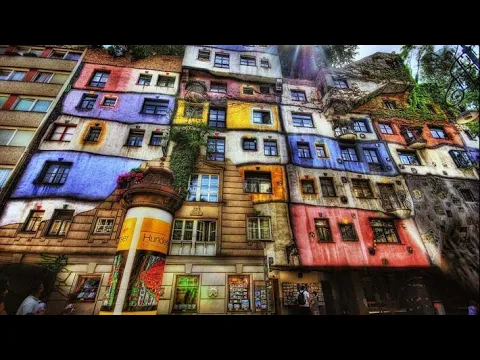

Built area exceeds 3,500 meters and reveals an uncommon project
The complex has about 3,550 square meters of usable area, distributed between residences and shared spaces.
-
Seen from space, a colossal ‘Y’ cuts through the largest desert in China, blending a jade-filled river, red and white mountains, and revealing the absurd scale of the transformation of the Taklamakan surrounded by a green wall with billions of trees.

-
The Pacific Ocean reveals what the cliffs of Big Sur have hidden for millennia: Pfeiffer Beach, in California, features swirling purple sand formed by garnet crystals and displays a stone arch that is illuminated by the sun in winter for just a few days each year.

-
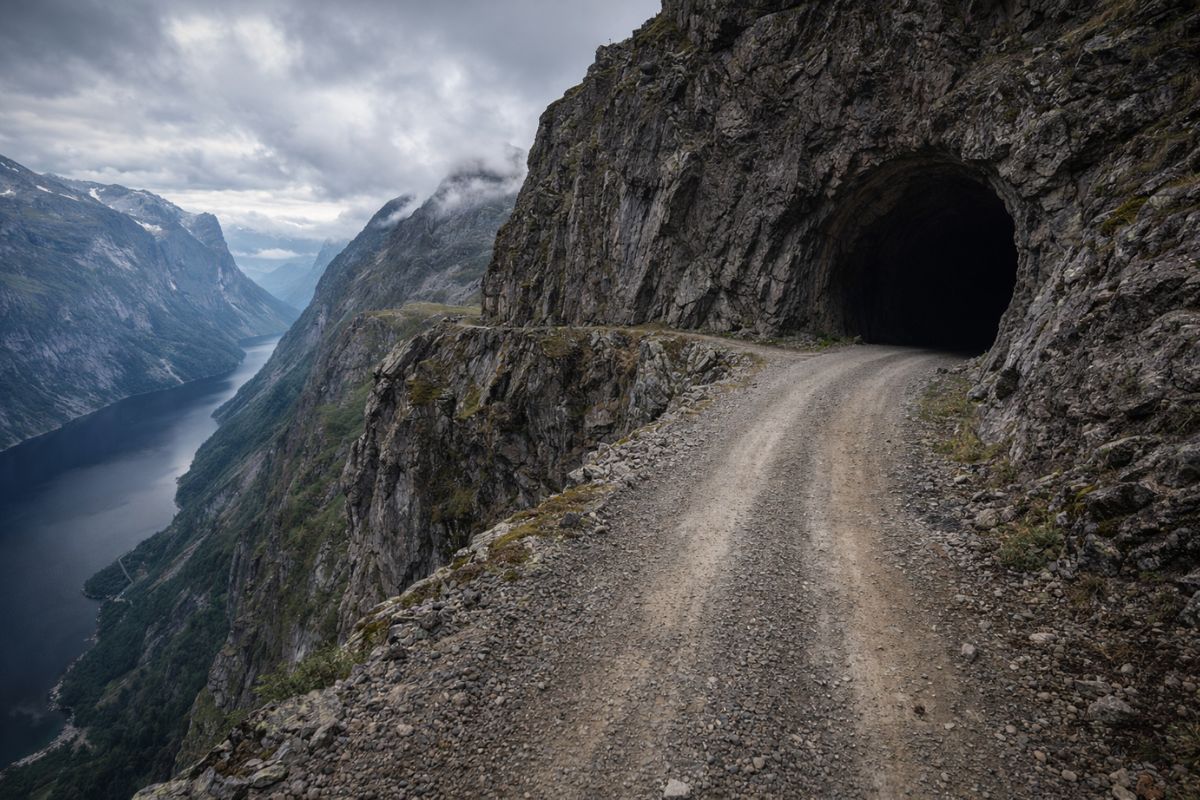
Aursjøvegen in Norway is a 100-kilometer gravel road that crosses chasms and dark tunnels carved into the rock at an altitude of 947 meters in the fjords and is only open for four months a year.
-
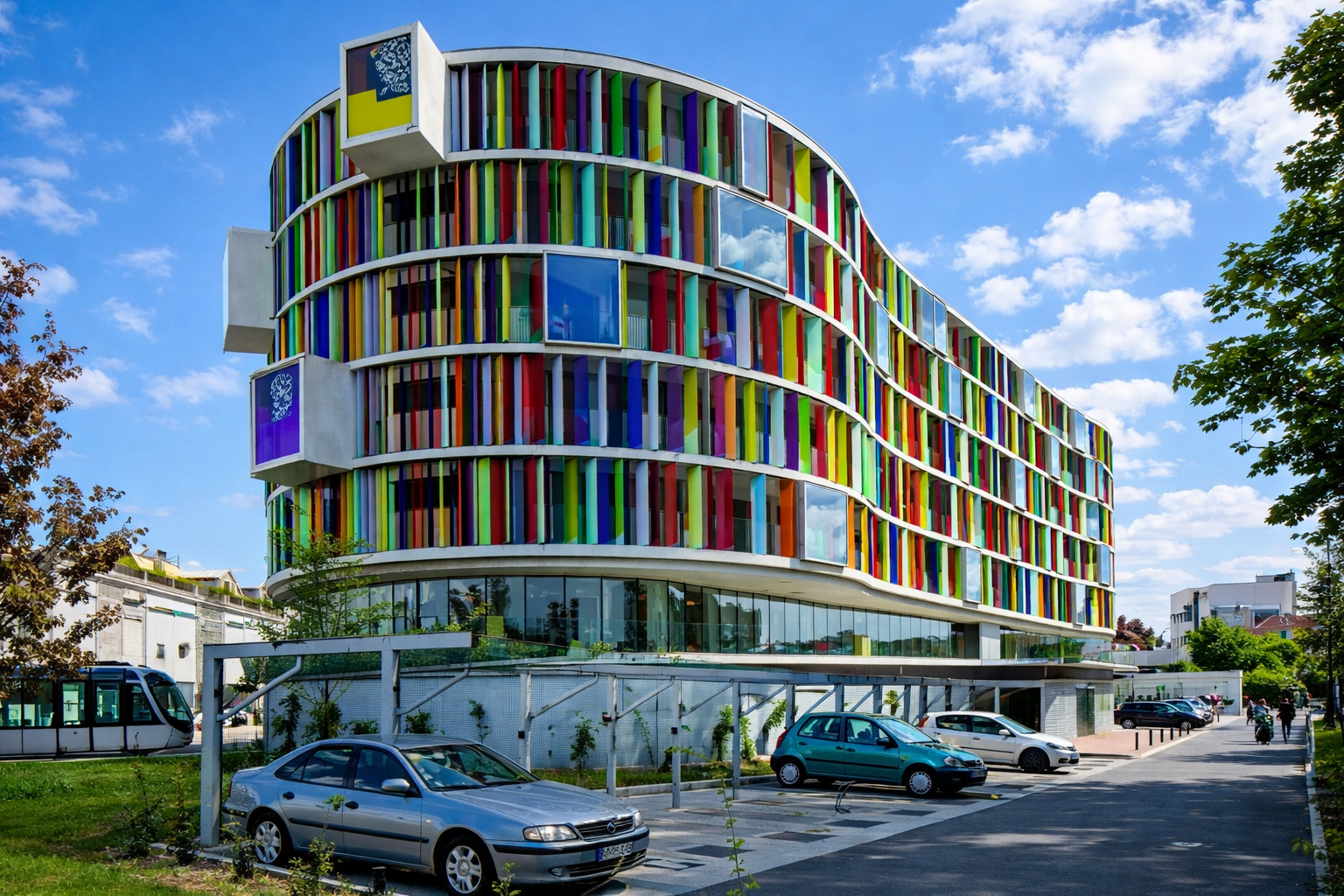
With about 4,000 m², the building constructed in a traditional neighborhood in France looks like a rainbow, has a colorful facade, mixes vibrant glass, and creates one of the most unusual visuals in Bordeaux.
The apartments range from 30 to 150 square meters, with unique shapes and irregular organization. Nothing follows a repetitive pattern, which reinforces the project’s identity.
Every detail was designed to escape the conventional, from the wavy facades to the lack of symmetry between the environments.
Construction lasted more than two years and involved million-euro investment
The work was constructed between August 1983 and October 1985, with an estimated cost between 6 and 7 million euros.
The funding came from the city of Vienna, which invested in an innovative proposal for urban housing.
The inauguration took place on March 1, 1986, consolidating the building as an architectural landmark in Europe.
Structure brings together dozens of units and outdoor spaces
The Hundertwasserhaus has 52 residential apartments and also includes 4 shops on the ground floor.
Additionally, the project features 16 private terraces and 3 community terraces, expanding the living areas.
This configuration allows residents to have direct contact with the external environment, even in an urban space.
More than 250 trees transform the building into a living roof
One of the most impressive aspects is the presence of more than 250 trees and shrubs scattered across roofs and balconies.
This concept creates a living roof, which contributes to thermal insulation and favors biodiversity.
It is also noteworthy that about 200 trees were integrated directly into the structure, some even growing through the windows.
Architecture without straight lines impacts comfort and ventilation
The giant building has no straight lines in floors or walls, a characteristic that goes beyond aesthetics.
The design favors natural ventilation in all 52 apartments, reducing the need for artificial cooling systems.
This solution shows how architecture can directly influence thermal comfort and energy consumption.

Facade attracts millions of visitors every year
Even though it is a residential building, the site has become a tourist attraction.
The Hundertwasserhaus records peaks of up to 2 million visitors per year, interested in observing its unique facade.
Internal access is not allowed, ensuring the privacy of the residents.
The Hundertwasserhaus continues to be an example of how architecture, nature, and functionality can coexist in the same space. Its numbers help to understand the scale of a project that completely escapes the ordinary.
Decades after its inauguration, the giant building continues to spark curiosity and attract visitors, reinforcing its urban and cultural impact.
Did you like this curiosity about different architecture? Share it with someone who is also interested in unconventional buildings or leave your opinion in the comments.








Seja o primeiro a reagir!