





 Portuguese
  English
  Spanish
  4 min of reading
  0 comments


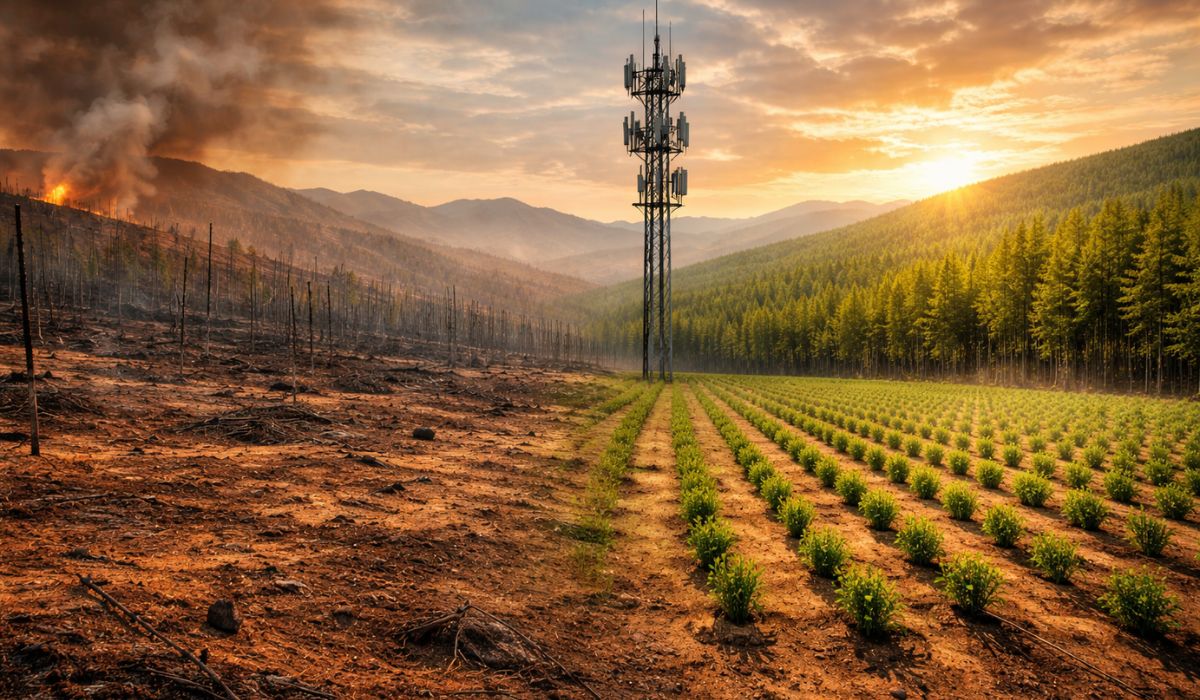
A large-scale environmental plan in eastern Kazakhstan puts reforestation back at the center of the public agenda and increases attention on how the country is trying to recover degraded areas and strengthen the monitoring of its forests.
The Kazakhstan intends to plant 36 million seedlings of forest species in the Eastern Kazakhstan region, in a new phase of recovering degraded areas and strengthening environmental protection in the east of the country.
The goal was announced by Daniyar Kanatbaev, head of the Forestry Department of the Natural Resources and Nature Use Regulation Directorate of the region, according to information released by the Kazinform agency and reproduced by TV BRICS.
In a statement reproduced by the press, Kanatbaev stated that the measure should increase the forest cover of the territory and enhance the resilience of natural ecosystems.
-
In Mexico, a 3,000-year-old Maya site with the dimensions of an entire city may have been built as a colossal map of the cosmos, created to represent the order of the universe and reveal how this people organized space, time, and rituals.
-
Japan wants to build a solar ring of 10,900 kilometers on the Moon to continuously send energy to Earth.

-
Weighing almost 1 ton, with temperatures of up to 3,000°C, the ability to launch 10,000 fragments within a radius of 1 km, capable of penetrating concrete and melting steel, Turkey’s terrifying bomb emerges as one of the most destructive non-nuclear weapons ever presented.

-
After a submarine disappeared beneath the “Doomsday Glacier,” scientists announce a new monstrous machine capable of operating at 3,000 meters depth to return to the heart of the ice and investigate a threat that could raise sea levels worldwide.

The planting is part of a set of actions aimed at the restoration of areas affected by fires, deforestation, and the natural aging of trees, according to regional authorities.
The initiative also includes strengthening the monitoring structure of the forests.
To this end, the regional government reported that it intends to install 90 communication towers with antennas in extensive and hard-to-reach areas.
According to the local administration, the network should facilitate the exchange of information between forest protection teams, monitoring services, and rescue groups.
Reforestation in Eastern Kazakhstan concentrates environmental actions
In Eastern Kazakhstan, the program brings together measures for vegetation restoration and the expansion of the operational capacity of public bodies responsible for environmental management.
The proposal, according to the regional government, is to recover degraded areas and improve the response to incidents in remote zones.
With the installation of the towers, the official expectation is to enhance connectivity in forest sections where communication between teams is usually limited.
In regions with large territorial extensions, this type of structure can support monitoring and the circulation of information about fire outbreaks and other occurrences recorded in the field.
So far, however, the material released by the authorities does not detail the complete installation schedule nor inform how the equipment will be distributed throughout the territory.
Still, the announcement indicates that the regional plan is not limited to seedling planting and includes measures aimed at the management and protection of forest areas.

Goal of 2 billion trees expands the country’s environmental policy
The action announced in the east of the country is part of a broader reforestation strategy adopted by Kazakhstan in recent years.
In 2021, President Kassym-Jomart Tokayev set the goal of planting 2 billion trees, according to the state agency Qazinform.
More recently, according to information published based on data from the Ministry of Ecology and Natural Resources, the deadline for this goal has been extended until the end of 2027.
The same report states that the country planted 1.15 billion seedlings between 2021 and 2024 and maintains 251 forest nurseries, responsible for producing more than 280 million seedlings.
These numbers help to situate the scope of the new plan for Eastern Kazakhstan within the national environmental policy.
By planning 36 million seedlings in a single region, the local initiative becomes part of a larger effort to expand vegetation cover and recover degraded areas.
Low forest cover explains the priority of reforestation
Reforestation has gained space on the Kazakh public agenda also because of the characteristics of the territory.
In 2021, Tokayev stated that the area of the forest fund represented about 11% of the national territory, while advocating for the expansion of planting on a national scale.
This data helps explain why forest recovery programs have been treated as a priority by the government.

In a country with low vegetation cover in part of the territory, restoration measures tend to be presented by the authorities as a tool for environmental preservation and recovery of vulnerable areas.
In addition to the numerical planting target, the topic appears associated with broader challenges related to land use and environmental degradation.
Reports and initiatives from international organizations about Central Asia, such as the United Nations Development Programme, point out that desertification, land degradation, and pressure on natural resources are among the main environmental problems faced by Kazakhstan.
Forest monitoring and maintenance enter the strategy
In the case of Eastern Kazakhstan, the strengthening of communication infrastructure has been presented as a complementary part of the restoration program.
The authorities’ assessment is that continuous monitoring and coordination between teams play a relevant role in protecting forests, especially in remote areas.
Experts and international organizations often point out that reforestation programs depend not only on the volume of seedlings planted but also on factors such as maintenance, adaptation of species to the environment, fire prevention, and technical follow-up over time.
Therefore, the effectiveness of such initiatives is often measured by the survival of the seedlings and the actual recovery of vegetation cover.
In the material released so far, regional authorities have not informed which species will be prioritized in each area nor presented public survival targets for the seedlings after planting.
There is also, at this moment, no public detailing of the budget for the regional operation.
Still, the announcement signals the intention to combine two fronts of forest policy: the restoration of vegetation and the improvement of the surveillance and response structure.
The Eastern Kazakhstan region thus occupies a prominent place within the national reforestation effort underway in the country.







Seja o primeiro a reagir!