





 English
  Francês
  Alemão
  Italiano
  Japonês
  Norueguês
  Portuguese
  Spanish
  5 min of reading
  0 comments


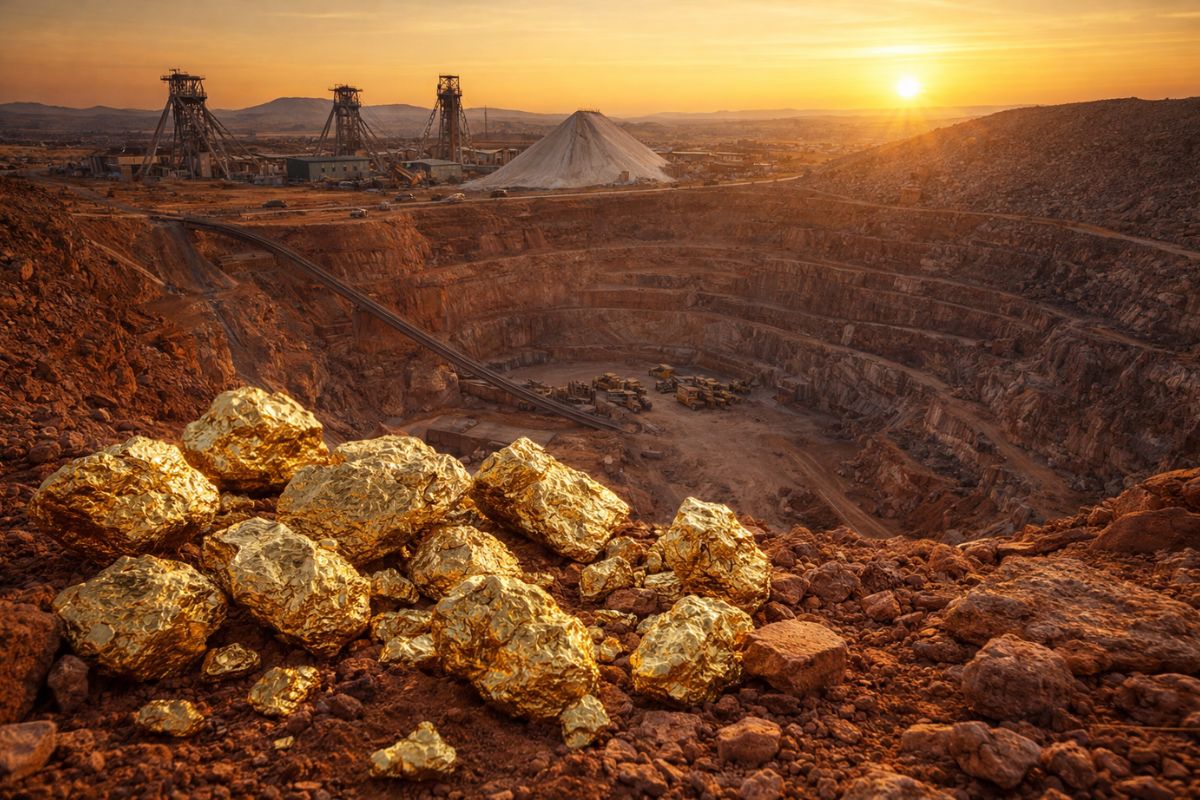
The Witwatersrand basin in South Africa produced more than 40 thousand tons of gold over more than a century of mining, but the extreme heat and overwhelming pressure from the depths prevent access to reserves estimated at R$ 3 trillion that remain untouched beneath layers of rock almost 3 billion years old
The history of gold is intertwined with the history of civilization itself. Wars have been fought over it, empires built upon it, and entire economies sustained by its reserves. But there is a place in the world where this precious metal has concentrated to such an absurd degree that it defies any comparison: the Witwatersrand geological basin, located in South Africa. This rock formation, approximately 2.7 billion years old, is responsible for up to 40% of all the gold ever extracted by humanity.
What makes this region even more extraordinary is what remains hidden. Experts estimate that tens of thousands of tons of gold remain unreachable in the depths of the earth, valued at around R$ 3 trillion. The problem is that accessing this underground treasure has become an almost impossible mission, blocked by temperatures exceeding 60°C and by a pressure capable of crushing any conventional equipment.
How a 2.7 billion-year-old formation accumulated so much gold in one place

The Witwatersrand is not an ordinary mine. It is a colossal sedimentary basin that formed over hundreds of millions of years, when particles of gold carried by ancient rivers settled in successive layers of sediment.
-
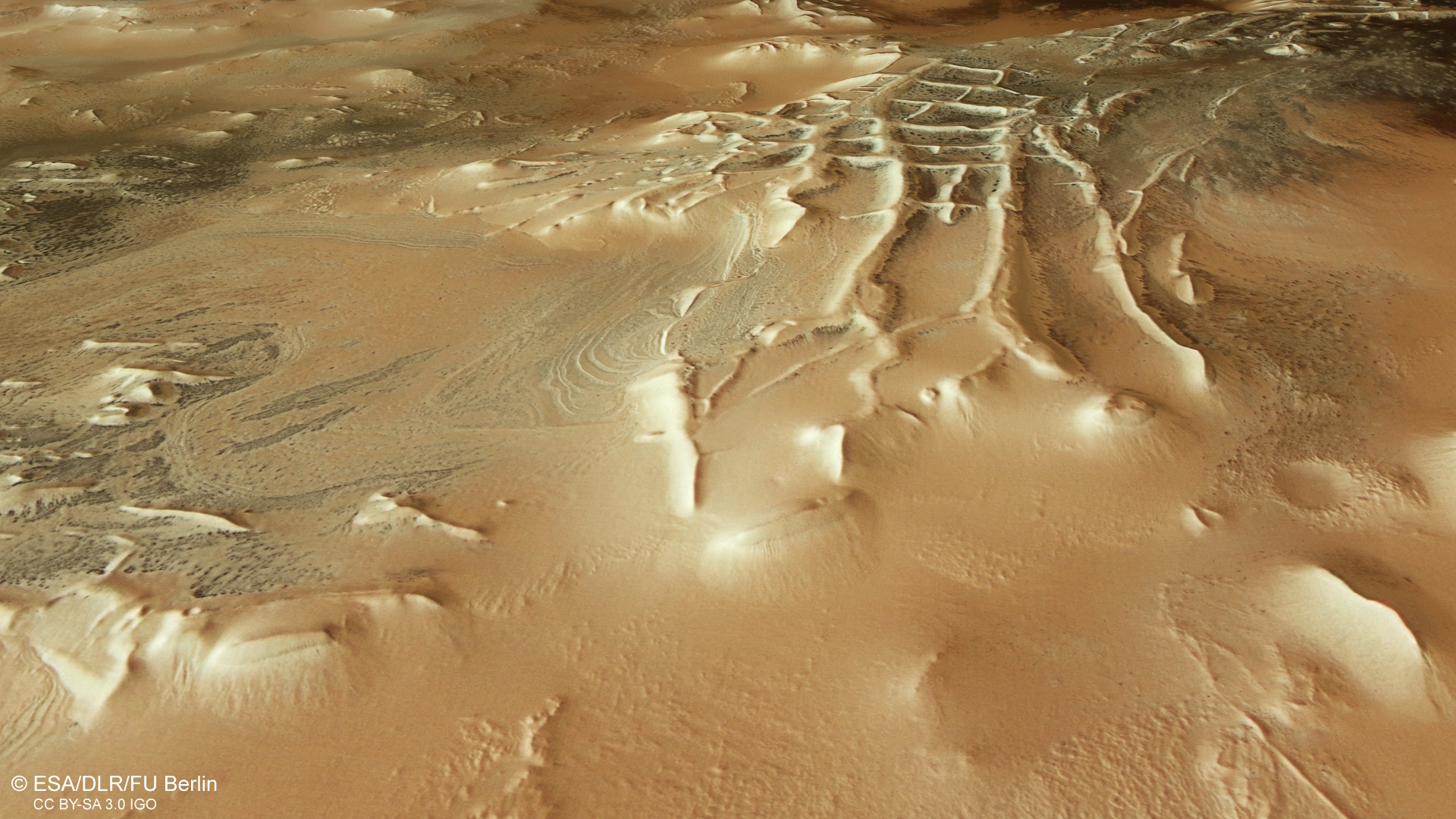
At over 80° south latitude on Mars, a formation called “Inca City” reveals a network of kilometer-scale ridges that forms an impressive geometric grid visible from space, created by deep fractures and sculpted by ice in one of the most extreme environments on the red planet.
-
Seen from space, a colossal ‘Y’ cuts through the largest desert in China, blending a jade-filled river, red and white mountains, and revealing the absurd scale of the transformation of the Taklamakan surrounded by a green wall with billions of trees.

-
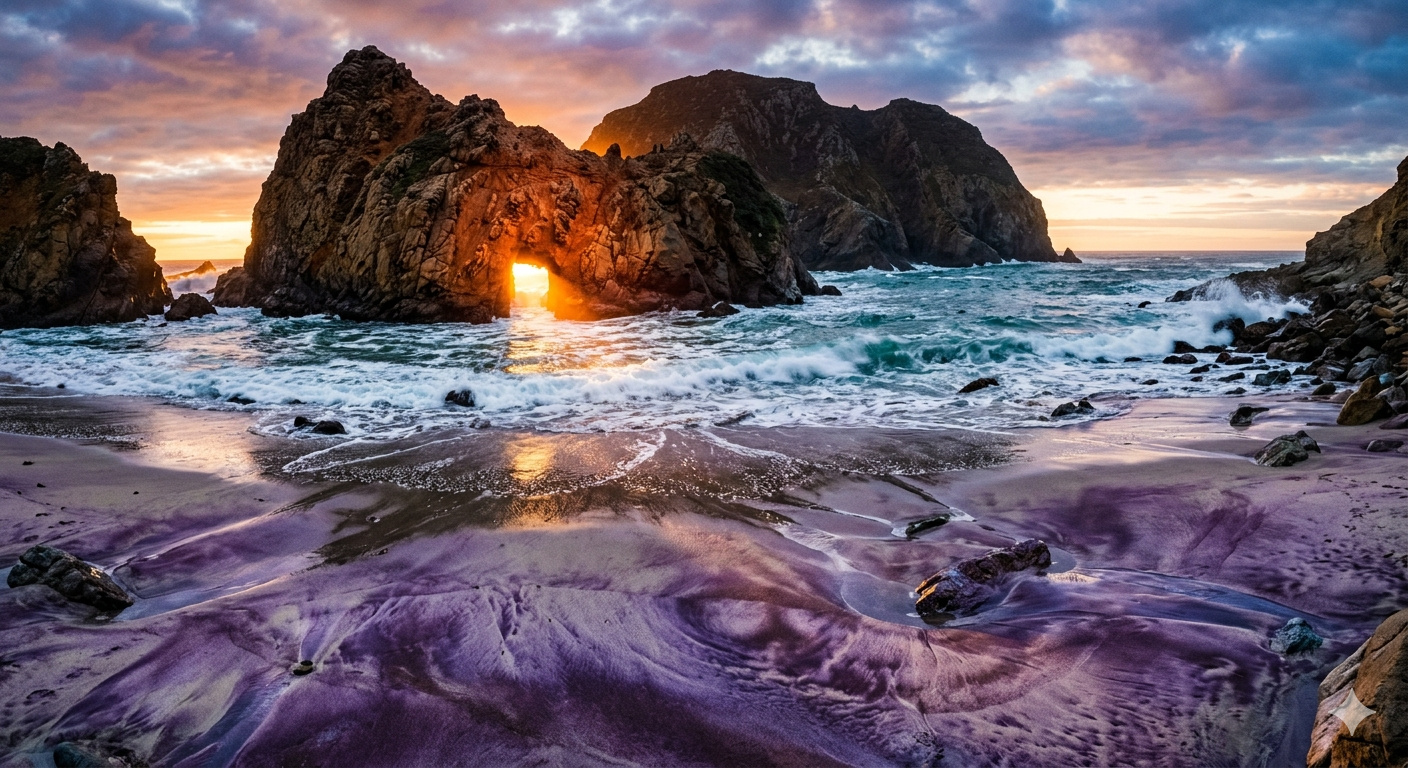
The Pacific Ocean reveals what the cliffs of Big Sur have hidden for millennia: Pfeiffer Beach, in California, features swirling purple sand formed by garnet crystals and displays a stone arch that is illuminated by the sun in winter for just a few days each year.
-
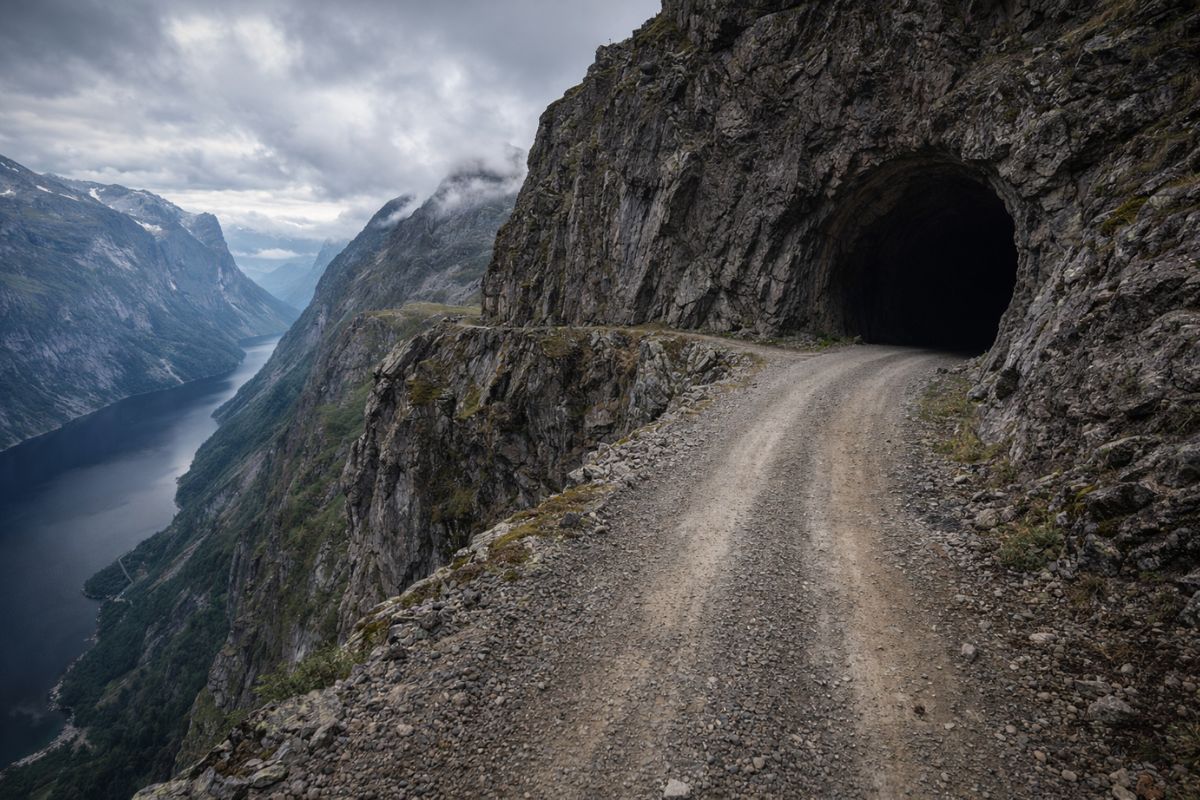
Aursjøvegen in Norway is a 100-kilometer gravel road that crosses chasms and dark tunnels carved into the rock at an altitude of 947 meters in the fjords and is only open for four months a year.

Over time, these layers were compacted and buried under kilometers of rock, creating a mineral deposit that has no parallel anywhere else on the planet.
Geologists classify this structure as the largest gold province ever documented by science. The rocks that house the precious metal are so ancient that they formed at a time when the Earth barely had free oxygen in the atmosphere.
This unique geological context explains why no other deposit in the world has managed to accumulate even remotely close to the quantities found in the South African region.
More than 40 thousand tons have been extracted and the number continues to impress
Since the first nugget was found in the region in 1886, the Witwatersrand has delivered to the world around 40 thousand tons of gold, equivalent to about 1.3 billion troy ounces of the metal.
This volume represents between 30% and 40% of all gold production accumulated globally throughout history, a number that no other recorded mineral source even threatens to match.
This wealth financed the construction of Johannesburg, now the largest city in South Africa, and completely transformed the region’s infrastructure.
The commercialization of this gold has generated unimaginable fortunes for decades and positioned the country as the absolute protagonist of the global precious metal market for almost the entire 20th century.
R$ 3 trillion in gold that no one can reach
As impressive as the volume already extracted is, economic analysts estimate that the untapped reserves are worth approximately R$ 3 trillion.
These are tens of thousands of tons of gold trapped in increasingly deep rock layers, where ground temperatures exceed 60°C and lithostatic pressure makes every meter of advancement a monumental challenge for modern engineering.
This astronomical valuation is based on current prices in the international market, where gold remains one of the most valued and sought-after assets by global investors.
The growing scarcity of new rich deposits in the world only increases attention on this South African deposit, which functions as a kind of gigantic natural vault that humanity has yet to find the right key to.
The heat, the pressure, and the costs that have transformed mining into an almost unviable operation
Mining at these depths is not just difficult. It is dangerously expensive and technologically limiting. The deepest shafts in the Witwatersrand exceed 4 kilometers below the surface, where the air must be artificially cooled for workers to survive.
The electricity required to pump cold water, ventilate the tunnels, and drain enormous volumes of groundwater consumes a brutal slice of mining companies’ budgets.
Many historic mines in the region have already closed their doors because operational costs exceeded profits.
The challenges include a constant risk of collapses, extreme logistical difficulty in transporting heavy machinery down, and the daily need to drain corrosive waters that deteriorate structures and equipment. Each working front that descends another level becomes exponentially more expensive to operate and maintain.
The future depends on innovations that do not yet exist
Despite all the obstacles, the Witwatersrand continues to attract the attention of major mining corporations and investors.
Fluctuations in the international gold price dictate the pace of operations: when prices soar, old mines that seemed economically dead become profitable again, and new drilling attempts gain funding.
The consensus among experts is that the future of mining in this region depends on technological leaps that reduce the cost of extraction at extreme depths.
Autonomous robotics, new cooling methods, and techniques for reprocessing the billions of tons of waste accumulated over more than a century are some of the industry’s bets to unlock this wealth that remains trapped in the Earth’s depths.
A wealth that defies time and human capacity
The Witwatersrand basin is, at the same time, a monument to human ambition and a reminder of the limits that nature imposes. Almost half of all the gold that humanity has ever touched came from there, and trillions in value remain locked away where no one can reach.
The question that remains is: will future technology be able to open this vault, or will this fortune remain forever out of our reach?
And you, do you believe it is worth investing billions in technology to reach this gold, or should humanity focus its resources on more sustainable alternatives? Leave your opinion in the comments and share this article with those interested in natural wealth and mining.






Seja o primeiro a reagir!