





 English
  Francês
  Alemão
  Italiano
  Japonês
  Norueguês
  Portuguese
  Spanish
  3 min of reading
  0 comments


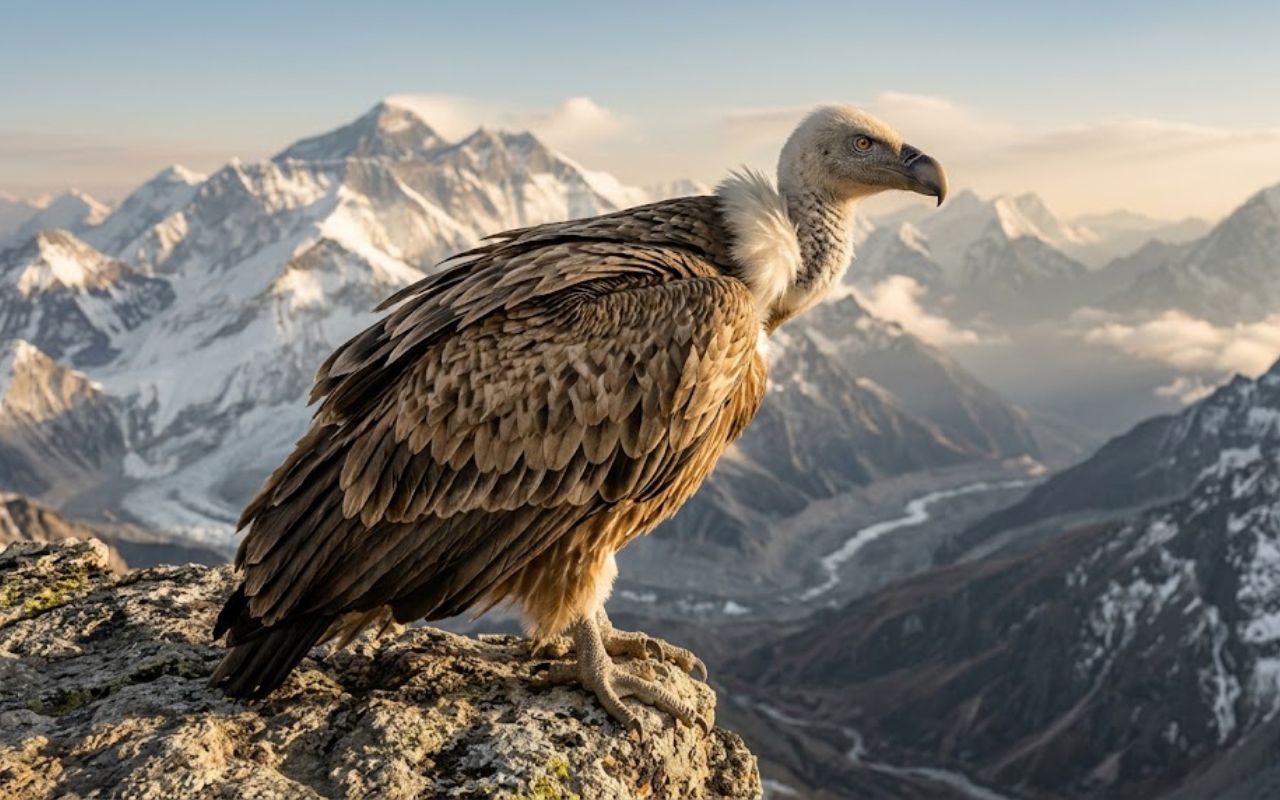
Meet the Himalayan vulture, the giant of raptor birds that protects the ecosystem of Asia. Understand its vital role in public health, its unique characteristics, and the threats that this sentinel of the mountains faces today.
In the extreme heights of Nepal, India, and China, where the thin air and harsh cold make life challenging, the Himalayan vulture (Gyps himalayensis) fulfills a vital mission.
This majestic raptor, one of the largest in Asia, acts as the primary “cleaner” of the mountains, consuming carcasses of large mammals that, if left in the environment, could become sources of serious diseases.
In recent years, however, the modernization of livestock farming and the use of veterinary medicines have turned the territory of this giant into a minefield, threatening the natural balance of the Tibetan Plateau.
-
Seen from space, a colossal ‘Y’ cuts through the largest desert in China, blending a jade-filled river, red and white mountains, and revealing the absurd scale of the transformation of the Taklamakan surrounded by a green wall with billions of trees.

-
The Pacific Ocean reveals what the cliffs of Big Sur have hidden for millennia: Pfeiffer Beach, in California, features swirling purple sand formed by garnet crystals and displays a stone arch that is illuminated by the sun in winter for just a few days each year.

-
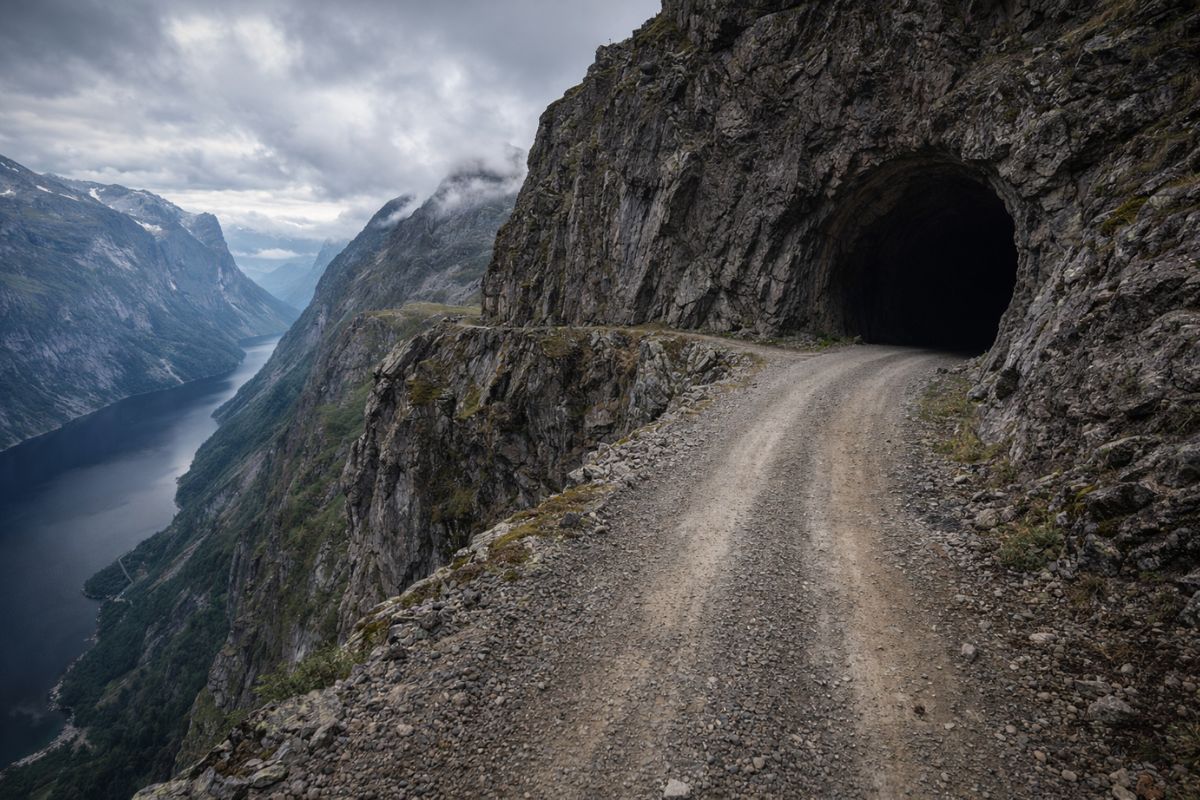
Aursjøvegen in Norway is a 100-kilometer gravel road that crosses chasms and dark tunnels carved into the rock at an altitude of 947 meters in the fjords and is only open for four months a year.
-
With about 4,000 m², the building constructed in a traditional neighborhood in France looks like a rainbow, has a colorful facade, mixes vibrant glass, and creates one of the most unusual visuals in Bordeaux.


The Himalayan vulture is not just a scavenger: it is the guardian of environmental cleanliness.
Without it, the nutrient cycle is interrupted, directly impacting the lives of humans and animals.
Invisible threats: why is the giant at risk?
Even with its imposing presence and strength, the Himalayan vulture faces modern threats that its biology cannot confront alone.
The human presence in the valleys and slopes has profoundly altered the availability of food, creating challenges that did not exist before.
Among the most critical dangers are residues of veterinary medicines in animal carcasses, which can be fatal for the species.
Additionally, changes in herd management by local communities have drastically reduced the natural food supply.
The impact of human activity does not stop there: constructions, works, and the increase of tourism in cliffs used for nesting disturb the rest and reproduction of these birds.
Large constructions also alter traditional flight routes, forcing vultures to seek sustenance in increasingly distant areas.
Together, these pressures show that the survival of the Himalayan giant depends on conscious human intervention and the preservation of its essential habitats.
Himalayan vulture: Anatomy of a sovereign
With a wingspan exceeding 2.5 meters, the Himalayan vulture is one of the largest flying birds on the planet.
Its robust musculature and broad wings allow for long periods of soaring flight with minimal energy expenditure.

Adults have a long feathered collar, in shades ranging from pale to striped brown, and the yellowish, sparsely feathered head is a perfect adaptation for feeding on carcasses.
Juveniles, on the other hand, have a whiter head, allowing biologists to identify the age of the birds during field monitoring.
The cycle of life in the heights
The reproduction of the Himalayan vulture is slow and careful, reflecting the hostile environment in which it lives.
Strictly monogamous, pairs maintain long-lasting bonds, building nests on cliffs inaccessible to predators.
Parental care is intense: the couple takes turns incubating the egg and protecting the chick.
Due to the harsh climate, the young remain in the nests for long periods until they gain strength for their first flight, relying entirely on the dedication of their parents.
A future that depends on protection
Preserving the Himalayan vulture is more than a matter of biodiversity: it is a measure of global health security.
By rapidly recycling nutrients and eliminating carcasses, the bird prevents the spread of pathogens in inhabited valleys.
Ensuring its future requires coordinated efforts between governments and local communities, with the prohibition of toxic substances and the protection of breeding areas.
As long as the Himalayan vulture continues to patrol the skies of the Himalayas, the high-altitude ecosystem will remain functional and safe for all forms of life.
With information from O Antagonista.








Seja o primeiro a reagir!