





 Portuguese
  English
  Spanish
  5 min of reading
  0 comments


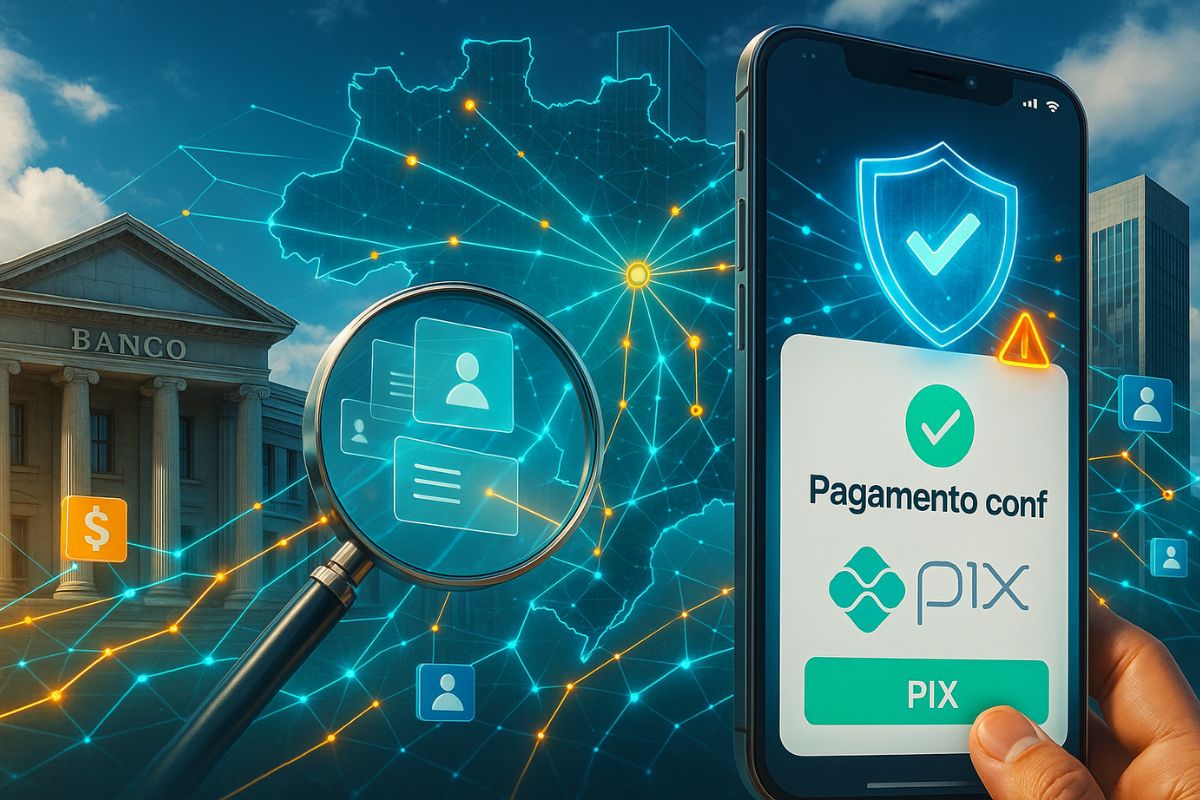
New PIX Rule in 2025 Expands Tracking of Diverted Money, Allows Recovery of Values Even After Withdrawals or Transfers, Brings Automatic Challenge in Apps, and Gives Banks Until February to Adopt the Mechanism Promising More Security Against Scams and Digital Frauds Used Daily by Millions of Brazilians.
The PIX is entering a new phase in 2025 and is no longer just a fast payment method but also becomes a more robust system for protection and recovery of money in case of fraud. The new rules from the Central Bank expand transaction tracking and allow for diverted funds to be sought beyond the first account used by the fraudster.
In practice, this means that the PIX will have a more intelligent refund mechanism, capable of following the money trail through different accounts and security barriers, increasing the chances that the victim can recover at least part of what was lost, even when the scammer quickly withdraws or transfers the amount.
How the New PIX Rule Works in 2025
According to the new rules, the PIX refund mechanism will now see not only the initial account used for the scam but also the accounts to which the money was transferred afterwards.
-
Mercado Livre “opens the vault” and announces a record investment of R$ 57 billion in Brazil in 2026, a value 50% higher than the previous year, with an expansion plan that includes 14 new logistics centers, totaling 42 units in the country and hiring an additional 10,000 employees.

-
How investment in technology can revolutionize the national economy and enhance industrial gains, according to a study that highlights the direct impact on productivity, innovation, and wealth retention within Brazil.

-
The largest food company on the planet, JBS, has just opened a 4,000 square meter laboratory in Florianópolis to develop customized proteins that modulate muscle mass gain, immune response, and metabolic performance.

-
After nearly 30 bids and competition among industry giants, a Spanish company purchases one of the largest airports in Brazil for almost R$ 3 billion and takes over the management of Galeão in a concession that will last until 2039.


The system identifies the transaction trail within the PIX ecosystem and shares this information with the involved institutions.
According to the Central Bank, this shared identification allows funds to be returned within 11 days after the challenge, provided there is available balance in the accounts through which the money passed.
Previously, if the scammer transferred or quickly withdrew the funds, the chance of recovery practically disappeared. Now, the path becomes longer for the criminal and more favorable for the victim.
Money Can Be Recovered Even After Transfers
One of the significant changes is the ability to seek the PIX amount beyond the first fraudulent account.
In the old setup, the bank could block and return the money only if it was still sitting in that initial destination.
With the new model, the system will act as a route tracker, allowing banks to block resources in intermediary accounts used by the scammer to “hide” the money. This directly targets a common practice used by criminal groups, which spread the funds across multiple accounts to hinder law enforcement actions.
The sooner the victim contests the PIX, the greater the chances of finding a balance in one of these accounts and enabling the refund. Time remains critical, but the window of opportunity widens.
PIX Self-Service in the App Eases the Challenge
Another important novelty is the self-service within the PIX environment in bank apps.
As of October 1st, all institutions now offer a specific function to challenge a suspicious transaction, without the need to call customer service or speak with an attendant.
The user accesses the PIX area, selects the operation they consider to be fraud, scam, or coercion, and initiates the refund request directly through the app.
This digital flow reduces reaction time, avoids queues in traditional channels, and increases the chance that the money is still in an account linked to the scam when the refund mechanism is triggered.
The Central Bank highlights that this automation of the process was designed to give more speed to reports and reduce losses in the first hours after the scam, when criminals act with greater intensity to “clean” the received funds.
Deadline for Banks and Mandatory New PIX in February
The rules came into effect this Sunday and are currently in a phase of optional adoption until the beginning of 2025. As of February 2nd, the use of the new tracking and refund mechanism of the PIX becomes mandatory for all participating institutions in the system.
This means that until February, banks and fintechs will have a technological and operational adaptation period to incorporate the new features.
After that, it will no longer be the institution’s choice to offer or not this security enhancement: the expanded refund mechanism will become a standard part of the PIX experience in the country.
In practice, the Central Bank expects that the number of accounts used in scams will be more easily identified, facilitating both the return of funds and the blocking of recurring accounts in frauds.
PIX Scams and the Impact of the Measure in Real Life
Recent surveys have already indicated the extent of the problem: millions of Brazilians reported being victims of scams involving PIX or fake invoices, which pressured the financial system for more effective responses.
The increasing use of instant payment has been accompanied by the professionalization of gangs specialized in social engineering, quick kidnapping, and account invasions.
With the new model, the message is clear. The PIX remains fast, but now it is also better prepared to react when something goes wrong.
Scammers will find it harder to “disappear” with the money, and institutions will begin to cooperate in a more structured way when a transaction is flagged as suspicious.
What the User Should Do If They Fall for a PIX Scam
Even with the new rules, the guidance remains to act immediately. As soon as they realize they have been a victim of a PIX scam, the user should:
- Open the bank’s app and use the challenge button within the PIX environment
- Detail what happened, marking the correct transaction
- File a police report, especially in situations of coercion or violence
The faster the request reaches the system, the greater the chance of the PIX refund mechanism finding a balance in the involved accounts and blocking the amount for return to the victim.
Technology improves the scenario, but it does not replace the basic care of checking data, being suspicious of urgent requests, and not sharing passwords or confirmation codes.
Ultimately, the PIX 2025 tries to balance speed and security, enhancing the financial system’s ability to respond to a problem that has already affected millions of people.
The new rule is not an absolute shield against scams, but represents an important advance in user protection.
Given these changes to the PIX, do you think you will feel safer making transfers or do you still fear falling for digital scams?








Seja o primeiro a reagir!