





 Portuguese
  English
  Spanish
  4 min of reading
  0 comments


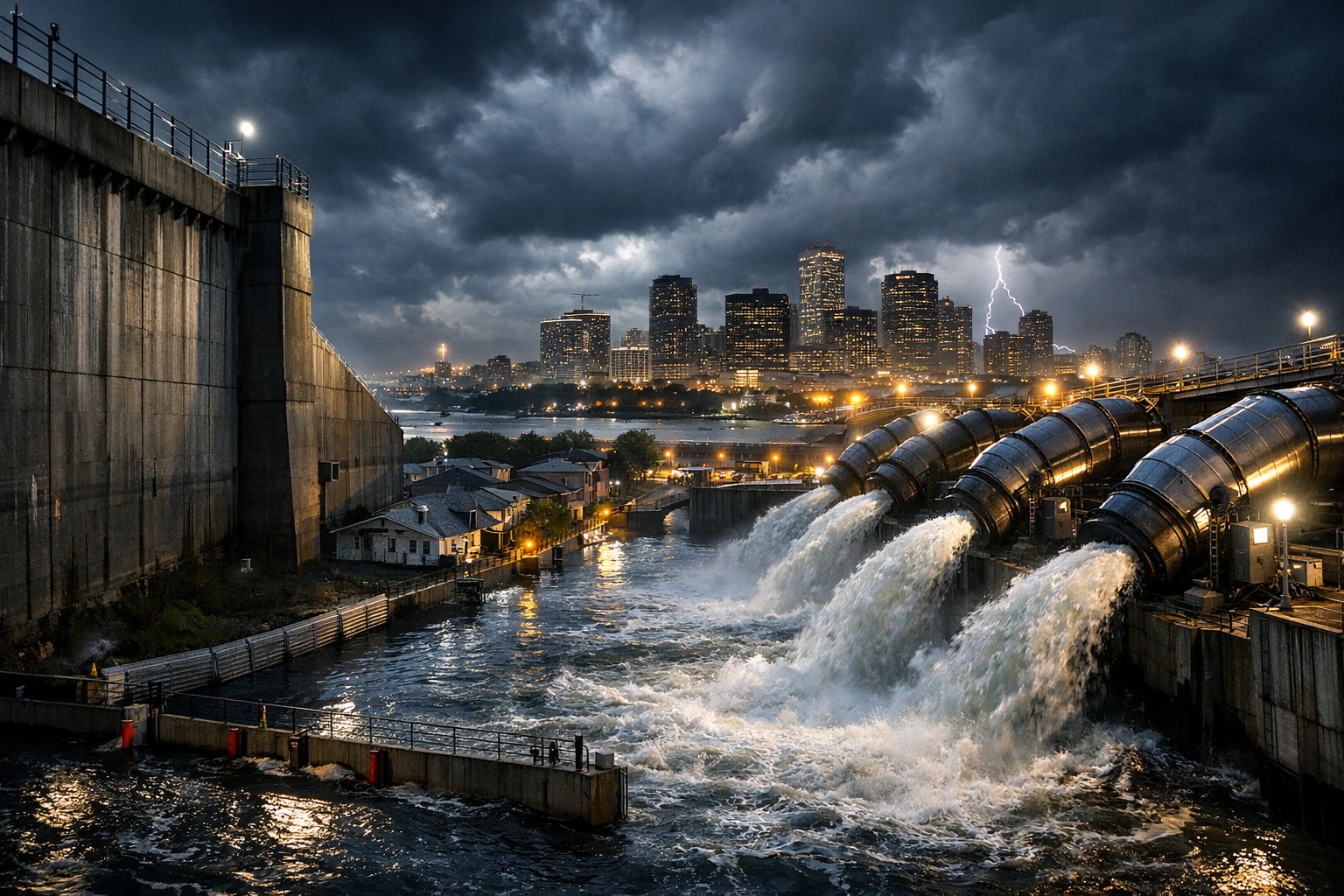
With Billion-Dollar Levees, Pumps Running 24 Hours, and Neighborhoods Below Sea Level, New Orleans Relies on Extreme Engineering to Remain Habitable.
Few people realize, but New Orleans is not just a city built near water. It is, in large part, a city built against water. Located in the delta of the Mississippi River, surrounded by Lake Pontchartrain, swamps, and artificial canals, the metropolis lives in a rare condition: about half of its urban area is at sea level or below it, with some regions dropping as much as two meters below.
This reality has turned New Orleans into one of the largest experiments in urban hydraulic engineering on the planet, a system that operates 24 hours a day, without pause, because any failure can mean immediate flooding.
New Orleans Below Sea Level: How the City Got to This Point
The problem did not start with modern climate. It is structural and historical. The city was built on extremely soft alluvial soils, formed by sediments from the Mississippi River. Throughout the 20th century, canal and levee projects prevented the river’s natural flooding, which previously deposited new sediments and “recharged” the soil.
-
Friends have been building a small “town” for 30 years to grow old together, with compact houses, a common area, nature surrounding it, and a collective life project designed for friendship, coexistence, and simplicity.

-
This small town in Germany created its own currency 24 years ago, today it circulates millions per year, is accepted in over 300 stores, and the German government allowed all of this to happen under one condition.

-
Curitiba is shrinking and is expected to lose 97,000 residents by 2050, while inland cities in Paraná such as Sarandi, Araucária, and Toledo are experiencing accelerated growth that is changing the entire state’s map.

-
Tourists were poisoned on Everest in a million-dollar fraud scheme involving helicopters that diverted over $19 million and shocked international authorities.


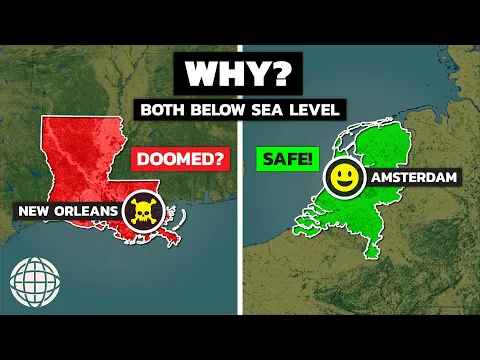

The result was a phenomenon known as subsidence: the ground began to slowly sink. Studies from the US Geological Survey and NASA show that some areas of the city have sunk over 1 meter over a few decades, creating a bowl-shaped topography.
Today, when heavy rains occur, the water has nowhere to naturally drain. It needs to be mechanically removed.
The System of Levees and Pumps That Keeps the City Alive
Following the disaster of Hurricane Katrina in 2005, the United States government initiated one of the largest hydraulic infrastructure rebuilds in modern history. The project, led by the US Army Corps of Engineers, resulted in the Hurricane and Storm Damage Risk Reduction System (HSDRRS).
The system includes:
- Over 560 km of levees and floodwalls
- Storm surge barriers capable of withstanding category 5 hurricanes
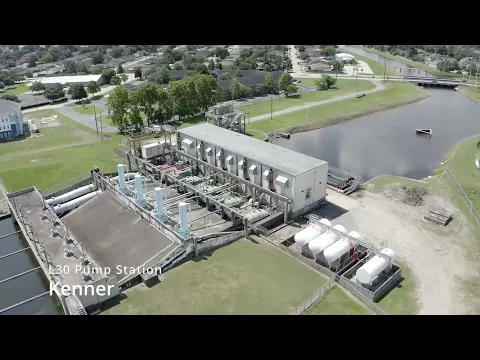
- Giant pumping stations, some capable of moving tens of thousands of liters of water per second
- Movable gates that isolate canals and lakes during storms
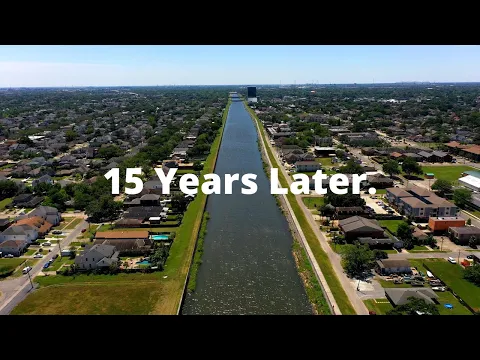
The total cost exceeded US$ 14 billion, and annual maintenance consumes hundreds of millions of dollars.
Even on common days, the pumps never stop. Moderate rains already require immediate activation of the system to prevent urban flooding.
Pumps That Replace Gravity
Unlike traditional cities, New Orleans does not rely on the slope of the land to drain water. It relies on machines.
The city’s pumping stations, operated by the Sewerage and Water Board, use high-power turbines to lift water from the lowest neighborhoods to elevated canals, which then direct it to the lake or the river.

In extreme events, the system must deal with:
- Intense rain in a few hours
- High tides that prevent natural drainage
- Strong winds that push water back into the canals
If the pumps fail due to electrical malfunction, fuel, or maintenance, the city begins to flood within hours.
The Seismic Risk and the Paradox of Total Protection
There is a little-discussed technical dilemma. The more levees and barriers are erected, the more the internal ground tends to sink, as the system prevents the natural influx of sediments. Additionally, the weight of the structures themselves presses down on the soft ground.
Experts call this the “trap of hydraulic engineering”: the city becomes increasingly dependent on artificial systems, and each new layer of protection raises the cost and complexity of the next.
Although New Orleans is not in an active seismic zone like California, light geological movements combined with subsidence and rigid structures increase the risk of localized failures in the long term.
Climate Change Raises the Stakes
The rising sea levels in the Gulf of Mexico add extra pressure. NOAA data indicates that sea levels in the region are rising faster than the global average, exacerbated by local subsidence.
This means that, every decade, the levee system has to cope with a “higher baseline”. Barriers that were sufficient 20 years ago now operate much closer to the limit.
At the same time, tropical storms tend to carry more energy and more rain, increasing the volume of water that needs to be removed in a short time.
A City That Only Exists While Engineering Works
New Orleans is an extreme but real case of how modern cities can become dependent on active infrastructure to exist. Unlike Venice, where water coexists with urban space, here the logic is total exclusion: water must be kept out.
The system has functioned so far. Since the completion of the HSDRRS, the city has withstood major hurricanes without structural collapses like those of 2005. But the cost is permanent, growing, and inevitable.
The question that engineers, urban planners, and public managers are asking today is not whether the system works, but how long it will be sustainable, financially, energetically, and environmentally.
In a world where more and more coastal cities face rising seas and subsidence, New Orleans has ceased to be an exception. It has become a continuous warning: when gravity stops helping, all that’s left is to turn on the pumps — and hope they never fail.










-

-

-

-

9 pessoas reagiram a isso.