





 Portuguese
  English
  Spanish
  4 min of reading
  0 comments


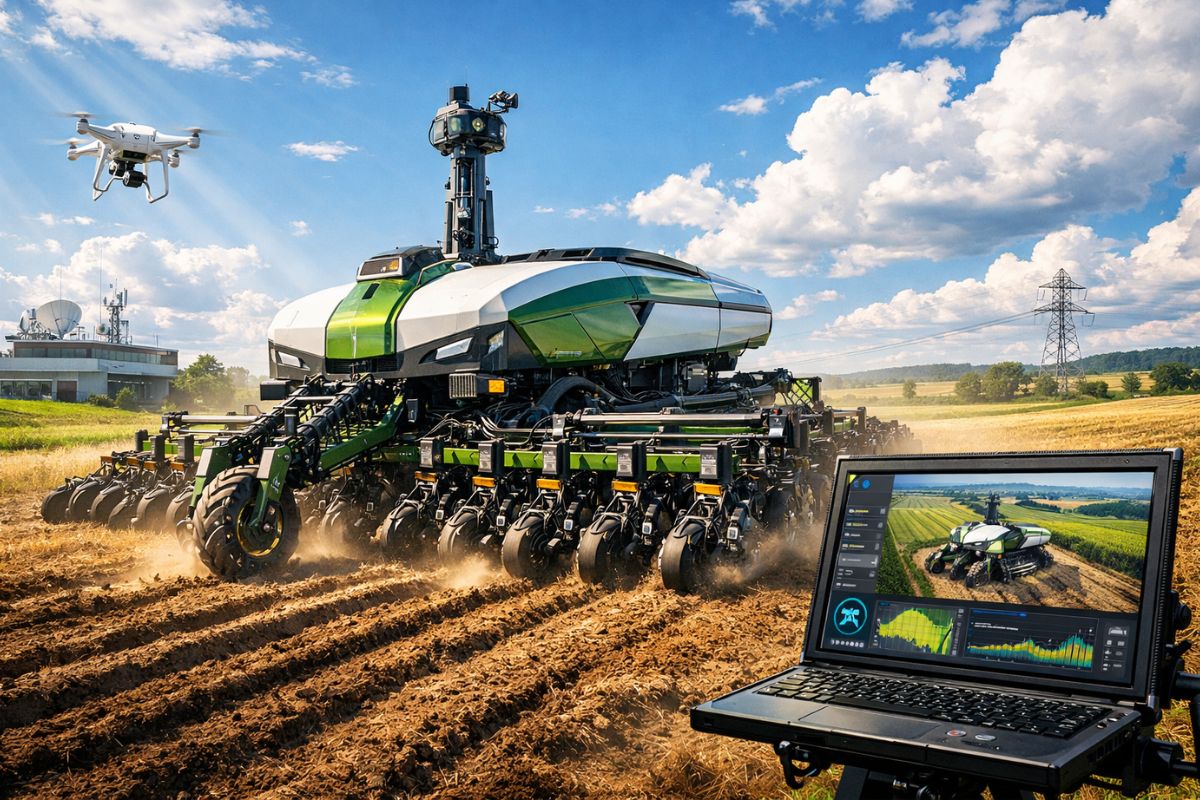
The autonomous planter will have remote monitoring, a hybrid diesel-electric system, and artificial intelligence to adjust planting to the terrain; a functional prototype will be ready in the 2nd semester of 2026.
The autonomous planter has become the next major test of automation in the field after BNDES approved financing of R$ 22.5 million for Cisa Indústria, Comércio e Representação de Equipamentos Agrícolas Ltda., known as J. Assy, to develop the equipment focusing on high precision and operation without the constant need for a human operator.
According to BNDES’s database, the autonomous planter promises to combine pre-defined routes, real-time remote monitoring, and a set of sensors, cameras, and artificial intelligence to navigate and adjust parameters according to terrain conditions, with a functional prototype expected for the 2nd semester of 2026.
What BNDES financed and why it matters
BNDES approved financing of R$ 22.5 million to support the development of an autonomous planter aimed at the global agricultural machinery market. The funding comes from the BNDES Mais Inovação program and corresponds to the total to be invested in the project, according to the BNDES News Agency text.
-
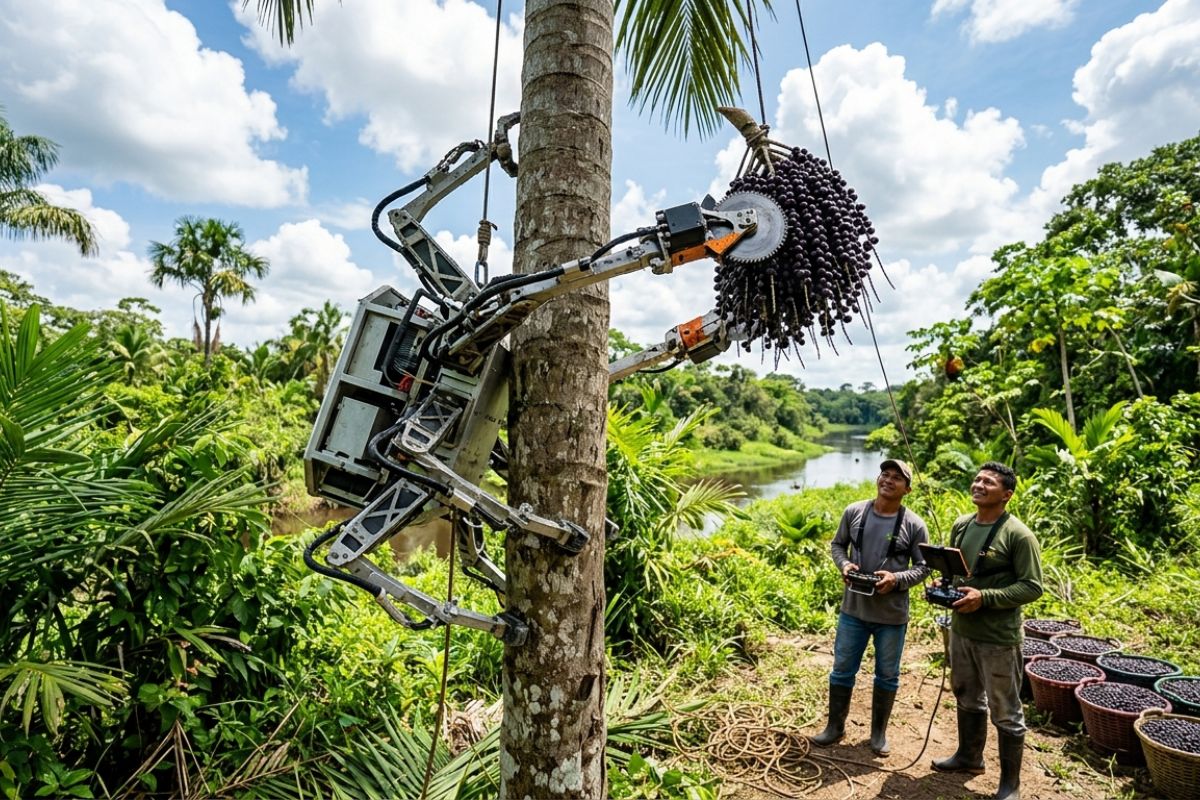
Robot that climbs açaí trees in Pará cuts bunches with a remote control, reduces accidents for harvesters, and promises to harvest 10 times more, reaching 1,000 kg per day, costing R$ 21,000 with subsidized PRONAF.
-
Scientists have discovered for the first time a gigantic cave hidden beneath a volcano on Venus, nearly a kilometer wide and 375 meters high, using radar images that had been forgotten for over 30 years.

-
They were brilliant! Scientists discover that our ancestors in China were already making super advanced tools 160,000 years ago, changing everything we knew.

-
Scientists unveil 3 million years of climate secrets hidden in the ice of Antarctica.


The initiative seeks to enable a testing and validation phase to confirm whether the proposed solutions work reliably. In practice, the money accelerates the moment when the technology moves from concept to operating machine.
What stage the project is in and when the prototype will be ready

The project has been under development since 2022. The financing enables the testing phase called TRL 5, aimed at concept validation and technical feasibility verification.
In this stage, expected to conclude in the 2nd semester of 2026, a functional prototype of a semi-autonomous planter will be built. The expectation described in the database is that, by 2028, functional prototypes suitable for testing in real conditions with industry partners will be completed, paving the way for subsequent industrial production.
How the autonomous planter is expected to operate in the field
In the final version, the autonomous planter should plant seeds autonomously, without the constant need for a human operator, following pre-defined routes. The plan includes real-time remote monitoring, focusing on low fuel consumption and high precision in the horizontal and vertical placement of seeds.
Another central point is the hybrid diesel-electric system, which, according to the database, will be part of the machine’s architecture. J. Assy also states that the equipment will feature monitoring technologies developed by the company and described as unprecedented in the market.
AI and automatic adjustment to the terrain: the promised differential
One of the expected gains compared to conventional machines is the ability to adjust parameters according to terrain conditions. This would be done with sensors, actuators, cameras, and artificial intelligence for autonomous navigation and operational decision-making.
The logic is to reduce variations in planting, increase process repeatability, and enhance efficiency in large areas, where standardization and fine control make a difference in the outcome.
Versatility: easily coupling and uncoupling implements
The database also highlights a system that will allow for easy coupling and uncoupling of different agricultural implements, enhancing the versatility of the setup. The idea is for the platform to adapt to different crops and specific needs of the farmer.
This type of modularity is important because it transforms the machine into a “core” of work, rather than limiting its use to a single scenario.
What BNDES and J. Assy said about the project’s objective
BNDES president, Aloizio Mercadante, points to potential productivity gains and sees a growing demand for automated and multifunctional implements, with relevance for export and use in large areas, especially in places with labor shortages.
CEO José Assy states that the project fits into a vision of serving farmers globally and reinforces the company’s investment in research and development, combining its own resources with the support of BNDES. The central message is to position Brazil as a leader in innovation in agriculture.
What to observe until the 2nd semester of 2026
The most important short-term milestone is the functional prototype expected for the 2nd semester of 2026. From there, validation in tests and the evolution to prototypes suitable for real conditions, with a horizon in 2028, should indicate whether the autonomous planter moves from discourse to product cycle.
Would you trust an autonomous planter to plant without an operator, or would you still prefer someone inside the cabin monitoring everything?






Seja o primeiro a reagir!