





 Portuguese
  English
  Spanish
  3 min of reading
  0 comments


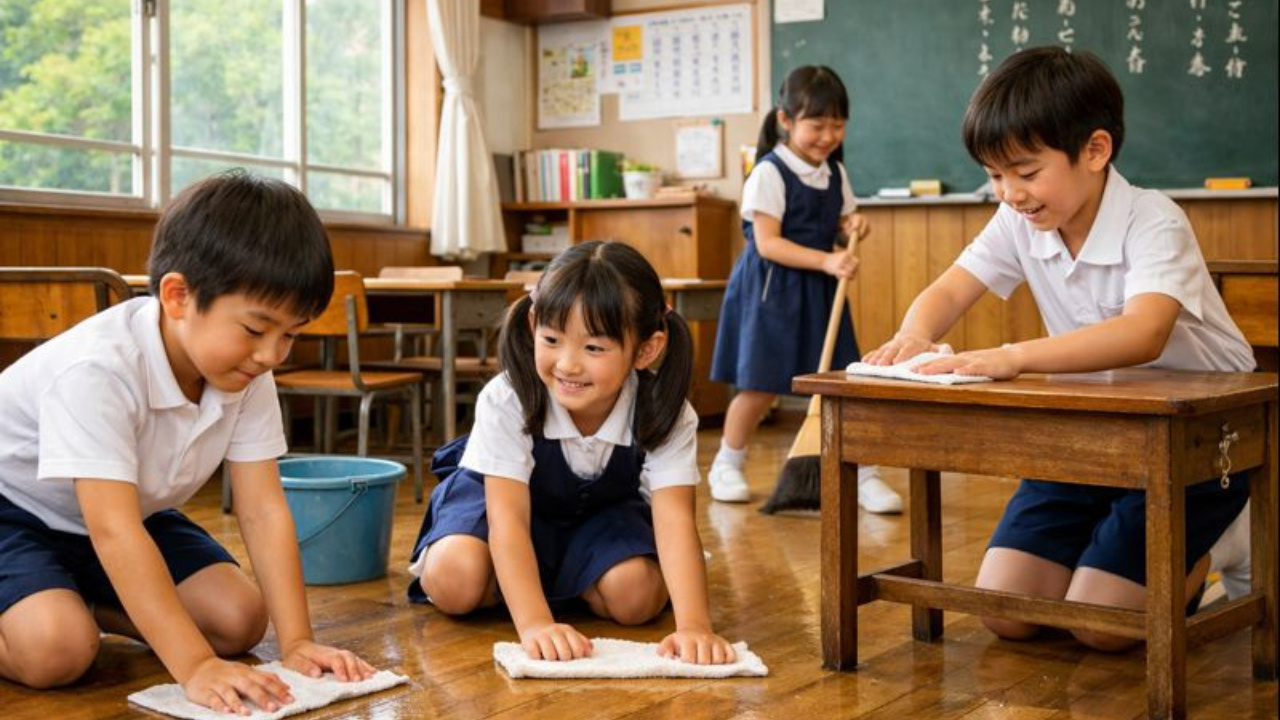
Japanese Education Prioritizes Value Formation, Discipline, Coexistence, and Child Autonomy in the First School Years.
Starting in 2026, children in Japan will only take formal tests after they turn 10 years old.
The decision, adopted by the Japanese educational system, prioritizes value formation, socioemotional development, discipline and coexistence, and child autonomy before emphasizing academic performance.
The measure applies to schools across the country and reinforces an already established practice, which now gains greater international visibility by breaking away from traditional models based on grades from an early age.
-
The Argentine government celebrates the lowest poverty rate in 7 years, but experts warn that the methodology has changed, real wages have fallen, unemployment has risen, and the number of people on the streets of Buenos Aires has increased by 57% since Milei took office.

-
7.8 magnitude earthquake in Indonesia frightens the population, triggers tsunami alert, and hits an island with over 200,000 inhabitants this Thursday.

-
Google will finally let you change that embarrassing Gmail address you created in your teenage years without losing any accounts, logins, or old emails: the feature is already available in the United States.

-
Heading to Brazil in a Bonanza F33 single-engine aircraft: a couple departs from Florida on a visual flight, makes technical stops in the Caribbean to refuel and organize paperwork, and begins the staged crossing until they reach the country.


In the early years of basic education, up to approximately the 4th grade, the focus is not on tests or rankings, but on building character, collective learning, and preparing children for life in society.
The central logic is clear: academic content carries more weight when accompanied by responsibility, empathy, and respect for others.
Value Formation as the Foundation of Learning
In Japanese education, subjects like mathematics and the national language share space with activities focused on social coexistence, hygiene, cooperation, and ethics.
From an early age, children learn to work in groups, respect common rules, and understand their role within the school community.
This approach strengthens socioemotional development, helping students recognize emotions, cope with frustrations, and develop empathy.
Thus, the educational process shifts from being merely a transmission of knowledge to forming more aware and balanced citizens.
Moreover, the system understands that values like respect and responsibility cannot be taught solely through speeches, but must be experienced daily in the school environment.
Discipline and Coexistence Learned in Practice
One of the best-known examples of discipline and coexistence in Japan is the routine called O-soji.
Instead of cleaning staff, the students themselves dedicate 15 to 20 minutes daily to clean classrooms, hallways, and bathrooms.
The activity is not treated as punishment.
On the contrary, it is part of the informal curriculum and reinforces the notion of collectivity.
According to Japanese educators, this practice teaches that everyone shares responsibility for common spaces and cannot shift it to others.
As a result, schools report fewer instances of vandalism, less accumulation of trash, and a significant reduction in conflicts and bullying, strengthening the environment of mutual respect.
Evaluations Only After the Consolidation of Value Formation
Educational institutions conduct formal tests only when students have developed solid behavioral foundations, usually starting from the 4th grade of elementary school.
At this stage, evaluation measures not only academic knowledge but also the ability to organize, take responsibility, and collaborate.
Value formation acts as an essential prerequisite for more demanding academic learning.
For the Japanese educational system, competing for grades without emotional preparation can cause anxiety and inequality, while an integral formation creates students better prepared for future challenges.
This philosophy advocates that learning is only complete when it walks hand in hand with character and collective consciousness.
Child Autonomy from the First Years
Another pillar of Japanese education is child autonomy.
From an early age, children walk to school alone, following safe and well-marked routes.
Groups of students wear colored hats, making it easier to identify them in urban traffic.
This practice develops independence, self-confidence, and decision-making skills.
By dealing with small daily challenges, students learn to solve problems and act responsibly, contrasting with models of excessively strict supervision adopted in other countries.
Educators highlight that this autonomy directly contributes to the emotional and social maturity of children.
An Educational Model That Forms Citizens
By prioritizing socioemotional development, discipline and coexistence, value formation, and child autonomy, the Japanese educational system reinforces the idea that educating goes beyond the classroom and tests.
The goal is not just to create good students, but adults aware of the role they play in society.
Starting in 2026, this approach gains even more prominence, positioning Japan as an international reference in humanized education.









-

Uma pessoa reagiu a isso.