





 Portuguese
  English
  Spanish
  4 min of reading
  0 comments


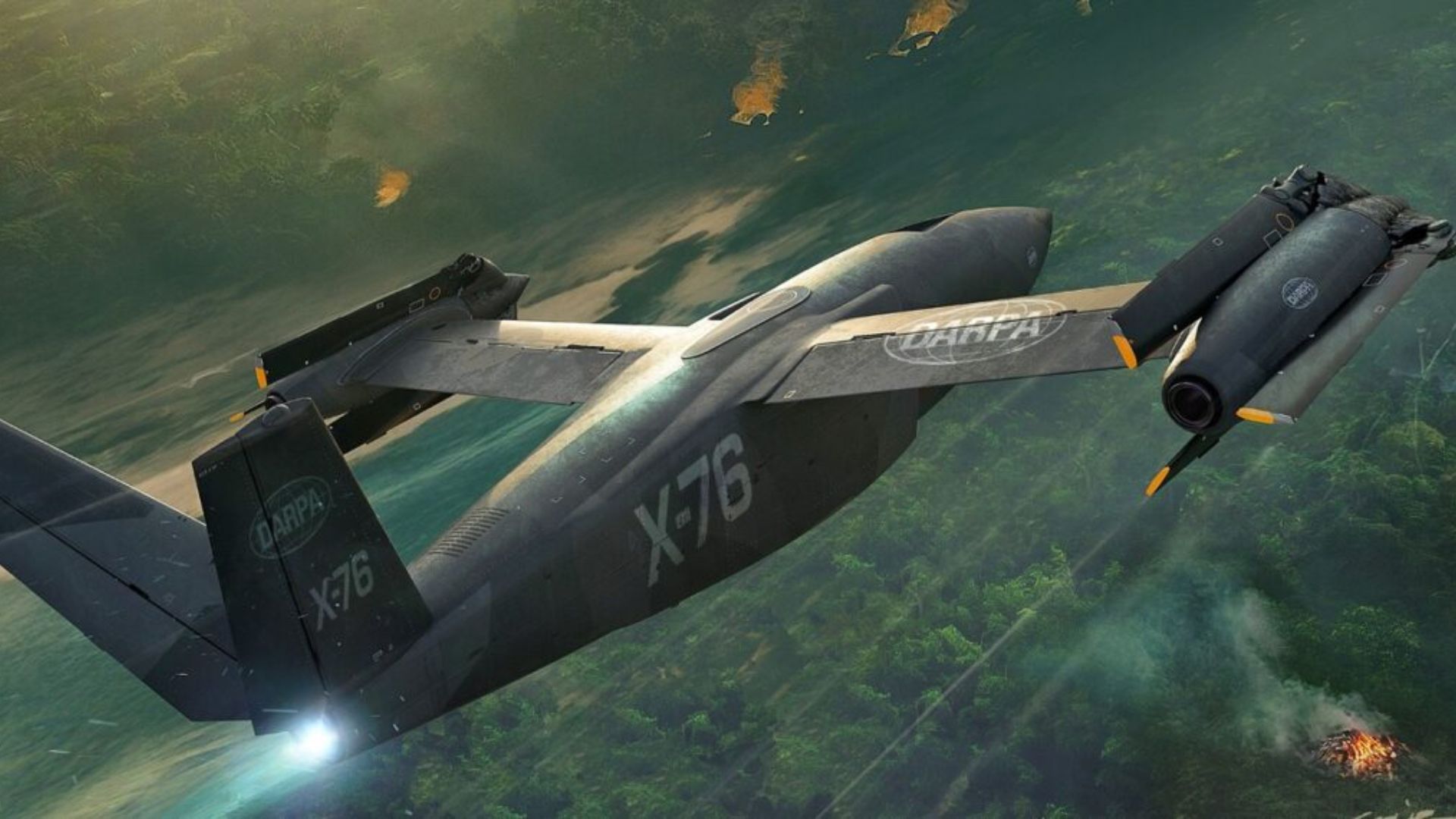
Experimental DARPA Project Seeks to Combine Jet Aircraft Speed with Helicopter Vertical Take-Off, Creating an Aircraft Capable of Operating Without Runways and Reaching Up to 450 Knots in Military Operations
The race for new military air mobility technologies has just gained an important chapter. The U.S. Defense Advanced Research Projects Agency, known as DARPA (Defense Advanced Research Projects Agency), revealed new details about an experimental aircraft project that could profoundly transform the future of military aviation. Designated X-76, the technology demonstrator is part of the SPRINT (Speed and Runway Independent Technologies) program and aims to develop a platform capable of combining two traditionally opposing features: the speed of a jet aircraft and the vertical take-off and landing capability typical of helicopters.
The proposal arises, above all, to address one of the main operational challenges faced by modern armed forces. On one hand, fixed-wing aircraft are extremely fast and efficient over long distances but rely on long runways vulnerable to enemy attacks. On the other hand, helicopters can operate practically anywhere, including improvised terrains, but have significant limitations in speed, range, and energy efficiency.
In this context, the SPRINT program seeks to eliminate this strategic choice by creating a hybrid aircraft capable of taking off vertically and achieving speeds comparable to conventional aircraft. If the concept works as expected, it could completely change how troops and equipment are deployed in modern warfare scenarios.
-
A startup sends robotic gloves for users to wear at home while washing dishes, folding clothes, and making coffee; every finger movement is recorded and sent back to train a domestic robot that has already learned 10 million real tasks without ever having entered a kitchen.

-
In a flooded well, archaeologists found a 1,700-year-old Roman egg that still contains clear and yolk intact inside the very thin shell.

-
Something is happening around the Earth: Inside the huge explosion of fireballs in 2026

-
A hot air bubble coming from Argentina expands over Brazil, causing thermometers to exceed 38 degrees with a thermal sensation of 40 degrees in late March, affecting 6 states at once.


The information was disclosed by the specialized website The Aviationist, which detailed the advances of the DARPA program and the technologies being developed to enable this new generation of military aircraft.
Experimental Aircraft Could Fly Between 740 and 830 km/h and Operate on Improvised Runways
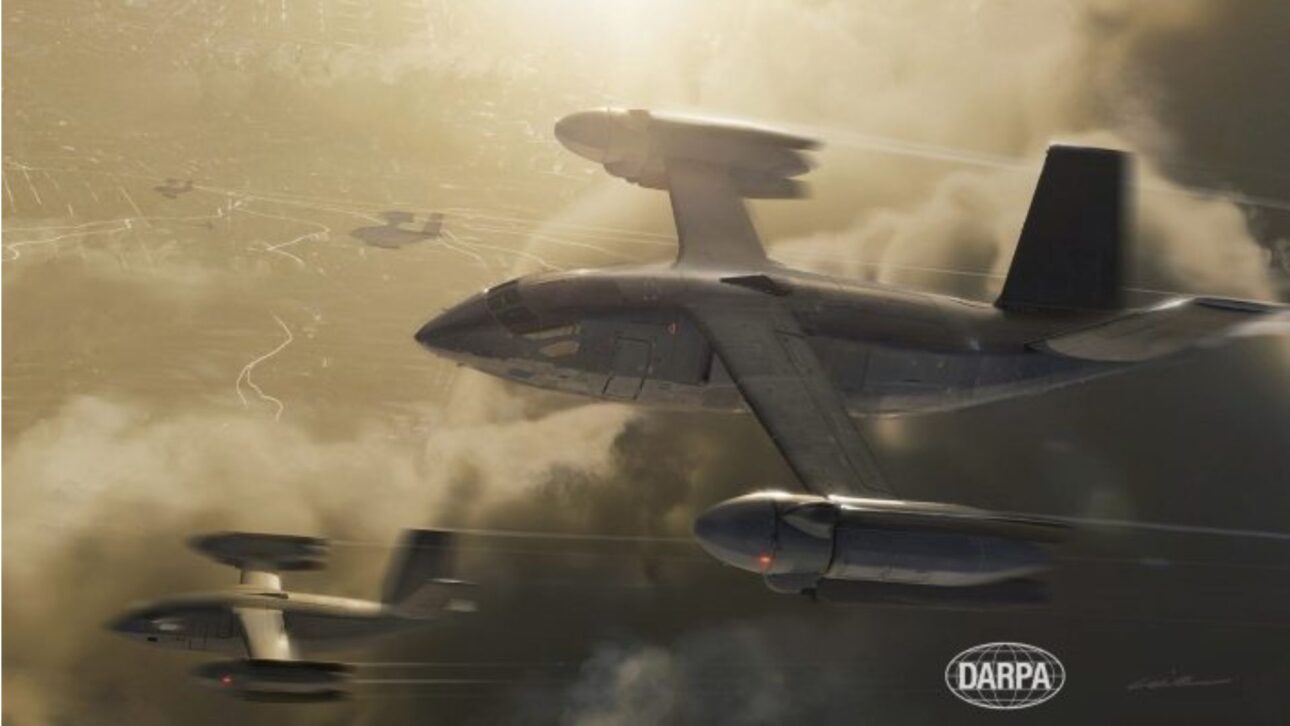
The development of the X-76 demonstrator is taking place in partnership with the U.S. Special Operations Command (USSOCOM), which seeks platforms capable of inserting and removing troops quickly in remote or hostile areas.
According to the requirements defined by DARPA, the aircraft is expected to achieve cruise speeds between 400 and 450 knots, which corresponds to approximately 740 to 830 km/h. Furthermore, the project envisions that the aircraft maintains hovering and vertical take-off capabilities, being able to operate on unprepared surfaces or improvised runways.
This combination of characteristics represents a significant strategic advantage. In modern conflict scenarios, large air bases are often priority targets for precision missiles, drones, and long-range attacks. Therefore, an aircraft that does not rely on traditional runways could considerably increase the survivability and flexibility of military operations.
To enable this technology, DARPA selected Bell Textron, known for its expertise in developing vertical take-off aircraft and convertiplanes. The company won the competitive phase of the program and now leads the project responsible for the development, system integration, construction, and testing of the X-76 prototype.
“Stop/Fold Rotor” System Allows Transition Between Helicopter and Jet Aircraft
One of the most innovative elements of the project is the use of a hybrid system called “stop/fold rotor”. This mechanism is designed to allow efficient transitions between different flight modes.
During vertical take-off and hovering, the aircraft uses rotors similar to those of helicopters. However, when the aircraft enters horizontal flight, these rotors go through a deceleration process and are folded against the fuselage, drastically reducing aerodynamic drag.
From this point on, jet engines take over the main propulsion of the aircraft, allowing it to reach speeds significantly higher than those of conventional helicopters or traditional convertiplanes.
Even before the construction of the complete prototype, Bell conducted several technology risk reduction tests. These experiments included evaluations of foldable rotors, advanced flight control systems, and aerodynamic testing in wind tunnels.
Some of these activities were conducted at the Holloman Air Force Base, located in the state of New Mexico, as well as at specialized aerodynamic research centers in the United States.
Prototype Expected to Start Flight Testing From 2028
After completing the critical design review, a step deemed essential to validate the entire architecture of the aircraft, the program now advances to the manufacturing phase of the demonstrator.
This phase includes production of the aircraft structure, integration of propulsion and control systems, and a broad campaign of ground testing to evaluate the vehicle’s behavior before the first flight.
According to the current program timeline, the X-76 demonstrator is expected to be ready for flight testing around 2028. During this phase, engineers will analyze critical aspects such as:
- Transition between vertical and horizontal flight
- Stability at high speeds
- Performance in take-offs and landings in austere environments
Although the X-76 is currently just a technology demonstrator, experts believe that the technologies developed in the program could pave the way for a new generation of military aircraft capable of operating without runways.
This type of platform could be particularly useful in infiltration and extraction missions for special forces, as well as logistical transport to forward bases, medical evacuation in remote areas, and rescue operations in combat zones.
Moreover, the combination of high speed and operation in improvised locations aligns with new operational concepts of the U.S. armed forces, which prioritize mobility, dispersion, and reduced vulnerability in high-intensity conflicts.
If the technologies demonstrated by the X-76 meet expectations, experts assert that the project could profoundly influence the future of vertical take-off military aviation, offering a much faster and more flexible alternative to the platforms currently in service.








-

-

3 pessoas reagiram a isso.