





 Portuguese
  English
  Spanish
  5 min of reading
  0 comments


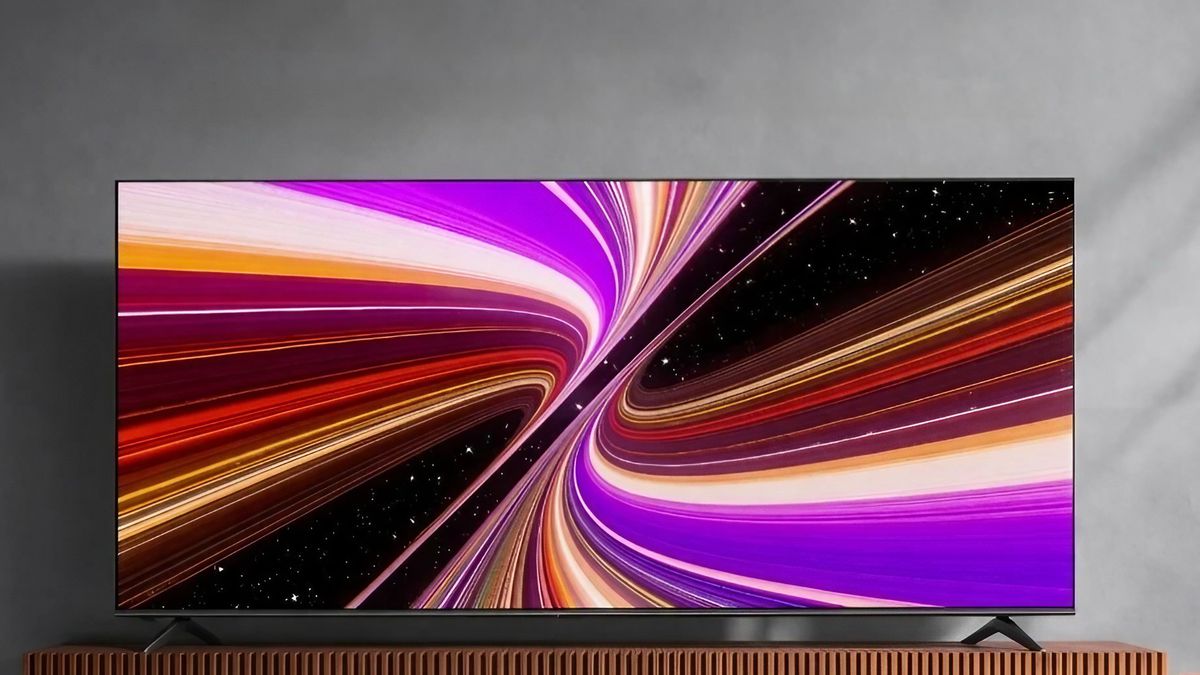
Xiaomi launches 50″ 4K TV with 144Hz for about R$ 1,060 — Redmi A50 arrives with HyperOS, 32 GB and a price that could change the market.
Xiaomi has put direct pressure on the global television market by launching the Redmi Smart TV A50, a 50-inch model with 4K resolution, a refresh rate of up to 144Hz, and a price equivalent to about R$ 1,060 in direct conversion. The model was introduced in the Chinese market for 1,399 yuan, an amount that corresponds approximately to this level in reais, according to specialized reports on the launch. The combination of advanced specifications and extremely low cost positions the product as one of the most aggressive in the category, especially for offering features typically restricted to more expensive models, such as a 4K panel and high refresh rate.
The launch reinforces a strategy that the company has already applied in smartphones and other electronics: delivering features typically found in premium products within an entry-level segment. In the case of the A50, this translates into a technical package that challenges the current standard of affordable smart TVs by including a 50-inch panel with a resolution of 3840 × 2160 and support for up to 144 Hz, something uncommon in this price range.
Specifications of the Redmi A50: 4K, 144Hz, and essential hardware
The Redmi A50 arrives with a set of technical characteristics that, until recently, were restricted to mid-range or high-end televisions.
-
In a flooded well, archaeologists found a 1,700-year-old Roman egg that still contains clear and yolk intact inside the very thin shell.

-
Something is happening around the Earth: Inside the huge explosion of fireballs in 2026

-
A hot air bubble coming from Argentina expands over Brazil, causing thermometers to exceed 38 degrees with a thermal sensation of 40 degrees in late March, affecting 6 states at once.

-
The radish leaf that almost everyone throws away has more polyphenols, flavonoids, and fiber than the consumed root, and a 2025 study showed that the leaf contains compounds that protect the intestine, combat inflammation, and may inhibit the growth of cancer cells.


The 50-inch screen offers 4K resolution (3840 × 2160), with support for over a billion colors and a refresh rate that can reach 144Hz. This last point is one of the main differentiators of the model.
In processing, the TV uses a chipset with a quad-core Cortex-A35 CPU and Mali-G31 MP2 GPU, accompanied by 2 GB of RAM and 32 GB of internal storage. Although it is not high-performance hardware, it is sufficient for streaming, browsing, and everyday use.
144Hz in a cheap TV: the differential that changes the segment
The presence of 144Hz in a TV of this price range represents a significant change in the market. Higher refresh rates provide greater image fluidity, especially in content with fast movement, such as sports, action movies, and games. In conventional entry-level televisions, the standard is still around 60Hz.

By incorporating 144Hz into an affordable model, Xiaomi reduces the gap between categories and pressures competitors to elevate the technical level of their products.
HyperOS transforms the TV into a smart home hub
Another strategic point of the Redmi A50 is the use of the HyperOS system, a platform developed by Xiaomi to integrate its devices.
With it, the TV ceases to be just a display device and starts functioning as a control center for the connected home. It is possible to manage smart devices, access streaming apps, and integrate different services within a single environment.
This approach follows the trend of transforming televisions into digital hubs, expanding their role within the home ecosystem.
Connectivity and features: what the TV offers in real use
The Redmi A50 brings a set of connections suitable for everyday use. Among the main features are HDMI inputs with ARC support, USB ports, Ethernet connection, and Wi-Fi.
The audio system includes two 10W speakers each, totaling 20W of power. Although it is not an advanced system, it meets standard home use.
The design follows the brand’s minimalist line, with thin bezels and a structure that prioritizes screen utilization.
The price of R$ 1,060: why it is so impactful
The most relevant factor of the launch is the price. In direct conversion, the amount of about R$ 1,060 places the Redmi A50 at the same level as basic televisions, but with significantly superior specifications.
This alters the market logic. Instead of paying more for advanced features, consumers now find them in affordable models.
However, it is important to consider that this value is valid for the Chinese market. If the model is launched globally, including in Brazil, the price is likely to increase due to taxes, logistics, and distribution.
Xiaomi’s strategy: repeating in TVs what it did in smartphones
Xiaomi has already used this strategy in other segments. By offering competitive hardware at aggressive prices, the company has managed to gain market share in smartphones and smart devices.
Now, the same logic is being applied to TVs. The idea is to reduce initial margins to increase scale and global presence.
This movement could provoke chain reactions, forcing other manufacturers to reconsider prices and specifications. The Redmi A50 is not just an isolated product. It is part of a larger trend of technological democratization.
If models with 4K and high refresh rates become standard in cheaper categories, the market could undergo a reconfiguration similar to what occurred with smartphones in the last decade.
This includes:
- reduction of the average price per inch
- increase in specifications in entry-level models
- greater competition among manufacturers
Limitations of the model: where the TV is still basic
Despite the attractive specifications, the Redmi A50 has typical limitations of entry-level models. The processor is simple and may not offer optimal performance for heavier applications. The 2 GB of RAM also limits more intense multitasking.
Additionally, there is no confirmation of advanced features such as local dimming or premium panel technologies, which are common in higher-end TVs.
Availability and expectation of arrival in Brazil
So far, the Redmi A50 has been initially launched in the Chinese market. There is no official confirmation about its arrival in other countries.
If launched in Brazil, the final price is expected to be significantly higher than the direct conversion, due to tax burdens and logistical costs. Even so, even with a price increase, the model may remain competitive depending on the positioning adopted by Xiaomi.
The launch of the Redmi A50 indicates a structural change in the television market. Features that were once considered differentiators — such as 4K and high refresh rates — are beginning to become standard even in entry-level models.
This movement redefines consumer expectations and raises the minimum level required in the category. The Redmi Smart TV A50 represents more than just a one-time launch. It signals a change in the balance between price and technology.
By delivering advanced specifications at an extremely low price, Xiaomi creates a new benchmark for the market. If this strategy expands globally, the impact could be significant, forcing competitors to adapt and accelerating the evolution of affordable smart TVs in the coming years.







Seja o primeiro a reagir!